Chef Graziella
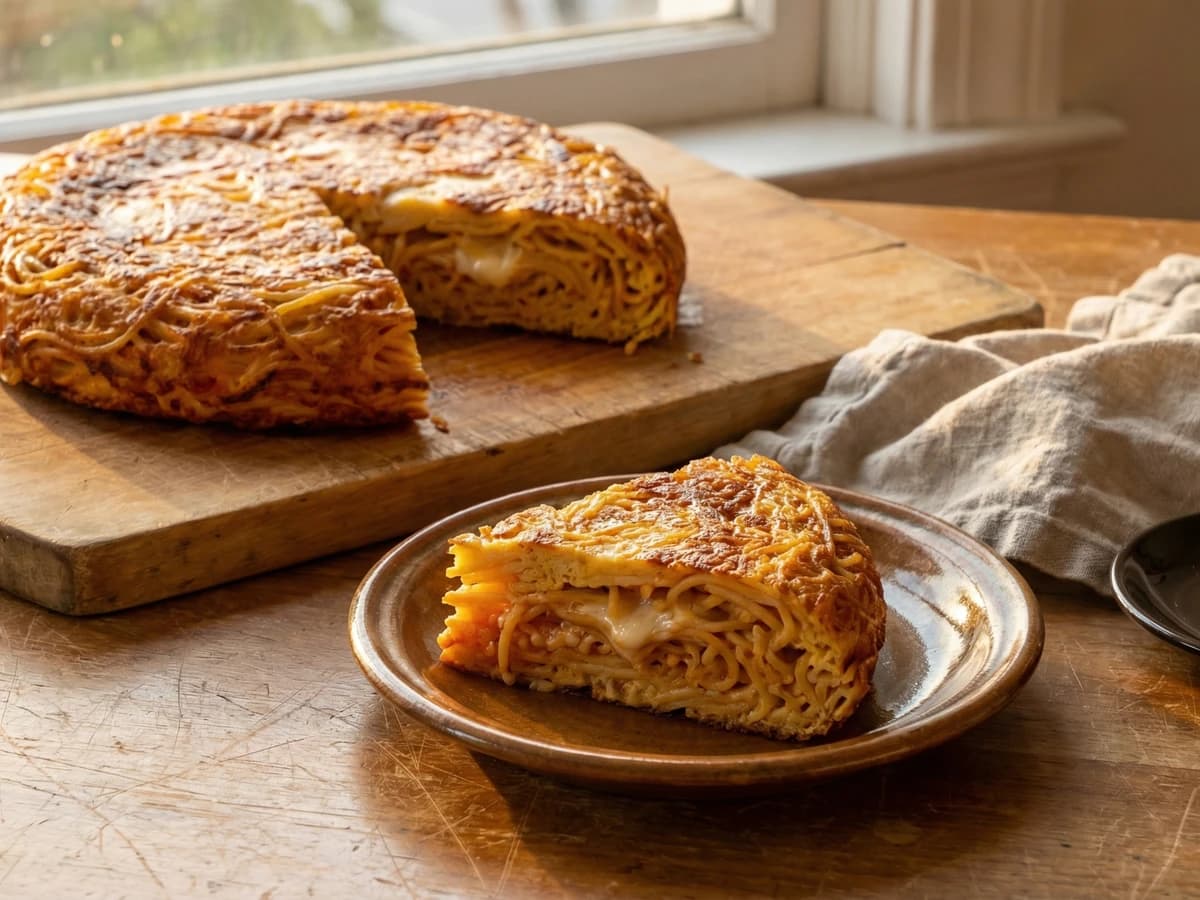
Frittata di Pasta Napoletana
The Neapolitan genius for wasting nothing. Yesterday's pasta becomes this morning's golden treasure, bound with eggs and crisped until it holds its shape like a promise.
A cooking platform built around craft, culture, and the stories behind what we eat.
Created by
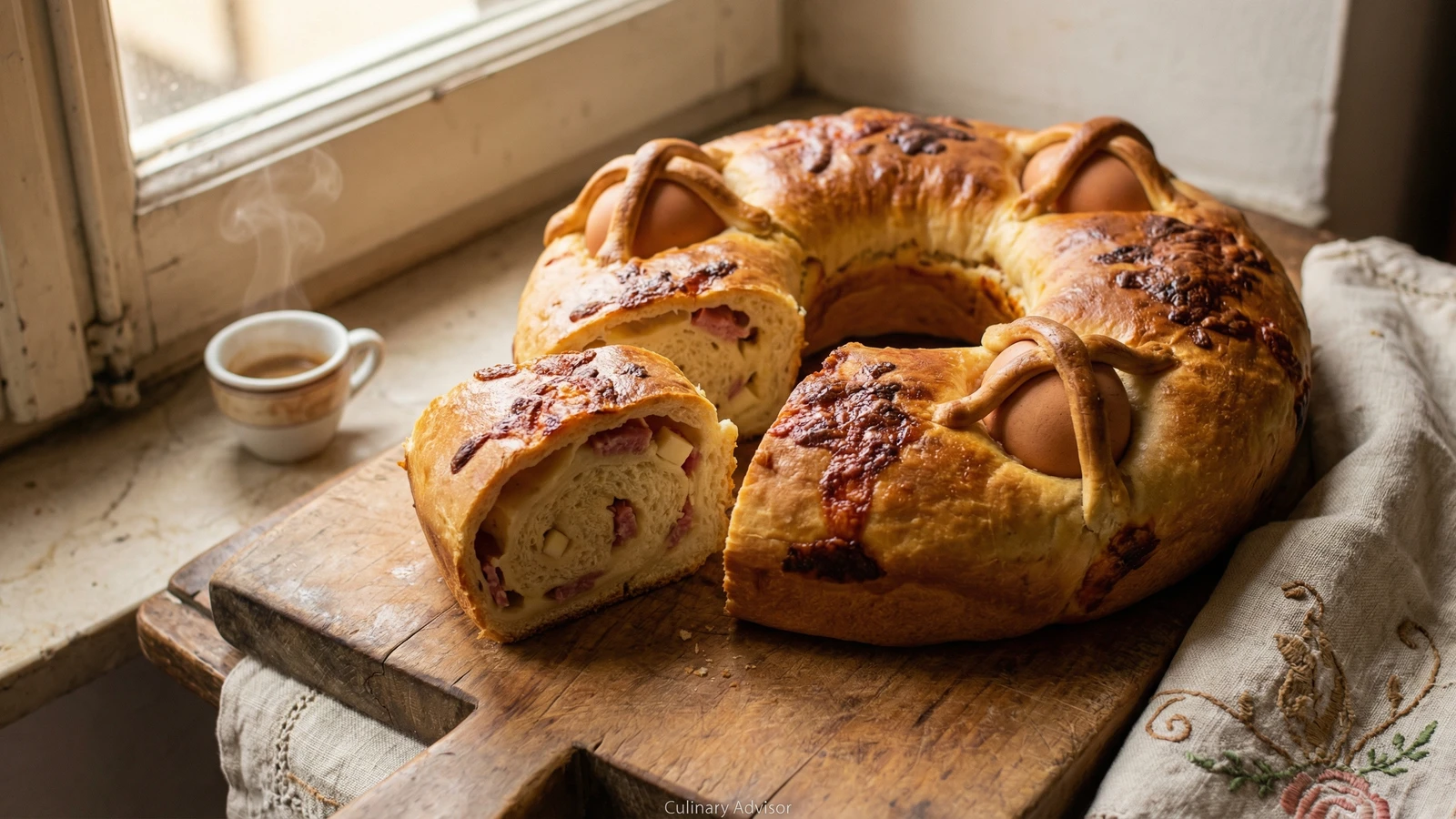
The magnificent ring-shaped Easter bread of Naples, its enriched dough wrapped around cubes of sharp cheese and salami, crowned with eggs that bake in their shells. This is what Neapolitan families bring to the table on Easter morning.
Casatiello belongs to Naples the way the Duomo belongs to Florence. You cannot separate them. Every family in the city has made this bread for Easter since before anyone can remember, the recipe passed from grandmother to mother to daughter with variations as subtle and fiercely defended as political opinions.
The dough is enriched with lard, which Neapolitans call strutto. Do not substitute butter. Do not substitute oil. The lard creates a tender crumb and carries the flavor of the cheese and salami in a way that nothing else can. If you cannot use lard for reasons of faith or conscience, I respect that, but then you are making a different bread.
The eggs baked into the top are not decoration. They are symbols. The ring shape represents eternity and resurrection. The eggs represent new life and the breaking of the Lenten fast. When you slice casatiello on Easter morning and see the spiral of cheese and meat, when you peel the baked egg from its strip of golden dough, you are participating in something that connects you to generations of Neapolitan home cooks who did exactly the same thing at exactly the same time of year.
Casatiello appears in Neapolitan records as early as the 16th century, though its origins likely reach back further into the pagan spring festivals that Christianity absorbed. The name derives from 'caso,' an old Neapolitan word for cheese. By the 17th century, Giovanni Battista Basile mentioned casatiello in his fairy tales as the bread that marked the end of Lenten sacrifice, a tradition that continues unbroken in Naples today.
Quantity
500g
Quantity
10g
Quantity
7g
Quantity
200ml
about 100°F
Quantity
100g
softened, plus more for pan
Quantity
4, plus 4 whole eggs in shells for decoration
Quantity
150g
cut into 1/2-inch cubes
Quantity
150g
cut into 1/2-inch cubes
Quantity
150g
cut into 1/2-inch cubes
Quantity
100g
cut into small pieces
Quantity
2 teaspoons
freshly ground
| Ingredient | Quantity |
|---|---|
| bread flour | 500g |
| fine sea salt | 10g |
| active dry yeast | 7g |
| warm waterabout 100°F | 200ml |
| lard (strutto)softened, plus more for pan | 100g |
| large eggs | 4, plus 4 whole eggs in shells for decoration |
| aged pecorino Romanocut into 1/2-inch cubes | 150g |
| aged provolonecut into 1/2-inch cubes | 150g |
| Neapolitan salamicut into 1/2-inch cubes | 150g |
| cicoli or pancettacut into small pieces | 100g |
| black pepperfreshly ground | 2 teaspoons |
Dissolve the yeast in the warm water and let it stand for 10 minutes until it becomes creamy and begins to foam. If nothing happens, your yeast is dead. Discard it and start again with fresh yeast. There is no point in proceeding with inactive yeast.
Place the flour and salt in a large bowl. Make a well in the center. Beat the 4 eggs lightly and add them to the well along with the yeast mixture. Begin stirring from the center, gradually incorporating flour from the sides. When the mixture becomes shaggy, add the softened lard in pieces. Work the dough until it comes together into a rough mass.
Turn the dough onto a work surface and knead vigorously for 10 to 12 minutes. The dough will be sticky at first because of the fat. Do not add more flour. Continue kneading until it becomes smooth, elastic, and pulls away from your hands cleanly. When you stretch a small piece, it should form a thin, translucent membrane without tearing. This is the window test. If the dough tears, knead longer.
Form the dough into a ball and place it in a lightly greased bowl. Cover with plastic wrap or a damp towel. Let it rise in a warm place until doubled in volume, about 2 hours. The time depends on the temperature of your kitchen. Do not rush this. Bread rises when it is ready, not when you are ready.
While the dough rises, combine the cubed pecorino, provolone, salami, and cicoli in a bowl. Add the black pepper and toss to distribute evenly. Neapolitans are generous with pepper in this bread. The filling should be substantial and visible in every slice.
Punch down the risen dough and turn it onto a lightly floured surface. Reserve about 80 grams of dough for the decorative strips. Roll the larger piece into a rectangle roughly 40 by 30 centimeters. Scatter the cheese and meat filling evenly over the surface, pressing lightly so it adheres. Roll the dough tightly into a long cylinder, starting from the long edge. Pinch the seam closed.
Generously grease a 26-centimeter tube pan or ring mold with lard. Form the filled cylinder into a ring, connecting the ends by overlapping and pinching firmly. Place it seam-side down in the prepared pan. The dough should fill about one-third of the pan. It will rise to fill the rest.
Wash the 4 whole eggs in their shells and dry them thoroughly. Press them gently into the top of the dough at even intervals, spacing them like points on a compass. They will sink slightly into the dough. This is correct. Roll the reserved dough into 8 thin strips, about 20 centimeters long. Cross two strips over each egg, pressing the ends firmly into the dough on either side to secure. These strips will hold the eggs in place as the bread rises and bakes.
Cover the pan loosely with plastic wrap or a towel. Let the casatiello rise until the dough has nearly doubled and reaches close to the top of the pan, about 1 to 1.5 hours. The dough should look puffy and the eggs should appear partially embedded. Preheat your oven to 180°C (350°F) during the last 30 minutes of rising.
Bake in the center of the preheated oven for 50 to 60 minutes. The bread is done when the top is deeply golden brown and a wooden skewer inserted into the bread (avoiding the eggs) comes out clean. If the top browns too quickly, tent loosely with aluminum foil for the remaining time. The internal temperature should reach 90°C (195°F).
Let the casatiello cool in the pan for 15 minutes, then carefully turn it out onto a wire rack. Cool completely before slicing. The bread is traditionally served at room temperature, not warm. It should be sliced in thick wedges that reveal the spiral of cheese and meat within, each slice containing a piece of the baked egg.
1 serving (about 130g)
Culinary guides, cultural storytelling, and the editorial depth that makes cooking meaningful.
Discover Culinary ExplorerChef Graziella
The Neapolitan genius for wasting nothing. Yesterday's pasta becomes this morning's golden treasure, bound with eggs and crisped until it holds its shape like a promise.
Chef Graziella
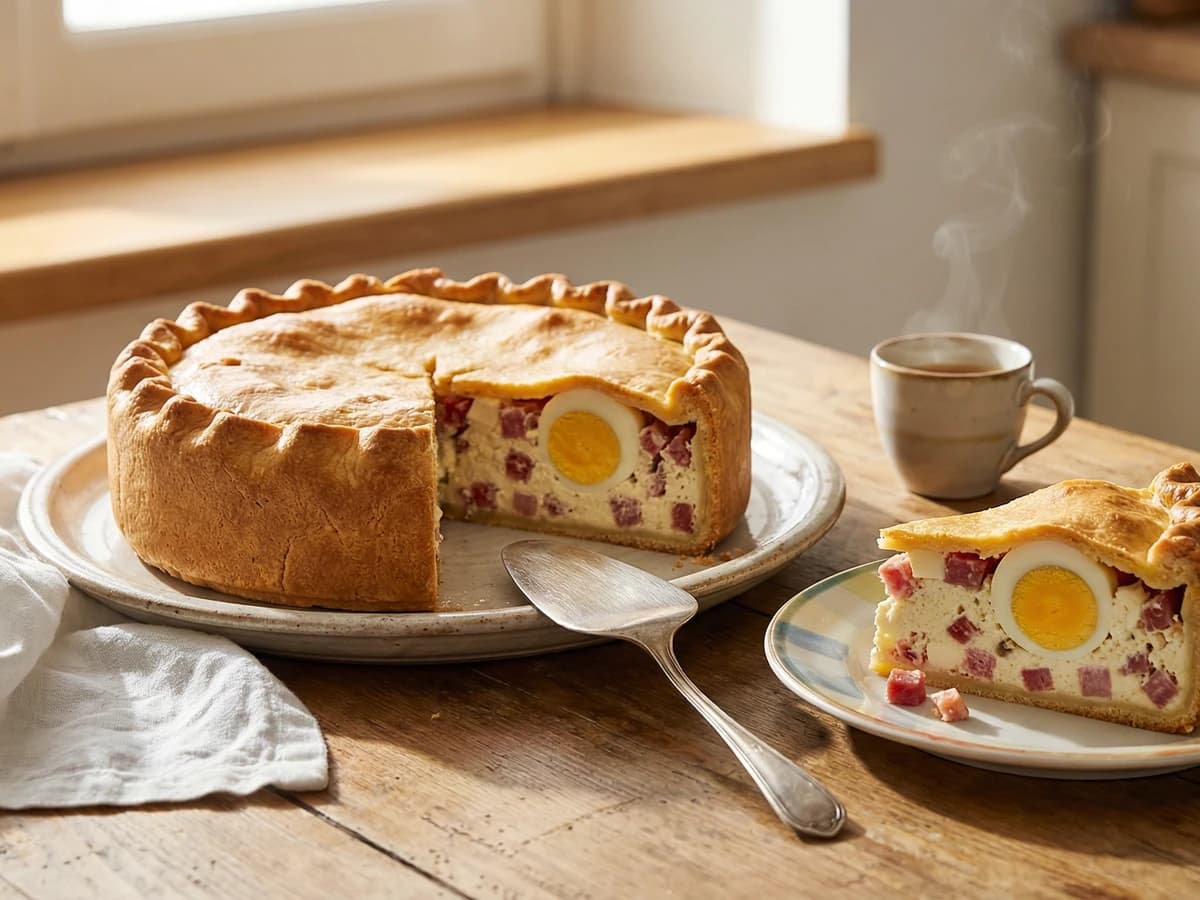
The great Easter pie of Naples, where forty days of sacrifice give way to ricotta, salami, prosciutto, and eggs baked in a golden crust. This is not pizza as you know it. This is celebration.
Chef Graziella
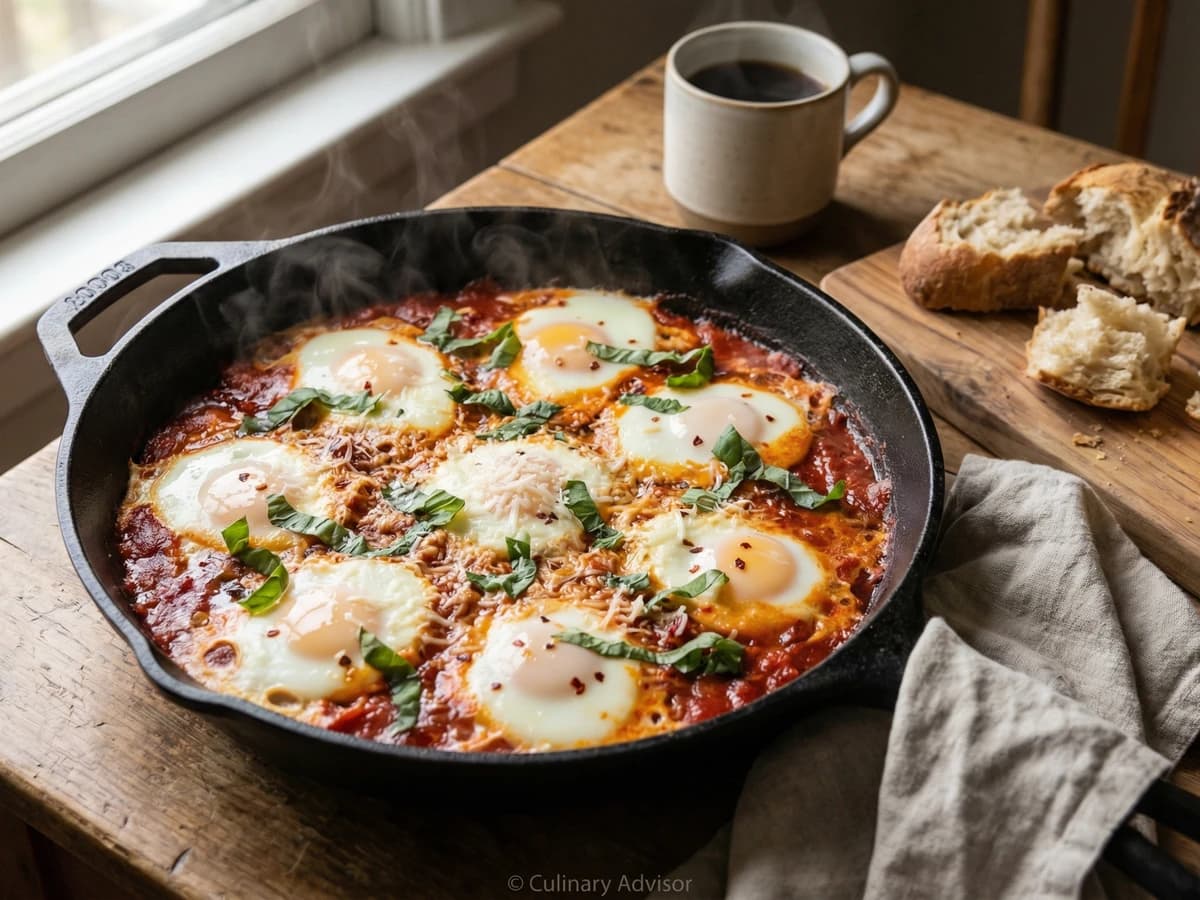
Eggs nestled in a spicy tomato sauce, the way Neapolitan home cooks have prepared them for generations. Four ingredients, one pan, and the understanding that simplicity requires precision.
Chef Juliette
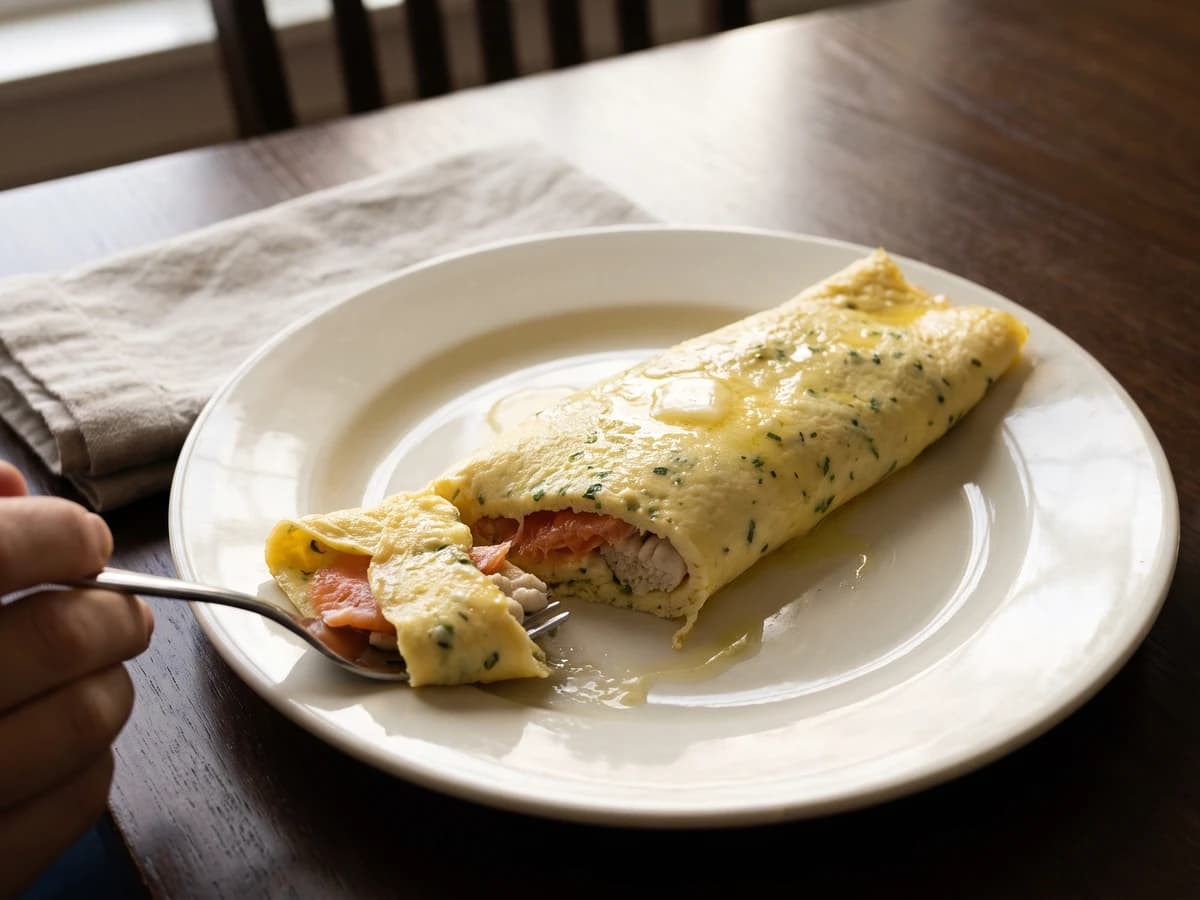
A creamy omelette aux fines herbes closes around smoked-salmon-wrapped herring milts, gently poached in butter. Have the filling ready, then roll the eggs while they still shine.