Chef Graziella
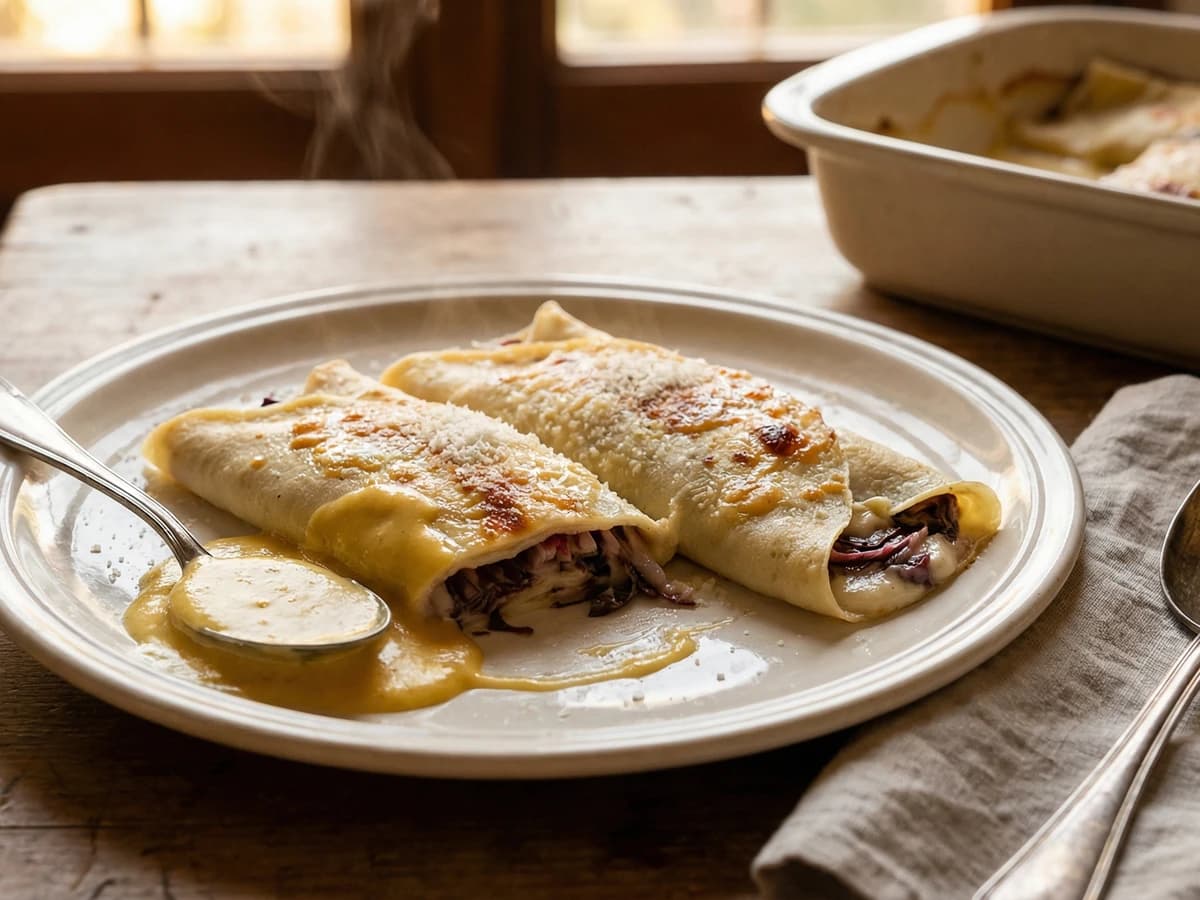
Crespelle con Radicchio di Treviso
Delicate egg crepes wrapped around the prized bitter chicory of the Veneto, softened by cream sauce and gratinéed until the edges crisp and the center stays tender.
A cooking platform built around craft, culture, and the stories behind what we eat.
Created by
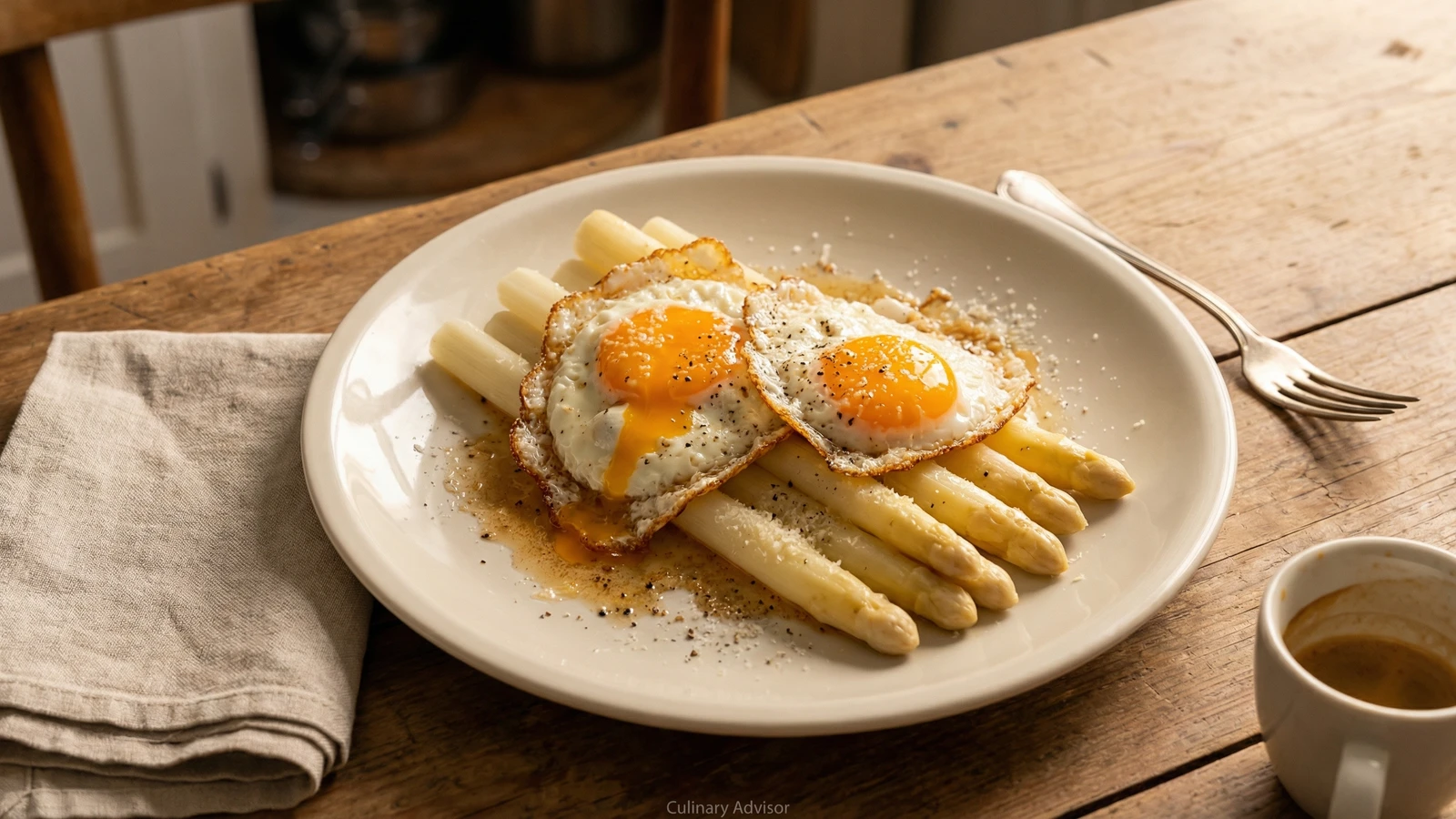
The Venetian celebration of spring, where prized white asparagus meets butter-fried eggs and the yolk becomes the only sauce you need. This is restraint as philosophy.
In the Veneto, when the white asparagus of Bassano del Grappa appears in the markets, there is only one way to honor it. You cook the spears until tender, you fry eggs in butter until the whites set and the yolks remain liquid, and you bring them together on a warm plate. The yolk breaks over the asparagus. That is your sauce. Nothing more is needed or wanted.
This is not a recipe that tolerates shortcuts or substitutions. Green asparagus is a different vegetable with a different character. It works, but it is not the same dish. The white asparagus of the Veneto, grown under mounds of earth to prevent the sun from triggering chlorophyll, has a delicacy and sweetness that green asparagus cannot match. If you cannot find white asparagus, wait until you can. Or use green and understand you are making something related but distinct.
The eggs must be fried in butter, not oil. The butter browns slightly at the edges, creating those lacey, crisp bits that Italians call the "pizzi." The yolk must be runny. A set yolk is useless here. You need it to flow over the asparagus when pierced, creating the sauce that binds the dish together.
What you keep out is as significant as what you put in. There is no garlic. No herbs scattered for color. No balsamic reduction drizzled in artistic patterns. The Venetians who created this dish understood that when you have perfect asparagus and fresh eggs and good butter, interference is not improvement. It is vandalism.
The white asparagus of Bassano del Grappa has been cultivated in the Veneto since the 16th century, when Venetian farmers discovered that earthing up the spears produced a sweeter, more delicate vegetable. The tradition of pairing it with eggs dates to the contadini who could not afford meat but kept hens, creating a dish that transforms humble ingredients into something the nobility would later claim as their own.
Quantity
2 pounds
Quantity
8
at room temperature
Quantity
6 tablespoons
Quantity
to taste
Quantity
to taste
freshly ground
Quantity
3 ounces
freshly grated
| Ingredient | Quantity |
|---|---|
| white asparagus | 2 pounds |
| large eggsat room temperature | 8 |
| unsalted butter | 6 tablespoons |
| kosher salt | to taste |
| black pepperfreshly ground | to taste |
| Parmigiano-Reggianofreshly grated | 3 ounces |
White asparagus requires peeling. The outer layer is fibrous and unpleasant. Using a vegetable peeler, start about two inches below the tip and peel downward to the base. Rotate and repeat until the entire lower portion is peeled. Trim the woody ends, about one inch. Green asparagus needs only the ends snapped off where they naturally break.
Fill a wide pan or pot with enough water to cover the asparagus when lying flat. Salt the water generously. Bring to a boil. Add the asparagus in a single layer. Cook until a knife pierces the thickest part with only slight resistance, 8 to 12 minutes for white asparagus, 4 to 6 minutes for green. The spears should bend slightly when lifted but not droop. Remove to a clean kitchen towel to drain briefly.
Place four dinner plates in a low oven or run them under hot water and dry them. The plates must be warm. Cold plates are an insult to hot food.
In a large nonstick skillet or well-seasoned pan, melt 4 tablespoons of the butter over medium heat. When the butter foams and the foam begins to subside, crack the eggs into the pan, working in batches of four if necessary. The butter should sizzle immediately upon contact with the egg. Cook without disturbing until the whites are set and opaque but the yolks are still liquid, about 3 minutes. The edges should turn golden and slightly crisp. These lacey edges are correct.
Divide the warm asparagus among the four plates, arranging the spears in a neat pile. Top each portion with two fried eggs, placing them so the yolks rest over the center of the asparagus. The remaining 2 tablespoons of butter should still be in the warm pan. Swirl it to melt completely, then drizzle the brown butter over each plate.
Season each plate with salt and freshly ground black pepper. Scatter the grated Parmigiano-Reggiano generously over the eggs and asparagus. Serve immediately. Instruct your guests to pierce the yolks and let them flow over the asparagus. The yolk is the sauce. Once the eggs are plated, there is no time for conversation. Eating must begin at once.
1 serving (about 340g)
Culinary guides, cultural storytelling, and the editorial depth that makes cooking meaningful.
Discover Culinary ExplorerChef Graziella
Delicate egg crepes wrapped around the prized bitter chicory of the Veneto, softened by cream sauce and gratinéed until the edges crisp and the center stays tender.
Chef Juliette
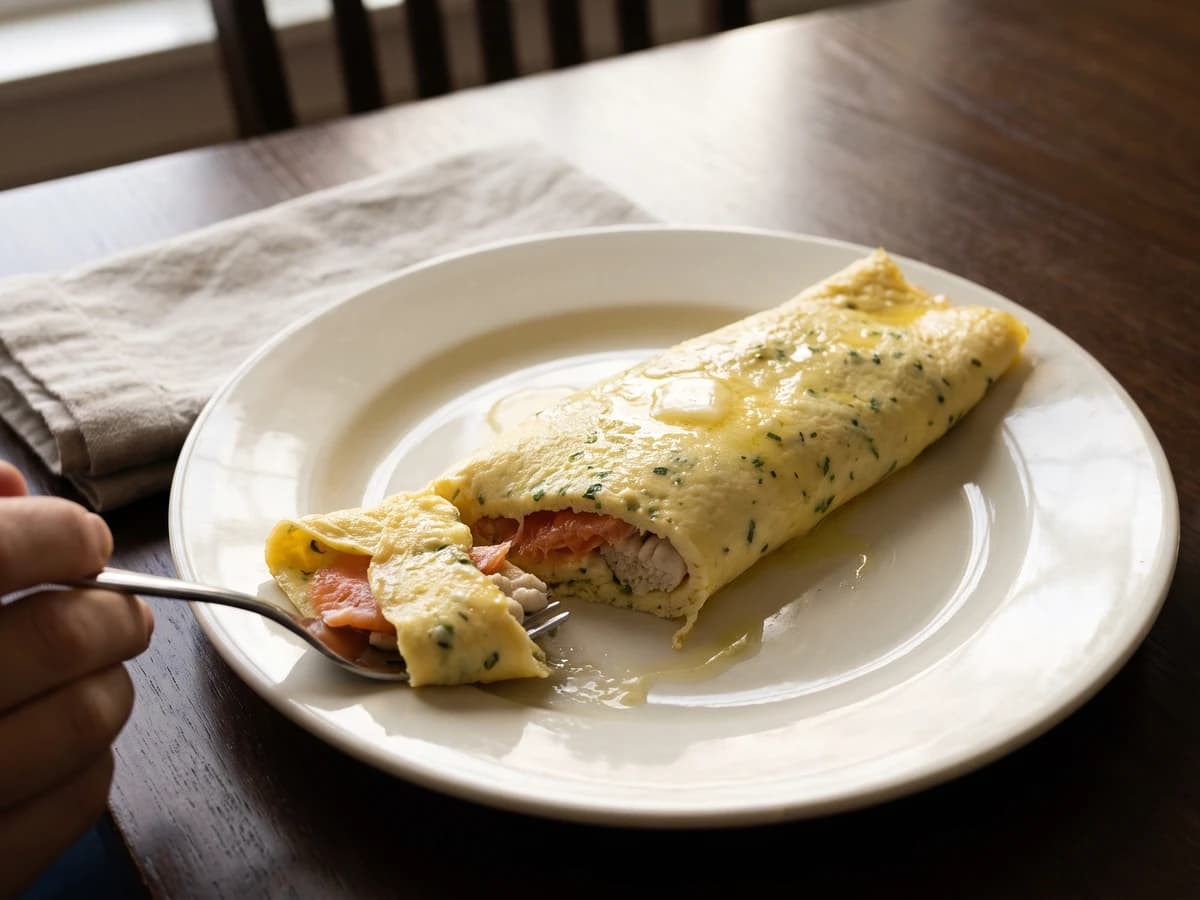
A creamy omelette aux fines herbes closes around smoked-salmon-wrapped herring milts, gently poached in butter. Have the filling ready, then roll the eggs while they still shine.
Chef Juliette
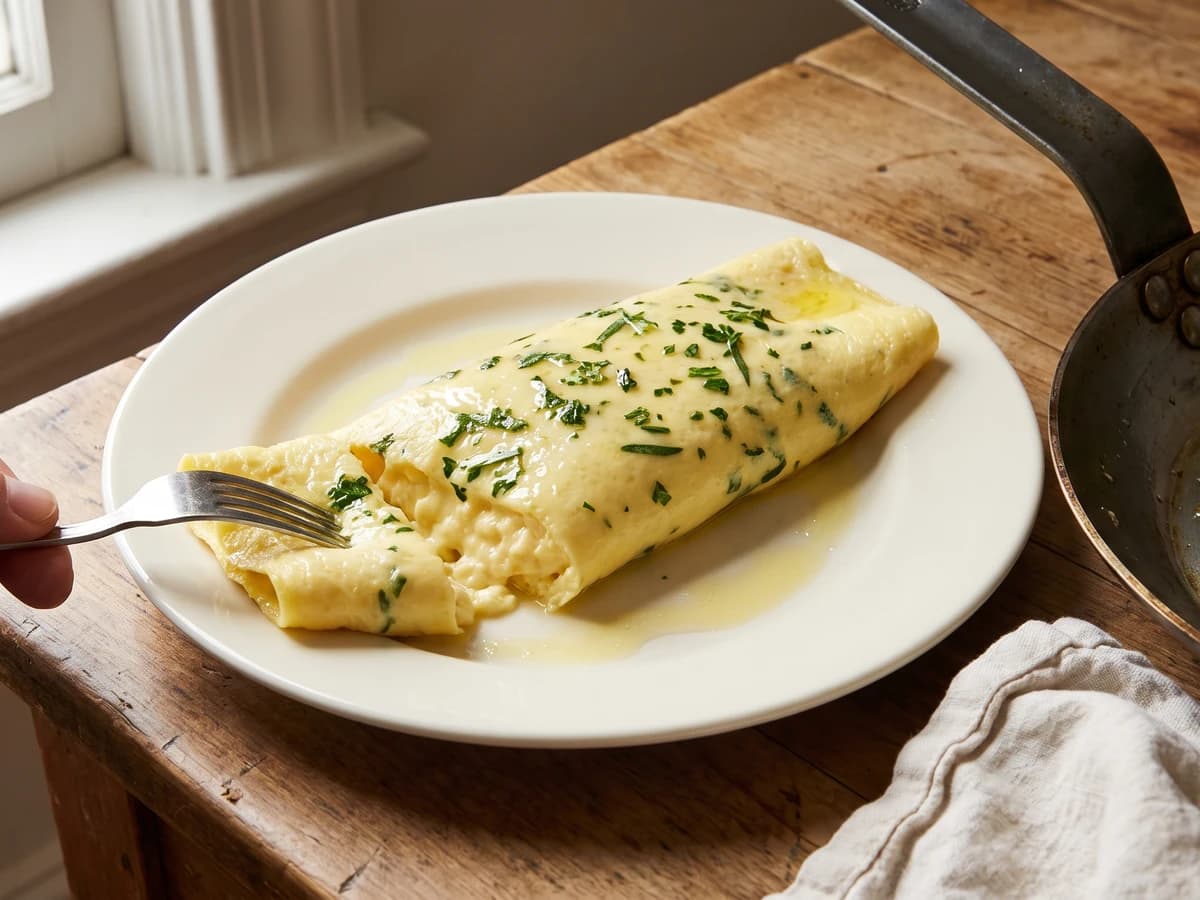
Four tender herbs, hot butter, and two eggs per pan: this rolled omelette teaches the quick hand and good judgment that keep the outside pale and the center creamy.
Chef Juliette
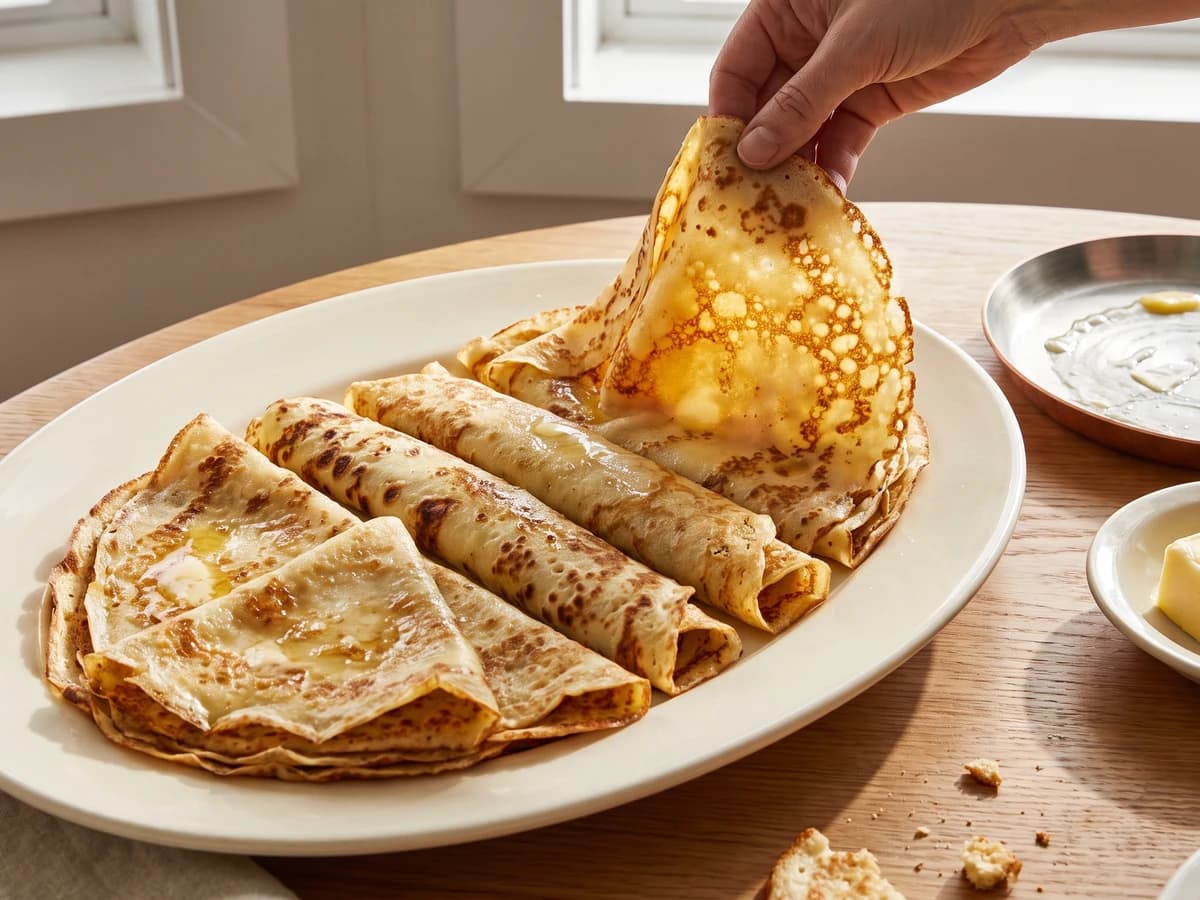
Four batters, one lesson: let the flour drink deeply before cooking, then spread the batter thinly in butter for crêpes and pannequets that bend without becoming tough.