
Chef Takumi
Awamori Mizuwari (泡盛水割り, awamori with water)
Awamori mizuwari is not a trick of the bar. It is three parts awamori, seven parts cold water, and enough patience to let the black-kōji aroma open.
A cooking platform built around craft, culture, and the stories behind what we eat.
Created by
Green ume, rock sugar, white liquor, and patience. Umeshu asks for almost no technique, only clean fruit, a dry jar, and the good sense to let early June do its work.
Green ume don't wait politely. They arrive in early June, hard, bright, and sour enough to make your shoulders rise, then they're gone before slower cooks have found their jars. That brief season is the whole invitation: catch the fruit at its shun, pack it with rock sugar, cover it with strong white liquor, and let time do the cooking.
Umeshu looks like a preserved secret, but the work is almost absurdly plain. Wash the fruit, dry it properly, pick out the little stem scars, layer ume and kōri-zatō (rock sugar), and pour over 35% shōchū. The one detail that decides it is dryness. Water clinging to the fruit or jar weakens the alcohol right where spoilage begins, and it clouds the liqueur you waited months to see clear.
Rock sugar matters because it dissolves slowly. As it melts, it draws juice from the ume without collapsing the fruit all at once, so the finished liqueur tastes bright, clean, and faintly almond from the stone. Granulated sugar will make drinkable umeshu, yes, but it rushes. We are not making a panic beverage, though early June sometimes behaves like one.
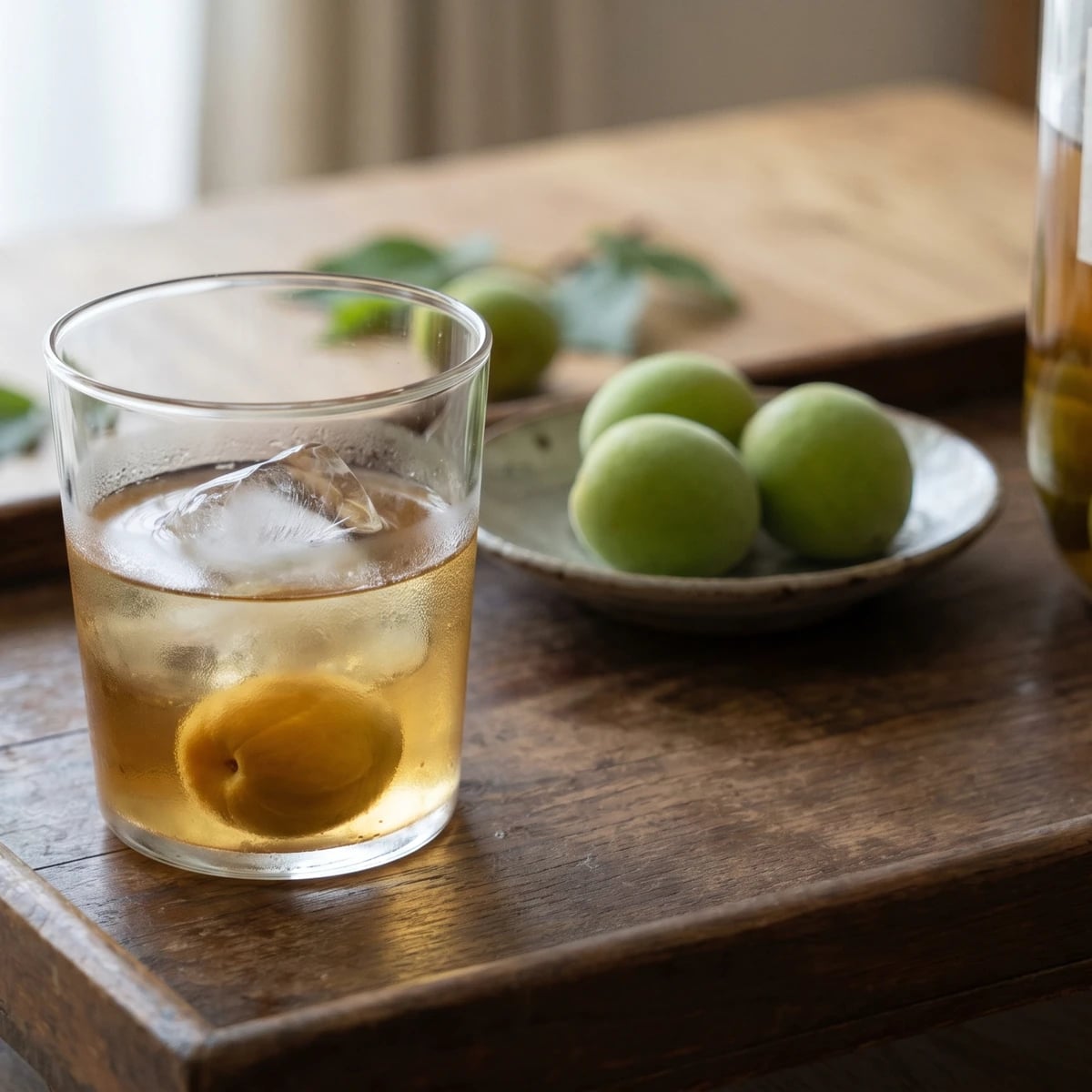
After six months, pour it over one large cube of ice, or cut it with chilled soda when the evening is heavy. It belongs at the edge of a meal or after it, a small glass of country patience on a tray with room around it. Nothing hidden. Just fruit, sugar, liquor, and waiting.
Umeshu appears in Edo-period records as both a household drink and a medicinal steeping; the 1697 Honchō Shokkan, a food-and-medicine compendium, describes ume preparations in alcohol for common ailments. The modern home version spread with bottled 35% white liquor, a neutral korui shōchū sold for fruit liqueurs in early summer alongside green ume and rock sugar. Under Japan's Liquor Tax Act, household infusions like umeshu are permitted for personal use when they begin with taxed commercial liquor of at least 20 percent alcohol and avoid ingredients likely to ferment, such as grains and grapes.
Quantity
1 kg
sorted, washed, fully dried, stems removed
Quantity
700g
use 500g for a drier liqueur
Quantity
1.8L
Quantity
2 tablespoons
for wiping the jar
| Ingredient | Quantity |
|---|---|
| firm green ume (ao-ume)sorted, washed, fully dried, stems removed | 1 kg |
| rock sugar (kōri-zatō)use 500g for a drier liqueur | 700g |
| white liquor or korui shōchū, 35% ABV | 1.8L |
| same liquor (optional)for wiping the jar | 2 tablespoons |
Sort the ume one by one. Keep only firm green fruit with taut skin and no bruises, cuts, or brown patches. Bruised fruit clouds the liquor and can spoil in the jar, and no amount of sugar makes a tired ume honest again.
Rinse the ume under cool running water. If they are very hard and green, soak them in fresh cold water for 1 to 2 hours, then drain. This pulls out some aku, the rough bitterness of young fruit. If the ume are already beginning to yellow, skip the soak, because softer fruit takes in water too easily and loses perfume.
Spread the ume on clean towels and pat each one dry, then leave them until no bead of water remains. Use a bamboo skewer or toothpick to lift out the little dark stem nubs without gouging the flesh. Water weakens the alcohol at the fruit's surface, and those stem bits bring a woody taste you didn't invite.
Wash a 4-liter fruit-liquor jar (kajitsushu-bin) and its lid. If the glass is heatproof, rinse it with boiling water, drain, and let it dry completely. If it is not heatproof, don't shock it with boiling water; wash it well, dry it, then wipe the inside with a little of the shōchū. The jar doesn't need ceremony. It needs cleanliness and no hidden droplets.
Put a third of the ume into the jar, scatter over a third of the rock sugar, and repeat until both are used, finishing with sugar. Rock sugar dissolves slowly as the fruit gives up juice, which keeps the extraction steady and the flavor clean. Fast sugar makes a hurried syrup at the bottom, and this drink is not improved by impatience.
Pour the 35% white liquor down the side of the jar so it covers the fruit. Some ume may float at first. That's fine, as long as everything is wet and sealed under strong alcohol. The strength matters because the fruit and sugar dilute the liquor as they mingle; sake, wine, and most 25% drinking shōchū are too weak for this job.
Seal the jar, label it with the date, and set it in a cool, dark cupboard. For the first month, tilt the jar gently every few days until the sugar has dissolved. Don't shake it hard. Tilting wets the floating fruit and evens the sweetness, while rough shaking bruises the ume and clouds the liqueur.
Taste after three months if curiosity is making a nuisance of itself, but expect a sharp young drink. At six months the umeshu is ready, clear gold and fragrant; after one year it grows rounder. Lift out the ume with clean tongs and strain the liquid into clean bottles. Serve 60ml over one large ice cube, with one infused ume if you like, or cut it with chilled soda. Stop before the glass looks crowded. Even a drink deserves ma.
1 serving (about 65g)
Culinary guides, cultural storytelling, and the editorial depth that makes cooking meaningful.
Discover Culinary Explorer
Chef Takumi
Awamori mizuwari is not a trick of the bar. It is three parts awamori, seven parts cold water, and enough patience to let the black-kōji aroma open.

Chef Takumi
Hot awamori asks for one small discipline: pour the hot water first, then the spirit. Do that, and the glass turns round, fragrant, and calmer than its strength suggests.

Chef Takumi
Brandy umeshu asks for patience, not skill: firm green ume, slow-dissolving rock sugar, and 1.8 liters of brandy left alone until the fruit gives up its perfume.

Chef Takumi
Chūhai is not a sweet can with a clever label. It is shōchū, ice, hard-cold soda, and one clean squeeze of citrus, built for grilled food and easy company.