
Chef Makoa
Baked ʻUala (Hawaiian Sweet Potato in the Embers)
Whole Hawaiian ʻuala baked in embers or a hot oven until the skins char and the flesh goes honey-soft, finished plain with paʻakai so the canoe crop tastes like itself.
A cooking platform built around craft, culture, and the stories behind what we eat.
Created by
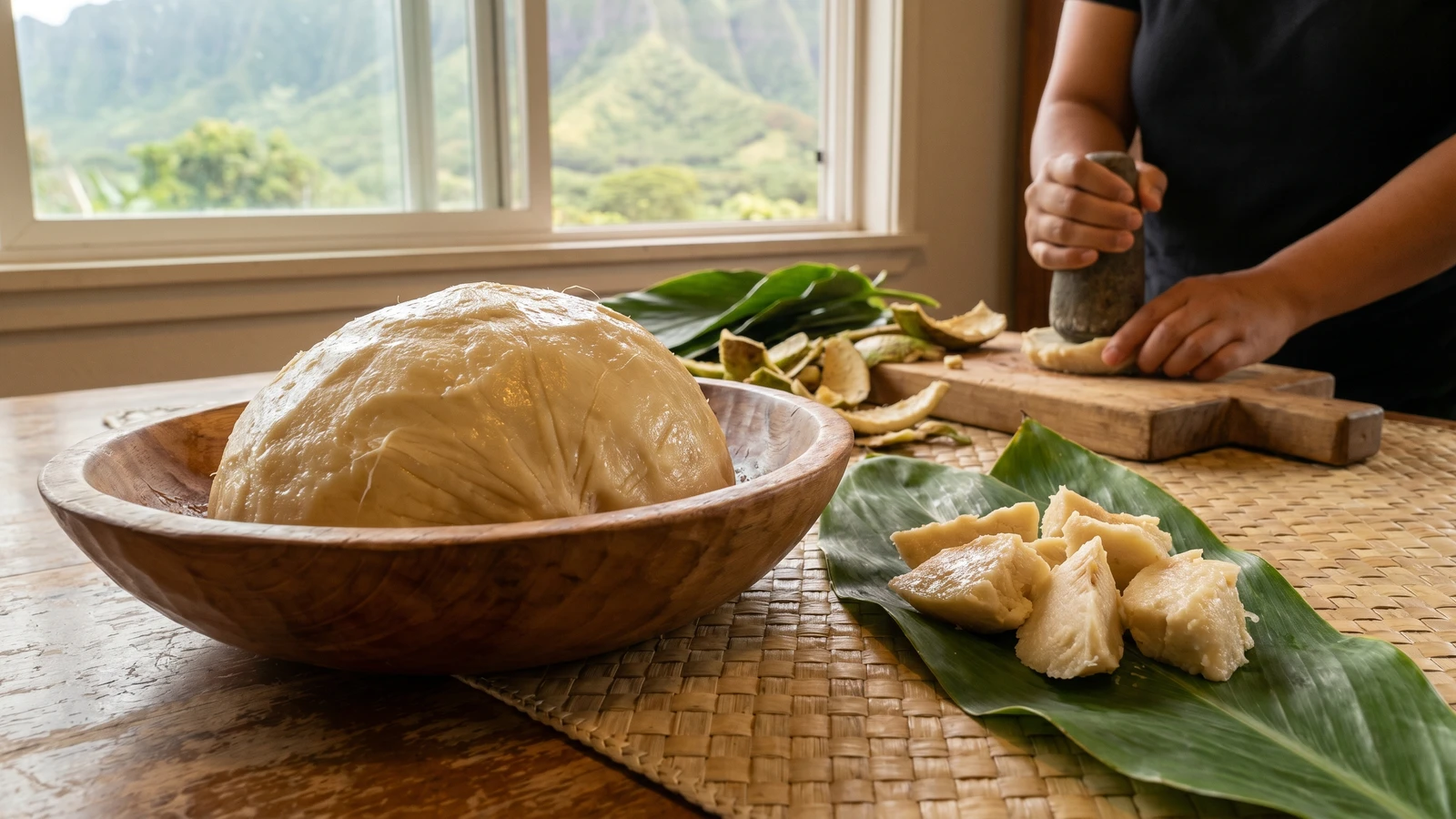
Hawaiian ʻulu cooked until tender, peeled while warm, and pounded dense and smooth into paʻiʻai, the thick stage before poi ʻulu, simple enough for a weeknight and old enough for the canoe.
The canoe brought more than people. It brought the plants that could make a home: kalo, ʻulu, ʻuala, niu, maiʻa. One ocean, one canoe, one root, yeah? In Hawaiʻi, ʻulu, breadfruit, stands beside kalo, taro, as a deep food, a starch that fed chiefs and children both when the land was allowed to feed its own people.
My hands learned pounding from kalo first, at the papa kuʻi ʻai, the wooden poi board, with the pōhaku kuʻi ʻai, the stone pounder. But ʻulu has its own mind. Steam it or roast it until the center gives all the way through, then peel it warm, scrape out the core, and pound while it's still soft enough to listen. If you wait too long, it firms up and starts talking back. No blame the ʻulu. You made it wait.
This is Hawaiian ʻulu paʻiʻai, dense and smooth, the thick stage before poi ʻulu, breadfruit poi. The cousins know the tree too: ʻuru in Tahiti and the Marquesas, mei in parts of the old eastern voyaging world, kuru in the Cook Islands. Some islands steam it, some bake it, some pound it with coconut, some ferment it against scarcity. Same canoe crop, different hands.
Bring it forward without making it precious. Use a steamer basket or a covered pot. Use a heavy mortar if you don't have the board and stone. Eat it with kālua puaʻa, laulau, grilled fish, stew, or a plate lunch with whatever get. Deep food is not fancy. It's family food when the relationship is kept.
Breadfruit is one of the great Polynesian canoe crops, carried east through the voyaging world and especially associated in Hawaiʻi with traditions of Marquesan introduction and later chiefly planting. In 1792, Captain William Bligh's HMS Providence stopped in Tahiti to collect ʻuru, breadfruit, for transport to the Caribbean, a colonial story that made the tree famous abroad while often forgetting the island people who had already grown, cooked, pounded, and preserved it for generations. In Hawaiʻi today, ʻulu has returned as a food-sovereignty crop, standing beside kalo and ʻuala in the repair of deep food, not mission food.
Quantity
1 (about 2 1/2 to 3 pounds)
Quantity
1 to 2 cups
as needed for steaming and pounding
Quantity
1/2 teaspoon
Quantity
1 tablespoon
for your hands and tools
| Ingredient | Quantity |
|---|---|
| mature firm ʻulu (breadfruit) | 1 (about 2 1/2 to 3 pounds) |
| wateras needed for steaming and pounding | 1 to 2 cups |
| paʻakai (sea salt) (optional) | 1/2 teaspoon |
| coconut oil or neutral oil (optional)for your hands and tools | 1 tablespoon |
Choose a mature firm ʻulu, green to yellow-green, heavy for its size, with a little latex at the stem and no sour smell. For paʻiʻai you want starch, not dessert. If it's soft and fragrant like ripe fruit, save that one for baking sweet or frying. Eat what you have, but ask the ʻulu what job it's ready for.
Rinse the ʻulu, cut off the stem end, and quarter it through the core. Set the pieces in a steamer basket over simmering water, cover tight, and cook 45 to 60 minutes, until a knife slides into the thickest part with no hard white resistance. The flesh should turn creamy yellow and smell warm, nutty, and clean.
Let the quarters cool just enough to handle, then peel away the skin and cut out the spongy core. Work while the ʻulu is still warm. That warmth is your helper, because the starch is relaxed and ready to smooth out under the stone.
Set the warm ʻulu on a papa kuʻi ʻai, a poi board, or in a heavy mortar. Wet the pōhaku kuʻi ʻai, the poi pounder, or pestle, and pound in steady strokes, folding the pieces back into themselves as they break down. At first it crumbles and pushes back. Keep going. It will gather.
Dip your fingers or pounder in water a little at a time, only enough to help the ʻulu turn smooth and pull together. Add the paʻakai if you want it. The paʻiʻai is ready when it holds as one dense, glossy mass, with no dry chunks hiding inside and no water pooling around it.
Oil your hands lightly if the ʻulu is sticking, shape it into a mound or thick slab, and serve warm or room temperature. Tear pieces by hand, or slice it for the table. It belongs beside salty meats, fish, greens, coconut-rich dishes, or whatever your house is eating that day. No need make it fancy.
1 serving (about 220g)
Culinary guides, cultural storytelling, and the editorial depth that makes cooking meaningful.
Discover Culinary ExplorerChef Makoa
Whole Hawaiian ʻuala baked in embers or a hot oven until the skins char and the flesh goes honey-soft, finished plain with paʻakai so the canoe crop tastes like itself.
Chef Makoa
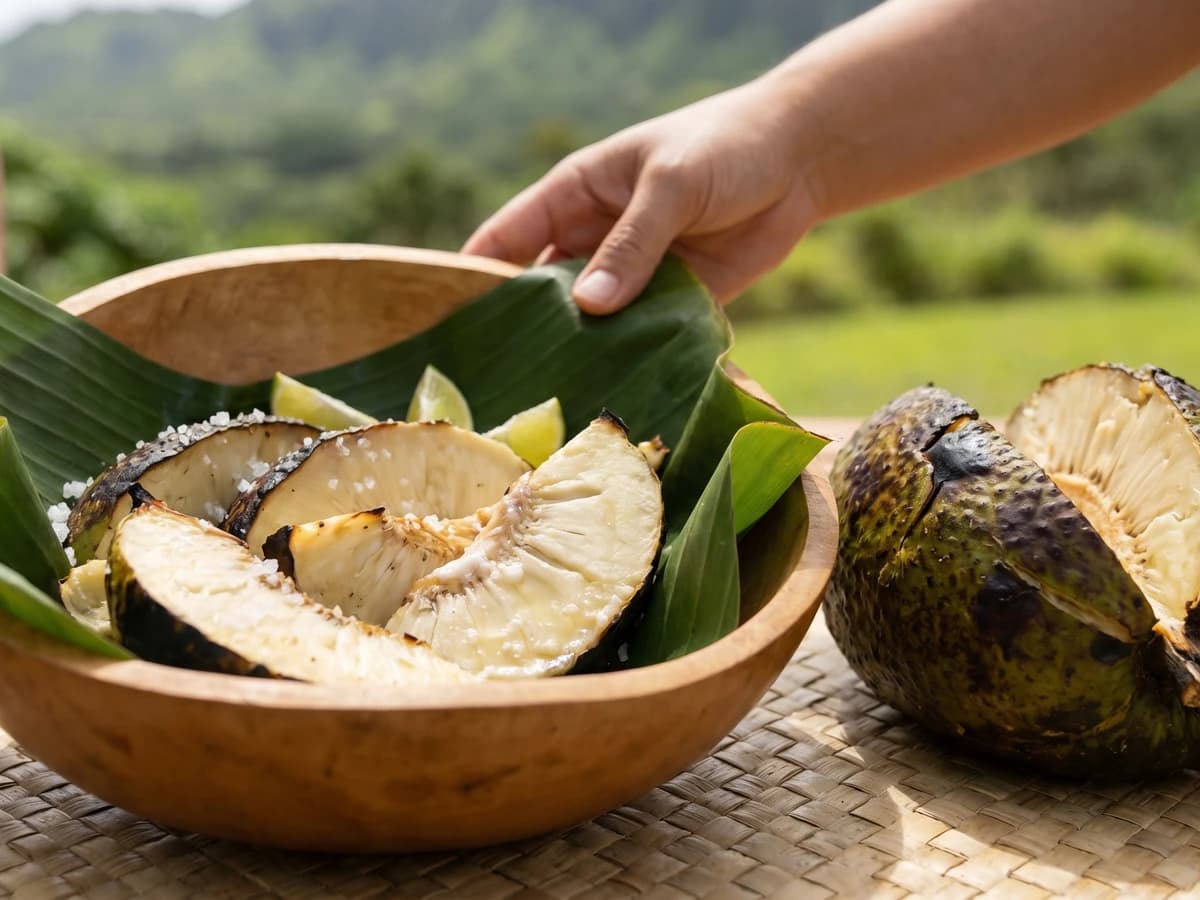
Hawaiʻi's ʻulu, breadfruit, roasted whole until the skin blackens and the inside turns soft and bread-like, the old canoe crop made real for a weeknight oven.
Chef Makoa
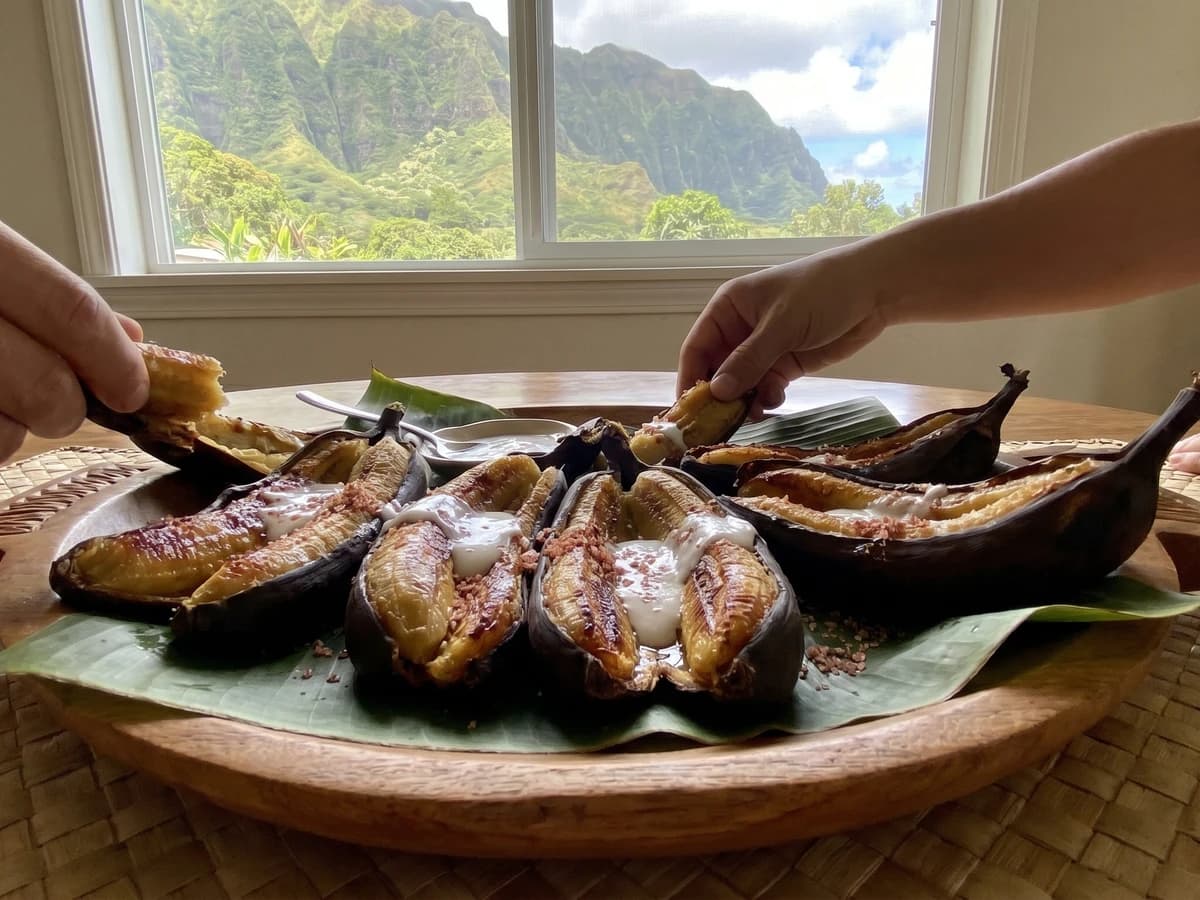
Firm Hawaiian maiʻa baked in its own skin until the starch relaxes into quiet sweetness, split open with coconut cream and paʻakai, a canoe-crop side for weeknight rice or a lūʻau table.
Chef Makoa
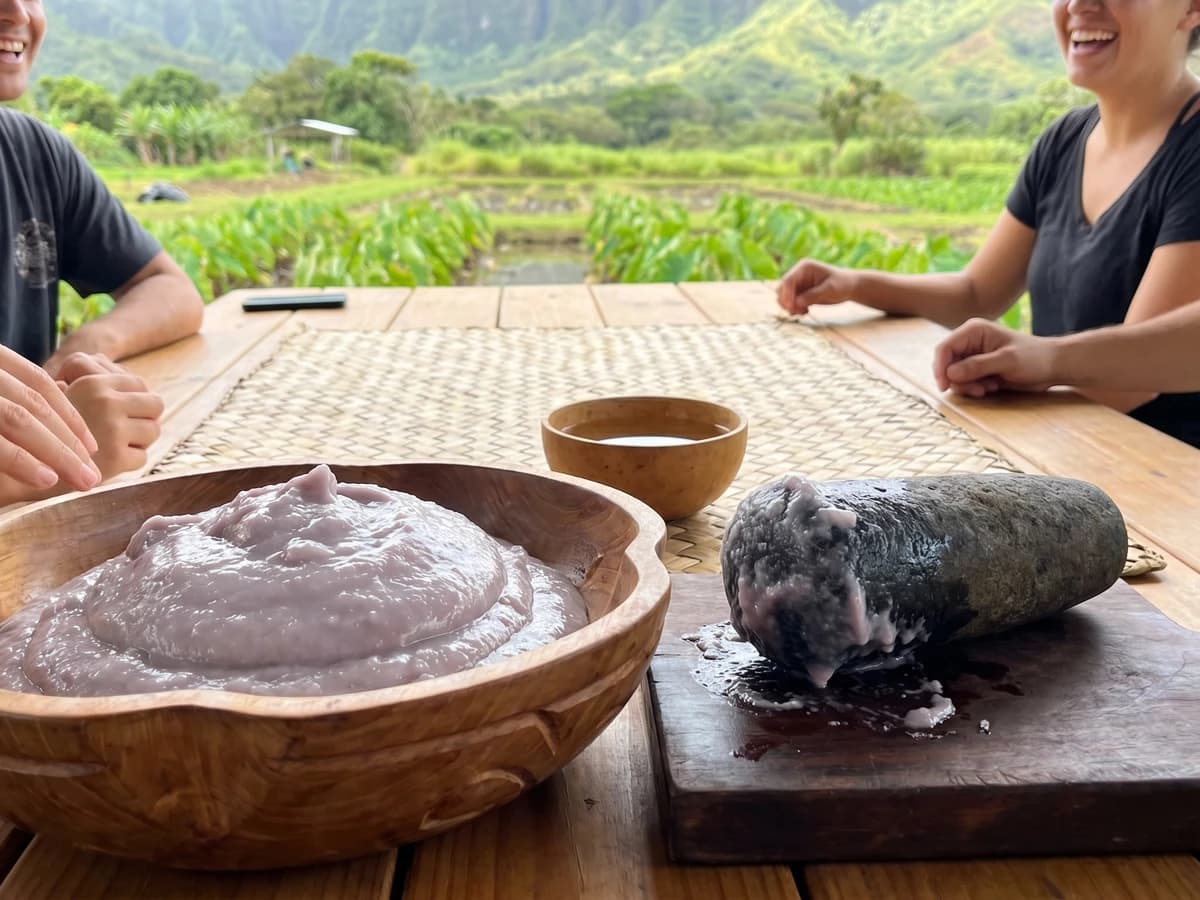
Hawaiian paʻiʻai is kalo steamed soft, cleaned, and pounded by hand until it shines, thick enough to lift from the stone, ready to eat as is or loosen into poi.