
Chef Makoa
Hawaiʻi Local Pickled Mango with Li Hing Mui (Salted Plum Powder)
Hard green mango from a Hawaiʻi backyard, sliced thick and cured in vinegar, salt, sugar, and red li hing mui until it snaps tart, salty, sweet, and ready for the fridge.
A cooking platform built around craft, culture, and the stories behind what we eat.
Created by
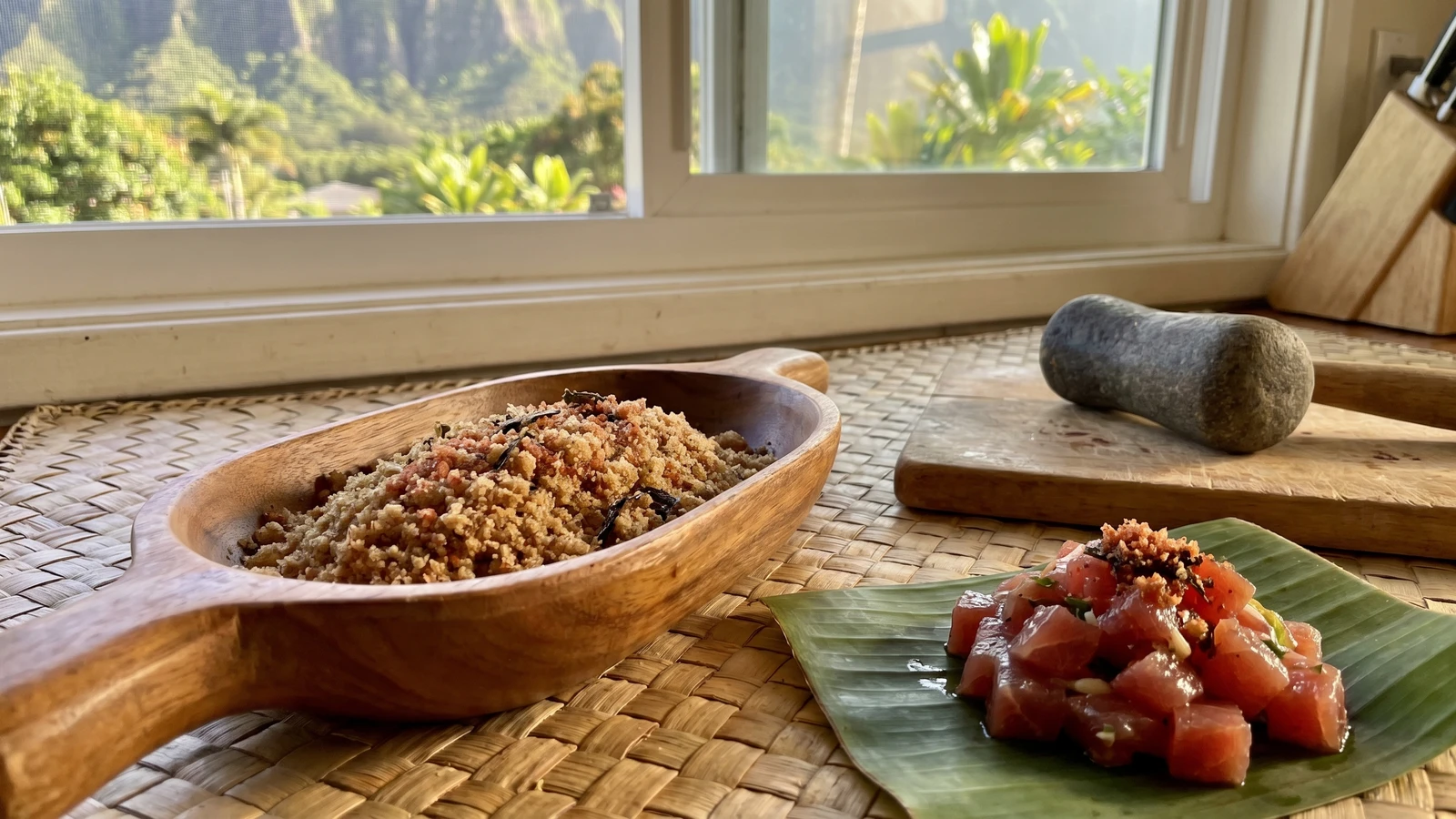
Roasted kukui nut pounded soft with paʻakai ʻalaea, the salty, oily Hawaiian relish that makes poke taste like home and carries the old hand into a weeknight kitchen.
My kumu used to say the smallest things on the table can carry the heaviest memory. ʻInamona is Hawaiian, from my home waters, kukui nut roasted and pounded with paʻakai ʻalaea, the red Hawaiian sea salt colored with iron-rich clay. It looks humble, almost like wet sand, but one pinch in poke and the whole fish stands up straighter.
Kukui, the candlenut tree, came with the old people in the canoe. The nut gave light, oil, medicine, and seasoning, so you don't treat it like some background crunch. You roast it fully because raw kukui can hurt you, then you pound it while it's still willing, until the oil comes out and the salt disappears into it. That's the why behind the method: roast for safety and depth, pound for the oil and the relationship.
Across the Triangle, every island has its own hand with nuts, oil, salt, and reef food, but ʻinamona belongs to Hawaiʻi. It sits beside poke the way Tahiti's ʻia ota sits in coconut milk and lime, the way Sāmoa's oka takes its own bowl, the way Tonga's ʻota ʻika carries the same fish another way. Same fish, different bowl. This little relish is one Hawaiian answer.
Use it on poke, yes, but don't make it precious. Sprinkle it over hot rice, steamed ʻulu, sweet potato, grilled fish, or a plate lunch when that's what you have. Eat what you have. Just keep the kukui cooked, the salt honest, and the hand gentle.
Kukui was one of the canoe plants carried into Hawaiʻi by Polynesian voyagers, valued for light, oil, dye, medicine, and food seasoning. ʻInamona became especially tied to Hawaiian poke, where roasted kukui and paʻakai season raw fish with limu and, in modern bowls, often shoyu and green onion. Because kukui is purgative and unsafe raw, the old roasting step is not decoration; it is the line between food and harm.
Quantity
1 cup
raw and unseasoned
Quantity
1 1/2 teaspoons
plus more to taste
Quantity
1 teaspoon
finely chopped
Quantity
1 small
seeded and minced
| Ingredient | Quantity |
|---|---|
| shelled kukui nuts or candlenutsraw and unseasoned | 1 cup |
| paʻakai ʻalaea (Hawaiian red sea salt)plus more to taste | 1 1/2 teaspoons |
| dried limu kohu or ogo (optional)finely chopped | 1 teaspoon |
| Hawaiian chile pepper or bird chile (optional)seeded and minced | 1 small |
Set the oven to 350F and spread the kukui nuts in a single layer on a dry rimmed baking sheet. No oil. Kukui carries its own oil, and plenty of it.
Roast 12 to 15 minutes, shaking the pan once or twice, until the nuts turn deep golden to light brown, smell rich and nutty, and look dry on the surface with a slight oil sheen. They must be cooked through. Raw or under-roasted kukui can make you sick, so don't rush this part.
Let the roasted kukui cool until warm enough to handle. Break one open. The inside should be golden, not chalky white, and the smell should be warm and oily, never sharp. That's how you know the roast went all the way through.
Move the warm nuts to a mortar, then add the paʻakai ʻalaea. Pound slow until the nuts crumble, then keep going until they turn moist, sandy, and slightly pasty as the oil comes out. You're not making nut butter. You want a loose relish that clings to your fingers and falls in soft crumbs.
Fold in the limu or chile if you're using them, then taste a tiny pinch. It should be salty, rich, and roasted, with the kukui oil softening the edge of the paʻakai. Add more salt only a pinch at a time. ʻInamona is powerful. Let it speak, no need let it shout.
Use right away, or pack into a clean jar and refrigerate. Sprinkle lightly over poke, hot rice, steamed ʻulu, poi, grilled fish, or vegetables. A little is enough. This is a keeper's seasoning, not a heap-on relish.
1 serving (about 7g)
Culinary guides, cultural storytelling, and the editorial depth that makes cooking meaningful.
Discover Culinary ExplorerChef Makoa
Hard green mango from a Hawaiʻi backyard, sliced thick and cured in vinegar, salt, sugar, and red li hing mui until it snaps tart, salty, sweet, and ready for the fridge.
Chef Juliette
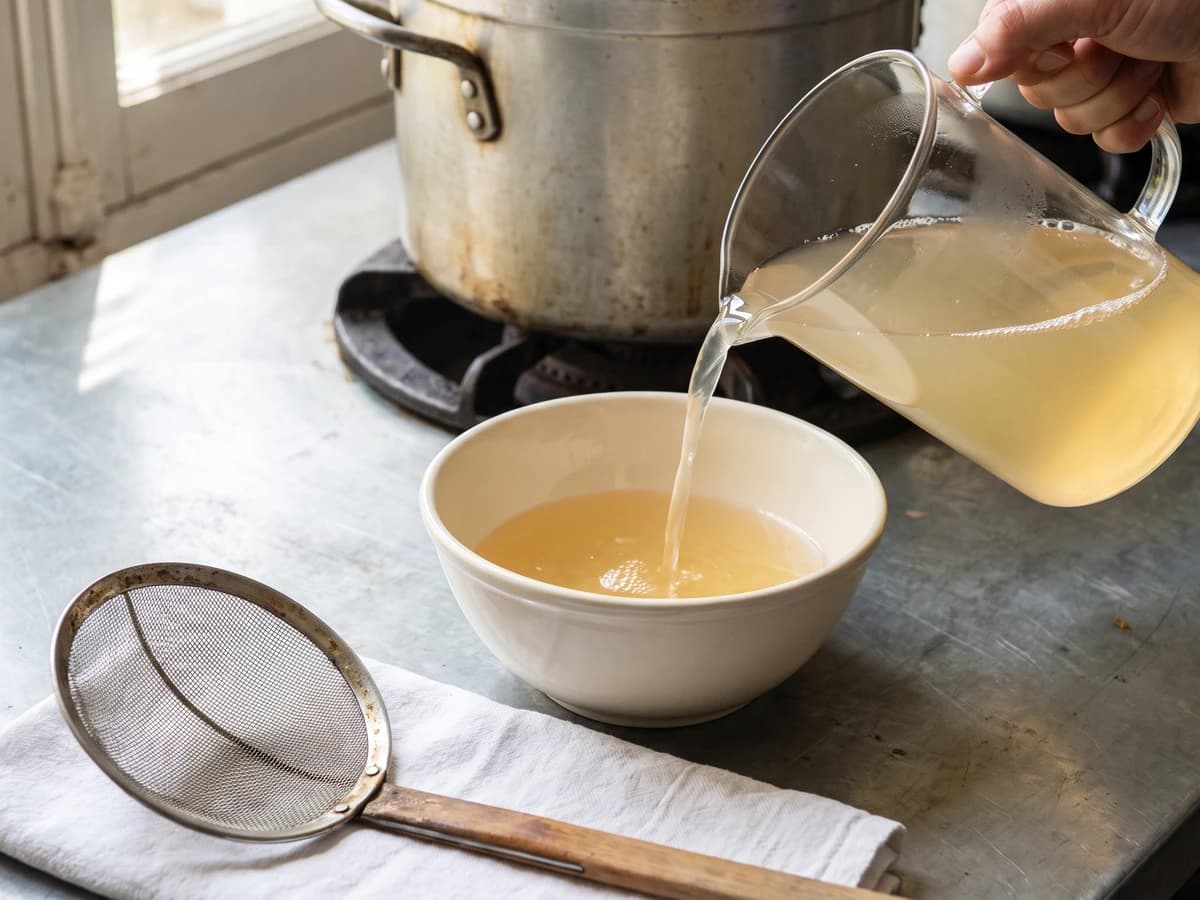
Beef shin, lean beef, and fowl begin in cold water and rise slowly toward a tremble. Skim before the boil, and you learn the quiet discipline that gives every clear French broth its backbone.
Chef Juliette
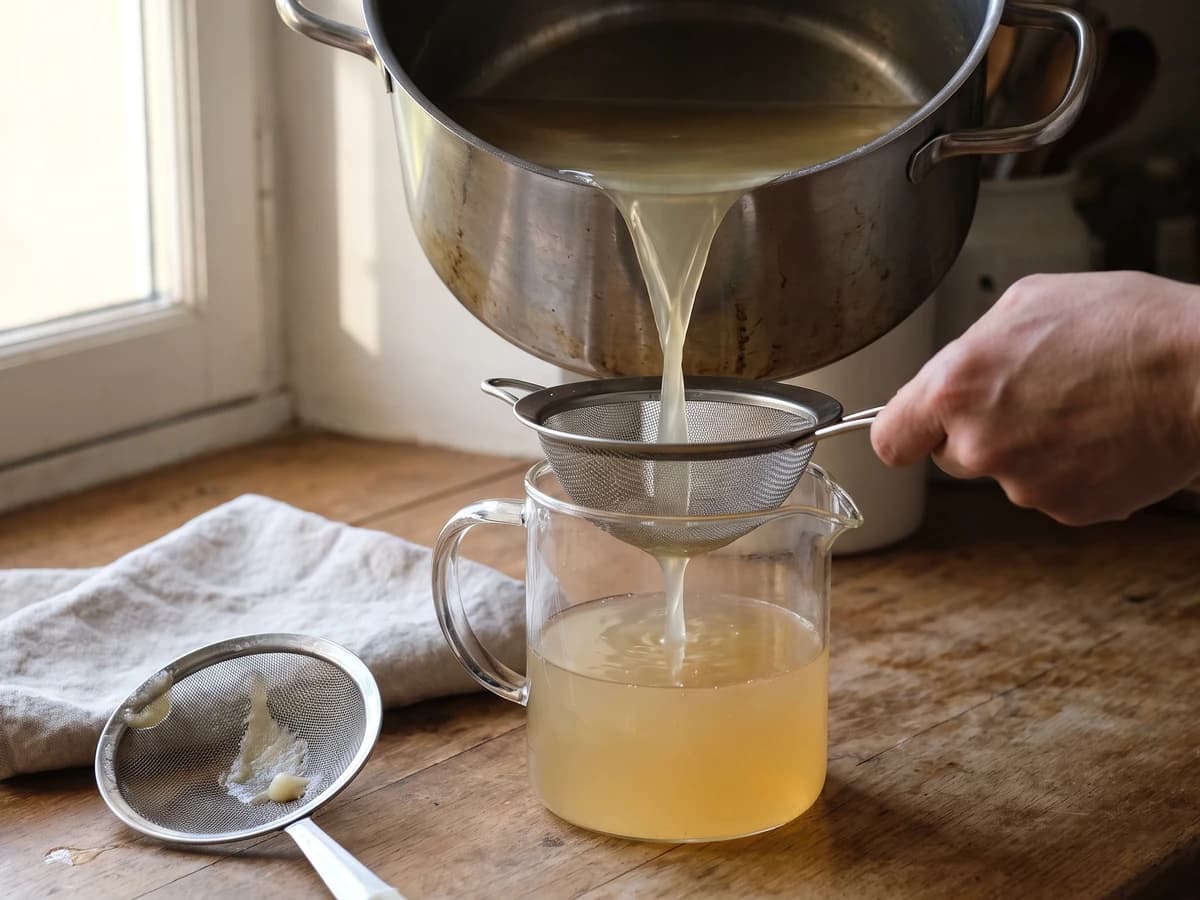
Break the veal bones small, then give them eight hours at a bare tremble. This pale, gelatinous fond becomes the quiet foundation beneath velouté, blanquette, and every sauce that must stay light.
Chef Juliette
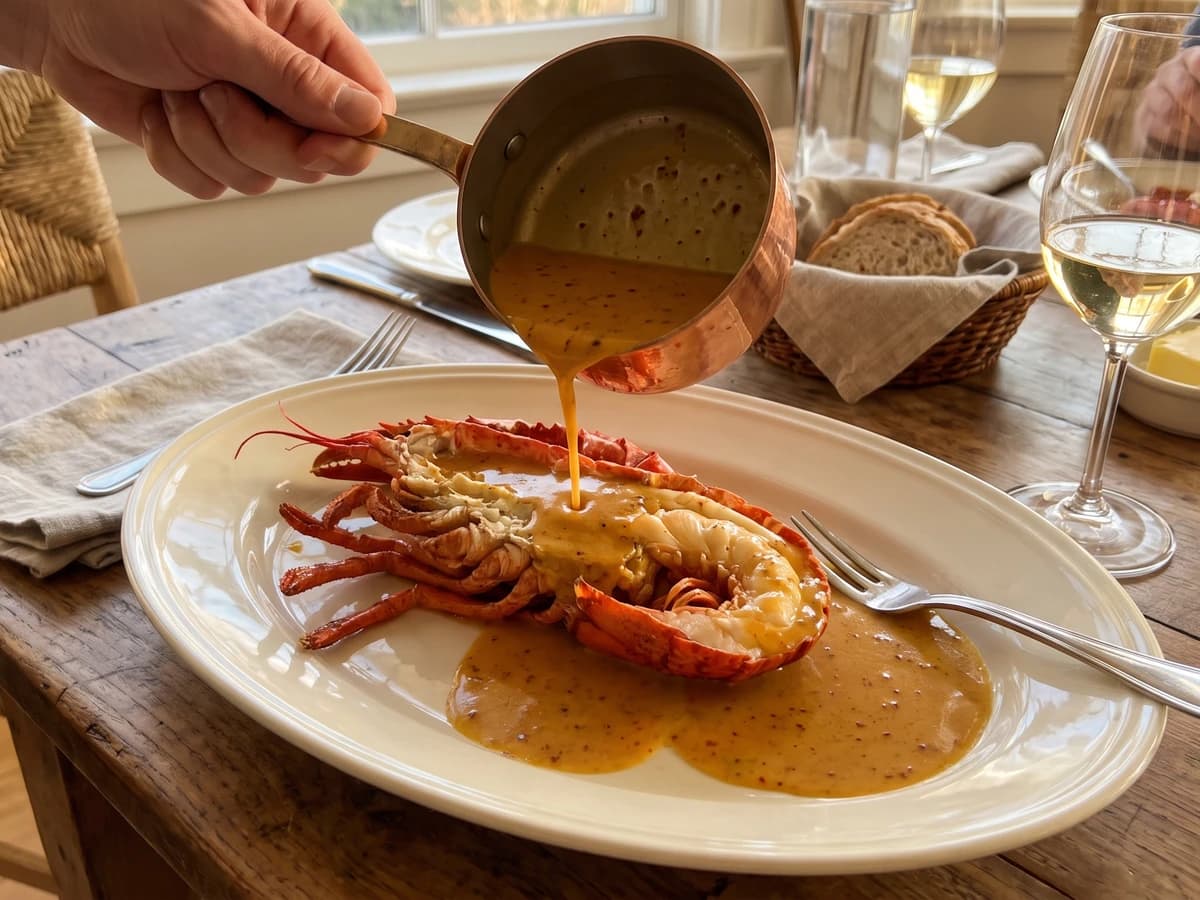
Sauce Orientale concentrates lobster-rich American Sauce with curry, then folds in cream away from the fire: a glossy, gently spiced derivative made for lobster, crayfish, and firm fish.