
Chef Makoa
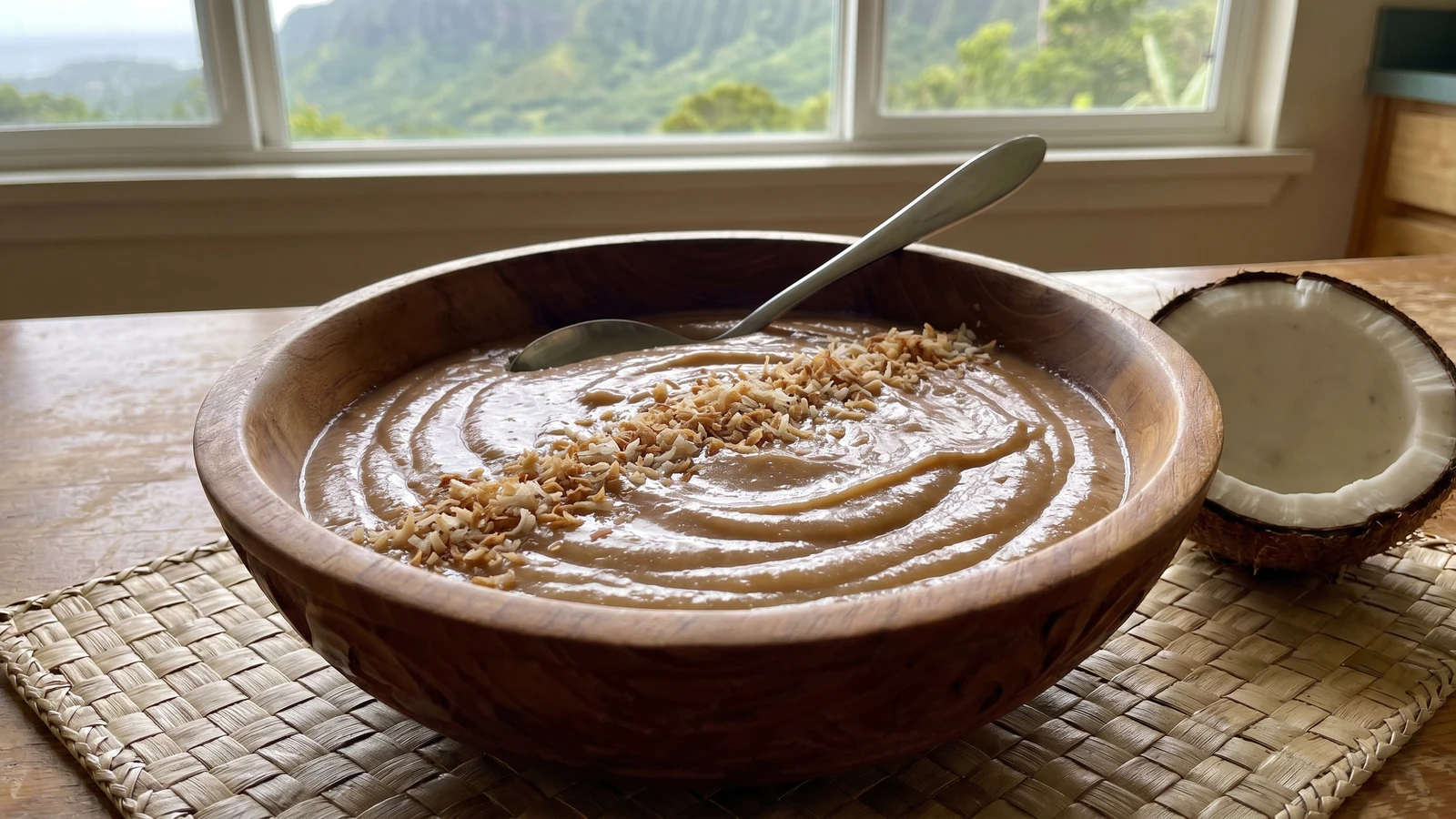
Baked ʻUlu Coconut Pudding (Hawaiian Ripe Breadfruit Custard)
Very ripe Hawaiian ʻulu, the canoe-crop breadfruit, mashed soft with coconut milk and sugar, then baked until the middle sets like a quiet custard.
A cooking platform built around craft, culture, and the stories behind what we eat.
Created by
Hawaiʻi's koʻele pālau turns steamed ʻuala into a soft coconut-cream pudding, sweet but grounded, the canoe crop brought forward for a celebration table or a quiet bowl at home.
My kumu used to say, eat what you have, and on the dry side of Hawaiʻi, plenty of times what you had was ʻuala, the sweet potato. Not the loud sweet kind buried under marshmallow. The old kind. The canoe crop kind. Koʻele pālau belongs to Hawaiʻi, and it tastes like a people who knew how to feed themselves from lava ground, wind, rain, and patience.
ʻUala is kin too, not the elder brother like kalo, but still carried close in the canoe and planted where wet loʻi couldn't always go. You steam it until it gives up clean under the fork, then mash it while warm and fold in coconut cream until it turns glossy and smooth. That's the why under the method: the warm ʻuala drinks the cream better, and the pudding comes together soft, not pasty. No rush it. No beat it angry. Let the root come around.
Across the Triangle, the cousins know this same move: a canoe starch cooked soft, sweetened, enriched with coconut. The Cook Islands pound and enrich their poʻe, Tahiti has pōpoi and sweet preparations of ʻuru, breadfruit, and Sāmoa and Tonga keep coconut close to the table in ways both everyday and chiefly. This one is Hawaiian. Same ocean, different bowl.
Serve it warm, chilled, or room temperature, in a wooden ʻumeke, a bowl, or straight from the fridge after the kids have been circling it all day. Deep food is not fancy. It's not precious. It's the old knowledge sitting easy in a real kitchen.
ʻUala, the Hawaiian sweet potato, was one of the canoe crops carried and spread through Polynesia before European contact, and in Hawaiʻi it became especially important in dryland systems such as Kona, Kohala, and parts of Maui where flooded kalo loʻi were not always possible. Koʻele pālau comes from that older food grammar: cooked sweet potato mashed with coconut cream into a dessert before plantation-era sweets and before haupia became the better-known party pudding. The dish also points to a wider Polynesian pattern, where taro, breadfruit, banana, and sweet potato were cooked, pounded, or softened with coconut into foods that fed both ceremony and ordinary days.
Quantity
2 pounds
scrubbed, peeled after cooking if desired
Quantity
1 cup
or thick canned coconut cream
Quantity
1/3 cup
plus more to taste
Quantity
1/2 teaspoon
Quantity
1 teaspoon
grated
Quantity
1 teaspoon
optional contemporary pantry addition
Quantity
2 to 4 tablespoons
only if needed to loosen
Quantity
2 tablespoons
for serving
| Ingredient | Quantity |
|---|---|
| Hawaiian ʻuala, sweet potatoesscrubbed, peeled after cooking if desired | 2 pounds |
| fresh coconut creamor thick canned coconut cream | 1 cup |
| brown sugar, coconut sugar, or raw sugarplus more to taste | 1/3 cup |
| fine sea salt | 1/2 teaspoon |
| fresh ginger (optional)grated | 1 teaspoon |
| vanilla extract (optional)optional contemporary pantry addition | 1 teaspoon |
| warm water or coconut milk (optional)only if needed to loosen | 2 to 4 tablespoons |
| toasted grated coconut (optional)for serving | 2 tablespoons |
Set the whole ʻuala in a steamer basket over simmering water, cover, and cook until a knife slides through the center with no hard heart left, 30 to 35 minutes depending on size. The skin may wrinkle and split a little. Good. The root is telling you it's ready.
Let the ʻuala cool just until your hands can handle it, then slip off the skins. Work while the flesh is still warm, because warm ʻuala takes in coconut cream like dry ground taking rain.
Put the warm ʻuala in a wide bowl and mash with a potato masher until no big lumps remain. For a very smooth pudding, pass it through a ricer or press it with the back of a spoon. Don't whip it hard. Too much beating makes it gluey, and no blame the ʻuala if you rough it up.
Warm the coconut cream gently just until fluid, then fold it into the mashed ʻuala with the sugar, salt, ginger if using, and vanilla if using. Stir until the pudding turns glossy and thick, holding soft waves when you pull the spoon through.
Taste it. If the ʻuala is very dry, fold in warm water or coconut milk one tablespoon at a time until it sits like a soft pudding, not a stiff mash. If your sweet potatoes are already sweet, stop with the sugar where it tastes right. Eat what you have.
Spoon the koʻele pālau into a wooden ʻumeke, a carved Hawaiian bowl, or a plain serving bowl set on lauhala. Smooth the top, scatter toasted coconut if you like, and let it rest 10 minutes so the cream settles into the root. Serve warm, room temperature, or chilled.
1 serving (about 205g)
Culinary guides, cultural storytelling, and the editorial depth that makes cooking meaningful.
Discover Culinary ExplorerChef Makoa
Very ripe Hawaiian ʻulu, the canoe-crop breadfruit, mashed soft with coconut milk and sugar, then baked until the middle sets like a quiet custard.

Chef Makoa
A chewy, golden Hawaiʻi Local square from mochiko, butter, and coconut milk, baked in one pan until the edges pull crisp and the middle stays tender.

Chef Makoa
Soft squares of Hawaiʻi Local chichi dango, pale pink and white from the mochi-shop counter, baked with mochiko, milk, and coconut milk, then dusted until every sticky edge turns friendly.
Chef Makoa
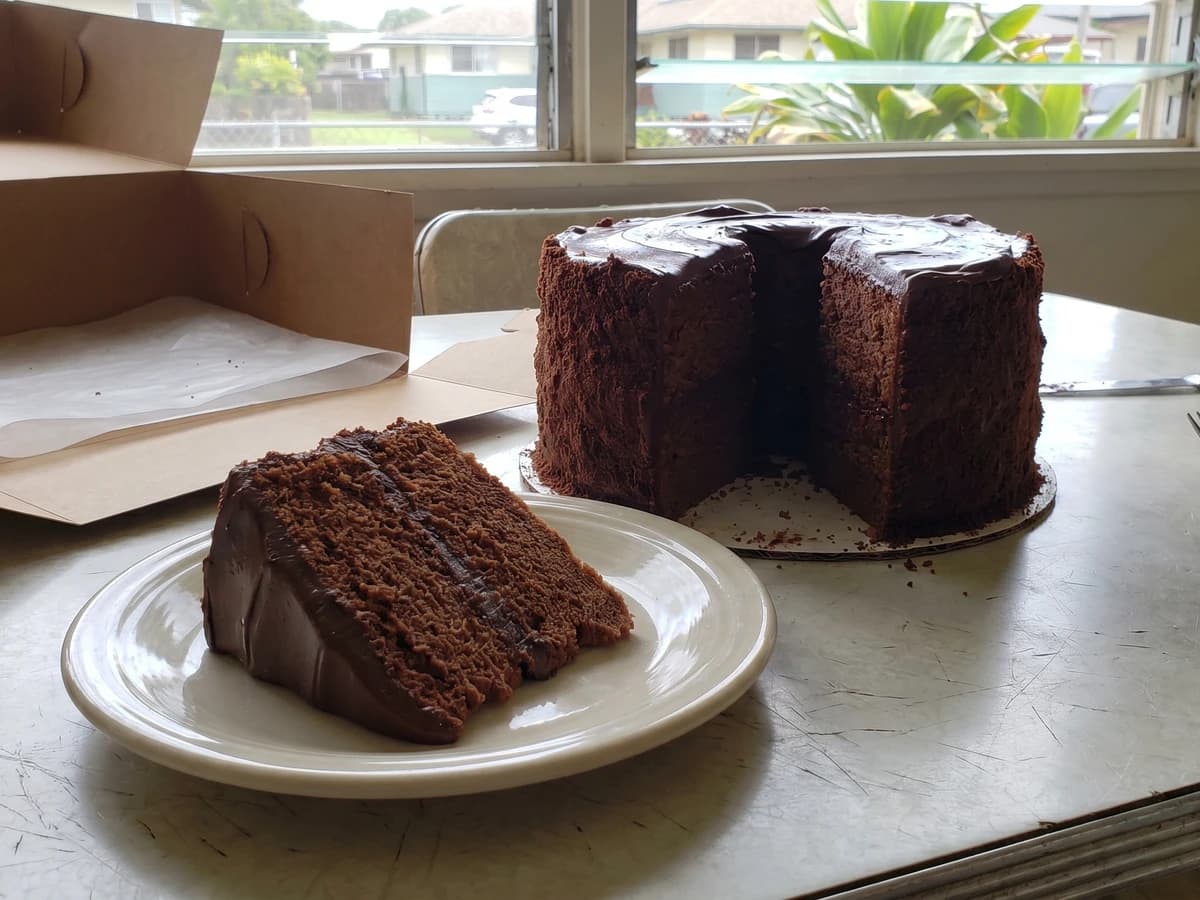
A Hawaiʻi Local chocolate-on-chocolate birthday cake: soft chiffon, cooked pudding icing, and cake crumbs pressed around the sides like the bakery case knew you were coming.