Chef Makoa
Baked ʻUlu (Hawaiian Roasted Breadfruit)
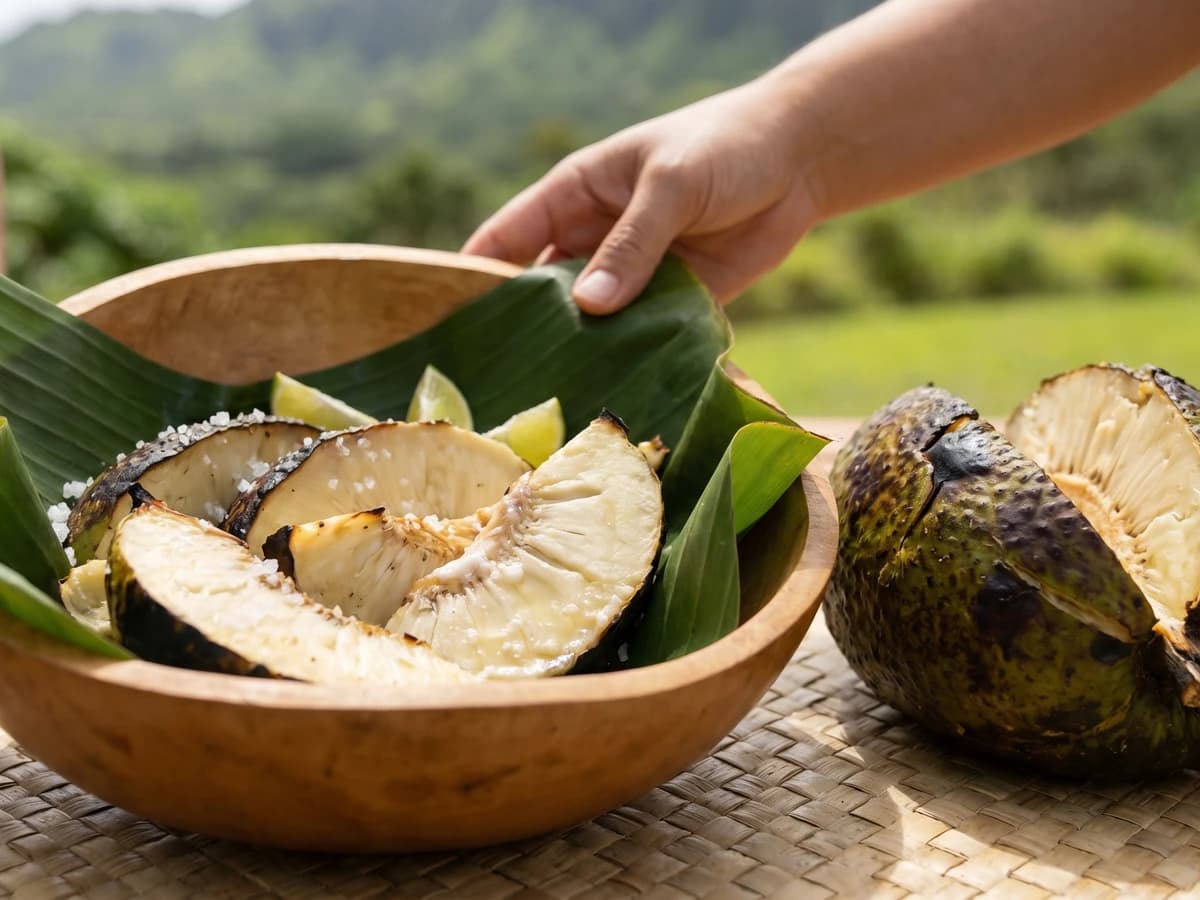
Hawaiʻi's ʻulu, breadfruit, roasted whole until the skin blackens and the inside turns soft and bread-like, the old canoe crop made real for a weeknight oven.
A cooking platform built around craft, culture, and the stories behind what we eat.
Created by
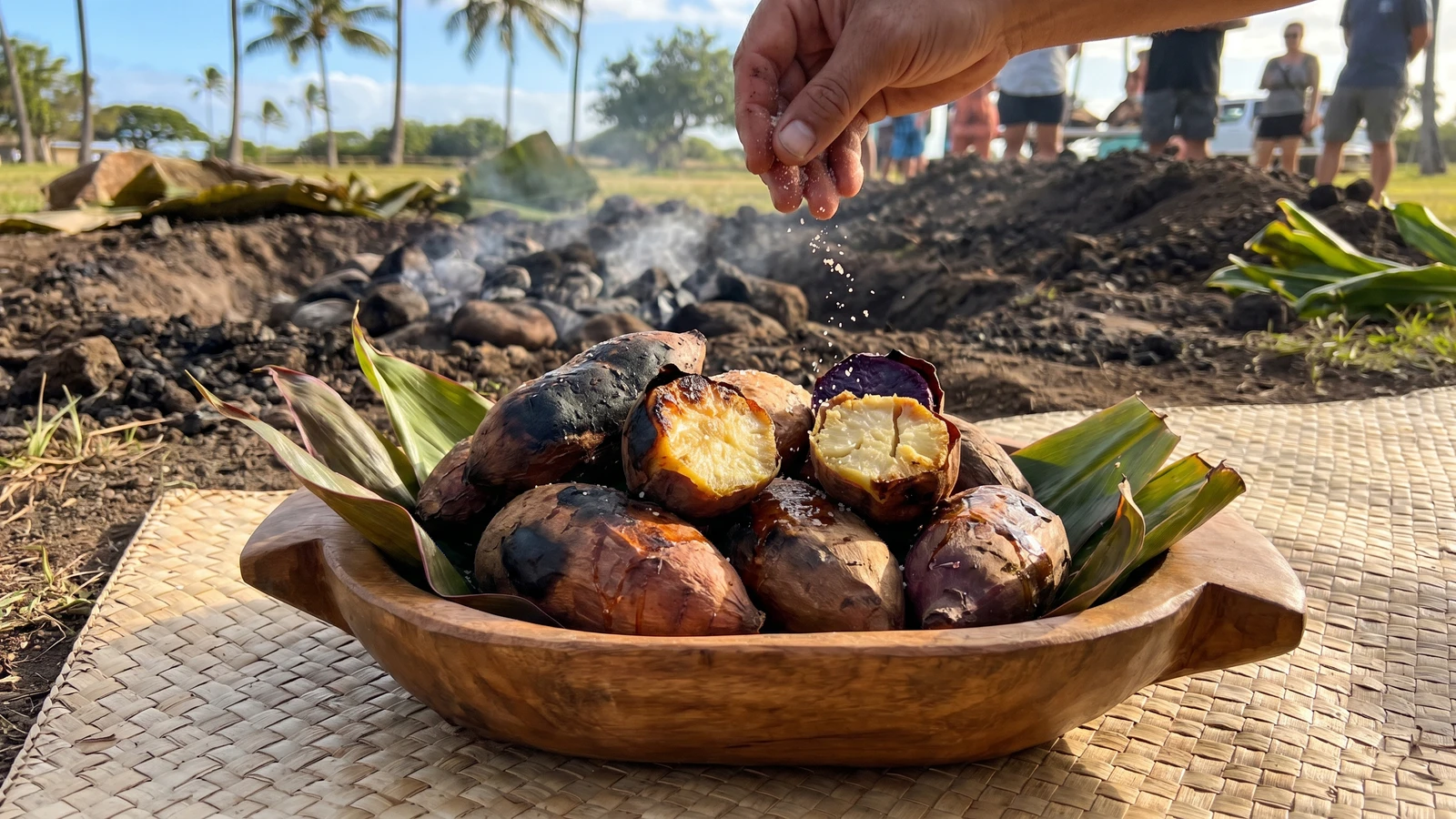
Whole Hawaiian ʻuala baked in embers or a hot oven until the skins char and the flesh goes honey-soft, finished plain with paʻakai so the canoe crop tastes like itself.
My kumu used to say, Eat what you have, and he meant the food already holding your ground. This one belongs to Hawaiʻi: ʻuala, the Hawaiian sweet potato, baked whole in the embers until the skin blackens and the inside turns honey-soft. Kalo may be Hāloa, the elder brother we sit down with in the loʻi, the irrigated taro patch, but ʻuala is kin from the dry side, from the māla, the cultivated garden, feeding families where the water was too precious or the land too lean for wet taro.
My own hands learned kalo first, standing in the loʻi on windward Oʻahu, but ʻuala teaches a different kind of respect. You don't pound it. You don't dress it up. You tuck it near clean coals, let the skin take the scorch, and wait until the root gives itself over. The outside looks rough, yeah, but inside it goes soft, sweet, and shining. That ugly one might be the best one. No throw out good food.
Across the Triangle, the root changes names and keeps speaking: Sāmoa has ʻumala, Tonga has kumala, Tahiti has ʻumara, the Cook Islands and Aotearoa carry kūmara, Rapa Nui says kumara, and Hawaiʻi says ʻuala. One ocean, one canoe, one root. This is the Hawaiian hand of it, simple as can be, and it carries evidence that our ancestors' ocean was not a wall.
Most of us aren't baking beside an imu, the Hawaiian earth oven, on a weeknight. No problem. Use clean embers if you have them, or a hot oven and a cast-iron pan if you don't. Don't peel it first. Don't drown it in sugar. Bake it until your thumb can feel the softness under the skin, split it open, pass the paʻakai, and feed the table.
ʻUala is different from kalo and ʻulu because its older home is the Americas, yet it was established in East Polynesia before European contact, especially in Hawaiʻi, Rapa Nui, and Aotearoa. In Hawaiʻi, dryland systems such as Kona and leeward Maui grew ʻuala where wet loʻi kalo, irrigated taro terraces, could not be built, making it deep food beside kalo and ʻulu rather than mission or plantation food. The cousin names across the Triangle, including Hawaiian ʻuala, Māori kūmara, Rapa Nui kumara, Tahitian ʻumara, Tongan kumala, and Sāmoan ʻumala, keep the memory of movement in the language.
Quantity
3 pounds
small to medium, scrubbed and dried
Quantity
1 teaspoon
for the oven method
Quantity
1 tablespoon
or coarse sea salt, for serving
Quantity
2 to 4
for resting and serving
Quantity
2 tablespoons
for splitting at the table
| Ingredient | Quantity |
|---|---|
| Hawaiian ʻuala (sweet potatoes)small to medium, scrubbed and dried | 3 pounds |
| coconut oil or neutral oil (optional)for the oven method | 1 teaspoon |
| paʻakai ʻalaea (Hawaiian red sea salt)or coarse sea salt, for serving | 1 tablespoon |
| ti leaves (lāʻī) or banana leaves (optional)for resting and serving | 2 to 4 |
| coconut oil or butter (optional)for splitting at the table | 2 tablespoons |
Pick ʻuala that are close in size so they finish together, then scrub them clean and dry the skins well. Leave the skins on. That skin is the little oven each root carries for itself, holding the flesh while the outside chars and the sugars gather inside.
For the ember way, burn clean hardwood or natural lump charcoal down to glowing coals with a soft gray ash over them. No treated wood, no lighter-fluid taste, no rubbish fire. If you're cooking in a kitchen, heat the oven to 425F and set a cast-iron skillet or heavy sheet pan inside to get hot.
Nestle the whole ʻuala at the edge of the embers, not in the wildest center of the fire, and rake a light cover of ash and coals over them. For the oven method, rub the dried skins with the barest film of oil, set them on the hot pan, and leave space between each one. Same patience, different kitchen.
Cook the ʻuala 35 to 60 minutes, turning every 15 minutes in the embers, until the skins are blackened in places, the roots slump a little, and a skewer slides through with no fight. In the oven, bake 45 to 60 minutes, then give them 2 or 3 minutes under the broiler if you want more ember-char on the skin.
Brush off loose ash, then lay the ʻuala on ti leaves, lāʻī in Hawaiian, or banana leaves and let them sit 10 minutes. The rest lets the flesh settle and finish softening. No need fuss with it. The root already did the work.
Split the ʻuala lengthwise with a knife or just press them open with your fingers if the table is family. Finish with a pinch of paʻakai ʻalaea and, if you like, a little coconut oil or butter melting into the orange, cream, or purple flesh. Serve them whole and generous, skins and all if the char tastes good, peeled back if the blackened parts went bitter.
1 serving (about 215g)
Culinary guides, cultural storytelling, and the editorial depth that makes cooking meaningful.
Discover Culinary ExplorerChef Makoa
Hawaiʻi's ʻulu, breadfruit, roasted whole until the skin blackens and the inside turns soft and bread-like, the old canoe crop made real for a weeknight oven.
Chef Makoa
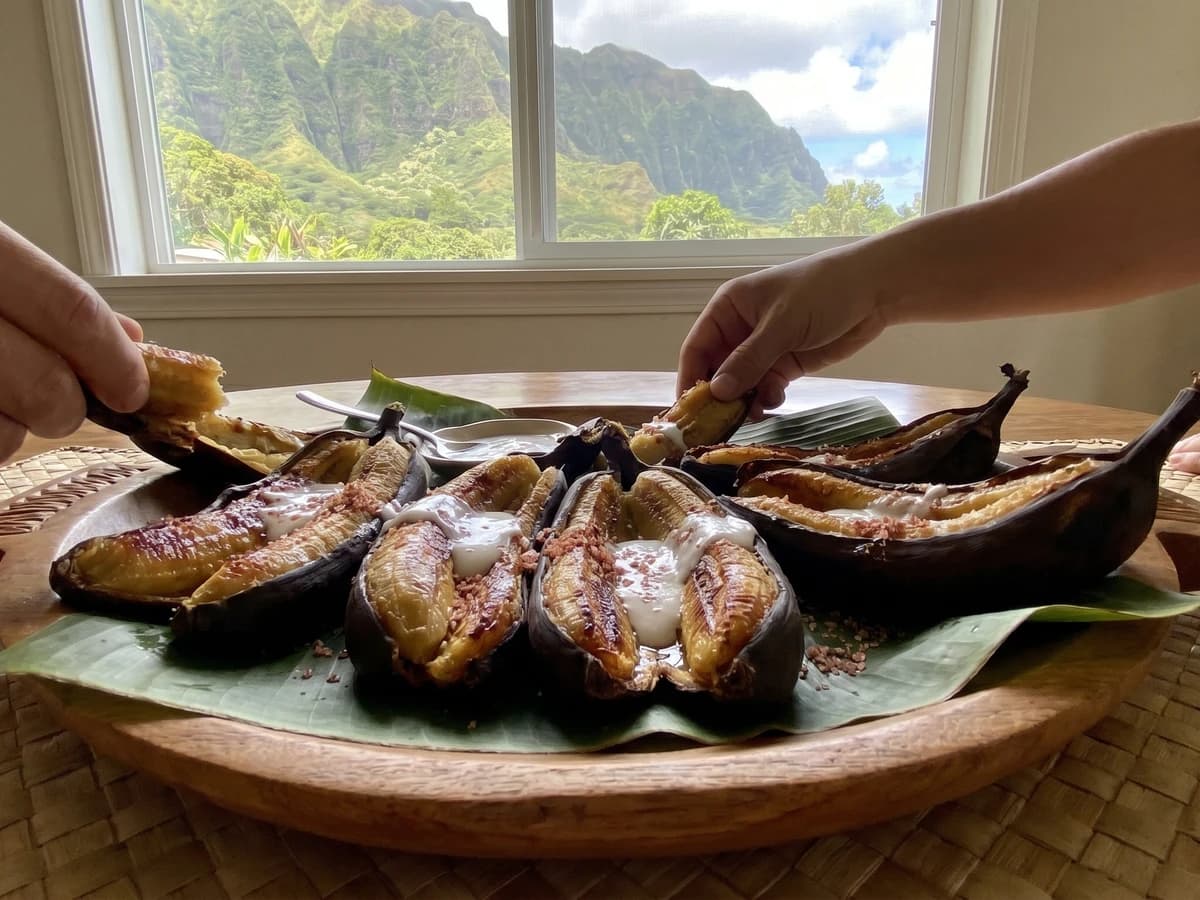
Firm Hawaiian maiʻa baked in its own skin until the starch relaxes into quiet sweetness, split open with coconut cream and paʻakai, a canoe-crop side for weeknight rice or a lūʻau table.
Chef Makoa
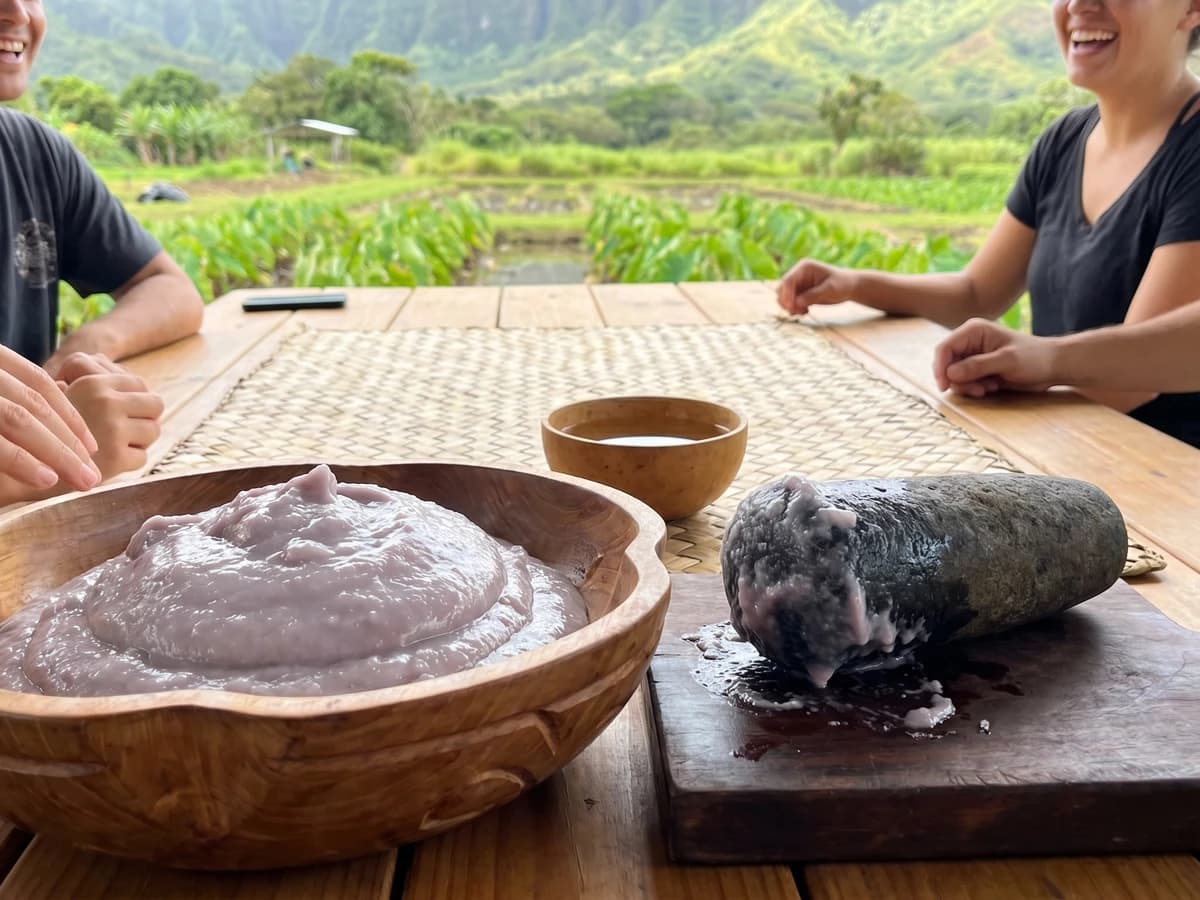
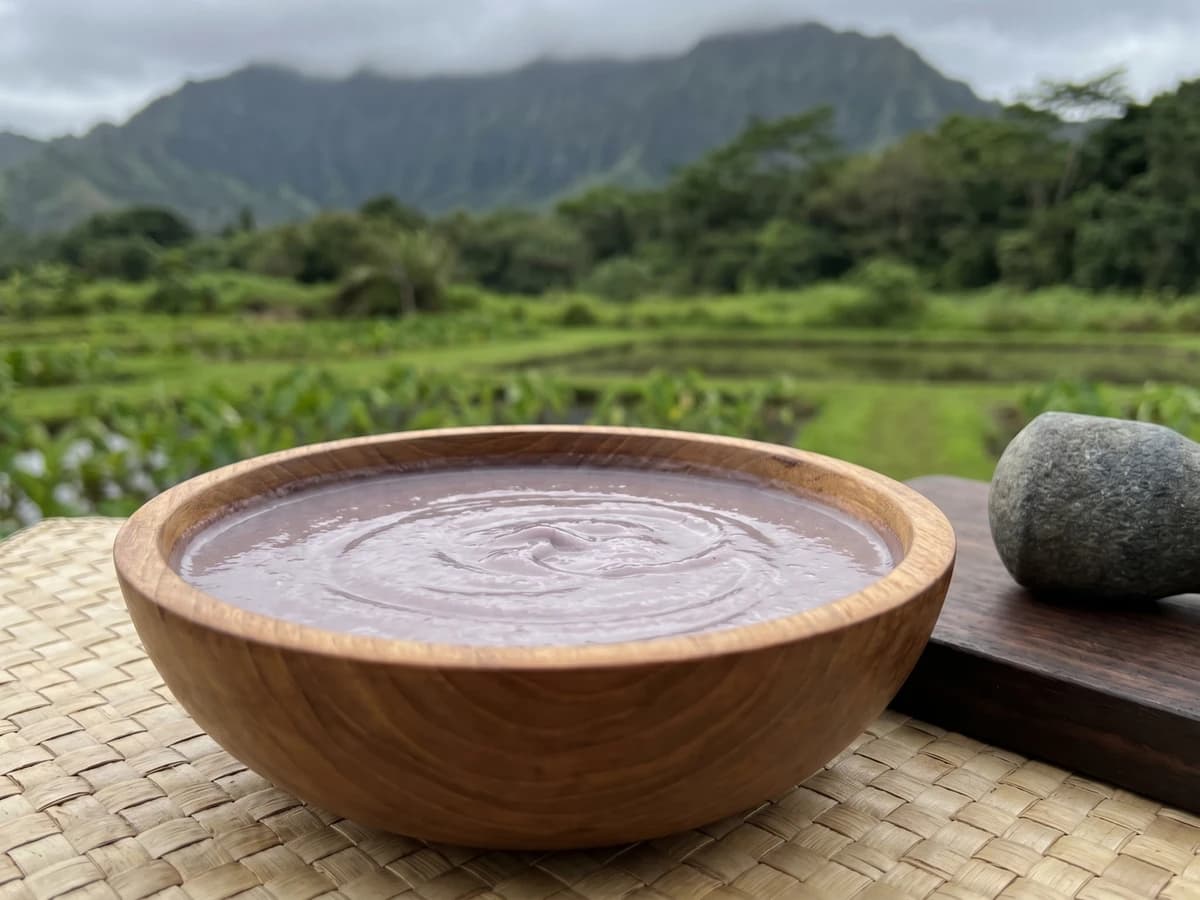
Hawaiian paʻiʻai is kalo steamed soft, cleaned, and pounded by hand until it shines, thick enough to lift from the stone, ready to eat as is or loosen into poi.
Chef Makoa
Fresh Hawaiian poi left to turn ʻawaʻawa, sour, over a few days, tangy and clean from its own kalo life, ready beside fish, kālua puaʻa, laulau, or tomorrow's plate lunch.