Chef Lupita
Acúmara Tatemada al Comal
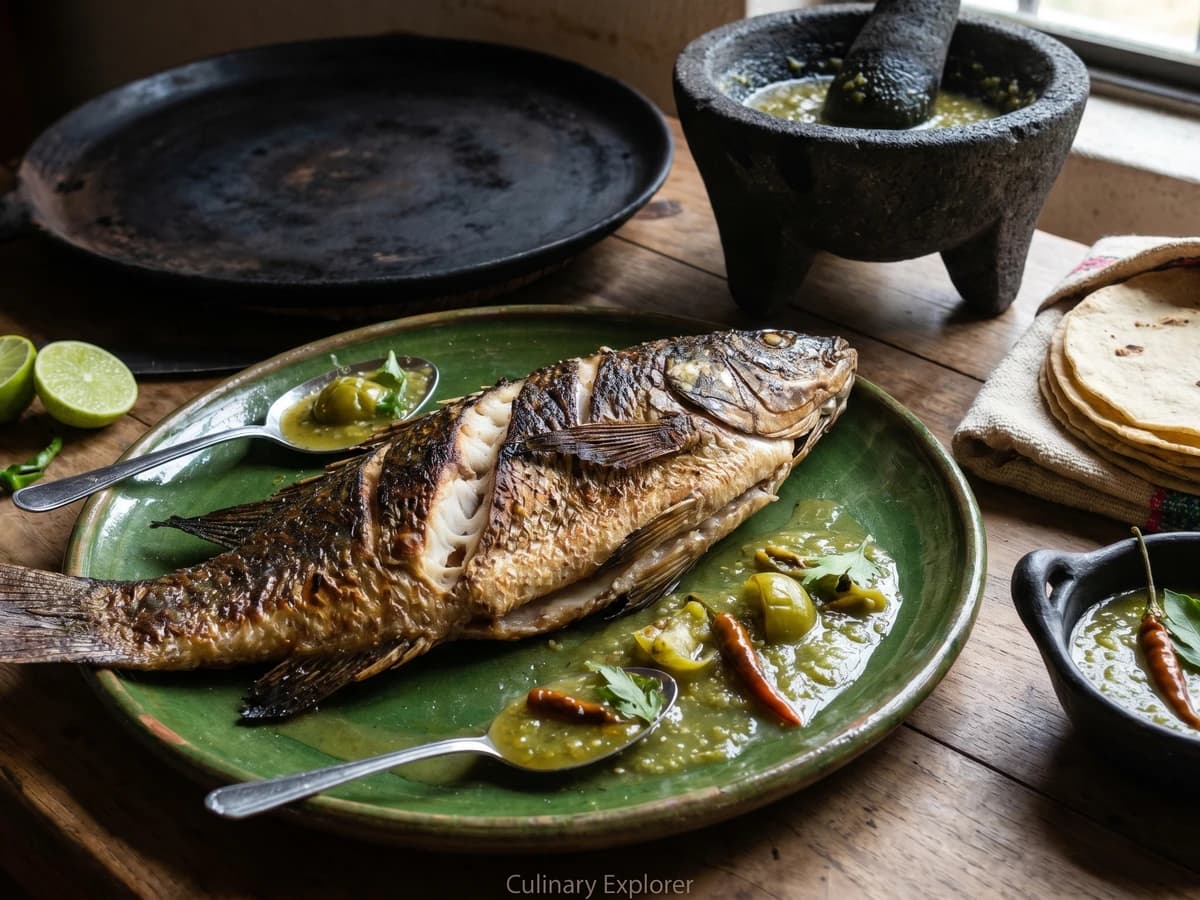
Michoacán's Lake Pátzcuaro acúmara, a whole kurucha from the lago tatemada on a comal de leña and served with chile perón atápakua, corn tortillas, and P'urhépecha discipline.
A cooking platform built around craft, culture, and the stories behind what we eat.

Created by
Michoacán's fresh-corn uchepos, tender from young elote and wrapped in their own husks, served warm with crema, rajas de poblano, and queso fresco from the market table.
Michoacán, especially the P'urhépecha Meseta and the Lake Pátzcuaro region, is where uchepos live. Not in a cold tray as a botana. At lunchtime, warm from the tamalera, opened from their green husks and covered with crema, rajas de poblano, and queso fresco. This is cocina de la milpa, corn speaking for itself.
The ingredient that defines the dish is young elote, tender enough that the kernels still carry their own milk. No masa harina. No dry corn dough pretending to be fresh corn. The women who perfected this, the cocineras tradicionales of Zacán, Janitzio, Cocucho, Cherán, and Uruapan, know by touch when the corn is ready. Too mature and the uchepo turns coarse. Too watery and it collapses. Pregúntale a las señoras del mercado.
In P'urhépecha cooking, the milpa gives corn, chile, squash, and quelites; the monte gives mushrooms and herbs; the lago gives kurucha and acúmara for other tables, not this one. Uchepos stay in the milpa. Serve them in loza de barro from Capula or Tzintzuntzan, with rajas cooked on the side and the salsa held back so the corn remains the first flavor. Cada estado, su propia cocina.
I learned to respect this dish watching cocineras work beside fogones de leña near Uruapan, moving without drama, folding husks faster than my students can read a recipe. They were not making something fancy. They were making something exact. Saber cocinar es saber vivir.
Uchepos come from Michoacán's P'urhépecha corn culture, where fresh elote tamales developed separately from tamales made with nixtamalized masa. The P'urhépecha state, ruled by the Cazonci before the Spanish conquest, resisted Mexica domination and maintained a distinct language and food system around the Meseta, Lake Pátzcuaro, and the Tierra Caliente trade routes. In 2010, UNESCO recognized Traditional Mexican Cuisine as Intangible Cultural Heritage using the Michoacán paradigm, with cocineras tradicionales as central transmitters of knowledge rather than restaurant chefs.
Quantity
12 large ears
husks attached, kernels cut from the cobs
Quantity
1/2 cup, plus more for serving
Quantity
4 tablespoons
softened
Quantity
2 tablespoons
Quantity
1 teaspoon
Quantity
1/2 teaspoon
Quantity
3 large
Quantity
1 tablespoon
Quantity
1/2 medium
thinly sliced
Quantity
1 small sprig
Quantity
1/4 teaspoon, plus more to taste
Quantity
1 cup
crumbled
Quantity
for serving
| Ingredient | Quantity |
|---|---|
| fresh young white cornhusks attached, kernels cut from the cobs | 12 large ears |
| Mexican crema | 1/2 cup, plus more for serving |
| unsalted buttersoftened | 4 tablespoons |
| granulated sugar | 2 tablespoons |
| kosher salt | 1 teaspoon |
| baking powder | 1/2 teaspoon |
| fresh chile poblano | 3 large |
| neutral oil or butter | 1 tablespoon |
| white onionthinly sliced | 1/2 medium |
| fresh epazote | 1 small sprig |
| kosher salt for rajas | 1/4 teaspoon, plus more to taste |
| queso frescocrumbled | 1 cup |
| salsa verde de tomatillo with chile serrano (optional) | for serving |
Peel the husks from the corn carefully, keeping the broad inner leaves whole. Set aside 24 good husks and tear a few thin strips for tying if you want closed packets. Rinse the husks and soak them in warm water while you make the masa. The husk is not decoration. It carries the sweet corn smell into the uchepo.
Cut the kernels from the cobs with a sharp knife, then scrape the cobs with the back of the knife to catch the milk. Grind the kernels and corn milk in a molino if you have one, or pulse in a food processor until you have a thick, wet paste with small pieces of corn still visible. Do not turn it into soup. Uchepos need texture from the milpa.
Scrape the corn paste into a bowl. Beat in the crema, softened butter, sugar, salt, and baking powder. The mixture should be spoonable, thick, and glossy, not stiff like nixtamal tamal masa. Taste it raw. It should taste like young corn first, with just enough salt to wake it up. If the corn is not sweet, the market already warned you.
Lay two soaked husks overlapping on the counter, smooth side up. Spoon 3 to 4 tablespoons of corn masa into the center and fold the sides over to make a flat packet. Fold the pointed end under. Repeat with the remaining masa. Keep them loose enough for the corn to swell. Pack them too tight and you get a dense brick, not an uchepo.
Line a tamalera or large steamer with extra husks. Stand the uchepos upright or lay them in loose layers, cover with more husks, and steam over steadily simmering water for 50 to 60 minutes. They are done when the masa sets, pulls cleanly from the husk, and smells like fresh elote on a comal de leña. Rest them off the heat for 10 minutes before opening.
While the uchepos cook, roast the chile poblano directly over a gas flame, under a broiler, or on a very hot comal until the skin blisters and blackens in patches. Put them in a covered bowl for 10 minutes, then peel, stem, seed, and slice into thin rajas. Do not rinse them under water. You worked for that roasted flavor.
Warm the oil or butter in a skillet over medium heat. Add the sliced onion and cook until soft and translucent, about 6 minutes. Add the poblano rajas, epazote, and salt. Cook 5 minutes more, just until the chile softens into the onion. The rajas should taste green, roasted, and gentle. Not all Mexican food is hot. This dish is about corn and chile poblano, not punishment.
Open the warm uchepos and place two or three on each plate or in a shallow barro cazuela. Spoon crema over the top, add the rajas, and finish with crumbled queso fresco. Serve the salsa verde de tomatillo with chile serrano on the side, not drowned over the corn. The cook decides the balance at the table. Así se hace y punto.
1 serving (about 375g)
Culinary guides, cultural storytelling, and the editorial depth that makes cooking meaningful.
Discover Culinary ExplorerChef Lupita
Michoacán's Lake Pátzcuaro acúmara, a whole kurucha from the lago tatemada on a comal de leña and served with chile perón atápakua, corn tortillas, and P'urhépecha discipline.

Chef Lupita
Puebla's weekday adobo of pork shoulder braised in a thick guajillo and ancho sauce sharpened with vinegar, cumin, and clove. The deep red of a market spice stall, the dish a poblana cooks without thinking.

Chef Lupita
Loreto's pit-roasted clams, planted hinge-up in beach sand and tatemadas under a fast fire of dried romerillo brush, the resinous Baja desert shrub that gives this dish its smoke.

Chef Lupita
Oaxaca's eighth mole, the silky, almond-and-cinnamon almendrado, served over poached chicken. Mild, sweet, restrained, and a quiet rebuttal to anyone who thinks Mexican food has to be hot to be Mexican.