Chef Lupita
Acúmara Tatemada al Comal
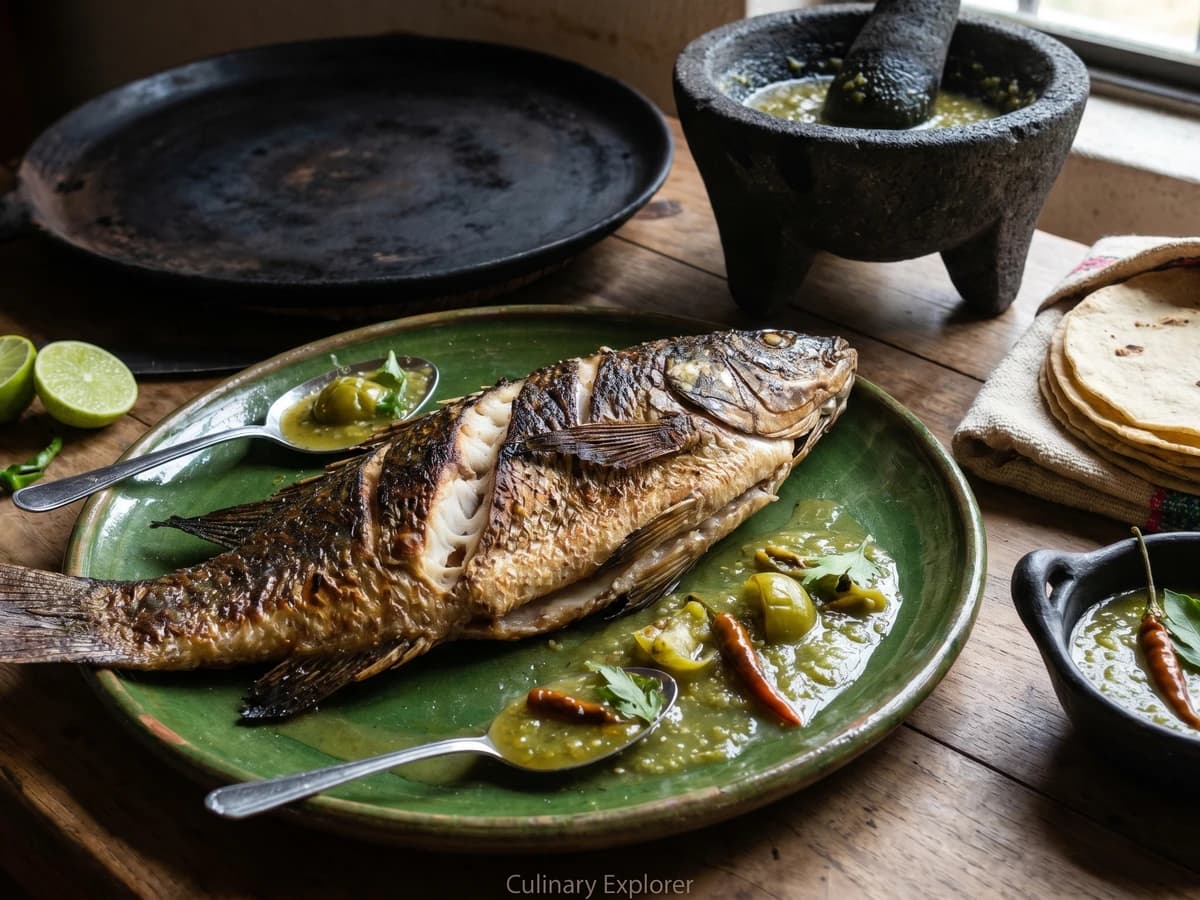
Michoacán's Lake Pátzcuaro acúmara, a whole kurucha from the lago tatemada on a comal de leña and served with chile perón atápakua, corn tortillas, and P'urhépecha discipline.
A cooking platform built around craft, culture, and the stories behind what we eat.

Created by
Michoacan's Lake Patzcuaro pescado blanco, called kurucha at the shore, bathed in toasted chile mulato, ajo, cominos, and raw cebolla before the cazuela goes to the oven.
Michoacan, Lake Patzcuaro. This dish lives on the shore, around Janitzio, Tzintzuntzan, Erongaricuaro, and the market kitchens where the P'urhepecha cocineras still know what the lago gives and what the milpa must carry. The fish is pescado blanco, kurucha, delicate and clean, not a heavy sea fish pretending to belong here.
The chile mulato defines the sauce. Not ancho. Not guajillo. Mulato gives a dark raisin color, a quiet sweetness, and that roasted depth that works with lake fish without crushing it. The sauce is chile mulato, ajo, cominos, salt, and enough water to move through the blender or molcajete. Then raw white onion goes over the fish before baking. Raw, yes. It softens in the sauce and keeps its edge. The senoras from Janitzio and Zacán taught it that way, and they are not waiting for permission from a restaurant menu.
This is not the fiery Mexican food people imagine when they don't know the map. It is restrained. It is lake cooking. The fish is from the lago, the onion and garlic from the milpa economy, the chile from the market network that ties Michoacan to the rest of the country. Put it in a barro cazuela from Capula or Tzintzuntzan, carry it to the table family-style, and let the sauce pool around warm corn tortillas. Cada estado, su propia cocina.
Pescado blanco de Patzcuaro, Chirostoma estor, is an endemic lake fish tied to P'urhepecha foodways and to the political center of the Cazonci, the pre-Hispanic ruler of the Tarascan state based around the Patzcuaro basin. Traditional Mexican Cuisine was inscribed by UNESCO in 2010 using the Michoacan paradigm, specifically recognizing community cooks and the living system of milpa, market, and ritual transmission. Because wild pescado blanco populations have been damaged by overfishing, pollution, and introduced species, responsible cooks now look for legal, sustainably raised Patzcuaro whitefish or use a clearly named compromise fish rather than pretending the lake is still inexhaustible.
Quantity
4, about 8 to 10 ounces each
scaled, gutted, and rinsed
Quantity
1 1/2 teaspoons
divided
Quantity
3
stemmed, seeded, and wiped clean
Quantity
3
unpeeled
Quantity
1/2 teaspoon
Quantity
1/4 teaspoon
Quantity
1 cup, plus more as needed
Quantity
2 tablespoons
for greasing the cazuela
Quantity
1 large
sliced into thin half-moons
Quantity
2 tablespoons
Quantity
for serving
| Ingredient | Quantity |
|---|---|
| whole small pescado blanco de Patzcuaroscaled, gutted, and rinsed | 4, about 8 to 10 ounces each |
| kosher saltdivided | 1 1/2 teaspoons |
| dried chile mulatostemmed, seeded, and wiped clean | 3 |
| garlic clovesunpeeled | 3 |
| cumin seeds | 1/2 teaspoon |
| black peppercorns | 1/4 teaspoon |
| hot water | 1 cup, plus more as needed |
| manteca de cerdo or neutral oilfor greasing the cazuela | 2 tablespoons |
| white onionsliced into thin half-moons | 1 large |
| fresh lime juice | 2 tablespoons |
| warm corn tortillas (optional) | for serving |
Pat the pescado blanco dry inside and out. Rub with 1 teaspoon of the salt, including inside the cavity, and let it rest while you prepare the chile. This short salting firms the delicate flesh so it does not fall apart in the cazuela. Lake fish needs a careful hand.
Heat a dry comal over medium. Toast the chile mulato pieces one at a time, about 15 to 20 seconds per side, pressing them flat with tongs. They should darken slightly and smell like raisins, cacao, and warm earth. Do not burn them. Burned mulato turns bitter and will bully the fish.
Put the toasted chiles in a bowl and cover with 1 cup hot water. Hot, not boiling. Let them soften for 15 minutes. Boiling water makes chile skins harsh. Hot water wakes the flesh and keeps the sauce clean.
On the same comal, roast the unpeeled garlic until the skins blacken in spots and the cloves soften, about 6 minutes. Toast the cumin seeds and black peppercorns for 30 to 45 seconds, just until fragrant. Peel the garlic. This is the small work that gives the sauce its backbone.
Drain the chiles, saving the soaking water. Blend the chiles with the peeled garlic, cumin, peppercorns, remaining 1/2 teaspoon salt, and 1/2 cup of the soaking water until smooth. If you are using a molcajete, grind the spices first, then garlic, then chile, adding water slowly. The sauce should coat a spoon, not run like broth.
Heat the oven to 375F. Grease a wide barro cazuela or baking dish with the manteca de cerdo. Lay half the raw white onion across the bottom. Set the fish over the onion in one layer. Spoon the chile mulato sauce over the fish and tuck the rest of the onion on top and around the sides.
Bake uncovered for 22 to 28 minutes, depending on the size of the fish. Baste once with the sauce in the cazuela. The fish is ready when the flesh near the backbone turns opaque and lifts easily with a spoon, and the sauce looks dark, glossy, and slightly thickened at the edges.
Squeeze the lime juice over the fish just before serving. Carry the cazuela to the table with warm corn tortillas. Serve family-style, spooning chile mulato sauce and softened onion over each portion. Watch for small bones. Pescado blanco is delicate, not boneless. Así se hace y punto.
1 serving (about 275g)
Culinary guides, cultural storytelling, and the editorial depth that makes cooking meaningful.
Discover Culinary ExplorerChef Lupita
Michoacán's Lake Pátzcuaro acúmara, a whole kurucha from the lago tatemada on a comal de leña and served with chile perón atápakua, corn tortillas, and P'urhépecha discipline.

Chef Lupita
Puebla's weekday adobo of pork shoulder braised in a thick guajillo and ancho sauce sharpened with vinegar, cumin, and clove. The deep red of a market spice stall, the dish a poblana cooks without thinking.

Chef Lupita
Loreto's pit-roasted clams, planted hinge-up in beach sand and tatemadas under a fast fire of dried romerillo brush, the resinous Baja desert shrub that gives this dish its smoke.

Chef Lupita
Oaxaca's eighth mole, the silky, almond-and-cinnamon almendrado, served over poached chicken. Mild, sweet, restrained, and a quiet rebuttal to anyone who thinks Mexican food has to be hot to be Mexican.