Chef Lupita
Acúmara Tatemada al Comal
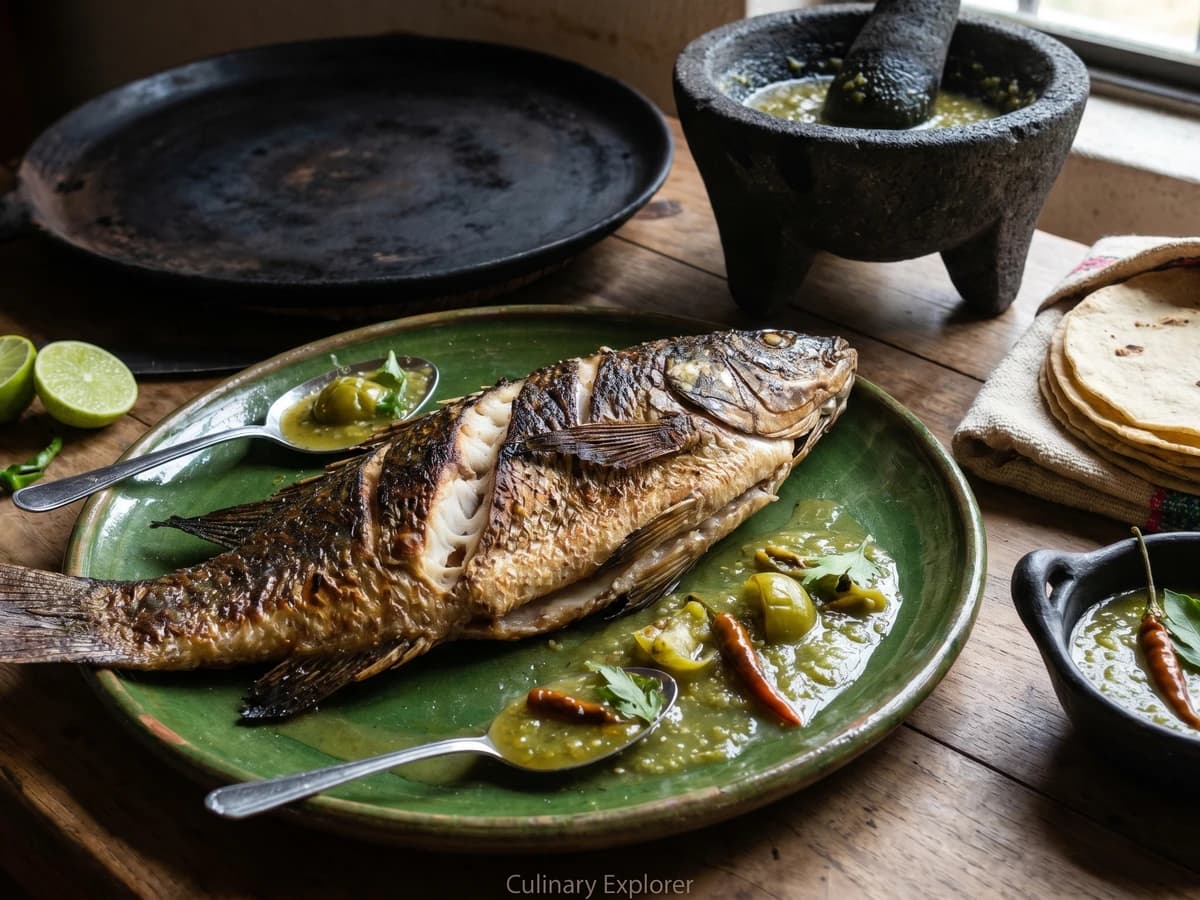
Michoacán's Lake Pátzcuaro acúmara, a whole kurucha from the lago tatemada on a comal de leña and served with chile perón atápakua, corn tortillas, and P'urhépecha discipline.
A cooking platform built around craft, culture, and the stories behind what we eat.

Created by
Michoacán's P'urhépecha chicken plate, built with guajillo, ancho, tomato, epazote, and fresh masa, served over rice the way cocineras in Cocucho and Uruapan set it down for supper.
Michoacán, Meseta P'urhépecha and the Lake Pátzcuaro basin. That is where atápakua lives. Not in a restaurant idea of Mexico, but in the kitchens of Zacán, Janitzio, Cocucho, Cherán, and Uruapan, where cocineras tradicionales keep the old sauces alive because someone has to remember what corn can do.
Atápakua is a mother sauce of the P'urhépecha kitchen: chile from the market, tomato and tomatillo from the milpa, epazote from the kitchen garden, and masa to thicken. Masa is not decoration here. It is structure. The sauce should hold to the chicken and settle over rice in a red, glossy layer. This is why you don't serve it thin like caldo. No me vengas con atajos.
In Cocucho, I watched a cocinera stir atápakua in a black-clay cazuela while tortillas puffed on the comal de leña. She spoke of kurucha from the lago, hongos from the monte, and corn from the milpa as if she were naming relatives. Chicken is from the corral, plain and useful, but the sauce gives it the P'urhépecha spine. Cada estado, su propia cocina.
My mother was Jalisciense, so this dish was not in her notebook. I learned it on the road, from women who did not measure with spoons because their hands already knew the work. I wrote it down because memory needs help. Saber cocinar es saber vivir.
Atápakua belongs to the P'urhépecha food system of Michoacán, where sauces thickened with fresh masa connect pre-Columbian corn technique to daily cooking. The P'urhépecha state resisted Mexica conquest under the Cazonci, its ruler, and kept a distinct language and culinary identity around the Meseta, Lake Pátzcuaro, and the Tierra Caliente trade routes. UNESCO's 2010 inscription of Traditional Mexican Cuisine as Intangible Cultural Heritage used the Michoacán paradigm, especially the work of cocineras tradicionales, as its central model of community transmission.
Quantity
3 pounds
skin on
Quantity
7 cups
Quantity
1 medium
half for broth and half for sauce
Quantity
5
divided
Quantity
2 fresh or 1 dried
Quantity
2 teaspoons, plus more to taste
Quantity
6
stemmed and seeded
Quantity
2
stemmed and seeded
Quantity
3
Quantity
4 medium
husked and rinsed
Quantity
2 tablespoons
Quantity
1/2 cup
or 1/3 cup masa harina mixed with 1/2 cup warm water
Quantity
1 sprig
Quantity
1/2 teaspoon
Quantity
2 cups
for serving
Quantity
12
warmed
Quantity
1/4 cup
Quantity
2 tablespoons
Quantity
for serving
| Ingredient | Quantity |
|---|---|
| bone-in chicken thighs and drumsticksskin on | 3 pounds |
| water | 7 cups |
| white onionhalf for broth and half for sauce | 1 medium |
| garlic clovesdivided | 5 |
| fresh bay leaves or dried bay leaf | 2 fresh or 1 dried |
| kosher salt | 2 teaspoons, plus more to taste |
| dried chile guajillostemmed and seeded | 6 |
| dried chile anchostemmed and seeded | 2 |
| ripe Roma tomatoes | 3 |
| tomatilloshusked and rinsed | 4 medium |
| manteca de cerdo | 2 tablespoons |
| fresh masa for tortillasor 1/3 cup masa harina mixed with 1/2 cup warm water | 1/2 cup |
| fresh epazote | 1 sprig |
| dried Mexican oregano | 1/2 teaspoon |
| cooked Mexican white ricefor serving | 2 cups |
| hand-pressed corn tortillas (optional)warmed | 12 |
| finely diced white onion (optional) | 1/4 cup |
| chopped cilantro (optional) | 2 tablespoons |
| lime wedges (optional) | for serving |
Put the chicken, water, half the onion, 2 garlic cloves, bay leaf, and salt in a heavy pot. Bring to a gentle simmer and skim the gray foam during the first 10 minutes. Cook 35 to 40 minutes, until the chicken is tender but still holds to the bone. The broth is part of the sauce, so keep it clean.
Heat a dry comal over medium. Toast the guajillo and ancho chiles separately, 15 to 25 seconds per side, just until they soften, darken slightly, and smell fruity. Do not blacken them. Burned chile makes bitter atápakua, and no señora in Cocucho will forgive that.
Put the toasted chiles in a bowl and cover with hot water for 15 minutes. Hot water, not boiling. Boiling roughens the skins and brings bitterness forward. Drain the chiles and discard the soaking water.
On the same comal, roast the tomatoes, tomatillos, remaining onion, and remaining 3 garlic cloves. Turn them until the skins blister and the tomatillos turn olive green. This is where the milpa and the mercado meet: tomato, tomatillo, chile, corn. Si no conoces el mercado, no conoces la cocina.
Blend the softened chiles with the roasted tomatoes, tomatillos, onion, garlic, and 2 cups of the chicken broth. Blend longer than you think. Atápakua should be smooth before it meets the masa. Strain it if your blender leaves chile skins behind.
Melt the manteca de cerdo in a black-clay cazuela or heavy Dutch oven over medium heat. Pour in the chile puree carefully and cook 8 to 10 minutes, stirring, until it darkens to brick red and the fat begins to shine at the edges. La manteca es el sabor. Vegetable oil will cook the sauce, but it will not give it the same body.
Whisk the fresh masa with 1 cup warm chicken broth until completely smooth. Pour it into the simmering sauce in a thin stream while stirring. The sauce will tighten within minutes and turn from loose chile broth into atápakua, thick enough to coat a spoon but still able to flow over rice. This is not gravy. This is corn doing its work.
Add the epazote, Mexican oregano, and cooked chicken pieces to the cazuela. Simmer gently for 15 to 20 minutes, spooning sauce over the chicken until every piece is stained red and glossy. Taste for salt. If the sauce becomes too thick, loosen it with more broth, a little at a time.
Spoon warm white rice onto each plate. Set one or two pieces of chicken over the rice and ladle atápakua generously over the top so it pools at the edge. Finish with a little diced white onion, cilantro, and lime if you use them. Serve with warm corn tortillas from the comal. Plated, not drowned in a bowl. Así se hace y punto.
1 serving (about 540g)
Culinary guides, cultural storytelling, and the editorial depth that makes cooking meaningful.
Discover Culinary ExplorerChef Lupita
Michoacán's Lake Pátzcuaro acúmara, a whole kurucha from the lago tatemada on a comal de leña and served with chile perón atápakua, corn tortillas, and P'urhépecha discipline.

Chef Lupita
Puebla's weekday adobo of pork shoulder braised in a thick guajillo and ancho sauce sharpened with vinegar, cumin, and clove. The deep red of a market spice stall, the dish a poblana cooks without thinking.

Chef Lupita
Loreto's pit-roasted clams, planted hinge-up in beach sand and tatemadas under a fast fire of dried romerillo brush, the resinous Baja desert shrub that gives this dish its smoke.

Chef Lupita
Oaxaca's eighth mole, the silky, almond-and-cinnamon almendrado, served over poached chicken. Mild, sweet, restrained, and a quiet rebuttal to anyone who thinks Mexican food has to be hot to be Mexican.