
Chef Joost
Beschuit met Muisjes
The airy Dutch rusk sold in rolls of thirteen, twice baked until crisp, then buttered and crowned with sugared aniseed for the birth of a child.
A cooking platform built around craft, culture, and the stories behind what we eat.
Created by
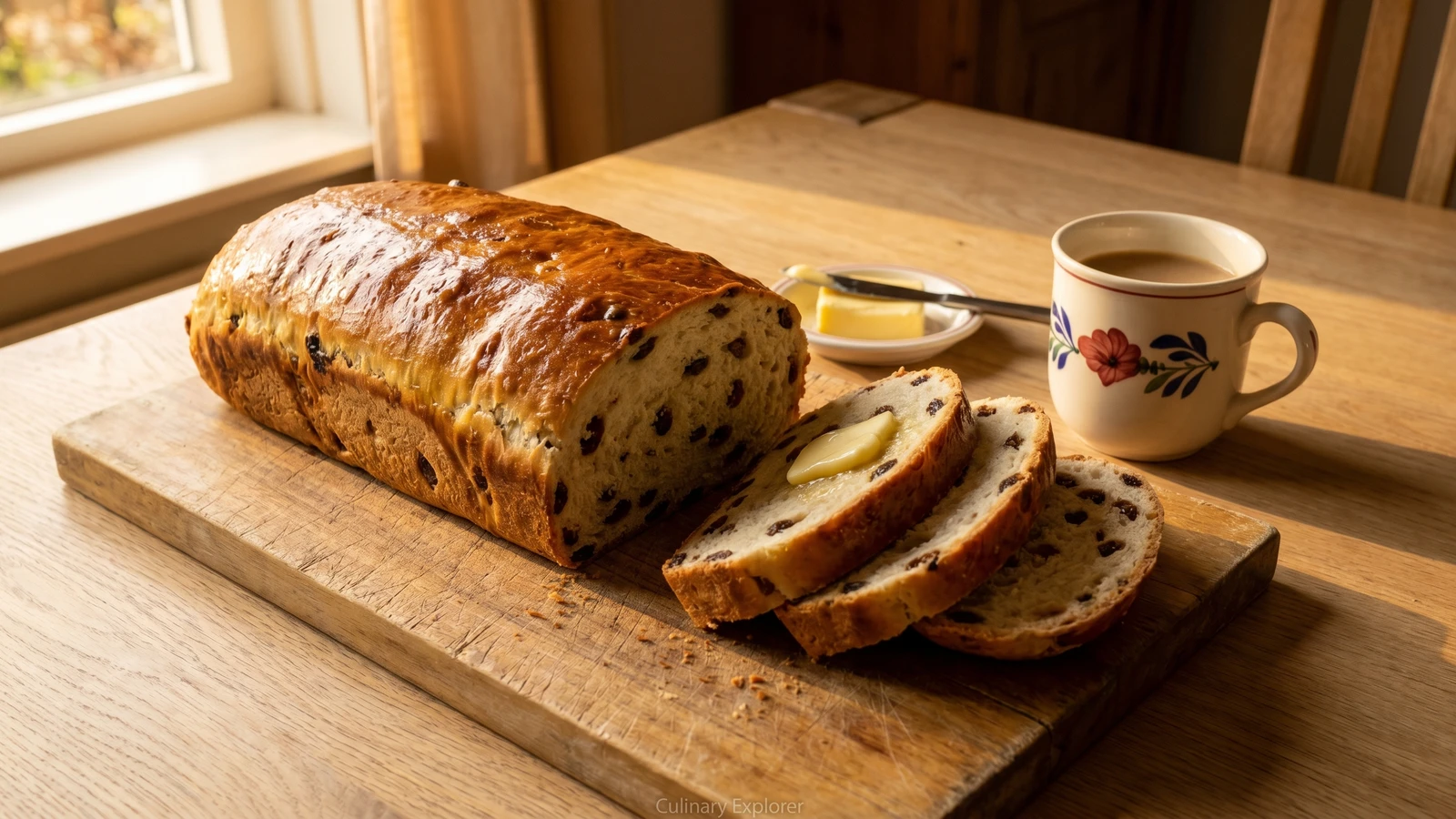
Twente's great birth bread is not modest: a long sweet loaf heavy with currants and raisins, carried to the new mother and sliced for everyone who comes to greet the child.
Some breads arrive at the table. Krentenwegge used to arrive almost like a guest of honor, carried through Twente in a basket or under the arm, long enough to make doorways interesting. It belonged to kraamschudden, the visit paid to a new mother and baby, where neighbors came with congratulations, gossip, and appetite. For obvious reasons, the bread had to be generous. A new child was not a moment for thin slices.
The name already tells you most of the truth, and here we should not make it more mysterious than it is. Krenten are currants, those small dark grapes dried down to little bursts of sweetness; wegge is the eastern Dutch word for a loaf of bread. But let me tell you a secret: the grandeur of krentenwegge is not in rare ingredients. It is in proportion. More fruit than a sensible baker would normally allow, a soft white dough strong enough to hold it, and a shape that says plenty before anyone has taken a bite.
This is Twente speaking in bread: rural, neighborly, exact in its rituals, and quietly theatrical when the occasion earns it. The old loaves could run a metre or more, sometimes longer for a family with a large circle of noabers, neighbors bound by mutual duty. We will make a home-oven version, still long, still heavy with fruit, still meant to be sliced and passed. Hou het altijd simpel, always keep it simple: soak the fruit so it doesn't rob the dough, knead until the dough can carry the load, and bake until the crust is deep golden and the loaf sounds hollow underneath.
Krentenwegge is most strongly associated with Twente in the eastern Netherlands, where it formed part of kraamschudden, the traditional visit to a woman after childbirth. The bread was often brought by noabers, neighbors in the eastern Dutch system of mutual obligation, and its impressive length signaled abundance and communal welcome. Regional records and living bakery practice describe loaves of a metre or more, making krentenwegge both food and public announcement: a child had arrived, and the household was receiving guests.
Quantity
350g
Quantity
250g
Quantity
250ml
lukewarm
Quantity
10g
Quantity
500g
plus extra for shaping
Quantity
60g
softened
Quantity
50g
Quantity
1 large
Quantity
8g
Quantity
1 teaspoon
Quantity
1/4 teaspoon
Quantity
1 yolk plus 1 tablespoon milk
for glazing
Quantity
as needed
| Ingredient | Quantity |
|---|---|
| currants | 350g |
| raisins | 250g |
| milklukewarm | 250ml |
| instant yeast | 10g |
| strong white bread flourplus extra for shaping | 500g |
| unsalted buttersoftened | 60g |
| sugar | 50g |
| egg | 1 large |
| fine salt | 8g |
| ground cinnamon | 1 teaspoon |
| ground nutmeg | 1/4 teaspoon |
| egg yolk mixed with milkfor glazing | 1 yolk plus 1 tablespoon milk |
| butter (optional) | as needed |
Put the currants and raisins in a bowl, cover them with warm water, and leave them for 20 minutes. Drain very well, then spread them on a clean towel and pat them dry. This is not fussing. Dry fruit steals moisture from the dough during baking; soaked and dried fruit stays plump without making the loaf wet.
In a large bowl, mix the lukewarm milk, yeast, flour, softened butter, sugar, egg, salt, cinnamon, and nutmeg into a soft dough. Knead for 10 to 12 minutes, until it becomes smooth and elastic. It should feel supple, not sticky; add a spoonful of flour only if it clings heavily to your hands.
Flatten the dough slightly, scatter over the soaked currants and raisins, and knead them in patiently. At first the fruit will leap out like it has better plans. Keep folding and pressing until it is evenly distributed. A krentenwegge should look almost unreasonable with fruit, but the dough must still hold together.
Place the dough in a lightly greased bowl, cover it, and let it rise in a warm place for 1 to 1 1/2 hours, until swollen and nearly doubled. Because this dough carries so much fruit, it rises more slowly than plain bread. Give it time. Celebration bread should not arrive breathless.
Turn the dough onto a lightly floured surface and shape it into one long, even loaf, about 45 to 55 centimetres, or as long as your baking tray allows. Tuck the seam underneath and place it on a parchment-lined tray. The old Twentse loaves could be far longer, but a home oven has opinions, and we must live with them.
Cover the shaped loaf loosely and let it prove for 35 to 45 minutes, until puffy and lighter to the touch. Brush gently with the egg yolk and milk glaze. Do not press hard; you have waited for that rise, and the loaf owes you nothing if you flatten it now.
Bake at 190C for 35 to 40 minutes, turning the tray once if your oven browns unevenly. The crust should be deep golden, the fruit near the surface glossy and dark, and the bottom should sound hollow when tapped. If it browns too quickly, lay a loose sheet of foil over the top for the last 10 minutes.
Let the krentenwegge cool on a rack for at least 45 minutes before slicing. Cut thick slices and serve with good butter. The loaf is rich enough to stand alone, but butter is the old Dutch answer to nearly every remaining question.
1 serving (about 95g)
Culinary guides, cultural storytelling, and the editorial depth that makes cooking meaningful.
Discover Culinary ExplorerChef Joost
The airy Dutch rusk sold in rolls of thirteen, twice baked until crisp, then buttered and crowned with sugared aniseed for the birth of a child.

Chef Joost
The Dutch square loaf baked under a lid, with a quiet crumb, a disciplined crust, and exactly the right shape for the tosti pan.

Chef Joost
Before bread came from a packet of yeast, it came from yesterday: flour, water, salt, and a living desem starter carrying one loaf into the next.

Chef Joost
A round raisin bread for Driekoningen, Three Kings' Day, with a hidden bean, a star in the crust, and one ordinary eater crowned king for a day.