Culinary Explorer

A cooking platform built around craft, culture, and the stories behind what we eat.
Discover Culinary Explorer
Trenette al Pesto

Trenette al Pesto

Created by

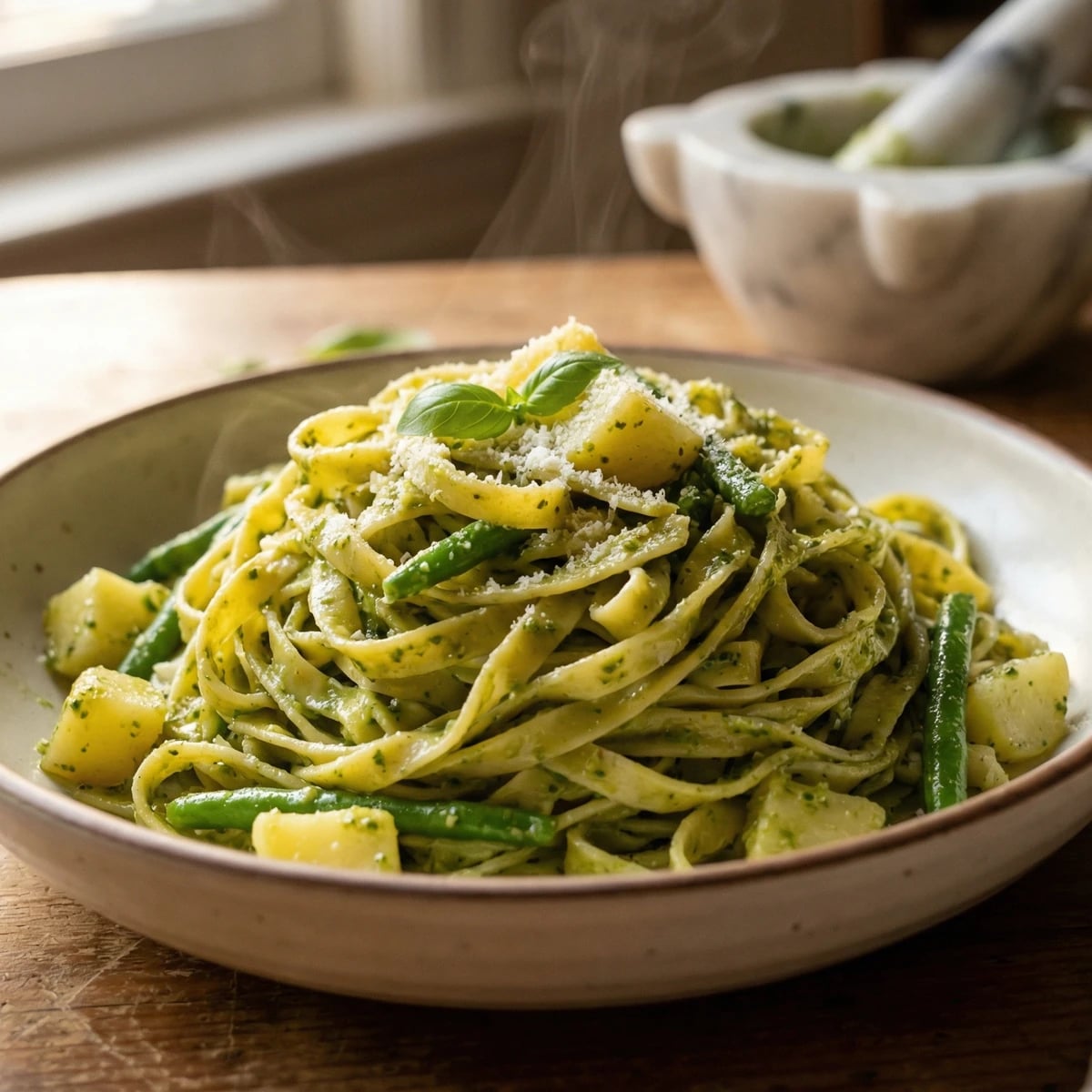
The true pesto of Genoa, pounded by hand with Ligurian basil, pine nuts, two cheeses, and olive oil. Served as tradition demands: with potatoes and green beans cooked in the same water as the pasta.

Main Dishes
Italian, Ligurian
Weeknight
Quick Meal
30 min
Active Time
20 min cook50 min total
Yield4 servings

Pesto belongs to Genoa. Not to California, not to the jars in American supermarkets, not to the restaurants that put it on everything from pizza to salmon. It belongs to the steep hillsides above the Ligurian coast, where small-leafed basil grows in the sea air, more fragrant and less peppery than any other variety.

The word comes from pestare, to pound. This is not a suggestion. True pesto is made in a marble mortar with a wooden pestle, the basil crushed rather than cut. A blade heats and bruises. A pestle releases the oils gently. The difference is the difference between adequate and transcendent.

Americans know pesto as a sauce. Genoese know it as a way of life. They serve it with trenette (a long, flat pasta slightly thicker than linguine), with trofie (small twisted pasta from the Ligurian coast), and always with potatoes and green beans. The vegetables are not optional, not a restaurant garnish. They are as essential as the basil. Everything cooks together in the same pot, finishes together, arrives at the table together. This is how Ligurian grandmothers have done it for as long as anyone remembers.

Pesto's ancestors trace to Roman moretum, a pounded mixture of herbs, cheese, and oil described by Virgil. The modern Genovese version crystallized in the 19th century when Ligurian sailors carried it aboard ships as a taste of home. The addition of potatoes and green beans likely began as a way to stretch an expensive sauce, then became tradition inseparable from the dish itself.

The technique, the tradition, and the story behind every dish.

Discover Culinary Explorer

Ingredients

fresh Genovese basil leaves

Quantity

2 cups packed (about 2 ounces)

pine nuts

Quantity

2 tablespoons

garlic cloves

Quantity

2 small

peeled

coarse sea salt

Quantity

to taste

Parmigiano-Reggiano

Quantity

1/4 cup

freshly grated

Pecorino Fiore Sardo or Pecorino Romano

Quantity

2 tablespoons

freshly grated

extra virgin olive oil

Quantity

1/2 cup

preferably Ligurian

small waxy potatoes

Quantity

8 ounces

peeled and sliced 1/4-inch thick

green beans

Quantity

6 ounces

trimmed and cut into 2-inch lengths

trenette or linguine

Quantity

1 pound

black pepper

Quantity

to taste

freshly ground

Equipment Needed

  • Marble mortar and wooden pestle (ideal) or food processor
  • Large pot for cooking pasta and vegetables
  • Large warm serving bowl

Instructions

  1. 1

    Prepare the basil

    Wash the basil gently in cold water and dry it completely with towels. Wet basil turns black. The leaves must be thoroughly dry before you begin. Handle them as little as possible. Bruised basil oxidizes and loses its bright flavor.

  2. 2

    Pound the pesto

    In a marble mortar, combine the garlic, pine nuts, and a generous pinch of coarse salt. Pound with the pestle using a rotating motion, grinding the ingredients against the sides of the mortar until you have a paste. Add the basil leaves in batches, pounding and grinding until each addition is incorporated. The salt acts as an abrasive, helping to break down the leaves. Continue until you have a uniform green paste with no large pieces remaining.

    A food processor will do if you must, but know that the blade heats the basil and bruises rather than crushes. The texture and color are never quite as fine. Pulse briefly and accept the compromise.
  3. 3

    Add the cheeses and oil

    Add both grated cheeses to the mortar and pound until incorporated. Then add the olive oil in a thin stream, stirring constantly with the pestle to emulsify. The pesto should be thick but pourable, the color of jade. Taste and adjust salt. The garlic should be present but not aggressive. If you taste only garlic, you have used too much.

  4. 4

    Cook the potatoes

    Bring a large pot of water to a boil and salt it generously. Add the potato slices and cook for 5 minutes. They should be just barely tender when pierced with a knife. Do not let them become soft or they will fall apart when tossed with the pasta.

  5. 5

    Add the beans and pasta

    Add the green beans to the pot with the potatoes. Let the water return to a boil, then add the trenette. Cook the pasta according to package directions, usually 10 to 12 minutes for dried trenette. Everything cooks together. The vegetables absorb the starchy water, the pasta absorbs the vegetable flavor. This is the Ligurian way.

  6. 6

    Loosen the pesto

    While the pasta cooks, transfer the pesto to a large warm serving bowl. Add two tablespoons of the boiling pasta water and stir. The starch helps the pesto coat the pasta. It should become slightly looser but not watery.

    Never heat pesto over direct flame. Heat turns basil dark and bitter. The warmth of the pasta and pasta water is sufficient.
  7. 7

    Dress the pasta

    Reserve another cup of pasta water, then drain the pasta, potatoes, and green beans together. Transfer immediately to the bowl with the pesto. Toss vigorously until every strand is coated and the vegetables are distributed throughout. The pesto should cling to the pasta, not pool at the bottom. Add more pasta water by the tablespoon if the sauce seems tight. Once the pasta is sauced, serve it promptly, inviting your guests and family to put off talking and start eating.

Chef Tips

  • Seek out Genovese basil if you can find it. The leaves are small, cupped, and intensely fragrant without the mintiness of larger varieties. Sweet basil from the supermarket will work, but the character changes.
  • Ligurian olive oil is pale, delicate, almost buttery. A robust Tuscan or Sicilian oil will overwhelm the basil. Choose the mildest, fruitiest oil you can find.
  • The traditional cheese is Pecorino Fiore Sardo from Sardinia, which has traded with Genoa for centuries. Pecorino Romano is sharper but acceptable. Some use only Parmigiano. Each family argues for their version.
  • Toast the pine nuts very lightly if you prefer, but traditional pesto uses them raw. Toasting adds nuttiness but changes the character.
  • The potatoes must be waxy, not starchy. Yukon Gold or fingerlings hold their shape. Russets will disintegrate into the pasta water.

Advance Preparation

  • Pesto can be made several hours ahead and kept at room temperature, covered with a thin layer of olive oil to prevent oxidation. It darkens in the refrigerator, though the flavor remains acceptable for two days.
  • To freeze pesto, omit the cheese. Freeze in ice cube trays, then transfer to bags. Add the cheese after thawing. Frozen pesto keeps three months but never quite matches fresh.

Frequently Asked Questions

Nutrition Information

1 serving (about 375g)

Calories
795 calories
Total Fat
35 g
Saturated Fat
6 g
Trans Fat
0 g
Unsaturated Fat
27 g
Cholesterol
8 mg
Sodium
445 mg
Total Carbohydrates
100 g
Dietary Fiber
6 g
Sugars
4 g
Protein
21 g

Note: Chef personas and recipes are created with AI assistance. Cook with care: follow safe food-handling practices, check doneness with a thermometer when needed, and adapt for allergies and your kitchen.

Where cooking meets culture.

Culinary guides, cultural storytelling, and the editorial depth that makes cooking meaningful.

Discover Culinary Explorer

More from Chef Graziella's Pasta and Noodle Main Dishes

Browse the full collection