
Chef Takumi
Aji Fry (アジフライ, panko-fried horse mackerel)
Aji fry is weeknight fish with no mystery: fresh horse mackerel opened cleanly, breaded lightly, and fried until the panko crackles while the flesh stays sweet.
A cooking platform built around craft, culture, and the stories behind what we eat.

Created by
Toriten is Ōita's bright answer to fried chicken: seasoned chicken in a thin tempura coat, crisp at the edges, tender inside, and sharpened at the table with ponzu and karashi.
Chicken tempura sounds like a small trick until you eat it with ponzu and karashi. Then the dish makes its argument plainly. This isn't karaage in a different coat. Toriten is lighter, cleaner, and a little more courtly, if fried chicken can be accused of manners.
The first secret is the cut. Slice the chicken into thin, even pieces so the heat reaches the center before the batter darkens. Thick pieces force you to choose between raw chicken and overcooked batter, which is a poor bargain. Thin pieces cook quickly, stay tender, and let the batter do what tempura batter should do: cover lightly, not bury.
The second secret is restraint in the bowl. Season the chicken with shōyu, sake, ginger, and a little garlic, then mix the batter cold and briefly. Lumps are not a disgrace here. Overmix and you wake the gluten, and the coating turns bready instead of crisp. We dip, fry, and leave well enough alone.
Toriten sits comfortably in the everyday meal: rice, a small salad or pickles, miso soup if you have it, and a dish of ponzu with karashi stirred in. The ponzu cuts the richness, the mustard gives a clean heat, and nothing is hidden. Good chicken, cut honestly, fried just enough. Honmono rarely needs more theater than that.
Toriten is closely associated with Ōita Prefecture, especially Beppu and Ōita City, where restaurants began serving chicken fried in tempura-style batter in the early Shōwa period. One frequently cited origin is Restaurant Tōyōken in Beppu, which traces its toriten to the 1920s and helped make the dish a local specialty. Unlike karaage, which is usually coated in starch after marinating, toriten is dipped in batter and commonly served with ponzu and karashi.
Quantity
600g
sliced into thin bite-size pieces
Quantity
1 tablespoon
Quantity
1 tablespoon
Quantity
1 teaspoon
grated
Quantity
1 small clove
grated
Quantity
1/4 teaspoon
Quantity
1
Quantity
1/2 cup
Quantity
3/4 cup, plus 2 tablespoons
extra flour reserved for dusting
Quantity
1 tablespoon
Quantity
enough for 3cm depth
Quantity
1/3 cup
Quantity
1 teaspoon
Quantity
as needed
Quantity
as needed
| Ingredient | Quantity |
|---|---|
| boneless skinless chicken thighs or breastssliced into thin bite-size pieces | 600g |
| shōyu (Japanese soy sauce) | 1 tablespoon |
| sake | 1 tablespoon |
| fresh gingergrated | 1 teaspoon |
| garlicgrated | 1 small clove |
| sea salt | 1/4 teaspoon |
| large egg | 1 |
| ice-cold water | 1/2 cup |
| cake flour or low-protein all-purpose flourextra flour reserved for dusting | 3/4 cup, plus 2 tablespoons |
| potato starch | 1 tablespoon |
| neutral frying oil | enough for 3cm depth |
| ponzu | 1/3 cup |
| karashi (Japanese hot mustard) | 1 teaspoon |
| lemon wedges (optional) | as needed |
| shredded cabbage (optional) | as needed |
Slice the chicken across the grain into thin bite-size pieces, about 1cm thick. Keep them even. Even pieces finish together, and with tempura batter that matters because the coating should stay pale and crisp while the chicken cooks through.
Put the chicken in a bowl with the shōyu, sake, ginger, garlic, and salt. Mix with your hand until the pieces feel lightly slick, then leave them for 15 minutes. This is seasoning, not a long marinade. Too much time in soy makes the surface wet and salty, and the batter will slide instead of cling.
Pour neutral oil into a deep pot to a depth of about 3cm and heat it to 170 C. If you have no thermometer, drop in a little batter. It should sink halfway, then rise with small lively bubbles. If it browns at once, the oil is too hot for chicken.
Beat the egg with the ice-cold water just until loose. Add the flour and potato starch, then stir briefly with chopsticks until streaks and small lumps remain. Cold, undermixed batter fries light because the flour has less chance to form gluten. Smooth batter looks obedient in the bowl and behaves badly in the pot.
Dust the chicken pieces lightly with the reserved flour and shake off the excess. Dip each piece into the batter just before frying. The flour gives the batter something to hold, but too much flour makes a pasty layer under the crust.
Lower the chicken into the oil one piece at a time and fry in small batches for 3 to 4 minutes, turning once. Don't crowd the pot. Crowding drops the oil temperature, and the batter drinks oil before it crisps. The toriten should be pale gold, crisp at the edges, and cooked through.
Lift the pieces to a rack, not a flat plate. Air underneath keeps the coating crisp, while a plate traps oil and softens the bottom. Check one larger piece: the juices should run clear and the center should be fully cooked.
Stir the karashi into the ponzu in a small dish. Serve the toriten at once with the dipping sauce, lemon wedges if you like, and shredded cabbage if it suits the table. Arrange the pieces in a small mound, not a heap. Leave it room.
1 serving (about 205g)
Culinary guides, cultural storytelling, and the editorial depth that makes cooking meaningful.
Discover Culinary ExplorerChef Takumi
Aji fry is weeknight fish with no mystery: fresh horse mackerel opened cleanly, breaded lightly, and fried until the panko crackles while the flesh stays sweet.
Chef Takumi
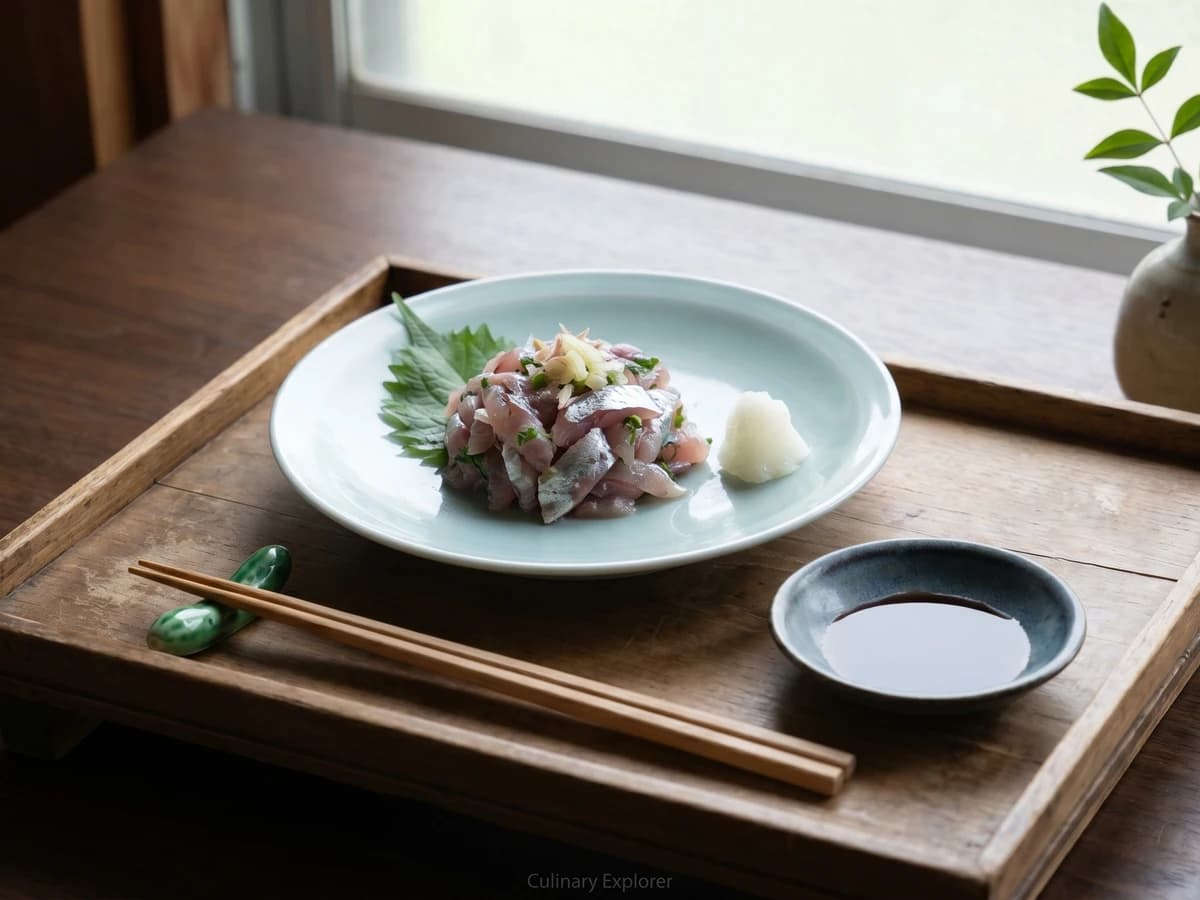
Summer horse mackerel, chopped just enough to catch ginger and scallion, becomes a cool, clean main dish with rice. The secret is fresh fish and a knife that does not bruise it.
Chef Takumi
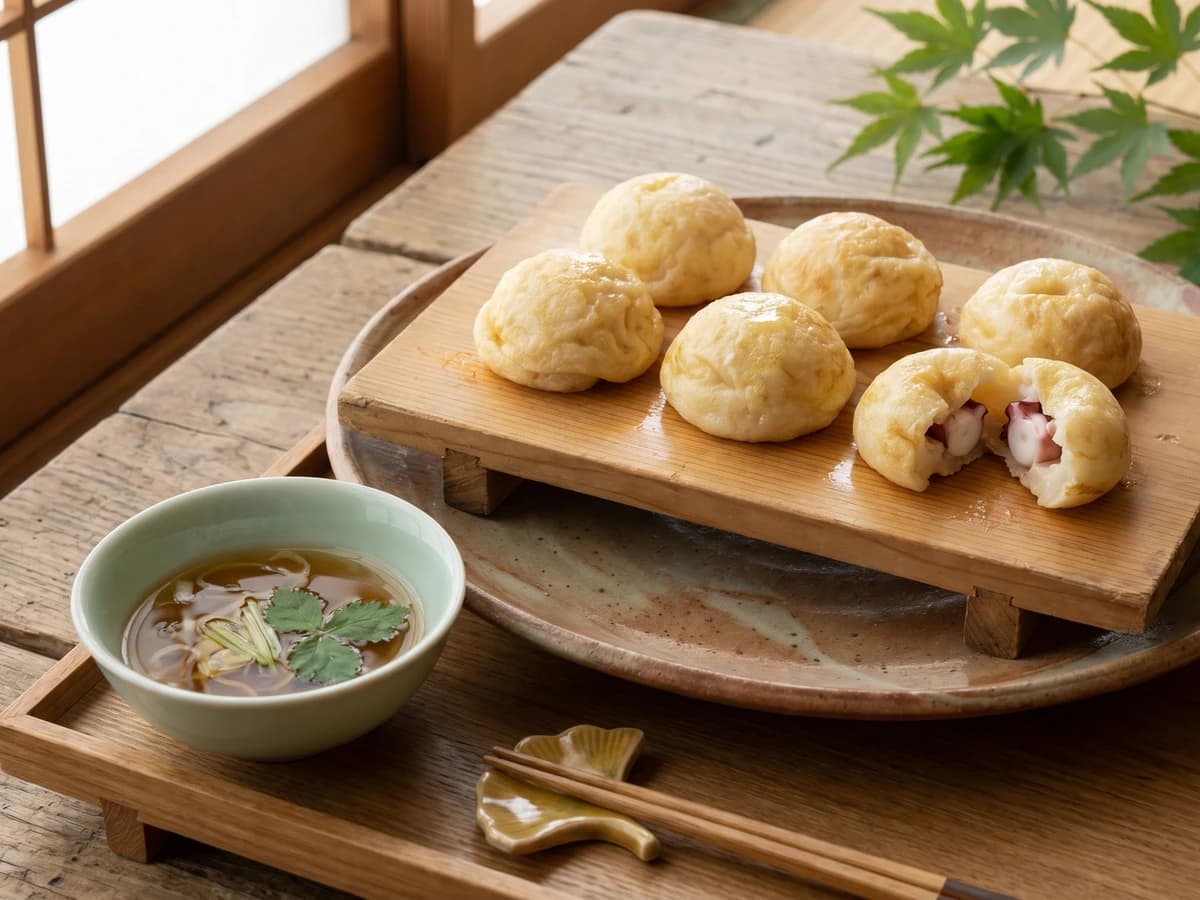
Akashi-yaki is not sauced takoyaki. It is egg-rich batter, tender octopus, and clear dashi, cooked pale and soft so each ball can be dipped like a small custard dumpling.

Chef Takumi
A whole anago looks like a test of nerve. It is mostly good sourcing, a dry skin, cold batter, and oil hot enough to leave the eel sweet under its lace.