Culinary Explorer

A cooking platform built around craft, culture, and the stories behind what we eat.
Discover Culinary Explorer
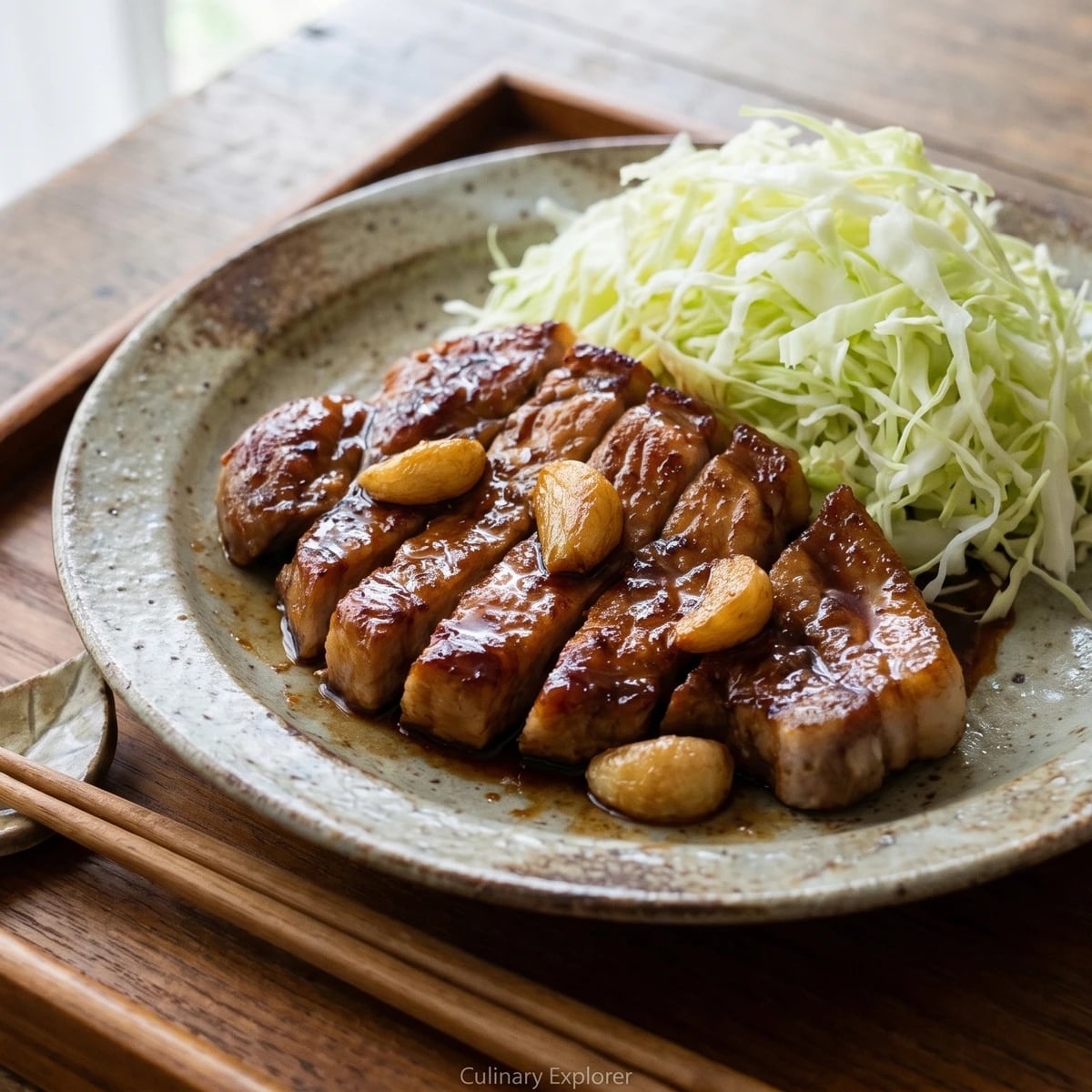
Tonteki (豚テキ, Yokkaichi pork steak)

Tonteki (豚テキ, Yokkaichi pork steak)

Created by

Mie's working-town pork steak is a plain pleasure: thick shoulder scored at the edges, seared until browned, then pulled through a dark garlic sauce with cabbage waiting beside it.

Main Dishes
Japanese
Weeknight
Comfort Food
Game Day
20 min
Active Time
15 min cook35 min total
Yield2 servings

Tonteki is not a delicate dish, and it would be silly to make it whisper. This is Yokkaichi pork steak: thick pork, garlic, dark sauce, shredded cabbage, rice. It has the blunt honesty of food made for appetite, not display, though we still give it room on the plate. Loud food can be orderly too.

The one detail that decides it is the cut. A thick pork steak wants to curl and tighten when it hits the pan, especially where the fat and sinew run along the edge. Score it deeply from one side so it opens like a glove, the Yokkaichi way, and suddenly the heat reaches the center, the pork lies flat, and the sauce can cling between the cuts. The knife has done half the cooking before the pan is hot.

Use pork shoulder loin if you can, katā rosu, with enough fat to stay juicy. Lean pork loin will work, but it asks more care and gives less back. Sear first, sauce last. Worcestershire, soy, sake, mirin, sugar, and garlic turn dark and glossy in a minute or two, but leave them too long over fierce heat and they turn harsh. The sauce should coat the pork, not punish it.

This is not kaiseki, and it doesn't need to pretend. It belongs to the everyday Japanese table, where rice makes sense of salt and sauce, and shredded cabbage cuts the richness cleanly. Nothing hidden. Buy good pork, cut it properly, brown it hard, and stop when the glaze shines.

Yokkaichi tonteki became a local specialty in Yokkaichi, Mie Prefecture, in the early postwar decades, with many accounts tracing the style to the restaurant Rairaiken and its thick pork steaks in a dark garlic sauce. The local Tonteki Association later defined the dish by four marks: thick sauteed pork, a blackish sauce, garlic, and shredded cabbage. The name is plain shorthand, ton for pork and teki from steak, a Western word made fully local at the Japanese table.

The technique, the tradition, and the story behind every dish.

Discover Culinary Explorer

Ingredients

boneless pork shoulder loin steaks or thick pork loin chops

Quantity

2 pieces (about 225g each)

1 to 1 1/4 inches thick, fat left on

fine sea salt

Quantity

1/2 teaspoon

freshly ground black pepper

Quantity

1/4 teaspoon

neutral oil

Quantity

1 tablespoon

garlic cloves

Quantity

6

peeled and lightly crushed

Japanese Worcestershire sauce

Quantity

3 tablespoons

soy sauce

Quantity

1 tablespoon

mirin

Quantity

1 tablespoon

sake

Quantity

1 tablespoon

sugar

Quantity

1 teaspoon

green cabbage

Quantity

4 cups

very thinly shredded, chilled, and well drained

cooked Japanese short-grain rice (optional)

Quantity

for serving

Equipment Needed

  • Heavy iron frying pan or wide skillet
  • Sharp knife for the Yokkaichi glove cut
  • Instant-read thermometer

Instructions

  1. 1

    Prepare the cabbage

    Shred the cabbage as finely as you can, soak it in cold water for five minutes, then drain it very well. The cold water firms the cut edges so the cabbage stays crisp beside the hot pork. Dry it properly, because wet cabbage thins the sauce the moment it touches the plate.

  2. 2

    Mix the tare

    Stir together the Worcestershire sauce, soy sauce, mirin, sake, and sugar until the sugar dissolves. This is the tare, the finishing sauce. Keep it ready by the stove, because once the pork is browned, the sauce should go in quickly and reduce briefly.

    The sauce is sharp, sweet, salty, and garlicky by design. It needs the pork fat and rice to make sense, so don't soften it into something timid.
  3. 3

    Score the pork

    Pat the pork dry. From the fat side, make four or five deep cuts toward the far edge, stopping before you cut all the way through, so each steak opens like a glove and still stays one piece. Nick any tight bands of fat or sinew around the edge. This keeps the pork from curling, helps the center cook evenly, and gives the glaze more places to cling. Season both sides with the salt and pepper.

    This glove cut is not decoration. It is the first secret of Yokkaichi tonteki: flat meat browns better, cooks faster, and carries the sauce honestly.
  4. 4

    Color the garlic

    Set a heavy frying pan over medium heat and add the oil and garlic. Cook the garlic until pale gold and fragrant, then lift it out to a small plate. Starting the garlic in cooler oil perfumes the pan without burning it. Burnt garlic is bitter, and no sauce will politely hide that for you.

  5. 5

    Sear the pork

    Raise the heat to medium-high and lay in the pork, opened side down if one side is more cut than the other. Press it lightly for the first few seconds so the cut faces meet the pan, then leave it alone until the underside is deeply browned, about three minutes. Turn and brown the second side, another two to three minutes. Moving it too much steals the browning you came for.

  6. 6

    Glaze and finish

    Lower the heat to medium. Return the garlic to the pan, pour the tare around the pork, and spoon the bubbling sauce over the top for one to two minutes, until it turns glossy and clings to the cuts. Pull the pork when the center reaches 63 C or 145 F, then rest it for three minutes. The short reduction gathers the browned pan juices into the sauce; a long boil tightens the pork and makes the Worcestershire harsh.

  7. 7

    Plate with cabbage

    Set a modest mound of shredded cabbage to one side of each plate. Lay the tonteki beside it, still shaped as one steak, and spoon over just enough dark sauce to gloss the pork and leave a little for the cabbage to catch. Add the garlic cloves on top or alongside. Serve at once with hot short-grain rice.

Chef Tips

  • Choose pork shoulder loin, katā rosu, when you can. It has the fine seams of fat that keep tonteki juicy under a hard sear. If you use lean loin, watch the temperature closely and don't ask the sauce to do the work the fat should have done.
  • Japanese Worcestershire sauce is thinner and fruitier than many Western bottles. If you cannot find it, use the least smoky Worcestershire you have and add a little extra mirin, but know what has changed. A sensible stand-in is useful; pretending it is the same thing is not.
  • The cabbage is not garnish in the decorative sense. It is the clean, crisp counterweight to pork fat and dark sauce, and the dish feels heavy without it. Slice it fine and drain it well.
  • Do not crowd the pan. Two steaks fit in a large skillet; if yours don't, cook them one at a time. Crowding traps moisture, and then you're simmering pork before you've earned any browning.

Advance Preparation

  • The tare can be mixed up to three days ahead and kept refrigerated. Stir it before using, because the sugar settles.
  • The cabbage can be shredded several hours ahead. Soak briefly, drain well, wrap in a clean towel, and refrigerate so it stays crisp.
  • The pork can be scored and salted up to thirty minutes before cooking. Do not add the sauce early, or the surface will wet down and brown poorly.

Frequently Asked Questions

Nutrition Information

1 serving (about 475g)

Calories
785 calories
Total Fat
31 g
Saturated Fat
9 g
Trans Fat
0 g
Unsaturated Fat
21 g
Cholesterol
160 mg
Sodium
1650 mg
Total Carbohydrates
65 g
Dietary Fiber
5 g
Sugars
15 g
Protein
52 g

Note: Chef personas and recipes are created with AI assistance. Cook with care: follow safe food-handling practices, check doneness with a thermometer when needed, and adapt for allergies and your kitchen.

Where cooking meets culture.

Culinary guides, cultural storytelling, and the editorial depth that makes cooking meaningful.

Discover Culinary Explorer

More from Yakizakana & Yakimono: Grilled Fish and Meat

Browse the full collection