Chef Lupita
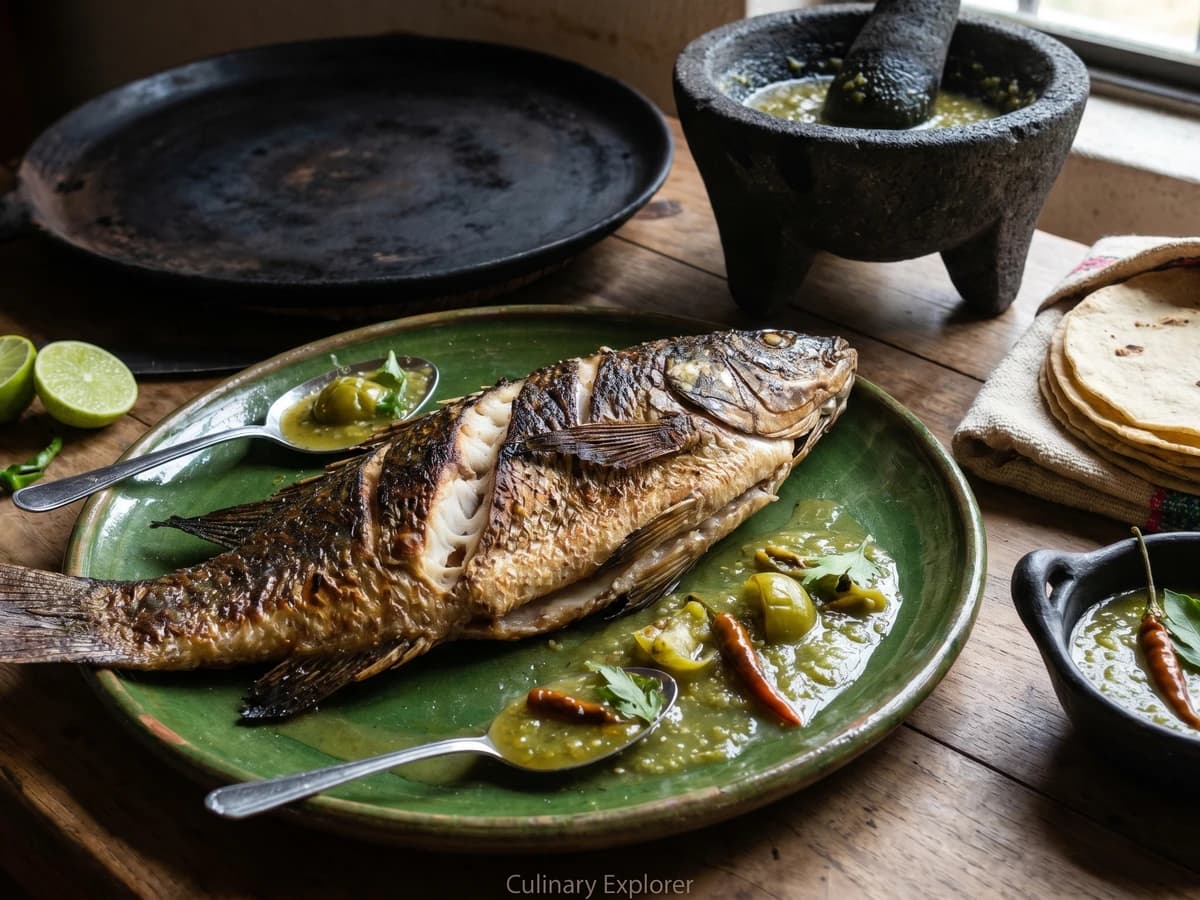
Acúmara Tatemada al Comal
Michoacán's Lake Pátzcuaro acúmara, a whole kurucha from the lago tatemada on a comal de leña and served with chile perón atápakua, corn tortillas, and P'urhépecha discipline.
A cooking platform built around craft, culture, and the stories behind what we eat.

Created by
Puebla's smoky shredded pork, with onions caramelized slow in lard and a reduction of charred tomato and chipotle en adobo, cooked down thick enough to mound on a tostada without sliding off.
Tinga is from Puebla. Not from the city of Mexico, not from the north, not from some generic shared kitchen. Puebla. The same state that gave the country mole poblano and chiles en nogada also gave it this everyday dish of shredded pork in a thick chipotle-tomato sauce, and the women of Puebla guard the recipe the way they guard the other two.
The technique is what separates a real tinga from the lazy version. Onions sliced thin and cooked slowly in manteca until they are deeply golden. Tomatoes charred on the comal, not boiled. Chipotle en adobo, not powdered chipotle. The puree fried in the lard until the fat separates and the color darkens. Then the pork goes in and reduces with the sauce until the mixture is thick enough to hold its shape on a tostada. Each step exists for a reason. Cut one and you are making something else.
My mother made tinga for weeknight dinners because it stretched a small piece of pork into a meal for a full table. We ate it on tostadas with avocado and queso fresco, standing at the kitchen counter, the way Pueblan families have always eaten it. The dish does not need a tablecloth. It needs hands and a stack of napkins. Saber cocinar es saber vivir.
Tinga has its documented roots in 18th-century Puebla, where the convents and middle-class kitchens of the colonial city developed it as a practical shredded-meat preparation that stretched a single cut of pork or beef across a large household. The word 'tinga' is of uncertain etymology, with linguists tracing it variously to a Nahuatl term for 'disorder' (a reference to the shredded, jumbled appearance of the meat) or to a regional Spanish term for a chaotic mix. The defining ingredient, chipotle en adobo, is itself a Pueblan codification: smoke-dried jalapeños rehydrated in a vinegar-and-spice paste, a preservation technique that allowed the smoky chile flavor to travel and keep through the highland winters of central Mexico.
Quantity
2 1/2 pounds
cut into 3-inch chunks
Quantity
1/2 pound
for the broth
Quantity
1 medium
halved (for the broth)
Quantity
1
halved crosswise (for the broth)
Quantity
2
Quantity
1 small bunch
Quantity
1 small bunch
Quantity
1 tablespoon, plus more to taste
Quantity
8 to 10
Quantity
3 tablespoons
Quantity
2
sliced into thin half-moons
Quantity
4
finely chopped
Quantity
2 pounds
Quantity
4 to 6
plus 2 tablespoons of the adobo sauce
Quantity
2
Quantity
1 teaspoon
Quantity
1/2 teaspoon
Quantity
1/2 teaspoon
Quantity
for serving
Quantity
for serving
Quantity
for serving
Quantity
for serving
Quantity
for serving
Quantity
for serving
| Ingredient | Quantity |
|---|---|
| bone-in pork shouldercut into 3-inch chunks | 2 1/2 pounds |
| pork ribs or neck bonesfor the broth | 1/2 pound |
| white onionhalved (for the broth) | 1 medium |
| head of garlichalved crosswise (for the broth) | 1 |
| bay leaves | 2 |
| fresh thyme | 1 small bunch |
| fresh marjoram | 1 small bunch |
| kosher salt | 1 tablespoon, plus more to taste |
| whole black peppercorns | 8 to 10 |
| manteca de cerdo (pork lard) | 3 tablespoons |
| large white onionssliced into thin half-moons | 2 |
| garlic clovesfinely chopped | 4 |
| ripe Roma tomatoes | 2 pounds |
| chiles chipotles en adoboplus 2 tablespoons of the adobo sauce | 4 to 6 |
| dried bay leaves | 2 |
| dried Mexican oregano | 1 teaspoon |
| dried thyme | 1/2 teaspoon |
| dried marjoram | 1/2 teaspoon |
| tostadas (hand-fried corn) (optional) | for serving |
| sliced avocado (optional) | for serving |
| crumbled queso fresco (optional) | for serving |
| crema mexicana (optional) | for serving |
| pickled jalapeños (optional) | for serving |
| lime wedges (optional) | for serving |
Place the pork shoulder and the ribs in a heavy stockpot. Cover with cold water by two inches. Add the halved onion, halved garlic, fresh bay leaves, thyme, marjoram, peppercorns, and the tablespoon of salt. Bring to a slow simmer over medium heat and skim the gray foam that rises in the first fifteen minutes. Lower the heat until the broth barely bubbles. Cook partially covered for about ninety minutes, until the pork pulls apart with a fork. A rolling boil will toughen the meat and cloud the broth. Be patient.
Lift the pork out of the broth and let it cool on a cutting board until you can handle it. Strain the broth and reserve two cups for the tinga. The rest is gold for a soup tomorrow. Pull the meat apart with two forks or your hands into uneven shreds. Tinga is not minced and not chopped. It is shredded. The irregular pieces are what catch the sauce.
Heat a dry comal over medium-high. Lay the whole tomatoes on it and let them blister, turning every couple of minutes, until the skins blacken in patches and the flesh starts to give. About ten minutes. The char is not decoration. It is depth. Drop the charred tomatoes into a blender with the chipotles, the adobo sauce, and a splash of the reserved pork broth. Blend until smooth but not foamy. You want a thick puree, not a sauce.
Melt the lard in a wide, heavy cazuela or deep skillet over medium-low heat. Add the sliced onions with a pinch of salt. Cook slowly, stirring every few minutes, for twenty to twenty-five minutes, until the onions are deeply golden and sweet. Not just translucent. Golden. La manteca es el sabor and the slow onion is the soul of the tinga. Rush this step and the dish will taste flat and sharp. No me vengas con atajos.
Stir in the chopped garlic, the dried bay leaves, the Mexican oregano, the dried thyme, and the dried marjoram. Cook for two more minutes until the garlic loses its raw edge and the dried herbs perfume the lard. The kitchen will smell like a Pueblan home on a Saturday afternoon. That is the marker.
Raise the heat to medium and pour the tomato-chipotle puree into the cazuela over the onions. It will sputter. Cook the puree for eight to ten minutes, stirring often, until it darkens from bright red to a deeper brick color and the fat starts to separate at the edges. This step is called sofreir la salsa. Skip it and the chipotle tastes raw. Cook it through and the sauce gets the round, smoky body that defines a real tinga.
Fold the shredded pork into the sauce, coating every piece. Add about half a cup of the reserved broth, just enough to loosen the mixture. Lower the heat and simmer uncovered for fifteen to twenty minutes, stirring now and then. The tinga is ready when the liquid has reduced and the mixture is thick enough that a spoon dragged across the cazuela leaves a brief trail. It should not be soupy. Tinga has to hold its shape on a tostada without sliding off. Taste and adjust salt now.
Pile the tinga generously onto hand-fried tostadas. Top with sliced avocado, a sprinkle of queso fresco, a thread of crema, and a few pickled jalapeños. Lime on the side. Eat with your hands and accept that it will be messy. Recetas probadas y garantizadas.
1 serving (about 290g)
Culinary guides, cultural storytelling, and the editorial depth that makes cooking meaningful.
Discover Culinary ExplorerChef Lupita
Michoacán's Lake Pátzcuaro acúmara, a whole kurucha from the lago tatemada on a comal de leña and served with chile perón atápakua, corn tortillas, and P'urhépecha discipline.

Chef Lupita
Puebla's weekday adobo of pork shoulder braised in a thick guajillo and ancho sauce sharpened with vinegar, cumin, and clove. The deep red of a market spice stall, the dish a poblana cooks without thinking.

Chef Lupita
Loreto's pit-roasted clams, planted hinge-up in beach sand and tatemadas under a fast fire of dried romerillo brush, the resinous Baja desert shrub that gives this dish its smoke.

Chef Lupita
Oaxaca's eighth mole, the silky, almond-and-cinnamon almendrado, served over poached chicken. Mild, sweet, restrained, and a quiet rebuttal to anyone who thinks Mexican food has to be hot to be Mexican.