
Chef Lupita
Aceite de Chiltepin Bajacaliforniano
Baja California's wild chiltepin steeped in olive oil with garlic, orejon, and lime peel, until the oil turns ruby-amber and carries the slow, sneaky burn of the desert coast.
A cooking platform built around craft, culture, and the stories behind what we eat.
Created by
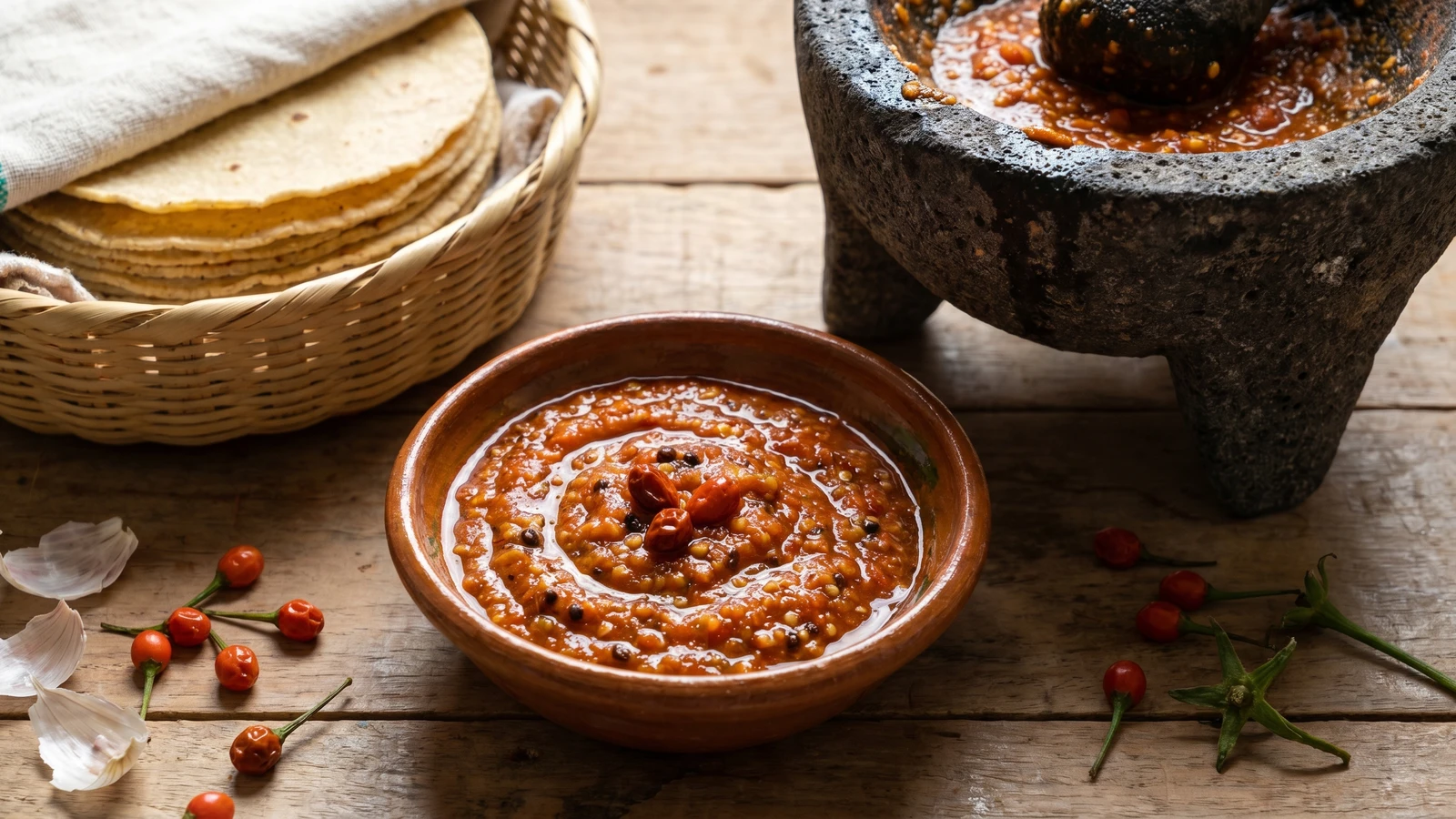
Veracruz's Huasteca salsa from Tihuatlan, tiny wild chiltepines fried in manteca de cerdo with ripe jitomate and garlic, then ground in the molcajete until the table pays attention.
Veracruz, the Huasteca Veracruzana around Tihuatlan, is where this salsa lives: north of Poza Rica, close to Tuxpan, in that hot strip where the monte gives small wild chiles to anyone willing to bend down and pick. This is not a city salsa. It belongs to the milpa edge, the backyard, the market stall with jitomates stacked in red pyramids and a woman measuring chiltepin by the handful because one handful is already serious.
The chile that defines it is chiltepin de monte, tiny, round, sharp, and fast. Not chile de arbol, not jalapeno, not whatever dry red chile you found at the supermarket. The chiltepin is fried briefly in manteca de cerdo after the jitomate and garlic have softened, then everything is ground hot in a molcajete. That order matters. Fry the chile too long and it turns bitter. Grind it cold and it loses its bite.
In Tihuatlan, the women who make this do not explain it as a performance. They cook, taste, add salt, and set the salsa in a small barro bowl next to bocoles, beans, grilled meat, or a plate of eggs. I wrote the instruction in my notebook exactly as one señora gave it to me: "el chile al final, Lupita." The chile at the end. Asi se hace y punto.
The word chiltepin comes from Nahuatl chilli and tecpintli, often translated as flea chile, a name for its small size and sudden bite. Capsicum annuum var. glabriusculum, the wild form behind many domesticated chiles, grows through northern and Gulf Mexico and is spread by birds, which eat the fruit and drop the seeds along fences, milpas, and monte. In the Huasteca shared by Veracruz, Hidalgo, San Luis Potosi, Tamaulipas, Puebla, and Queretaro, fried chile salsas mark regional tables as clearly as zacahuil, bocoles, and cecina.
Quantity
2 tablespoons
stems and leaves picked out, about 40 to 50 tiny chiles
Quantity
5 ripe tomatoes, about 1 1/4 pounds
cored and quartered
Quantity
4
peeled
Quantity
3 tablespoons
Quantity
1 teaspoon, plus more to taste
Quantity
1 to 2 tablespoons
only if needed to loosen the salsa
Quantity
for serving
| Ingredient | Quantity |
|---|---|
| fresh wild chile chiltepin de montestems and leaves picked out, about 40 to 50 tiny chiles | 2 tablespoons |
| jitomate guaje or Roma tomatoescored and quartered | 5 ripe tomatoes, about 1 1/4 pounds |
| garlic clovespeeled | 4 |
| manteca de cerdo | 3 tablespoons |
| coarse sea salt | 1 teaspoon, plus more to taste |
| warm water (optional)only if needed to loosen the salsa | 1 to 2 tablespoons |
| bocoles huastecos, warm corn tortillas, beans, eggs, grilled meat, or cecina (optional) | for serving |
Pick through the chiltepines and remove stems, leaves, and any soft chiles. If they came from the monte dusty, rinse them quickly and dry them completely on a towel. Completely means completely. Water in hot lard jumps back at you. If you are using dried chiltepin, do not rinse it, rub it clean with a dry cloth.
Melt the manteca de cerdo in a small clay cazuela or heavy skillet over medium heat. Add the garlic cloves and the quartered jitomates, cut side down. Let them sizzle until the garlic turns golden in spots and the tomatoes slump, wrinkle, and leave red juices in the fat, 8 to 10 minutes. This is not just heating tomato. You are concentrating it in pork fat. La manteca es el sabor.
Lower the heat to medium-low and push the tomatoes to one side of the pan. Add the chiltepines to the fat and fry them briefly, 20 to 30 seconds for fresh chiles or 10 to 15 seconds for dried. They should darken slightly and smell sharp. Do not walk away. Chiltepin is tiny and burns fast. Burn it and the salsa turns bitter. No me vengas con atajos.
Transfer the salt and fried garlic to a volcanic stone molcajete. Grind them into a paste first. Add the fried chiltepines with a spoonful of the red lard from the pan and crush until you see broken skins and seeds. Add the fried tomatoes piece by piece, grinding after each addition so the salsa stays coarse, not smooth. Scrape in the tomato juices and remaining lard from the pan. That fat carries the chile through the whole salsa.
Taste for salt while the salsa is still warm. If it is too thick to spoon, add 1 tablespoon warm water and grind once more. The finished salsa should be red-orange, glossy at the edges from the manteca, and rough enough that you can see tomato skin and tiny chile seeds. Let it rest 10 minutes before serving so the chile settles into the tomato.
Spoon the salsa into a small glazed barro bowl and set it on the table with bocoles huastecos, warm corn tortillas, beans, eggs, grilled meat, or cecina. Use it with respect. Chiltepin does not shout for long, it strikes fast and disappears clean. That is why the women in Tihuatlan keep making it this way. Cada estado, su propia cocina.
1 serving (about 30g)
Culinary guides, cultural storytelling, and the editorial depth that makes cooking meaningful.
Discover Culinary ExplorerChef Lupita
Baja California's wild chiltepin steeped in olive oil with garlic, orejon, and lime peel, until the oil turns ruby-amber and carries the slow, sneaky burn of the desert coast.

Chef Lupita
Puebla's Lenten convent adobo, a brick-red vinegar chile paste of ancho, guajillo, garlic, oregano, and comino made to dress fish for the meatless calendar.
Chef Lupita
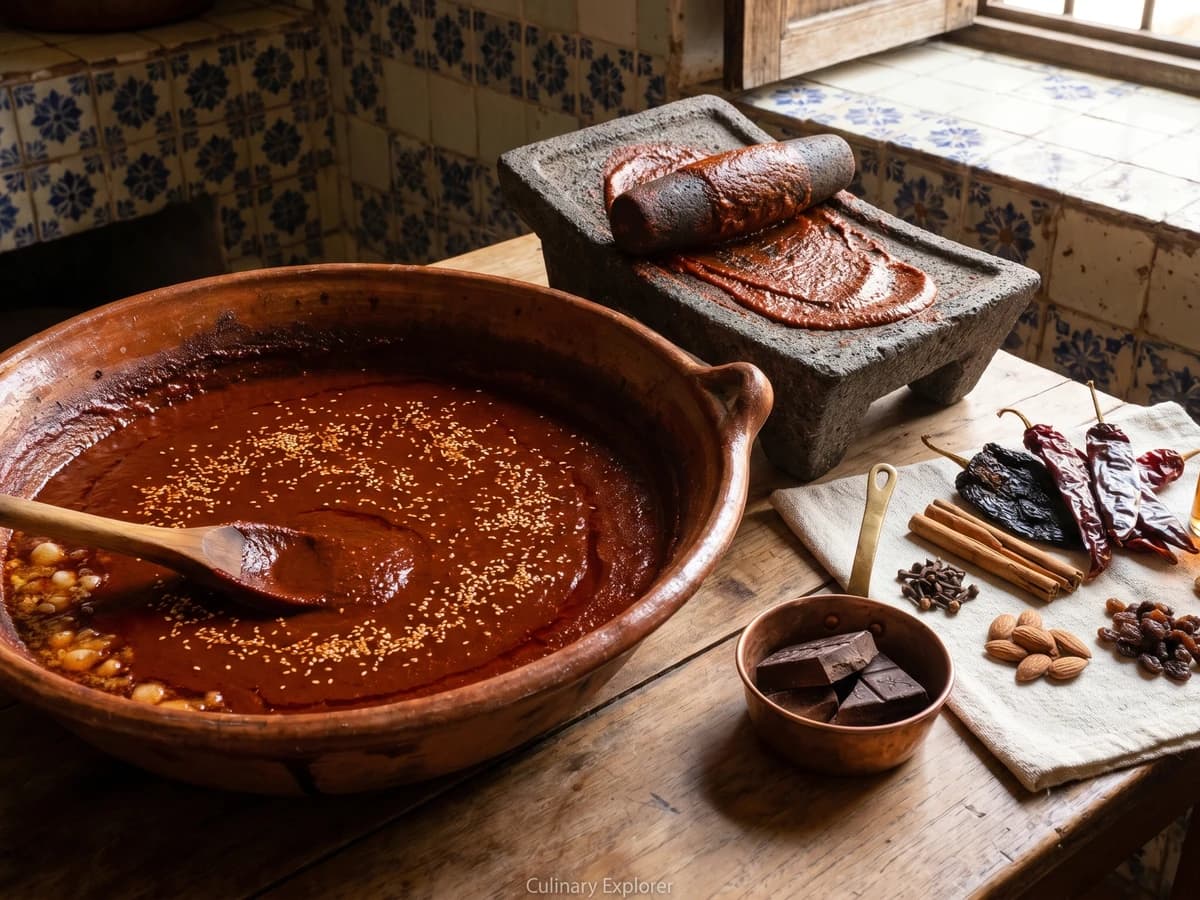
Zacatecas' wedding-table adobo, built from toasted guajillo and ancho, piloncillo, sour orange, chocolate, canela, clavo, almonds, sesame, and lard.

Chef Lupita
Puebla's convent kitchens built this adobo with ancho, guajillo, jerez, almonds, raisins, clove, and lard, a baroque marinade that stains pork loin and finishes as the sauce.