
Chef Dimitra
Aegean Island Kakavia (Κακαβιά)
Aegean kakavia is the fisherman’s soup named for the pot itself: small rockfish, potato, onion, lemon, and enough olive oil to turn a poor catch rich.
A cooking platform built around craft, culture, and the stories behind what we eat.
Created by
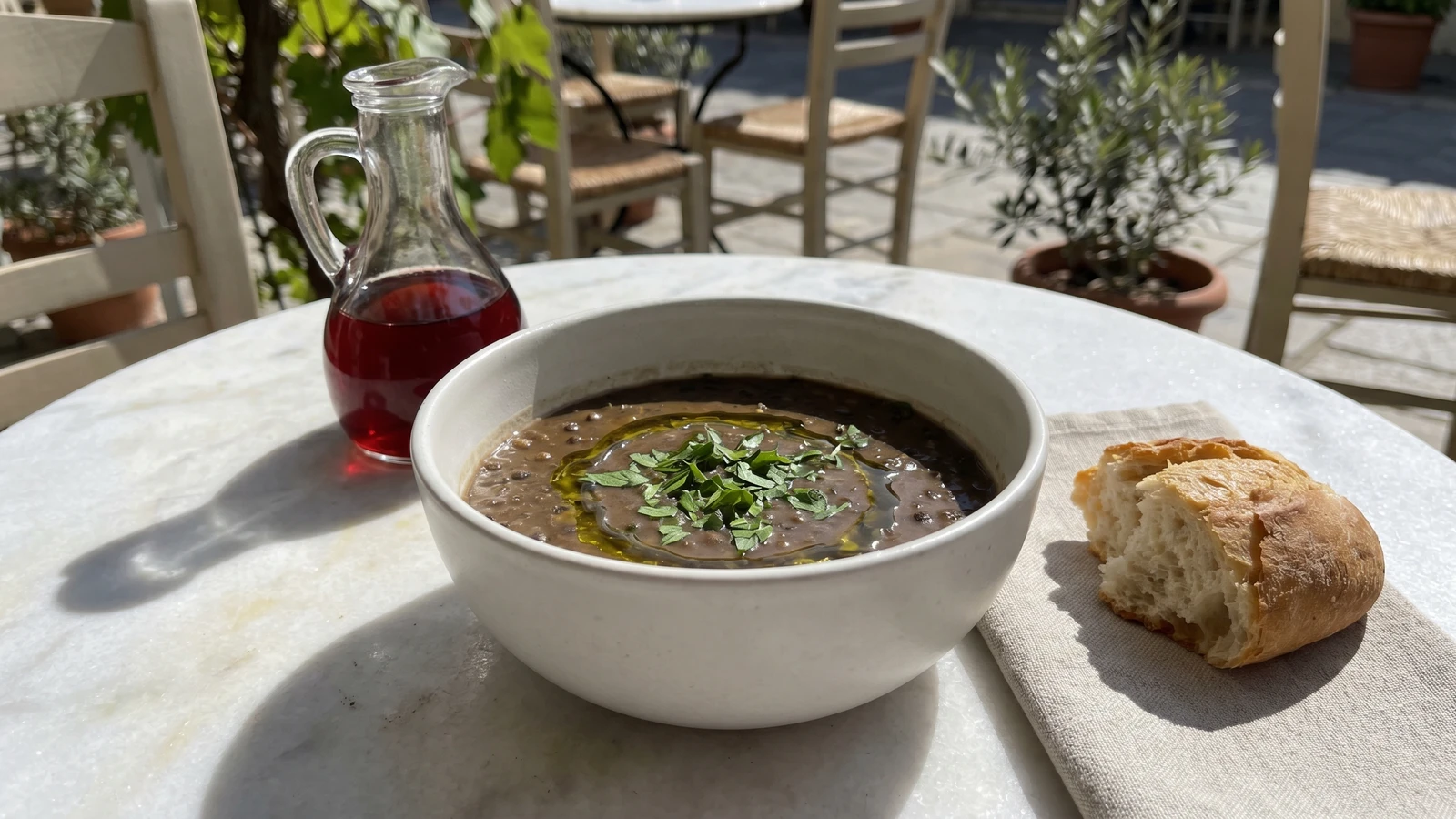
Thessaloniki fakes are the plain brown lentil soup of the weekday table: garlic, bay, good olive oil, and vinegar added at the end, where the dish wakes up.
Thessaloniki fakes are brown lentils cooked with garlic, bay, a little tomato, and olive oil, then sharpened with red wine vinegar at the table. They are not glamorous. Good. This is the soup that feeds a house on a Tuesday and still tastes like someone was paying attention.
The one method that decides the pot is the first short boil. Five minutes, then drain and start again with fresh water. Old cooks do it because it gives a cleaner broth and softens the heavy edge of the lentils without stripping away their body. After that, the soup asks for very little: a low simmer, salt near the end, vinegar off the heat.
I record this as the northern mainland bowl I know from Thessaloniki, where the pot goes on before the day takes hold and nobody argues about whether vinegar belongs. It does. A drizzle of olive oil, a heel of bread, olives if you have them. Λίγα και καλά, a few things, and good ones.
Fakes are one of the oldest everyday pulse dishes in the Greek kitchen, tied less to feast days than to the ordinary economy of the household. Lentils were cultivated in the eastern Mediterranean from antiquity, and in modern Greece they became a fasting-table staple because they need no meat, dairy, or fish to make a complete meal. The splash of vinegar at serving is a particularly Greek habit, balancing the earthiness of the lentils and helping a small pot taste alive.
Quantity
300g
picked over and rinsed
Quantity
1.5L
plus more as needed
Quantity
1 medium
finely chopped
Quantity
3
thinly sliced
Quantity
2
Quantity
60ml
plus more for serving
Quantity
1 tablespoon
Quantity
1 medium
diced small
Quantity
1 teaspoon
plus more to taste
Quantity
1/2 teaspoon
Quantity
2 tablespoons
plus more at the table
Quantity
small handful
chopped
| Ingredient | Quantity |
|---|---|
| small brown lentils (φακές)picked over and rinsed | 300g |
| waterplus more as needed | 1.5L |
| yellow onionfinely chopped | 1 medium |
| garlic clovesthinly sliced | 3 |
| bay leaves | 2 |
| extra virgin olive oilplus more for serving | 60ml |
| tomato paste | 1 tablespoon |
| carrotdiced small | 1 medium |
| fine sea saltplus more to taste | 1 teaspoon |
| freshly ground black pepper | 1/2 teaspoon |
| red wine vinegarplus more at the table | 2 tablespoons |
| flat-leaf parsley (optional)chopped | small handful |
Pick through the lentils for small stones, then rinse them under cold water until the water runs clear. Put them in a pot with enough fresh water to cover by 5cm, bring to a boil, and boil for 5 minutes. Drain them. This first boil softens the harsher edge of the lentils and gives a cleaner broth.
Return the drained lentils to the pot with 1.5L fresh water, the onion, garlic, bay leaves, carrot, tomato paste, olive oil, and black pepper. Bring to a steady boil, then lower the heat until the soup moves quietly, with small bubbles at the edges.
Simmer uncovered for 35 to 45 minutes, stirring now and then, until the lentils are tender but not broken into mud. Add a little hot water if the soup thickens too much before the lentils are done. Fakes should be brothy, not a lentil purée.
Add the salt only once the lentils are mostly tender, then simmer 5 minutes more. Remove the bay leaves and stir in 2 tablespoons red wine vinegar off the heat. Taste. It should be earthy first, sharp at the edge, and rich from the oil.
Ladle the fakes into bowls and finish each one with a small thread of olive oil. Set red wine vinegar on the table. In a Greek kitchen this isn't decoration, it's the final seasoning, and each person sharpens the bowl as they like.
1 serving (about 315g)
Culinary guides, cultural storytelling, and the editorial depth that makes cooking meaningful.
Discover Culinary ExplorerChef Dimitra
Aegean kakavia is the fisherman’s soup named for the pot itself: small rockfish, potato, onion, lemon, and enough olive oil to turn a poor catch rich.

Chef Dimitra
Corfu's bourdeto is a red, pepper-hot fish braise, traditionally made with scorpionfish, potatoes, tomato, and enough heat to announce the Ionian table.

Chef Dimitra
Central Macedonia's spring lamb fricassee braises shoulder with romaine, dill, and spring onion, then finishes the pot with avgolemono, the egg-lemon sauce that makes it silk.

Chef Dimitra
In Chania, tsigariasto is goat or lamb browned in olive oil, softened with wine, and left to braise without water until the pot gives back only glossy meat juices.