
Chef Dimitra
Aegean Island Kakavia (Κακαβιά)
Aegean kakavia is the fisherman’s soup named for the pot itself: small rockfish, potato, onion, lemon, and enough olive oil to turn a poor catch rich.
A cooking platform built around craft, culture, and the stories behind what we eat.
Created by
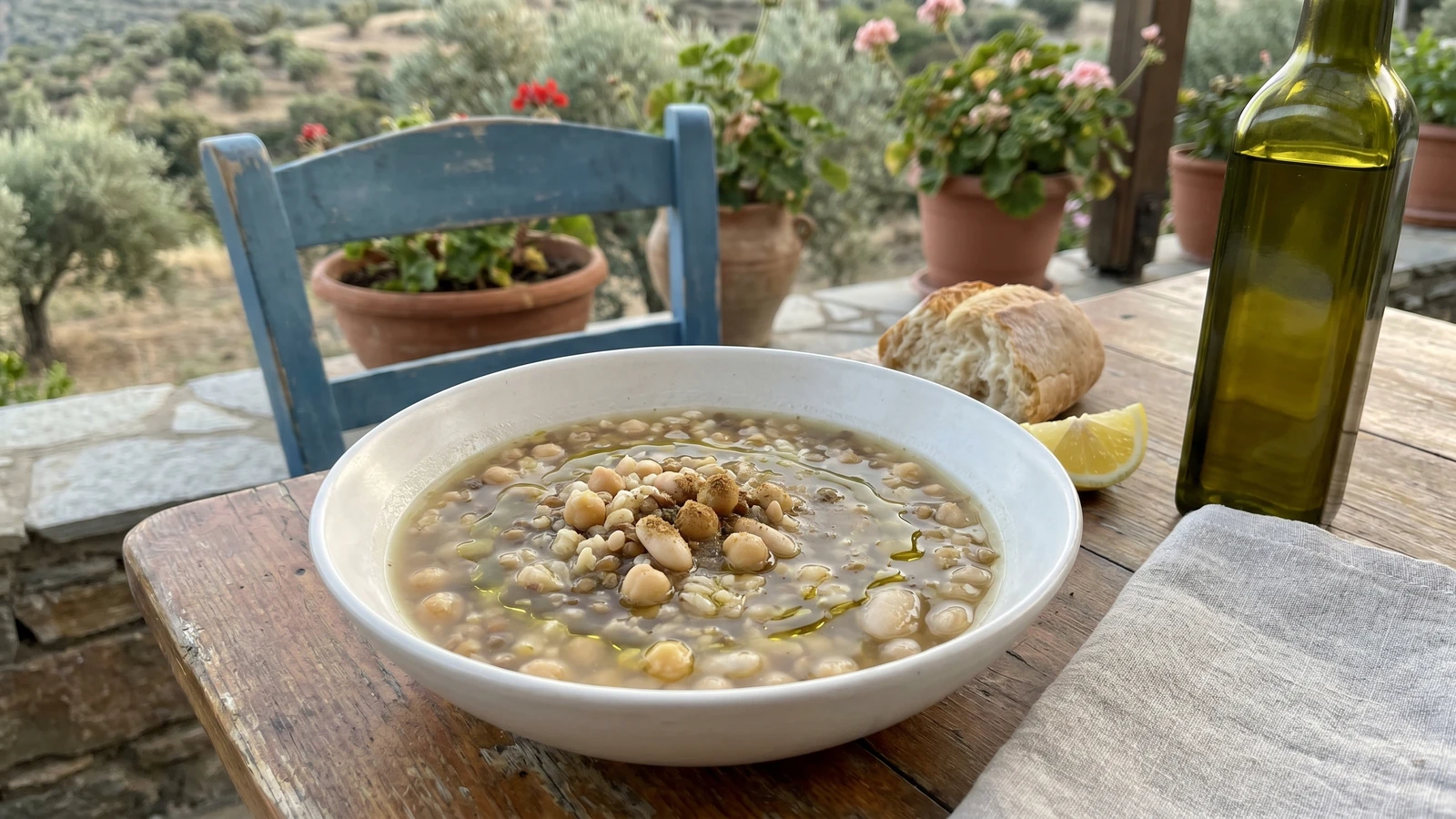
Crete's palikaria is a November fasting pot of chickpeas, white beans, lentils, and wheat, cooked in careful order and finished with cumin, lemon, and green-gold olive oil.
Cretan ospriada, called palikaria in many houses, is the November pot of many seeds: chickpeas, small white beans, lentils, and wheat berries cooked meatless until the broth turns cloudy and generous. It belongs to Panagia's feast, but it isn't solemn food. It is practical Cretan cooking, the cupboard gathered into one pot, sharpened with lemon and warmed with cumin.
The method is simple, but the order matters. The hard beans and wheat go first, the lentils later. If everything starts together, the lentils break down before the chickpeas are tender, and you lose the clear little chorus of each pulse. Keep the salt and lemon for the end, when the skins have softened. That's the whole trick.
I like this one because it tells the truth about fasting food. No meat, no dairy, no apology. Good olive oil, and patience. The pot tastes better after a rest, and tomorrow it will need only a little hot water and another squeeze of lemon to wake it back up.
In Crete, ospriada is better known in many houses as palikaria and is tied to Eisodia tis Theotokou, the Presentation of the Virgin, on 21 November, when the sowing season is underway. The broader Greek custom is called polysporia, many seeds boiled together, and it preserves an older agrarian habit of offering and sharing the household's pulses and grain. Crete keeps the pot savory, with cumin, lemon, and olive oil, unlike the sweeter seed mixtures found in some other Greek regions.
Quantity
160g
picked over and soaked overnight
Quantity
160g
picked over and soaked overnight
Quantity
120g
picked over and soaked overnight
Quantity
100g
rinsed
Quantity
2 liters
plus hot water as needed
Quantity
1
Quantity
1 large, about 180g
finely chopped
Quantity
90ml
divided
Quantity
4g, about 2 teaspoons
plus a pinch for serving
Quantity
12g
plus more to taste
Quantity
1/2 teaspoon
Quantity
70ml
plus lemon wedges for serving
| Ingredient | Quantity |
|---|---|
| dried chickpeaspicked over and soaked overnight | 160g |
| dried small white beanspicked over and soaked overnight | 160g |
| whole wheat berries (sitari)picked over and soaked overnight | 120g |
| brown or green lentils (fakes)rinsed | 100g |
| fresh waterplus hot water as needed | 2 liters |
| bay leaf | 1 |
| yellow onionfinely chopped | 1 large, about 180g |
| extra virgin Koroneiki olive oildivided | 90ml |
| ground cumin (kymino)plus a pinch for serving | 4g, about 2 teaspoons |
| fine sea saltplus more to taste | 12g |
| freshly ground black pepper | 1/2 teaspoon |
| fresh lemon juiceplus lemon wedges for serving | 70ml |
Put the chickpeas, white beans, and wheat berries in a large bowl, cover with plenty of cool water, and leave them overnight, 10 to 12 hours. Keep the lentils separate. They don't need soaking, only a rinse before they meet the pot.
Drain the soaked chickpeas, beans, and wheat. Put them in a heavy pot with 2 liters fresh water and the bay leaf. Bring to a boil, skim the gray froth from the surface, then lower the heat to a steady simmer.
Cook for 60 to 75 minutes, with the lid slightly ajar, until the chickpeas and beans have begun to soften but still keep their shape. Add hot water if the level drops below the pulses. Don't salt yet.
Stir in the rinsed lentils, chopped onion, and 45ml of the olive oil. Simmer 35 to 45 minutes more, until the chickpeas, beans, wheat, and lentils are all tender and the broth is lightly thickened.
Add the salt, cumin, and black pepper. Simmer 10 minutes so the cumin warms through the pot and the salt reaches the beans. The soup should be brothy but not thin, with each pulse still visible.
Take the pot off the heat and remove the bay leaf. Stir in the remaining 45ml olive oil and the lemon juice. Taste and correct the salt. The lemon goes in at the end, after the skins are tender, when it can brighten the pot instead of toughening it.
Let the ospriada rest 15 minutes before serving. Ladle it into deep bowls, finish each one with a thread of olive oil, a pinch of cumin, and lemon wedges on the side. Country bread belongs here.
1 serving (about 425g)
Culinary guides, cultural storytelling, and the editorial depth that makes cooking meaningful.
Discover Culinary ExplorerChef Dimitra
Aegean kakavia is the fisherman’s soup named for the pot itself: small rockfish, potato, onion, lemon, and enough olive oil to turn a poor catch rich.

Chef Dimitra
Corfu's bourdeto is a red, pepper-hot fish braise, traditionally made with scorpionfish, potatoes, tomato, and enough heat to announce the Ionian table.

Chef Dimitra
Central Macedonia's spring lamb fricassee braises shoulder with romaine, dill, and spring onion, then finishes the pot with avgolemono, the egg-lemon sauce that makes it silk.

Chef Dimitra
In Chania, tsigariasto is goat or lamb browned in olive oil, softened with wine, and left to braise without water until the pot gives back only glossy meat juices.