
Chef Dimitra
Bourdeto Kerkyra (Μπουρδέτο Κέρκυρας)
Corfu's bourdeto is a red, pepper-hot fish braise, traditionally made with scorpionfish, potatoes, tomato, and enough heat to announce the Ionian table.
A cooking platform built around craft, culture, and the stories behind what we eat.
Created by
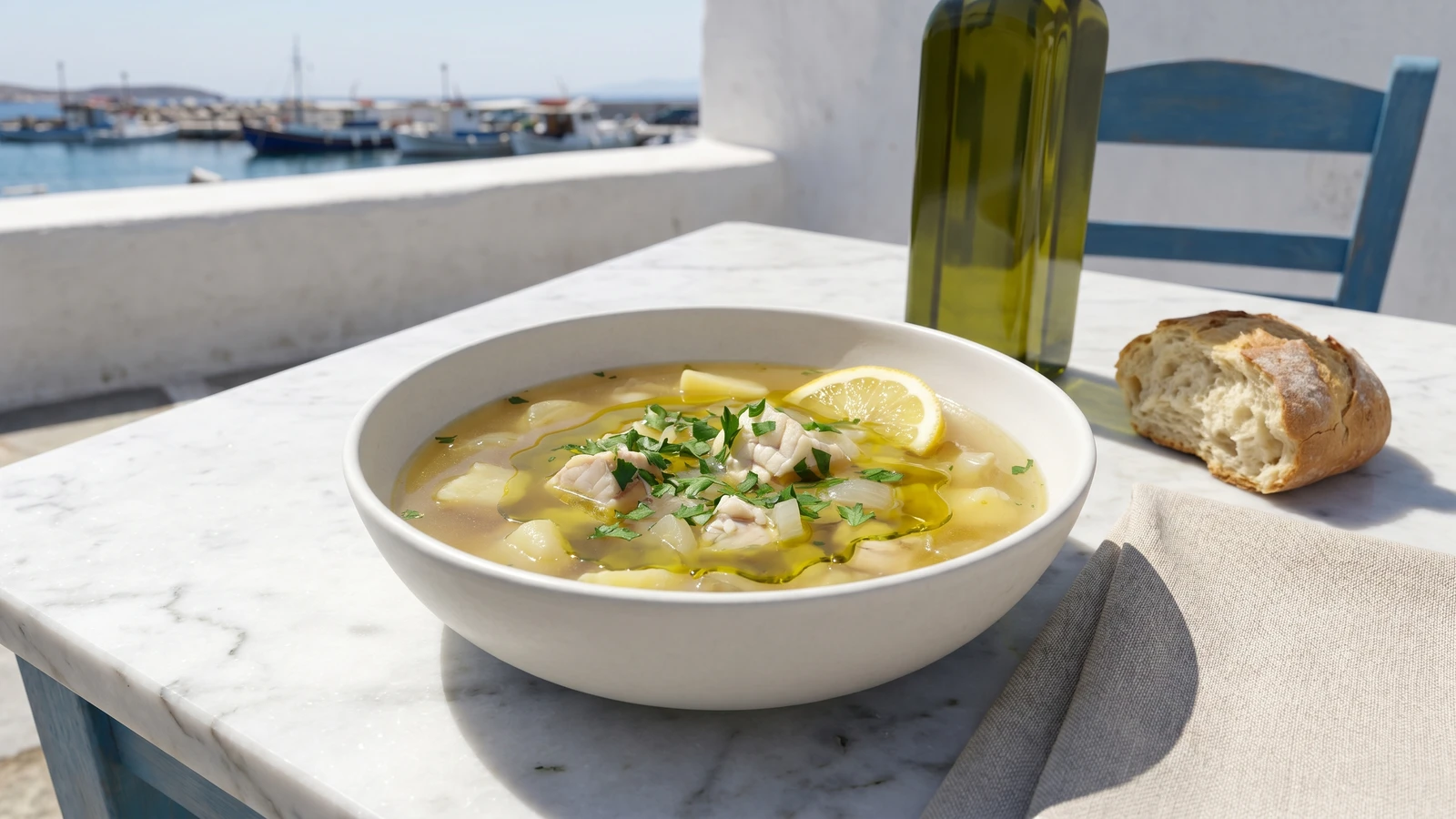
Aegean kakavia is the fisherman’s soup named for the pot itself: small rockfish, potato, onion, lemon, and enough olive oil to turn a poor catch rich.
Aegean kakavia is the fisherman’s soup of the islands, named for the kakavi, the pot that went with the boat. Small rockfish, onion, potato, celery, lemon, and a flood of olive oil make a broth sweeter than its ingredients look on paper. The region is the dish’s surname, and here the surname is the Aegean shore: practical, salty, and poor only if you don’t understand fish bones.
The fish are not a garnish for the soup. They are the soup. You need heads, bones, skin, and the small awkward fish that a grand restaurant ignores. Simmer them gently, never at a rolling boil, and strain the broth clean. That quiet heat is what gives kakavia its body without turning it cloudy or harsh.
I don’t invent it. I find it, I test it, I write it down. Kakavia is one of those dishes that proves the Greek kitchen’s old rule: λίγα και καλά, a few things, and good ones. If the fish are fresh, the pot will forgive you almost everything. If they aren’t, no clever hand can save it.
Kakavia takes its name from the kakavi, the cooking pot used by Greek fishermen, and versions of the soup are recorded across the Aegean and Ionian coasts. Its ancestry is often linked to ancient Greek fish soups, but the living dish is humbler: fishermen cooked the small, bony, hard-to-sell fish with oil and whatever vegetables were aboard or at home. In many island households the fish and vegetables are served on a platter, with the strained broth ladled first as the meal’s opening bowl.
Quantity
1.5kg
cleaned and scaled
Quantity
1, about 180g
thinly sliced
Quantity
3 medium, about 600g
peeled and cut into thick rounds
Quantity
2 medium, about 200g
cut into thick rounds
Quantity
2, about 120g
roughly chopped
Quantity
2
Quantity
120ml
plus more to finish
Quantity
1.6L
or just enough to barely cover
Quantity
12g
plus more to taste
Quantity
1/2 teaspoon
Quantity
80ml
Quantity
2 tablespoons
chopped
| Ingredient | Quantity |
|---|---|
| mixed small whole rockfishcleaned and scaled | 1.5kg |
| large onionthinly sliced | 1, about 180g |
| waxy potatoespeeled and cut into thick rounds | 3 medium, about 600g |
| carrotscut into thick rounds | 2 medium, about 200g |
| celery stalks with leavesroughly chopped | 2, about 120g |
| bay leaves | 2 |
| extra virgin Koroneiki olive oilplus more to finish | 120ml |
| cold wateror just enough to barely cover | 1.6L |
| fine sea saltplus more to taste | 12g |
| black peppercorns | 1/2 teaspoon |
| fresh lemon juice | 80ml |
| flat-leaf parsleychopped | 2 tablespoons |
Ask for a mix of small whole fish with bones and heads: scorpionfish, gurnard, comber, small bream, weever if your fishmonger cleans it safely. Kakavia depends on ordinary fish with good bones, not expensive fillets. Rinse them briefly and pat them dry.
Lay the onion, potatoes, carrots, celery, bay leaves, salt, and peppercorns in a wide heavy pot. Set the fish on top in one loose layer, pour over the olive oil, then add cold water until it just barely covers the fish. Too much water gives you thin soup. The old kakavi pot was practical, not romantic.
Bring the pot slowly to a bare simmer over medium heat, skimming the gray foam as it rises. Lower the heat and cook gently for 25 to 30 minutes, without stirring, until the potatoes are tender and the fish pulls easily from the bone. This is the step that decides kakavia: a hard boil breaks the fish and muddies the broth, while a quiet simmer lets the bones give sweetness and body.
Use a wide slotted spoon to lift the fish and vegetables onto a platter. Strain the broth through a fine sieve into a clean pot, pressing only lightly. Pick any good pieces of fish from the bones if you want them in the bowl, but don't force the scraps through the sieve.
Return the strained broth to low heat just until glossy and hot. Take it off the heat, stir in the lemon juice, taste for salt, and add another small thread of olive oil if the broth wants it. It should taste clean, fish-sweet, and bright, not sour.
Serve the broth in deep bowls with pieces of fish and potato, or serve the fish and vegetables separately on a platter with the soup first. Scatter with parsley and add olive oil at the table. Country bread is not decoration here. It is for the bowl.
1 serving (about 405g)
Culinary guides, cultural storytelling, and the editorial depth that makes cooking meaningful.
Discover Culinary ExplorerChef Dimitra
Corfu's bourdeto is a red, pepper-hot fish braise, traditionally made with scorpionfish, potatoes, tomato, and enough heat to announce the Ionian table.

Chef Dimitra
Central Macedonia's spring lamb fricassee braises shoulder with romaine, dill, and spring onion, then finishes the pot with avgolemono, the egg-lemon sauce that makes it silk.

Chef Dimitra
In Chania, tsigariasto is goat or lamb browned in olive oil, softened with wine, and left to braise without water until the pot gives back only glossy meat juices.
Chef Dimitra
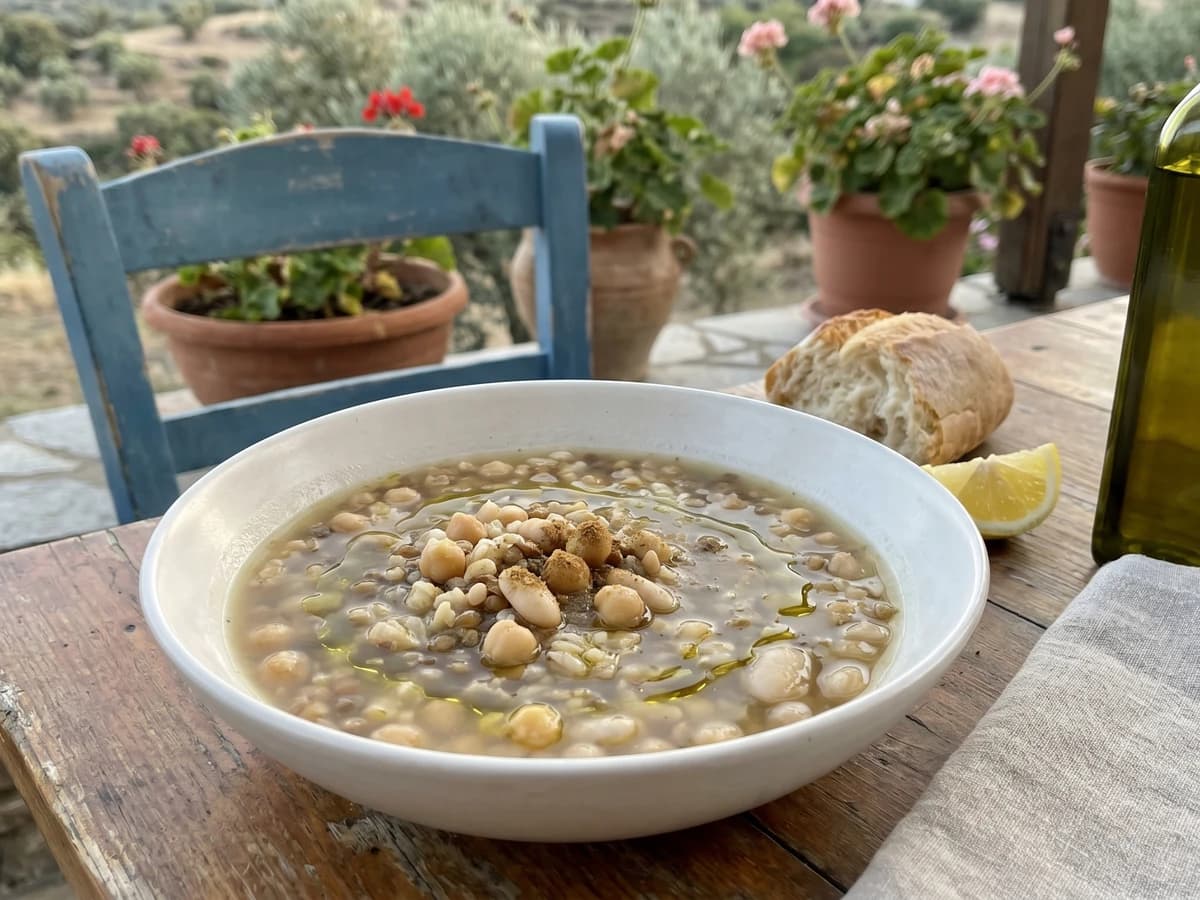
Crete's palikaria is a November fasting pot of chickpeas, white beans, lentils, and wheat, cooked in careful order and finished with cumin, lemon, and green-gold olive oil.