
Chef Dimitra
Aegean Island Kakavia (Κακαβιά)
Aegean kakavia is the fisherman’s soup named for the pot itself: small rockfish, potato, onion, lemon, and enough olive oil to turn a poor catch rich.
A cooking platform built around craft, culture, and the stories behind what we eat.
Created by
Cypriot louvana is yellow split peas cooked down with rice and leek, then beaten smooth and sharpened with lemon, a plain Lenten soup that fills the bowl honestly.
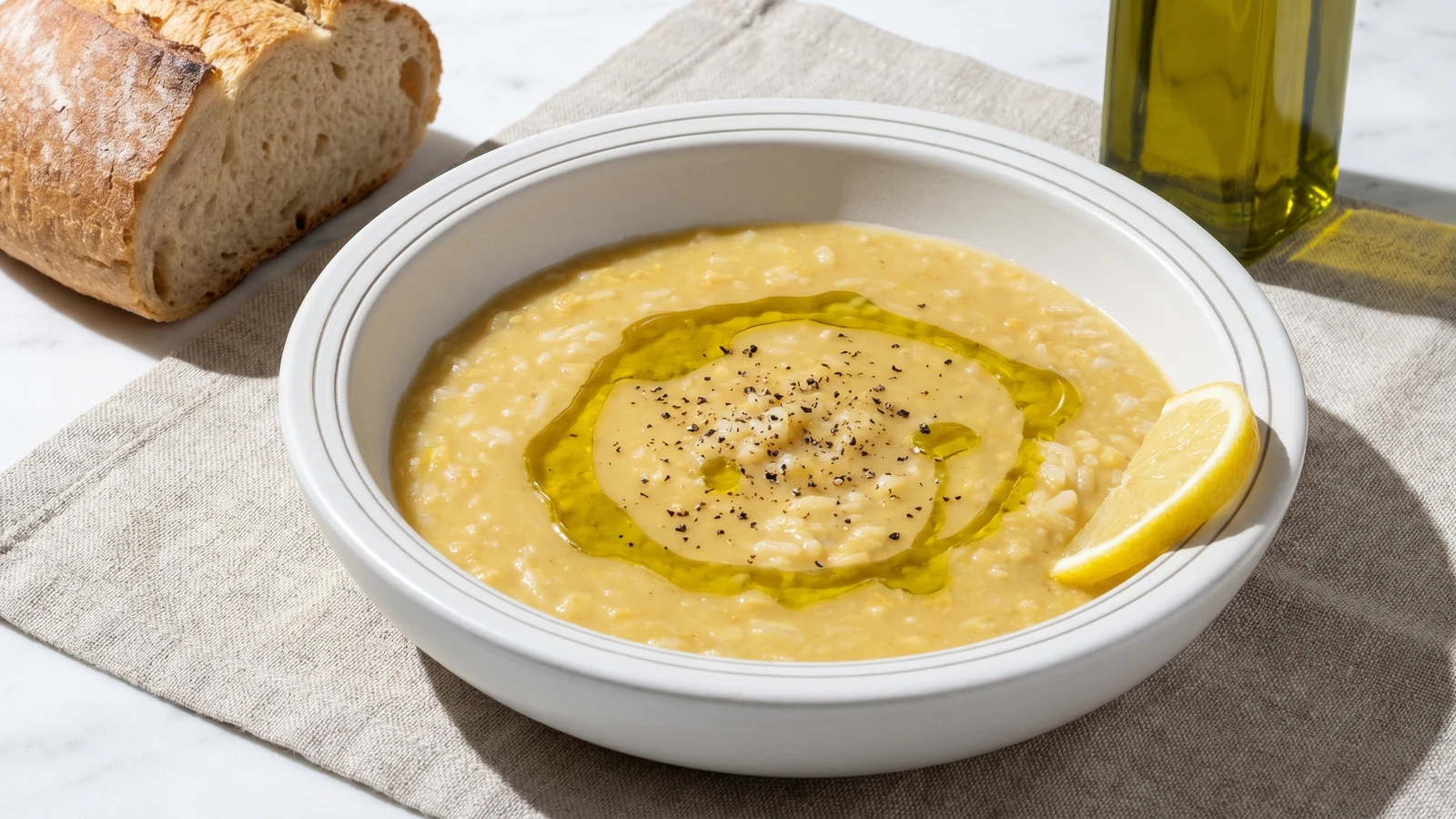
Cypriot louvana (Λουβάνα) is the island's yellow split pea soup, thickened with rice and sweet leek until it sits between a broth and a puree. It belongs to the nistisima table, the Orthodox fasting table, but it isn't punishment food. The bowl is pale gold, glossy with olive oil, and bright enough with lemon to wake the whole pot.
The method is humble, with one place where you pay attention. Once the rice goes in, keep the flame low and stir like you mean it, because split peas and rice settle and catch at the bottom before they soften into each other. Let them cook slowly and the peas collapse around the grains, making a soup that needs no butter, no stock, no fuss.
I serve it with lemon at the table and a last thread of olive oil, the way a Cypriot house makes a small pot generous. A cook from Nicosia wrote in my notebook, 'more lemon than you think.' She was right. The region is the dish's surname, and Cyprus keeps this one plain.
Louvana is the Cypriot Greek name for yellow split peas, and the island's soup keeps them apart from the Aegean fava served as a meze puree. Its place is the nistisima table of Great Lent and the weekly fasts, where pulses, rice, leeks, and lemon made a filling meal without meat or dairy. The rice is the Cypriot mark: it turns a small measure of pulse into a family soup while keeping the bowl thick enough to eat with bread.
Quantity
300g
picked over and rinsed
Quantity
90g
rinsed
Quantity
1, about 220g trimmed
white and pale green parts finely sliced
Quantity
1 medium, about 150g
finely chopped
Quantity
1.8L
plus boiling water as needed
Quantity
90ml
divided
Quantity
10g
plus more as needed
Quantity
1/2 teaspoon
plus more for serving
Quantity
75ml
plus lemon wedges for serving
| Ingredient | Quantity |
|---|---|
| yellow split peas (louvana, λουβάνα)picked over and rinsed | 300g |
| medium-grain ricerinsed | 90g |
| large leekwhite and pale green parts finely sliced | 1, about 220g trimmed |
| yellow onionfinely chopped | 1 medium, about 150g |
| waterplus boiling water as needed | 1.8L |
| extra virgin olive oildivided | 90ml |
| fine sea saltplus more as needed | 10g |
| freshly ground black pepperplus more for serving | 1/2 teaspoon |
| fresh lemon juiceplus lemon wedges for serving | 75ml |
Rinse the louvana in two or three changes of cold water, rubbing the peas lightly between your fingers, until the water is only faintly cloudy. Rinse the rice separately and keep it aside. Small stones are rare now, but check anyway; an old habit saves teeth.
Put the louvana and 1.8L water in a heavy 4 litre pot and bring to a boil over medium-high heat. As the gray froth rises, skim it off with a spoon. Lower the heat and simmer, partly covered, for 25 minutes, until the peas are swollen and beginning to split at the edges.
While the peas simmer, warm 60ml of the olive oil in a small pan over medium-low heat. Add the onion and leek with a pinch of the measured salt and cook for 10 to 12 minutes, stirring often, until soft and sweet-smelling but not browned.
Scrape the leek and onion into the pot. Add the rinsed rice, the remaining salt, and the black pepper. Stir well and return the soup to a gentle bubble.
Simmer for 25 to 30 minutes, uncovered, stirring every few minutes and scraping the bottom of the pot. Once the rice goes in, this soup can catch before it looks thick; low heat and steady stirring are what keep the louvana sweet instead of scorched. Add a splash of boiling water if the spoon starts leaving a dry path.
Take the pot off the heat. Whisk for 1 to 2 minutes, breaking the peas into the broth while leaving some rice grains visible, until the soup looks creamy and pale gold. Stir in 60ml lemon juice, taste, then add the remaining 15ml if you want the true Cypriot brightness.
Rest the soup for 10 minutes, because it thickens as it settles. Ladle into warm bowls, finish each with the remaining 30ml olive oil divided over the top, a little black pepper, and lemon wedges at the side. Serve with bread, olives, or nothing else. It is a complete little pot.
1 serving (about 400g)
Culinary guides, cultural storytelling, and the editorial depth that makes cooking meaningful.
Discover Culinary ExplorerChef Dimitra
Aegean kakavia is the fisherman’s soup named for the pot itself: small rockfish, potato, onion, lemon, and enough olive oil to turn a poor catch rich.

Chef Dimitra
Corfu's bourdeto is a red, pepper-hot fish braise, traditionally made with scorpionfish, potatoes, tomato, and enough heat to announce the Ionian table.

Chef Dimitra
Central Macedonia's spring lamb fricassee braises shoulder with romaine, dill, and spring onion, then finishes the pot with avgolemono, the egg-lemon sauce that makes it silk.

Chef Dimitra
In Chania, tsigariasto is goat or lamb browned in olive oil, softened with wine, and left to braise without water until the pot gives back only glossy meat juices.