
Chef Takumi
Ago Dashi (あごだし, grilled flying fish stock)
Ago dashi is quiet luxury: roasted flying fish, konbu, and patient water. Steep it slowly and you get a clear stock that tastes sweet, clean, and full without heaviness.
A cooking platform built around craft, culture, and the stories behind what we eat.
Created by
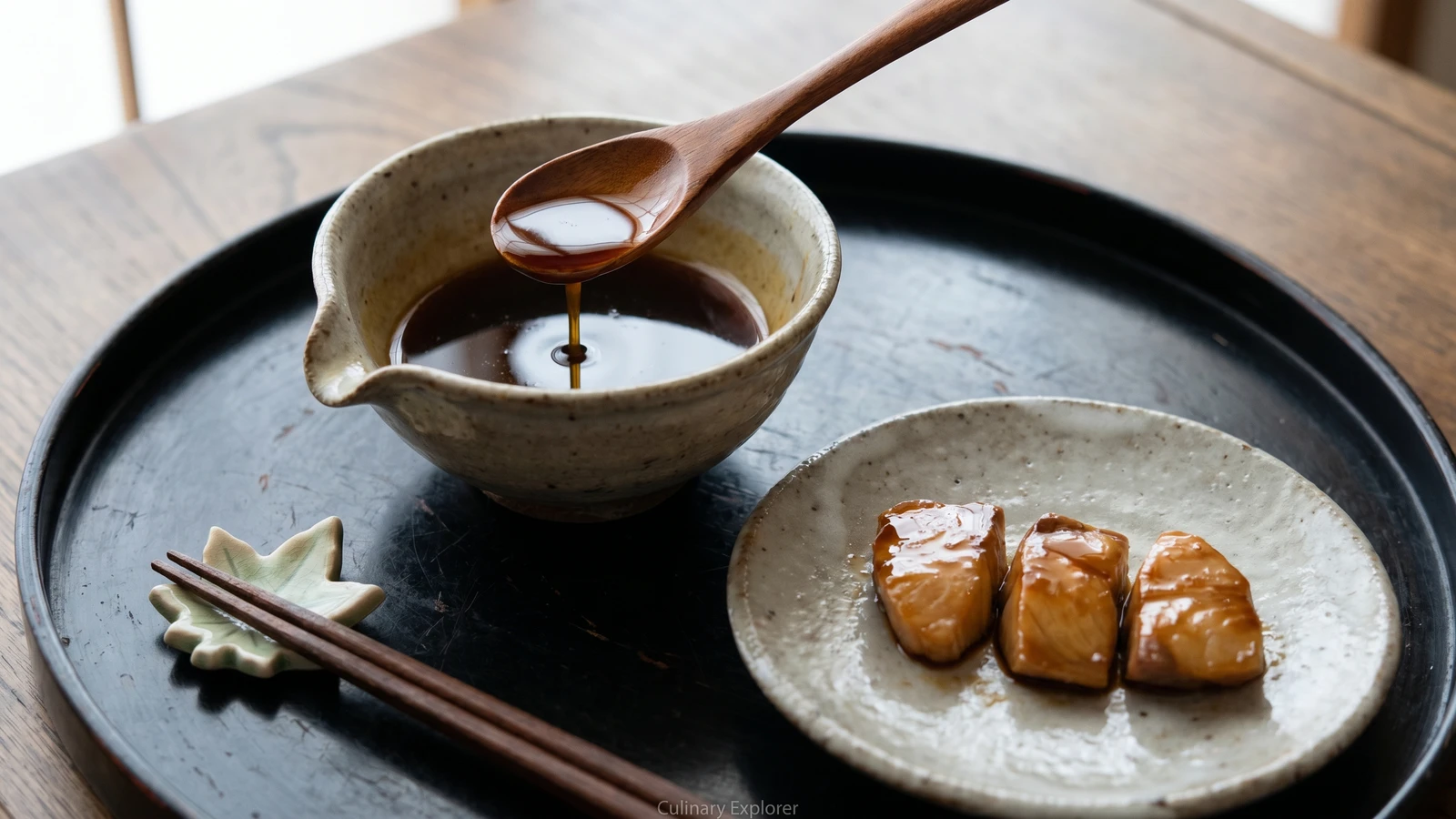
Real teriyaki sauce is not bottled sweetness. It is soy, mirin, sake, and sugar reduced only until glossy, so fish or chicken shines without being buried.
Teriyaki no tare begins with a shine, not a bottle. The word teri is the gloss you see on the surface, and yaki is the grilling or pan-grilling that gives it somewhere to cling. The sauce itself is almost sternly plain: soy sauce, mirin, sake, and a little sugar. This is the part that makes people suspicious. Surely there must be more. There isn't, which is merciful.
The first secret is the reduction. Simmer the four ingredients until the bubbles turn glossy and the sauce lightly coats a spoon, then stop. Too little reduction and it slides off the fish. Too much and the sugar darkens past shine into bitterness, while the soy grows harsh. The tare should glaze, not smother.
Use it as we do: near the end. Cook yellowtail in its winter shun, its season of prime fat, salmon, or chicken thigh until nearly done, then spoon the tare over and let the surface go shining-dark. Teriyaki is the method, not the menu. The 本物 (honmono, the real thing) is restrained: the sauce is not there to rescue a tired ingredient; it is there to leave a good one visible, with nothing hidden.
Teriyaki combines teri, the lustrous sheen created by sugar and mirin in soy sauce, with yaki, grilled or broiled food. The method took shape after soy sauce became widely available in the Edo period, when koikuchi shōyu production grew around Edo in the seventeenth century and sweet soy glazes became practical for fish such as yellowtail. The thick bottled sauce familiar overseas is largely a twentieth-century North American development; in Japan, teriyaki is usually a cooking method, with the tare reduced and spooned onto the food near the end.
Quantity
1/2 cup
Quantity
1/2 cup
Quantity
1/2 cup
Quantity
2 tablespoons
| Ingredient | Quantity |
|---|---|
| koikuchi shōyu (Japanese regular soy sauce) | 1/2 cup |
| hon mirin | 1/2 cup |
| sake | 1/2 cup |
| sugar | 2 tablespoons |
Measure the koikuchi shōyu, hon mirin, sake, and sugar into a small heavy saucepan. Stir while the mixture is still cold, because sugar that sits on the bottom meets the heat first and can scorch before the liquid has even begun to simmer. The proportions are the lesson: equal liquid parts, with just enough sugar to make the teri, the shine.
Set the pan over medium heat and bring it to a lively simmer, stirring until the sugar disappears. Let it bubble for two minutes so the raw edge of the sake and mirin lifts away. You are not trying to thicken it yet; you are clearing the alcohol's roughness so the finished tare tastes clean, not boozy.
Lower the heat to medium-low and simmer uncovered for 6 to 8 minutes. The bubbles will grow rounder and glossier, and the sauce will darken to a clear mahogany brown. Reduce it to about 1 cup, not less. Soy and sugar are obedient until they aren't; once the sauce turns bitter, no polite apology will bring it back.
Dip in a spoon and draw your finger across the back; the line should hold for a moment, then slowly soften. On a chilled plate, a drop should sit in a shiny bead rather than run like water. Stop while it still looks a little loose, because tare thickens as it cools and tightens again when it hits a hot pan.
Take the pan off the heat and let the tare settle for 10 minutes. Pour it into a clean glass jar, leaving any dark flecks behind if the bottom caught a little. Cool completely, cover, and refrigerate for up to 2 weeks. Warm it gently before using; hard boiling after storage dulls the soy aroma you made the sauce to carry.
To glaze fish or chicken, cook the piece until it is nearly done first. Wipe excess fat from the pan, add 2 to 3 tablespoons tare, and spoon it over the food while turning once or twice until the surface is shining-dark. Add the tare near the end because its sugar burns before a thick piece of fish or chicken cooks through. The sauce finishes the dish; it does not cook it for you.
1 serving (about 50g)
Culinary guides, cultural storytelling, and the editorial depth that makes cooking meaningful.
Discover Culinary ExplorerChef Takumi
Ago dashi is quiet luxury: roasted flying fish, konbu, and patient water. Steep it slowly and you get a clear stock that tastes sweet, clean, and full without heaviness.
Chef Takumi
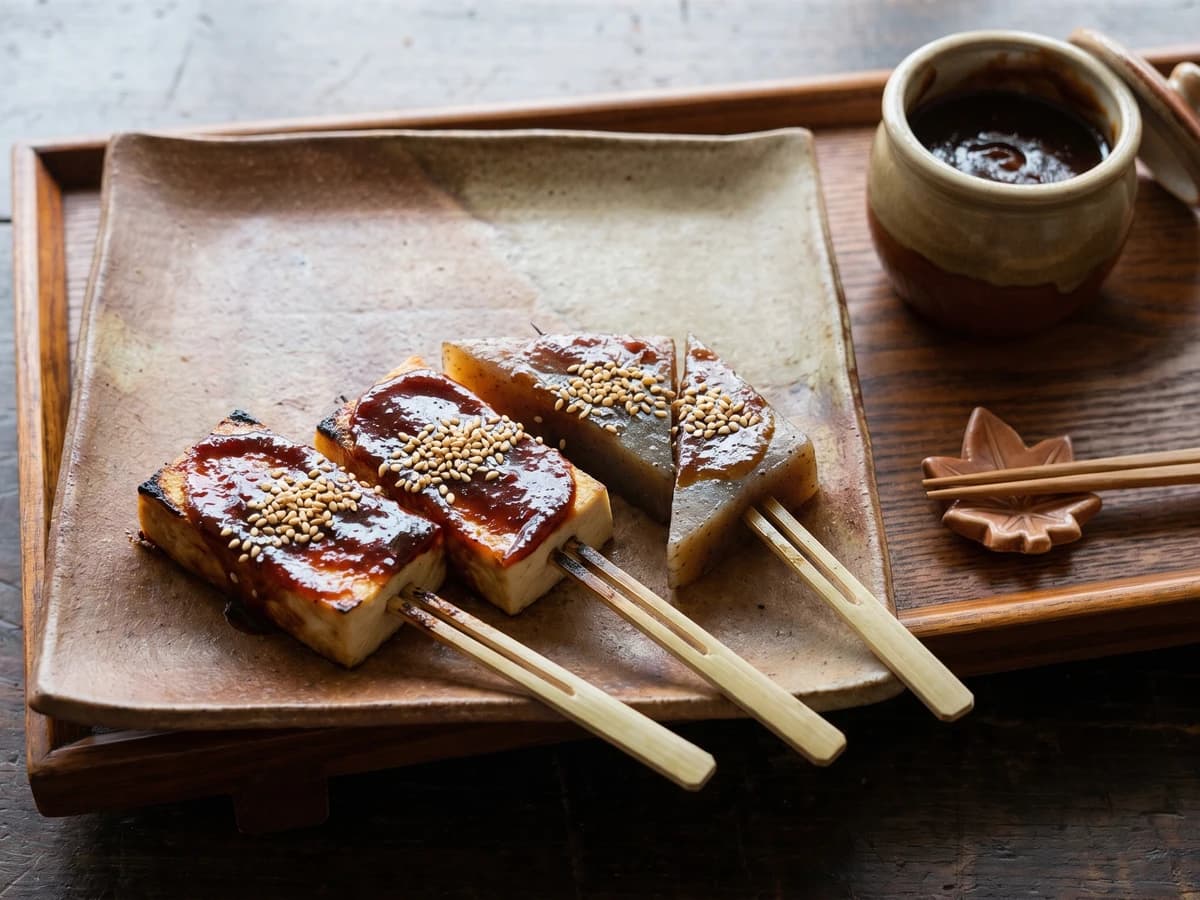
Akamiso dengaku-miso is plain work: bean miso, sweetness, sake, and patient stirring until the glaze turns dark, glossy, and thick enough to cling to the grill.
Chef Takumi
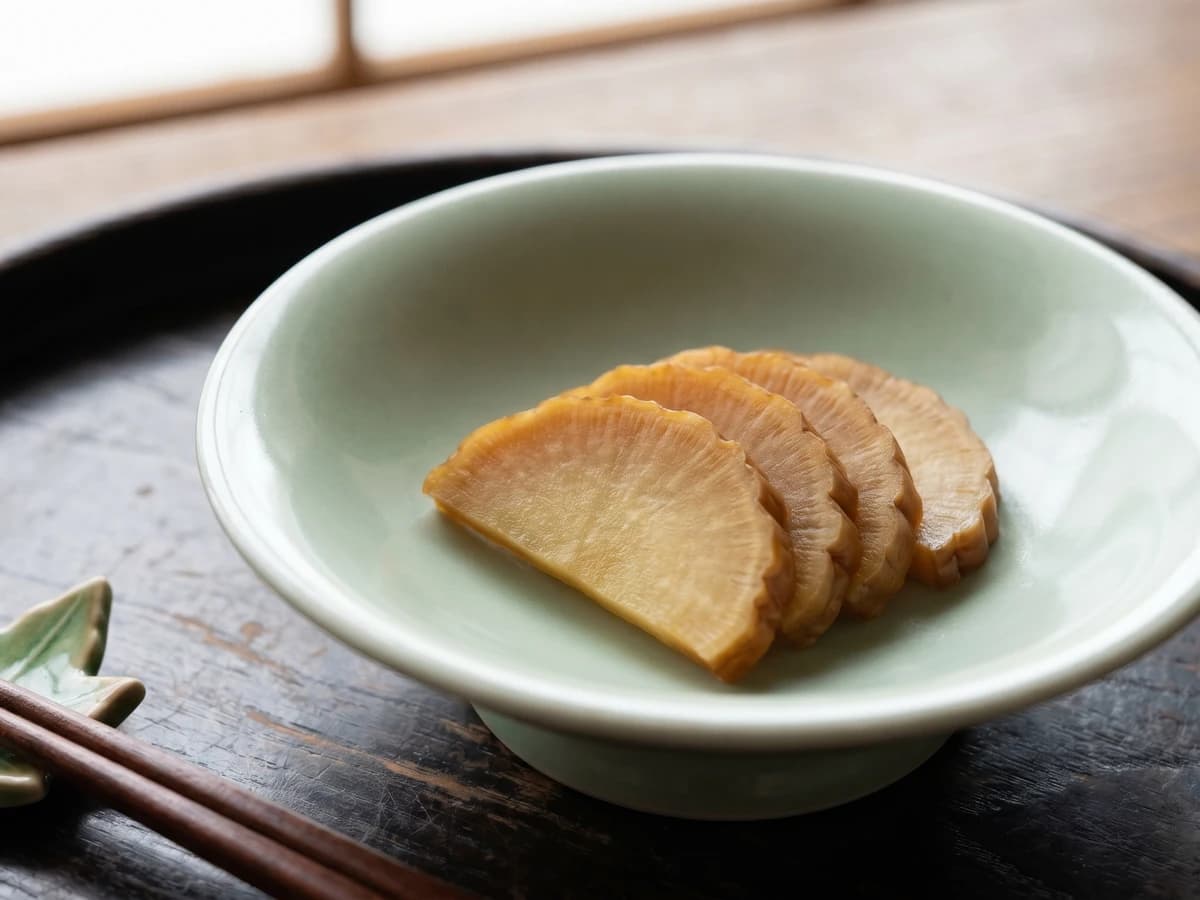
Snow-country takuan begins with smoke. Hang the daikon, dry it gently, then let rice bran, salt, and time turn it into Akita's amber pickle.

Chef Takumi
Aso takanazuke is spring caught in salt: sharp mustard greens pressed until they soften, fermented until their edge turns round, then fried briefly with sesame for rice.