
Chef Takumi
Ago Dashi (あごだし, grilled flying fish stock)
Ago dashi is quiet luxury: roasted flying fish, konbu, and patient water. Steep it slowly and you get a clear stock that tastes sweet, clean, and full without heaviness.
A cooking platform built around craft, culture, and the stories behind what we eat.
Created by
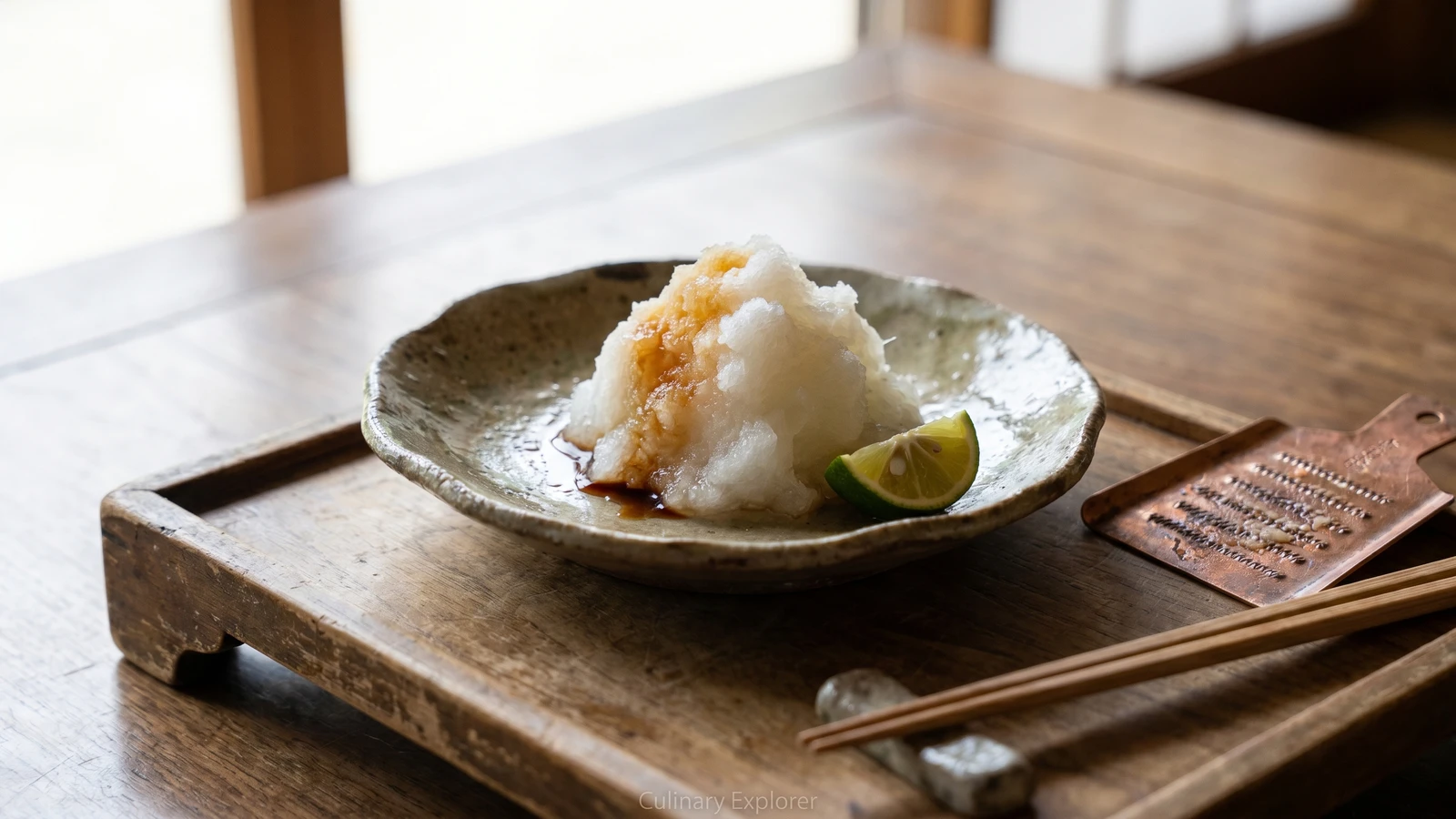
Daikon oroshi is only grated radish, which is why it matters. Choose a firm daikon, grate it fresh, drain it lightly, and let its cool bite brighten the meal.
Daikon oroshi looks too plain to be a recipe. That is its strength. A white radish meets a grater, gives up its juice, and becomes the clean, peppery relish we set beside grilled fish, tempura, nabe, and soy-dark little things that need waking up.
The one detail that decides it is how you grate. A fine, rough oroshigane, the Japanese grater, tears the daikon into a soft snowy pulp instead of long wet shreds. That torn surface releases the radish's sharpness, then softens as it sits, so grate it close to serving. Too early and the bite goes flat. Too dry and it loses its coolness. Drain it briefly, not fiercely.
Daikon is best in the cold months, when the root is heavy, sweet, and full of water. The shoulder near the leaves is mildest, good for oroshi served by itself, while the tip is sharper and better when a rich fish needs cutting through. We don't hide anything here. The radish is the seasoning, and the meal is cleaner for it.
Daikon has been grown in Japan for more than a thousand years, and by the Edo period it was one of the most common vegetables in urban markets as well as temple and farm cooking. Grated daikon became a standard accompaniment to grilled oily fish such as sanma and saba because its sharp, watery pulp lightens fat without covering the fish. The copper oroshigane, still favored by careful cooks, was valued because its small raised teeth tear rather than slice the root.
Quantity
1 medium (about 450g)
preferably the upper half near the leaves
Quantity
1 to 2 teaspoons
for serving
Quantity
1 small
| Ingredient | Quantity |
|---|---|
| daikonpreferably the upper half near the leaves | 1 medium (about 450g) |
| soy saucefor serving | 1 to 2 teaspoons |
| sudachi or yuzu wedge (optional) | 1 small |
Choose a daikon that feels heavy for its size, with taut skin and no spongy bend. A winter daikon at its shun is sweet, wet, and clean tasting, so the relish needs almost no help. Use the shoulder near the leaves for a milder oroshi, or the tapered tip if you want more peppery bite beside oily fish.
Cut off the leafy end and peel only the section you will grate. The skin can be fibrous, and peeling gives a smoother, snowier texture. Keep the rest of the root wrapped and cold, because daikon loses its sweetness as it dries.
Hold the daikon upright against an oroshigane and grate in small circles or short strokes until you have a soft white mound. Use steady pressure, not force. The grater should tear the flesh into a fine pulp, which releases the clean sharpness and lets the oroshi sit lightly on fish or tempura instead of falling away in strings.
Gather the grated daikon in a small sieve and let it drain for thirty seconds to one minute. Press only with the back of a spoon if it is flooding the plate. You want a mound that holds together, still cool and juicy, because the liquid carries much of the radish's freshness.
Set the oroshi in a small mound beside grilled fish, tempura, or simmered dishes, leaving it room on the plate. Add a few drops of soy sauce at the table, or a squeeze of sudachi or yuzu if the dish wants brightness. Serve immediately, before the peppery edge fades.
1 serving (about 100g)
Culinary guides, cultural storytelling, and the editorial depth that makes cooking meaningful.
Discover Culinary ExplorerChef Takumi
Ago dashi is quiet luxury: roasted flying fish, konbu, and patient water. Steep it slowly and you get a clear stock that tastes sweet, clean, and full without heaviness.
Chef Takumi
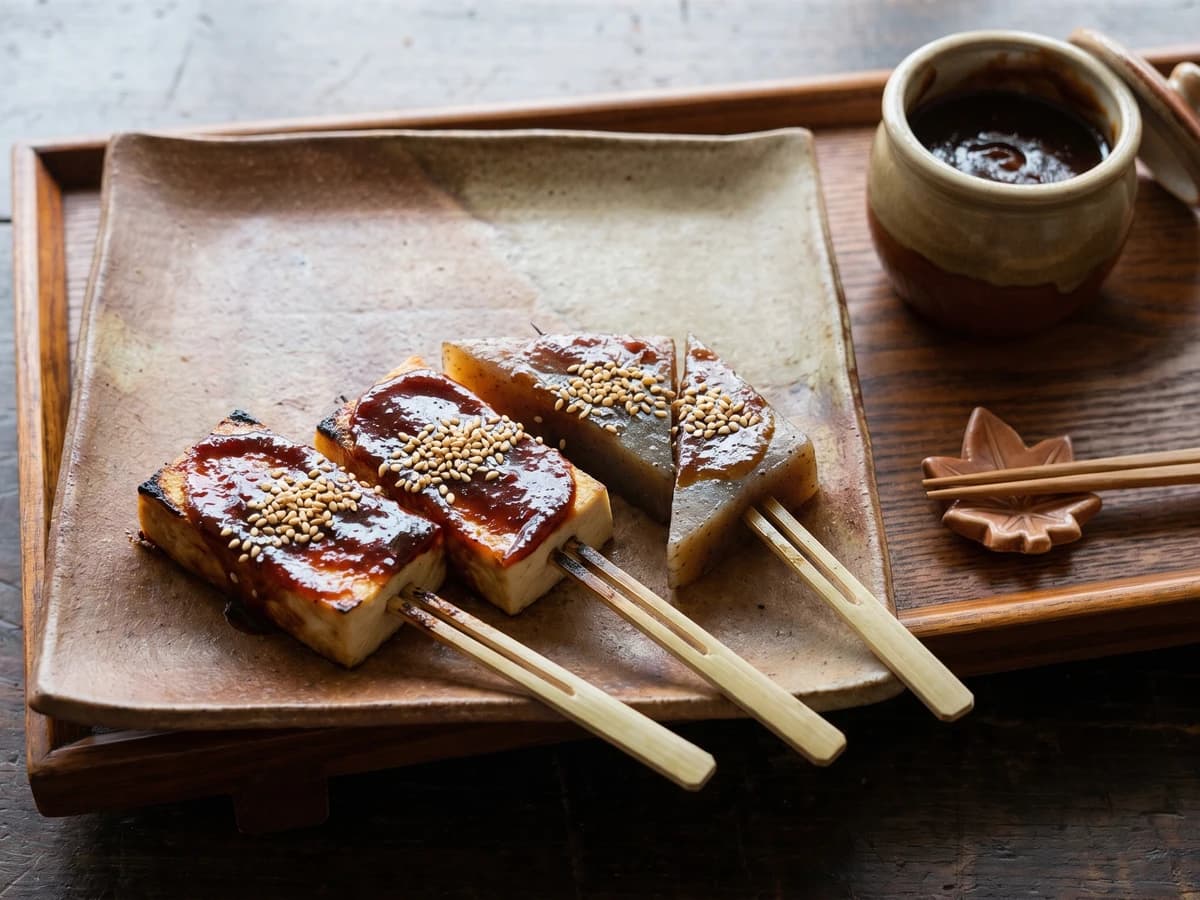
Akamiso dengaku-miso is plain work: bean miso, sweetness, sake, and patient stirring until the glaze turns dark, glossy, and thick enough to cling to the grill.
Chef Takumi
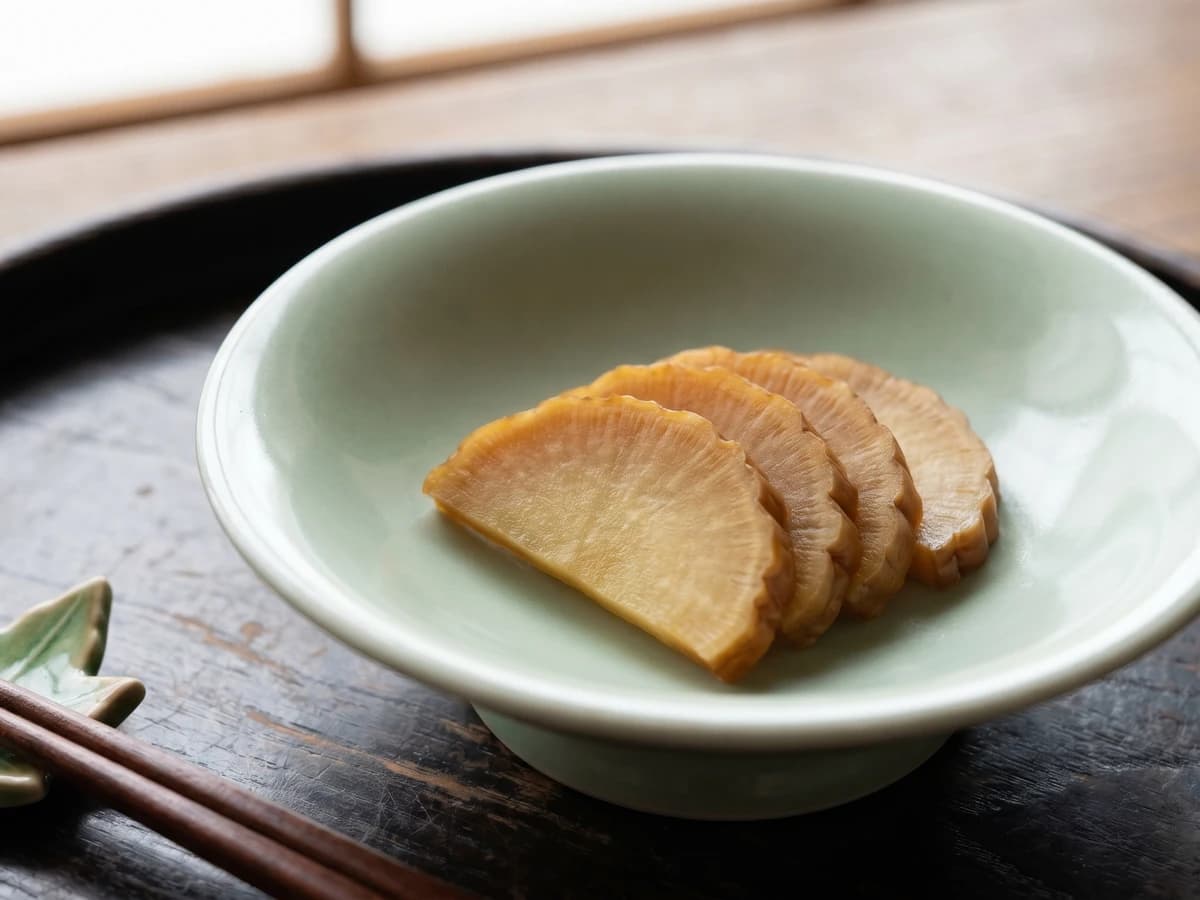
Snow-country takuan begins with smoke. Hang the daikon, dry it gently, then let rice bran, salt, and time turn it into Akita's amber pickle.

Chef Takumi
Aso takanazuke is spring caught in salt: sharp mustard greens pressed until they soften, fermented until their edge turns round, then fried briefly with sesame for rice.