
Chef Takumi
Ago Dashi (あごだし, grilled flying fish stock)
Ago dashi is quiet luxury: roasted flying fish, konbu, and patient water. Steep it slowly and you get a clear stock that tastes sweet, clean, and full without heaviness.
A cooking platform built around craft, culture, and the stories behind what we eat.

Created by
Oroshi shōga is not a sauce to hide behind. It is fresh ginger grated fine, squeezed only if needed, and served as a small bright heap beside the food.
Ginger does not ask for drama. It asks to be fresh, firm, and grated at the last moment, when its sharp scent is still awake. Oroshi shōga, grated ginger, is one of the cleanest yakumi, the small aromatic seasonings we set beside a dish so each bite can be adjusted by hand.
The one detail that decides it is the grating surface. A proper oroshigane, the Japanese grater, tears the ginger into a fine, juicy paste instead of cutting it into dry threads. That matters because the juice carries the fragrance. Use a ceramic ginger grater if you have one, or the finest holes of a rasp grater if you don't. The stand-in works, but grate gently, or you'll bruise out bitterness along with the heat.
Serve it small. A pea-sized mound on chilled tofu, katsuo tataki, cold noodles, or simmered pork is enough to sharpen the dish without shouting over it. We don't bury the food in ginger. We give it a clean edge, then leave it room. This is honmono at its plainest: one good rhizome, one good grate, nothing hidden.
Ginger was known in Japan by the early court period, and the 10th-century Engishiki records shōga among cultivated and tribute goods. Long before it became a familiar table condiment, it was valued as both a medicinal plant and an aromatic seasoning. Oroshi shōga belongs to the broader practice of yakumi, small condiments such as scallion, myōga, shiso, and wasabi that sharpen a dish without turning it into something else.
Quantity
1 knob (about 40g)
firm, thin-skinned, and freshly grated
Quantity
1 teaspoon
only if needed to loosen the paste
| Ingredient | Quantity |
|---|---|
| fresh gingerfirm, thin-skinned, and freshly grated | 1 knob (about 40g) |
| cold water (optional)only if needed to loosen the paste | 1 teaspoon |
Choose ginger that feels heavy and firm, with taut skin and a clean, peppery smell. If the cut end looks dry or the flesh feels fibrous, save it for simmering. Oroshi shōga is served almost raw, so freshness is the seasoning.
Trim away any dry ends. Peel only the part you will grate, using the edge of a spoon to scrape off the thin skin. A spoon follows the curves without wasting flesh, and the flesh just under the skin carries much of the fragrance.
Hold the ginger at a slight angle and move it in small circles over an oroshigane or ceramic ginger grater until you have a soft, wet paste. Press lightly. Heavy pressure makes stringy ginger and pulls out a harsher bite, while a gentle hand keeps the aroma clean.
Gather the grated ginger and its juice together. If it looks too wet for the dish, press it lightly with the back of a spoon and pour off only a little liquid. Don't squeeze it dry. The juice is where the brightness lives.
Shape a small mound and serve it immediately beside chilled tofu, katsuo tataki, cold noodles, grilled fish, or a simmered dish that wants a clean edge. Grated ginger fades quickly once exposed to air, so make only what you'll use now.
1 serving (about 45g)
Culinary guides, cultural storytelling, and the editorial depth that makes cooking meaningful.
Discover Culinary ExplorerChef Takumi
Ago dashi is quiet luxury: roasted flying fish, konbu, and patient water. Steep it slowly and you get a clear stock that tastes sweet, clean, and full without heaviness.
Chef Takumi
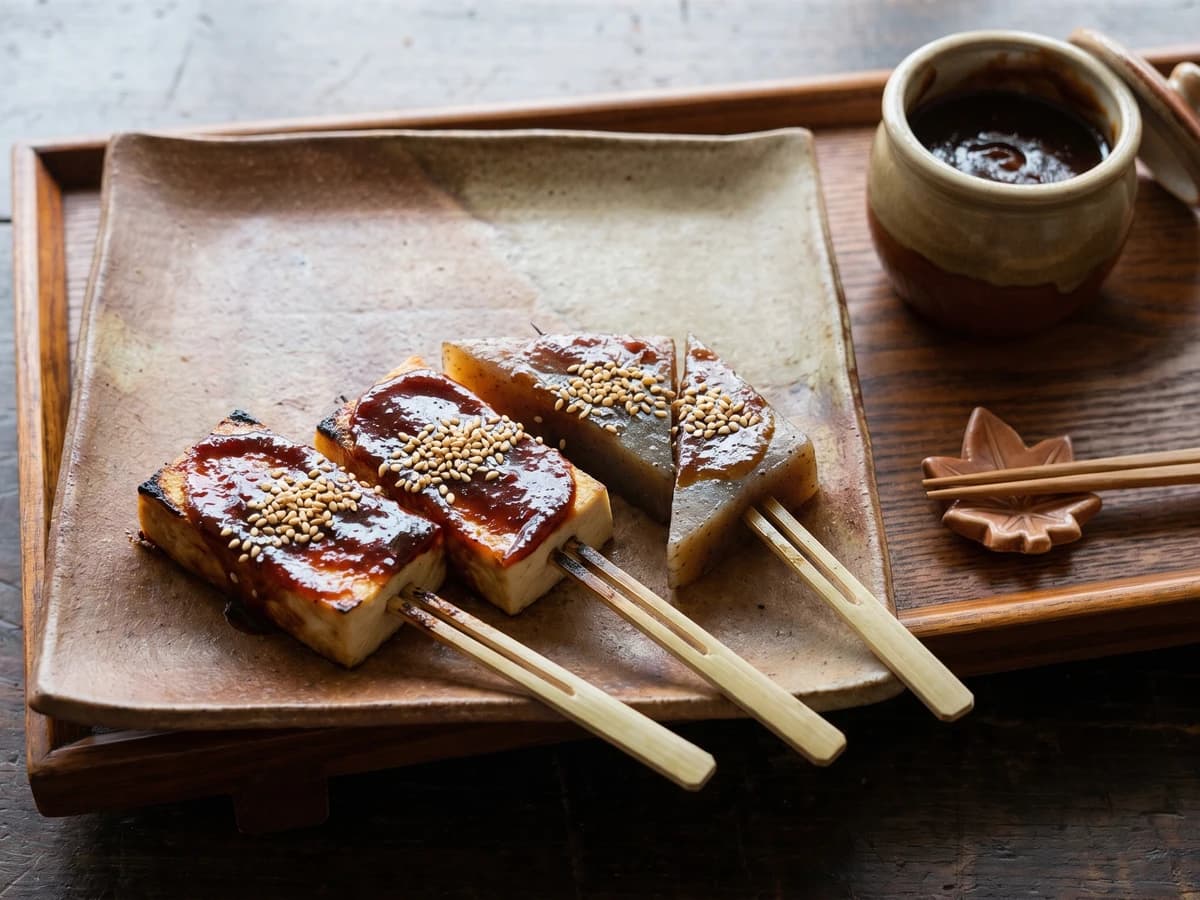
Akamiso dengaku-miso is plain work: bean miso, sweetness, sake, and patient stirring until the glaze turns dark, glossy, and thick enough to cling to the grill.
Chef Takumi
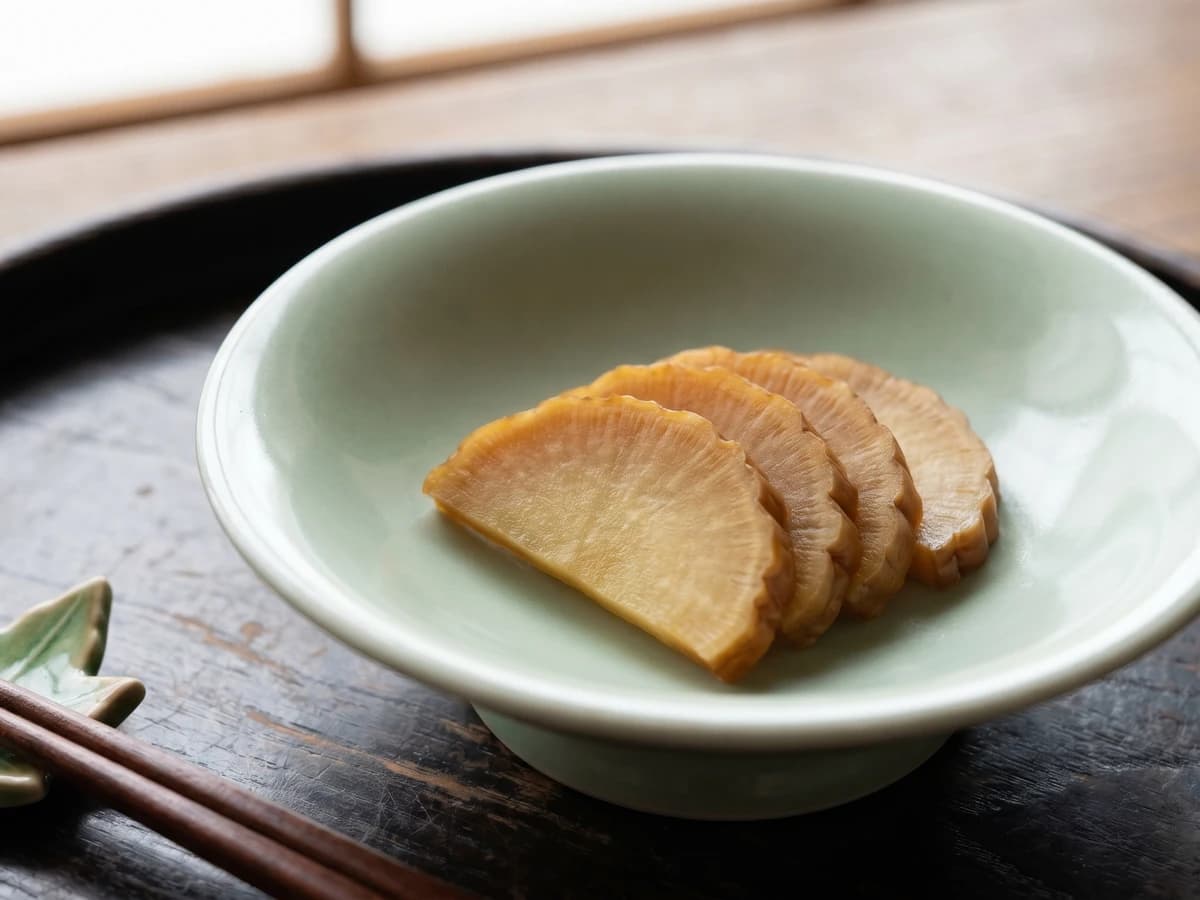
Snow-country takuan begins with smoke. Hang the daikon, dry it gently, then let rice bran, salt, and time turn it into Akita's amber pickle.

Chef Takumi
Aso takanazuke is spring caught in salt: sharp mustard greens pressed until they soften, fermented until their edge turns round, then fried briefly with sesame for rice.