Chef Takumi
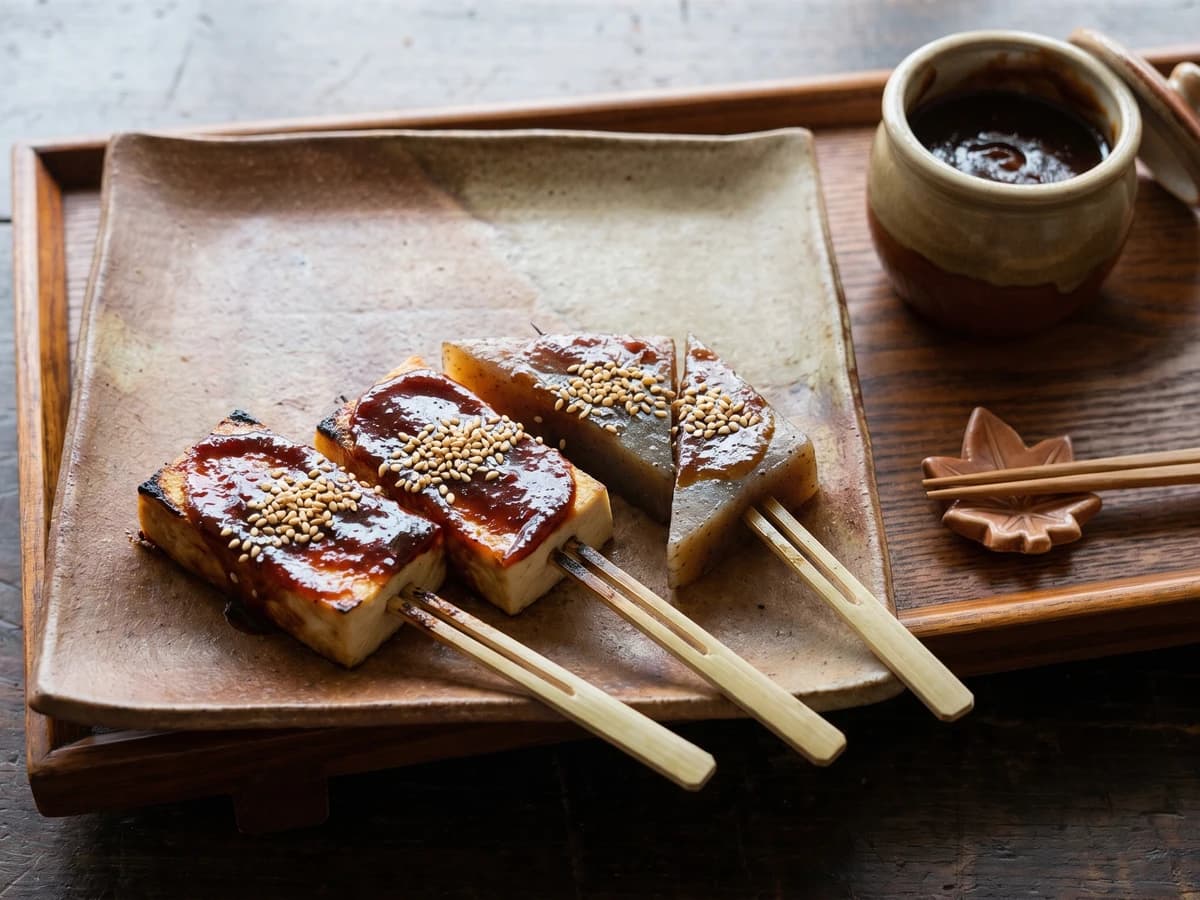
Aichi Red-Miso Glaze (赤味噌田楽味噌, Akamiso Dengaku-miso)
Akamiso dengaku-miso is plain work: bean miso, sweetness, sake, and patient stirring until the glaze turns dark, glossy, and thick enough to cling to the grill.
A cooking platform built around craft, culture, and the stories behind what we eat.
Created by
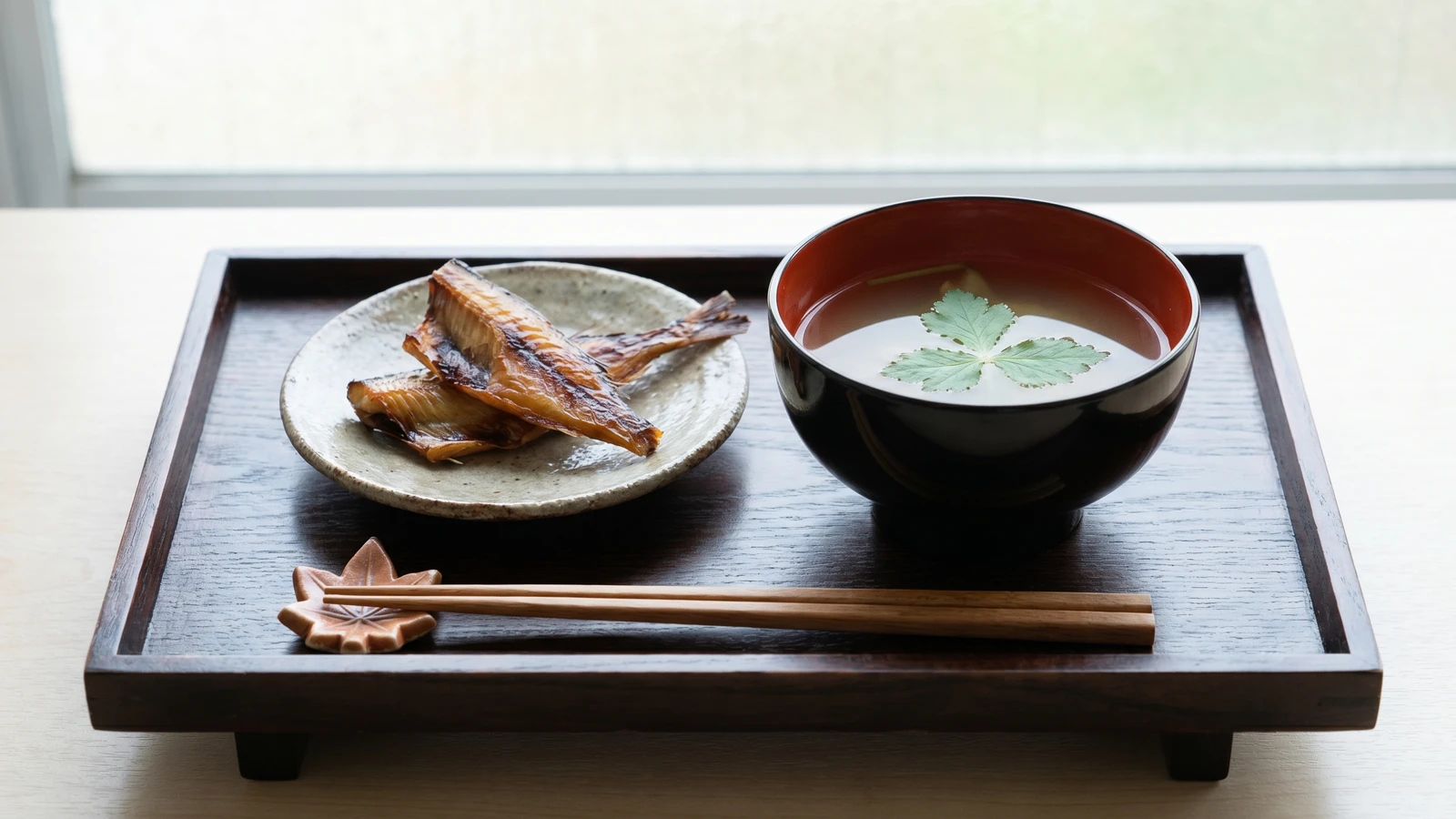
Ago dashi is quiet luxury: roasted flying fish, konbu, and patient water. Steep it slowly and you get a clear stock that tastes sweet, clean, and full without heaviness.
Ago dashi begins with a fish that has already met the fire. Dried flying fish, roasted until tawny and fragrant, gives a stock sweeter and rounder than katsuo dashi, with a clean finish that suits New Year clear soup and a fine bowl of udon. It sounds like a special-occasion stock because it is. That doesn't make it difficult.
The one detail that decides it is restraint. Yaki-ago, grilled dried flying fish, needs time in cold water so its flavor opens before heat tightens it. Bring it up slowly with konbu, then stop before the kelp boils. Boil konbu and it turns the broth faintly bitter and slick; boil the fish hard and the stock grows cloudy and harsh. We are coaxing, not extracting by force. There is a difference, and the pot knows it.
Good ago dashi should be pale gold, clear, and quietly sweet, not smoky in a loud way. Use whole grilled ago if you can find it, break it open, remove the bitter innards, and let the water do the honest work. This is honmono made reachable: one good ingredient, good water, and enough patience to keep from bullying either.
Ago is a regional name for flying fish used especially in western Japan and Kyushu, where dried grilled flying fish, yaki-ago, became a prized stock ingredient in places such as Nagasaki and the Gotō Islands. The Gotō Islands are also known for Gotō udon, whose broth is traditionally built on ago dashi for its sweet, clear depth. In parts of Kyushu, ago dashi is closely tied to zōni, the New Year soup whose stock and contents vary sharply from region to region.
Quantity
4 whole fish (about 35g total)
heads, gills, and dark innards removed
Quantity
1 piece (about 10g)
Quantity
5 cups
Quantity
1 tablespoon
| Ingredient | Quantity |
|---|---|
| yaki-ago (grilled dried flying fish)heads, gills, and dark innards removed | 4 whole fish (about 35g total) |
| konbu (dried kelp) | 1 piece (about 10g) |
| cold water | 5 cups |
| sake (optional) | 1 tablespoon |
Break each grilled flying fish in half and remove the gills and any dark, bitter innards. Leave the bones and skin. They carry flavor, and the stock will be strained. If the fish smell cleanly roasted and sweet, you're ready. If they smell stale or oily, change the dish. Nothing hidden.
Put the prepared ago, konbu, and cold water in a pot or covered container. Soak in the refrigerator for 6 to 8 hours, or overnight. Cold soaking gives the dried fish time to open gently, so the broth becomes rounded before heat is ever asked to help.
Set the pot over low heat and bring the liquid up slowly, 15 to 20 minutes. Pull out the konbu when small bubbles begin to climb the sides and the water trembles, before it boils. This protects the clean edge of the stock; boiled konbu gives bitterness and a slippery texture you did not ask for.
Keep the liquid just below a boil for 8 to 10 minutes, then turn off the heat. Add the sake if using, and let the ago settle for 5 minutes. A hard boil shakes fine particles from the fish and clouds the broth, while quiet heat draws out sweetness and a roasted fragrance.
Strain through a fine-mesh strainer lined with cloth or sturdy paper towel. Let it drip on its own. Don't press the fish, because pressing drives bitter, muddy flavors into the clear stock. The finished dashi should be pale gold, fragrant, and clean.
Use the ago dashi as the base for zōni, osuimono, udon broth, chawanmushi, or a light simmered dish. Season only after the stock is finished, usually with salt, usukuchi shōyu, or a little mirin depending on the dish. The dashi is the foundation, not the whole seasoning.
1 serving (about 240g)
Culinary guides, cultural storytelling, and the editorial depth that makes cooking meaningful.
Discover Culinary ExplorerChef Takumi
Akamiso dengaku-miso is plain work: bean miso, sweetness, sake, and patient stirring until the glaze turns dark, glossy, and thick enough to cling to the grill.
Chef Takumi
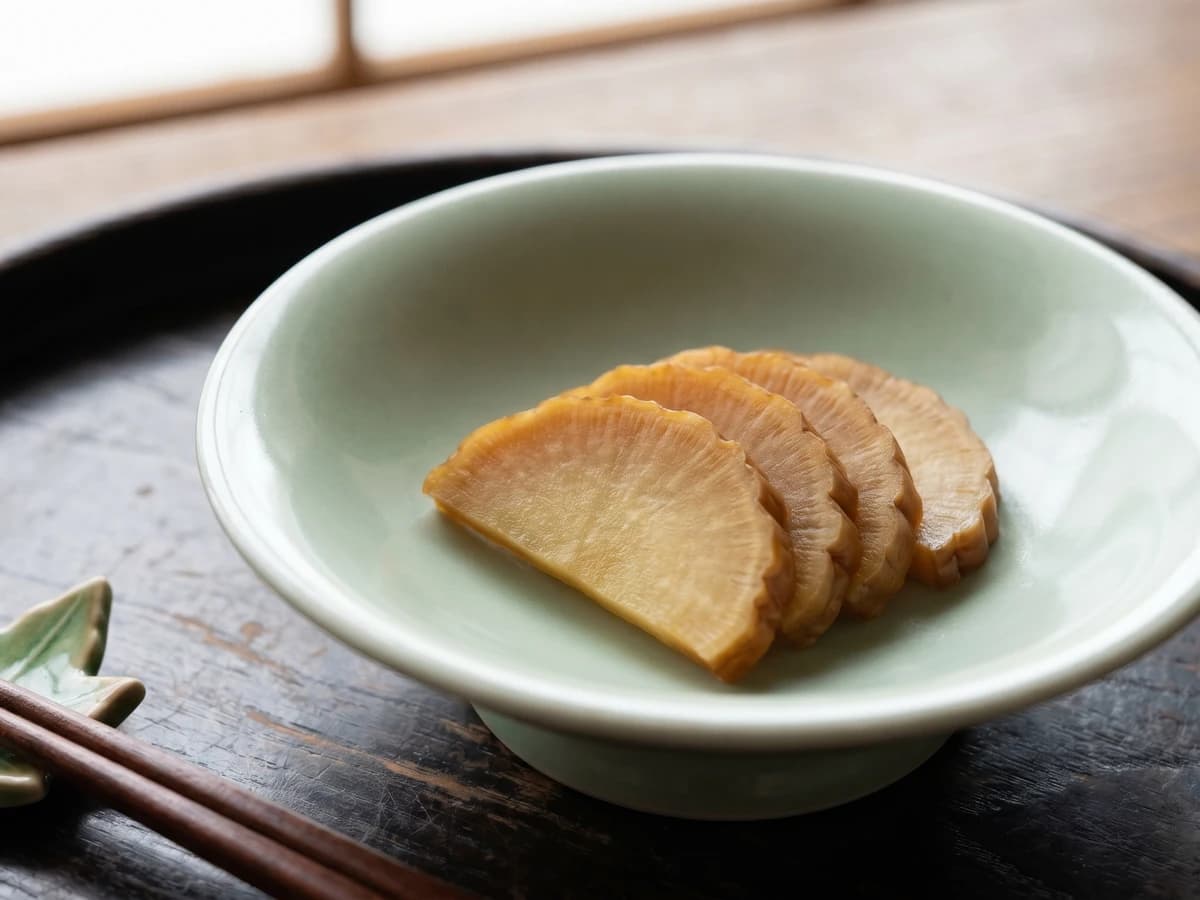
Snow-country takuan begins with smoke. Hang the daikon, dry it gently, then let rice bran, salt, and time turn it into Akita's amber pickle.

Chef Takumi
Aso takanazuke is spring caught in salt: sharp mustard greens pressed until they soften, fermented until their edge turns round, then fried briefly with sesame for rice.

Chef Takumi
A white daikon, a red chili, and a grater. Momiji oroshi looks like a small flourish, but it brings clean heat, fresh bite, and autumn color to the table.