
Chef Takumi
Ago Dashi (あごだし, grilled flying fish stock)
Ago dashi is quiet luxury: roasted flying fish, konbu, and patient water. Steep it slowly and you get a clear stock that tastes sweet, clean, and full without heaviness.
A cooking platform built around craft, culture, and the stories behind what we eat.
Created by
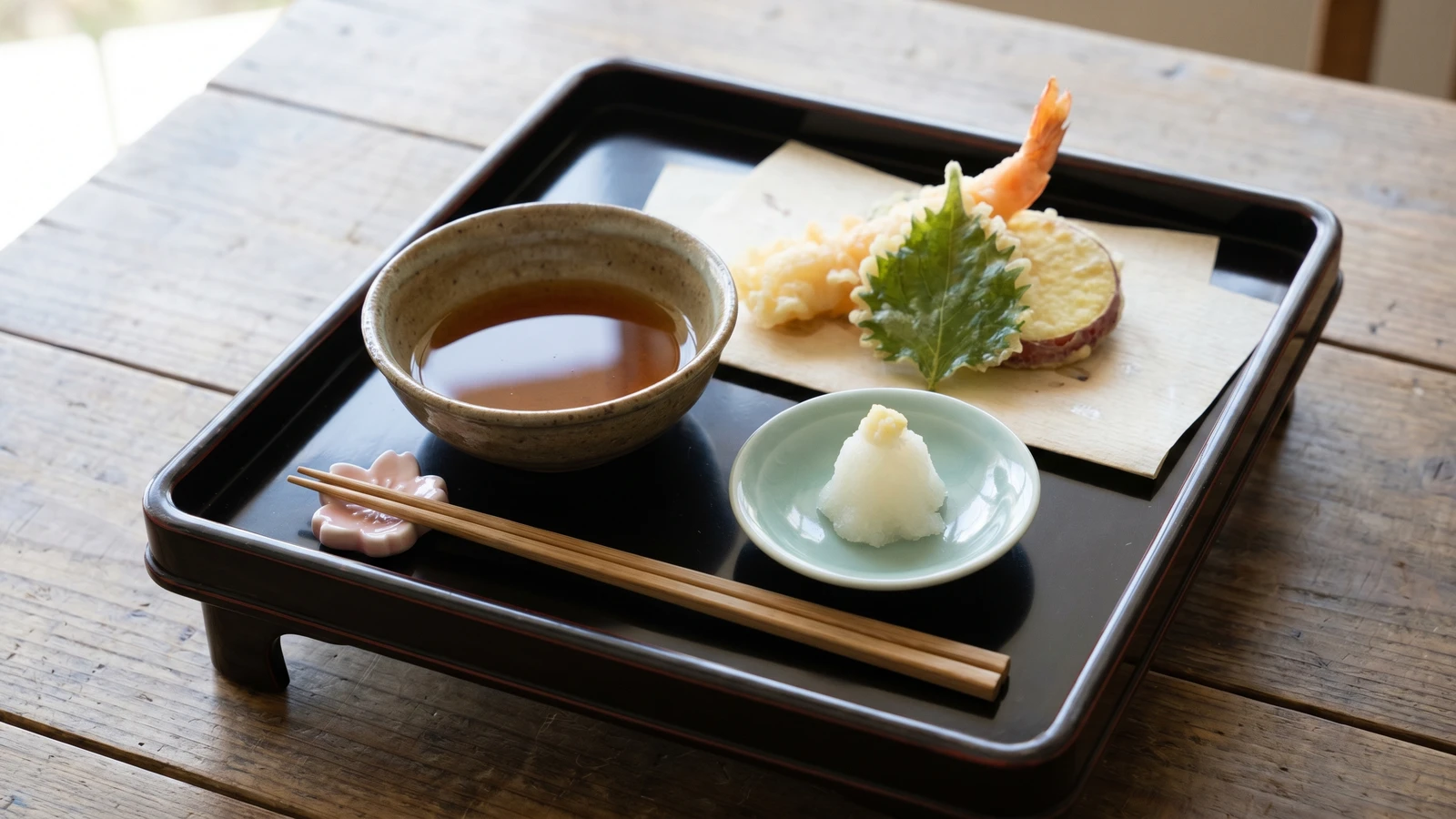
Tentsuyu is the small bowl that lets tempura stay itself: clear dashi, soy, and mirin warmed together, with grated daikon waiting to brighten each crisp piece.
Tempura takes the applause, but tentsuyu does the quiet work at its side. It is not a heavy sauce and it is not plain soy sauce, thank heaven for small mercies. It is mostly dashi, widened with mirin and sharpened with shōyu, warm enough to loosen the sweetness of the mirin but gentle enough to leave the stock clear.
The detail that decides it is the dashi. Make it clean, and the sauce feels generous without becoming loud. Boil the konbu and you bring bitterness; squeeze the katsuobushi and you press out oiliness; rush to powder and the dip tastes flat and salty before it tastes of anything useful. This is a small job, not a difficult one. Ten good minutes at the pot will do more than a shelf of seasonings.
Tentsuyu belongs at the tempura table because it lets the season stay visible. Eggplant in summer, lotus root in autumn, sweet potato when the cold comes, each gets the same clear support and keeps its own voice. Grated daikon is not decoration. Stir a little into the bowl and it lightens the oil on the tongue, so each piece can be dipped, eaten, and followed by the next without fatigue. Leave the sauce warm, the daikon fresh, and the tempura only briefly dipped. That is the whole secret, which is a relief. We have enough complicated things in life.
Tempura took its familiar Edo shape in the late eighteenth and early nineteenth centuries, sold by street vendors around busy districts such as Nihonbashi. Tentsuyu grew from the same Edo-period tsuyu tradition used for soba: dashi seasoned with soy sauce and mirin, kept thinner so fried batter could be dipped quickly. Regional preferences still show in the bowl, with Tokyo cooks often using darker koikuchi shōyu and western Japanese versions tending paler and softer.
Quantity
2 cups
Quantity
1 piece (about 5g)
Quantity
10g
Quantity
6 tablespoons
Quantity
6 tablespoons
Quantity
1/2 cup
finely grated and lightly drained
| Ingredient | Quantity |
|---|---|
| cold water | 2 cups |
| konbu (dried kelp) | 1 piece (about 5g) |
| katsuobushi (bonito flakes) | 10g |
| hon mirin | 6 tablespoons |
| shōyu (Japanese soy sauce) | 6 tablespoons |
| daikon radishfinely grated and lightly drained | 1/2 cup |
Wipe the konbu with a damp cloth, but don't wash it. Put it in 2 cups cold water and bring it up slowly over low heat, about 10 minutes. Pull the konbu when the water trembles and small bubbles climb the sides of the pot, before it boils. The white bloom on the kelp is flavor, and boiling the kelp pushes the stock toward bitterness and a slippery feel.
Bring the water to a gentle boil, add the katsuobushi all at once, then immediately turn off the heat. Let the flakes sink for 2 to 3 minutes without stirring. They give their aroma quickly, and stirring only roughens a stock you want clear.
Strain the dashi through a cloth-lined sieve and let it drip on its own. Don't squeeze. Squeezing presses strong, oily flavors from the flakes into the clear stock, which is exactly what we are trying not to do. Measure 1 1/2 cups dashi for the sauce and keep any extra for soup or a small simmered dish.
Put the mirin in a small saucepan and bring it to a quiet simmer for 45 to 60 seconds. This sends off the raw alcohol and leaves the round sweetness behind. Add 1 1/2 cups dashi and the shōyu, then warm just until tiny bubbles gather at the edge. Do not reduce it; tentsuyu should taste like seasoned dashi, not a salty glaze.
Peel and grate the daikon on an oroshigane, a Japanese grater, or use the fine holes of a box grater. Drain it lightly, but don't wring it dry; that fresh juice is part of how it lifts the oil on the tongue. Pour the warm tentsuyu into small bowls and add a spoonful of daikon to each, or serve it beside the sauce. Dip tempura briefly, just enough to season the edge.
1 serving (about 175g)
Culinary guides, cultural storytelling, and the editorial depth that makes cooking meaningful.
Discover Culinary ExplorerChef Takumi
Ago dashi is quiet luxury: roasted flying fish, konbu, and patient water. Steep it slowly and you get a clear stock that tastes sweet, clean, and full without heaviness.
Chef Takumi
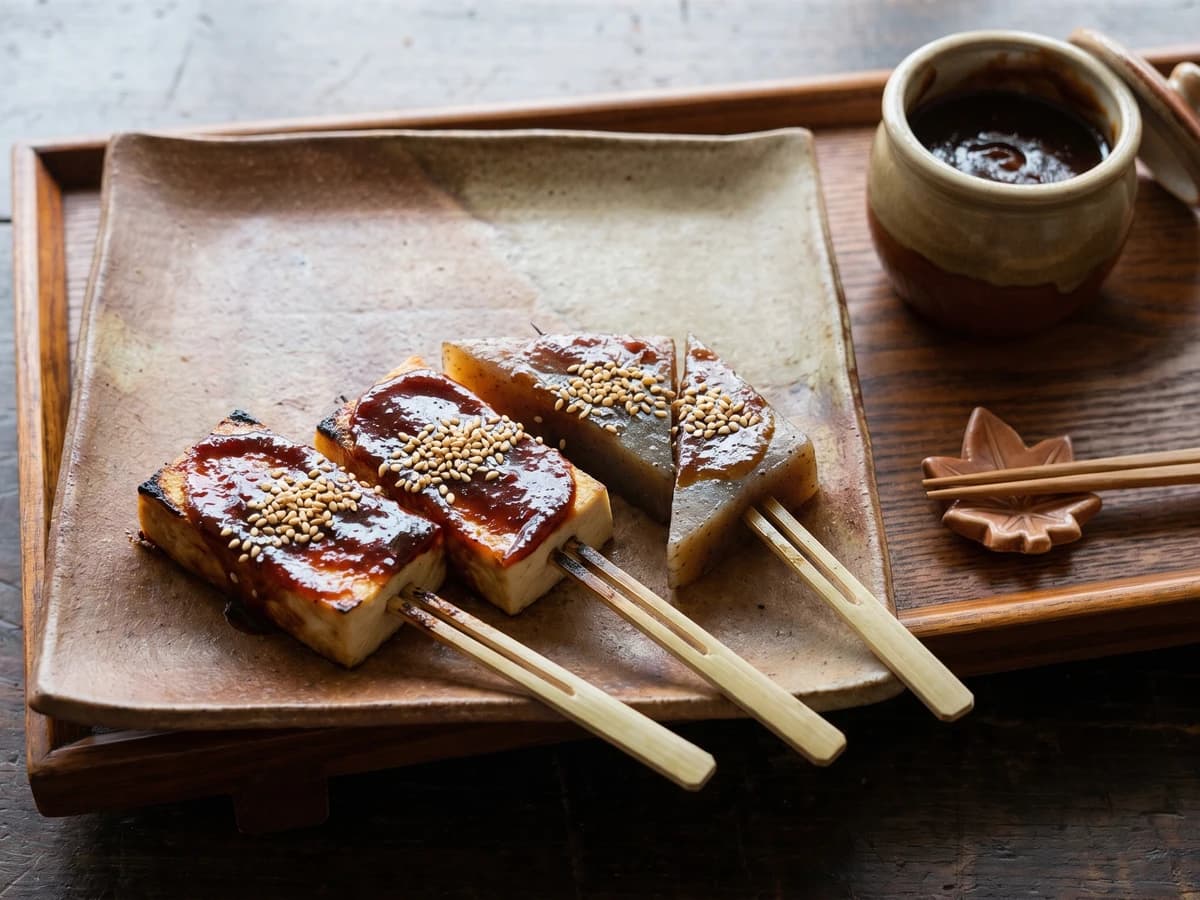
Akamiso dengaku-miso is plain work: bean miso, sweetness, sake, and patient stirring until the glaze turns dark, glossy, and thick enough to cling to the grill.
Chef Takumi
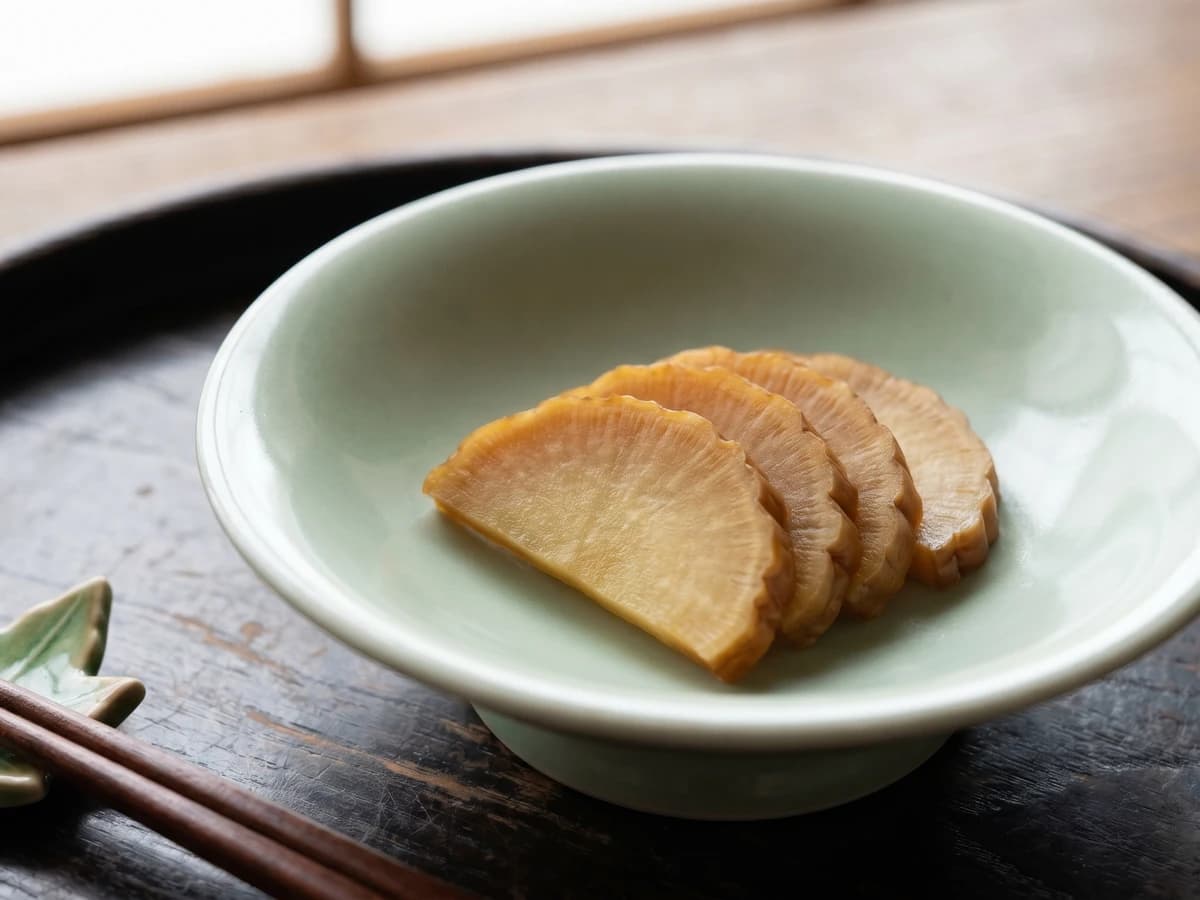
Snow-country takuan begins with smoke. Hang the daikon, dry it gently, then let rice bran, salt, and time turn it into Akita's amber pickle.

Chef Takumi
Aso takanazuke is spring caught in salt: sharp mustard greens pressed until they soften, fermented until their edge turns round, then fried briefly with sesame for rice.