Culinary Explorer

A cooking platform built around craft, culture, and the stories behind what we eat.
Discover Culinary Explorer
Temple-Kitchen Vegetable Fry (精進揚げ, Shōjin-age)

Temple-Kitchen Vegetable Fry (精進揚げ, Shōjin-age)

Created by

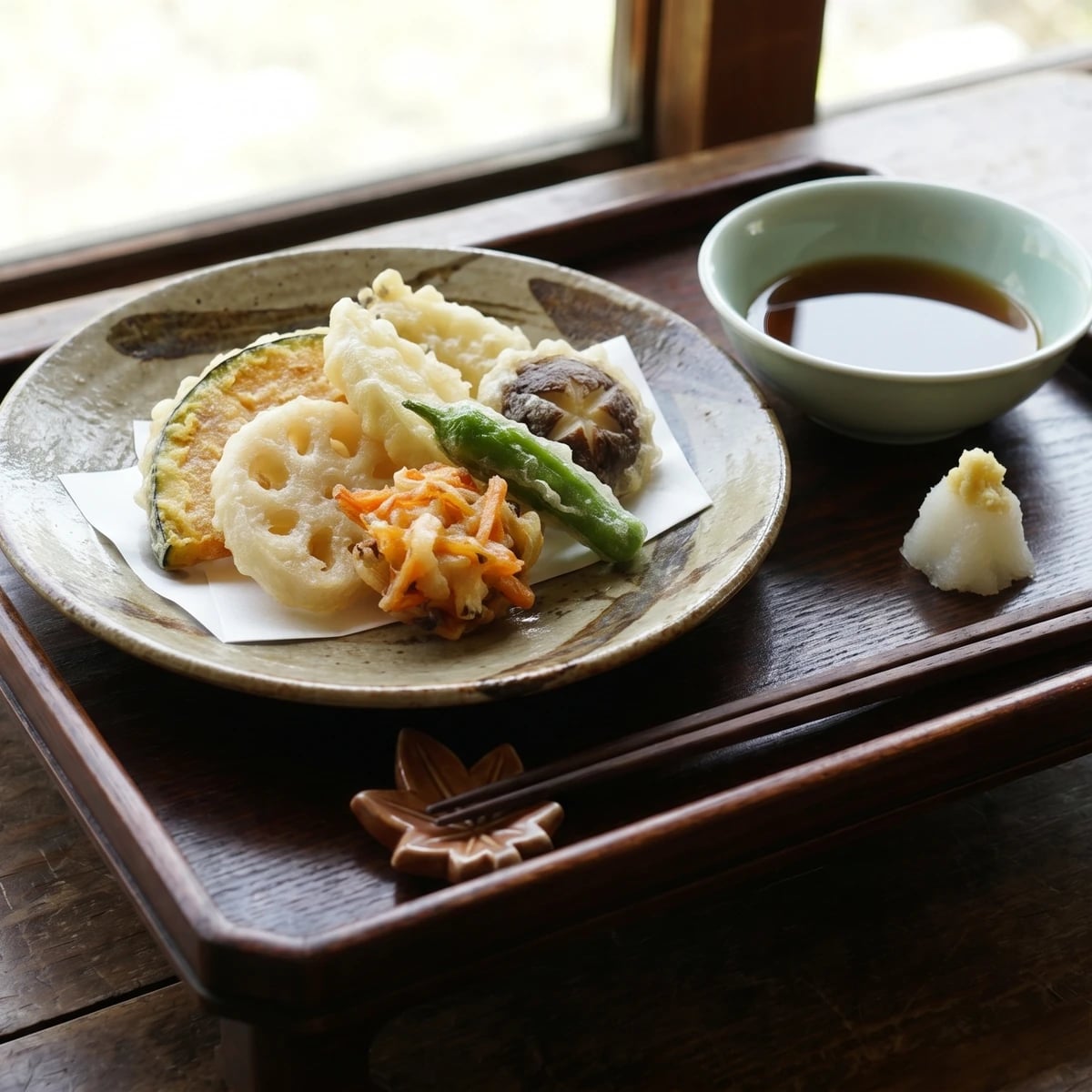
Shōjin-age is tempura stripped to its quietest form: vegetables at their prime, an eggless batter, clean oil, and a dipping sauce built from konbu and shiitake.

Main Dishes
Japanese
Special Occasion
Comfort Food
35 min
Active Time
25 min cook1 hr total
Yield4 servings

Vegetables tell you when this dish is ready to be made. Lotus root snaps clean under the knife, kabocha shows a dry orange face, shiitake smell deep and woodsy, and shishito carry that small green bitterness we need beside the oil. This is shun, the ingredient at its prime, doing half the cooking before you begin.

People hear tempura and think of restaurant nerves. Shōjin-age asks for less theater and more attention. No egg, no seafood, no disguise. The batter is only flour and cold water, mixed lazily so small lumps remain. Those lumps fry into a light, irregular coat; beat the batter smooth and you wake the gluten, which gives you a chewy jacket instead of a crisp one. A vegetable deserves better tailoring than that.

The other detail is the sauce. For a meatless table, we set the dashi on konbu and dried shiitake, the way temple kitchens do. That is honmono, not a compromise. Lift the konbu before the water boils, because boiling pulls bitterness and slipperiness from it. Simmer the shiitake gently so their depth moves into the water without turning muddy. Then soy and mirin finish the work.

Serve shōjin-age as a main dish with rice, pickles, and perhaps a clear soup, and you have the method, not the menu: fried food made seasonal, restrained, and plain-spoken. Fry in small batches, drain well, and leave the plate room. The vegetables should arrive crisp at the edge, sweet inside, with nothing hidden.

Shōjin ryōri, the meatless cuisine of Buddhist temples, developed strongly in Japan after Zen Buddhism spread in the Kamakura period from the late twelfth century. Shōjin-age belongs to that temple-kitchen logic: frying vegetables in a light batter while avoiding meat, fish, and egg. The name uses shōjin, a Buddhist term for disciplined practice, and age, meaning fried.

The technique, the tradition, and the story behind every dish.

Discover Culinary Explorer

Ingredients

konbu (dried kelp)

Quantity

1 piece (about 10g)

dried shiitake mushrooms

Quantity

4

cold water

Quantity

3 cups

soy sauce

Quantity

3 tablespoons

mirin

Quantity

3 tablespoons

sugar

Quantity

1 teaspoon

kabocha squash

Quantity

1/2 small

seeded and sliced 1/4 inch thick

lotus root

Quantity

1 small

peeled and sliced 1/4 inch thick

Japanese sweet potato

Quantity

1 small

sliced 1/4 inch thick

fresh shiitake mushrooms

Quantity

8

stems removed

shishito peppers

Quantity

8

slit once near the stem

carrot

Quantity

1 small

cut into thin matchsticks

onion

Quantity

1/2 small

thinly sliced

all-purpose flour

Quantity

1 1/4 cups, plus more for dusting

potato starch or cornstarch

Quantity

2 tablespoons

ice-cold water

Quantity

1 1/4 cups

neutral frying oil

Quantity

as needed

grated daikon (optional)

Quantity

for serving

grated ginger (optional)

Quantity

for serving

Equipment Needed

  • Heavy pot or deep fryer
  • Frying thermometer
  • Long cooking chopsticks or tongs
  • Wire rack set over a tray
  • Fine-mesh strainer
  • Small dipping bowls

Instructions

  1. 1

    Soak the dashi

    Wipe the konbu with a damp cloth, but don't wash it. Put the konbu, dried shiitake, and cold water in a pot and soak for at least 30 minutes, or up to overnight in the refrigerator. The slow soak draws out depth gently, and the white bloom on the konbu is flavor, not dirt.

  2. 2

    Finish the sauce

    Set the pot over low heat and warm it slowly. When small bubbles climb the sides and the water trembles, lift out the konbu before it boils. Simmer the shiitake 5 minutes longer, then strain. Add soy sauce, mirin, and sugar, warm just until the sugar dissolves, and keep the sauce hot at the edge of the stove.

    Boiled konbu gives a bitter, slick edge. The shiitake can take a short simmer, but the kelp cannot. Each ingredient has its manners.
  3. 3

    Prepare vegetables

    Pat every vegetable dry, especially the lotus root and fresh shiitake. Water trapped on the surface makes the batter slide off and makes the oil spit. Keep slices thin and even so the centers cook before the coating darkens.

  4. 4

    Heat the oil

    Pour oil into a heavy pot to a depth of about 2 inches and heat to 170 to 175 C, or 340 to 350 F. If you don't have a thermometer, drop in a little batter; it should sink halfway, then rise with lively small bubbles. Too cool and the coating drinks oil. Too hot and the outside browns before the vegetable sweetens.

  5. 5

    Mix the batter

    Stir the flour and potato starch together, then add the ice-cold water all at once. Mix with chopsticks only until the dry flour mostly disappears. Leave small lumps. Cold, under-mixed batter gives a thin crisp coat; smooth batter is the cook trying too hard, a common human fault.

  6. 6

    Dust and dip

    Lightly dust the vegetables with flour, shake off the excess, then dip each piece into the batter. The dusting gives the batter something to hold onto, like a dry hand taking a wet one. For the carrot and onion, mix small handfuls with a spoonful of batter to make loose kakiage fritters.

  7. 7

    Fry in batches

    Fry only a few pieces at a time, keeping the oil between 170 and 175 C. Turn each piece once, and lift it when the coating is pale gold and the bubbling quiets, about 1 to 3 minutes depending on the vegetable. Crowding drops the oil temperature, and then the vegetables soak instead of fry.

  8. 8

    Drain and serve

    Drain the fried vegetables upright on a rack or on crumpled paper, which keeps air around the coating. Serve at once with the warm konbu-shiitake dipping sauce, grated daikon, and ginger. Put only a restrained mound on each plate, with space around it, because fried food looks heavier the moment it is piled.

Chef Tips

  • Choose vegetables that are dry, firm, and at their prime. Kabocha and sweet potato bring sweetness, lotus root brings snap, shiitake brings depth, and shishito brings the green note that keeps the plate awake.
  • Keep the batter bowl cold by setting it over a larger bowl of ice if your kitchen is warm. Cold batter meeting hot oil is what makes the coating crisp and light.
  • Do not salt the fried vegetables before serving. Shōjin-age is eaten with tentsuyu, the dipping sauce, so seasoning the surface first makes the dish heavy and confused.
  • Use rice bran oil if you can. It has a clean taste and is common for Japanese frying. Canola or grapeseed is a sensible stand-in.
  • Fry the pale vegetables first and the sweet, starchy ones later. The oil stays cleaner, and the plate reads more quietly.

Advance Preparation

  • The konbu and dried shiitake can soak overnight in the refrigerator, which gives a rounder, calmer dashi.
  • The dipping sauce can be made one day ahead and refrigerated. Rewarm it gently before serving.
  • Vegetables can be sliced two hours ahead, covered, and kept cool. Pat them dry again just before dusting and frying.
  • Mix the batter only at the last moment. Once water meets flour, time begins working against lightness.

Frequently Asked Questions

Nutrition Information

1 serving (about 290g)

Calories
520 calories
Total Fat
21 g
Saturated Fat
2 g
Trans Fat
0 g
Unsaturated Fat
18 g
Cholesterol
0 mg
Sodium
760 mg
Total Carbohydrates
75 g
Dietary Fiber
7 g
Sugars
18 g
Protein
9 g

Note: Chef personas and recipes are created with AI assistance. Cook with care: follow safe food-handling practices, check doneness with a thermometer when needed, and adapt for allergies and your kitchen.

Where cooking meets culture.

Culinary guides, cultural storytelling, and the editorial depth that makes cooking meaningful.

Discover Culinary Explorer

More from Agemono: Tempura, Tonkatsu, Karaage

Browse the full collection