
Chef Freja
Æblegelé
Tart autumn apples, slow-boiled and strained clear overnight, then cooked with sugar to a trembling pale amber jelly that belongs on the cheese board, on morning toast, and in the kitchen of anyone who respects the season.
A cooking platform built around craft, culture, and the stories behind what we eat.
Created by Chef Freja
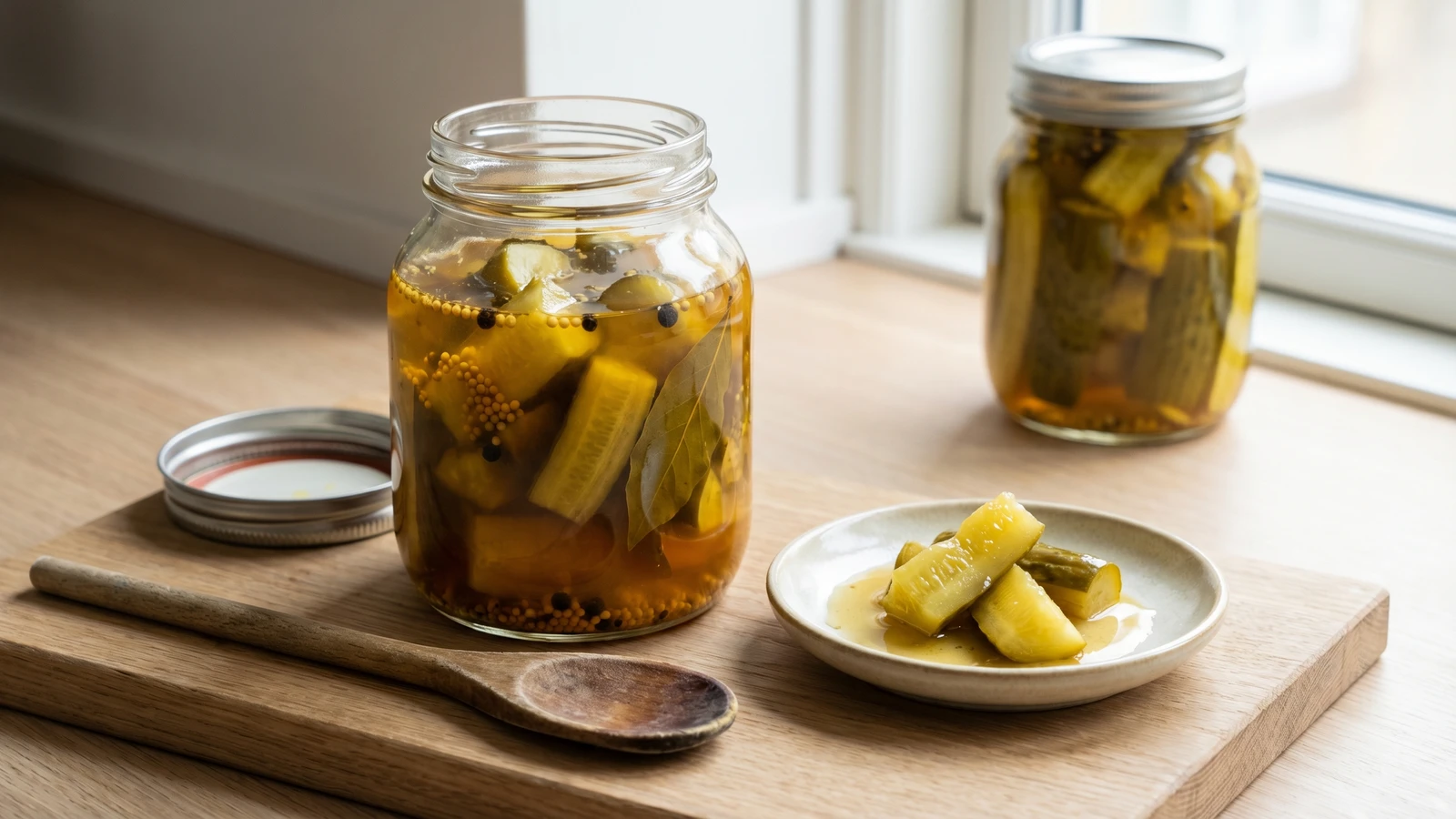
Overgrown cucumbers salted overnight and jarred in a warm, golden brine of brown sugar, mustard seed, and turmeric. The pickle that belongs beside the Christmas flaeskesteg and nowhere else.
Late August in a Danish garden, and the cucumbers have done what cucumbers do when you turn your back. They've grown past salad, past polite company, into something thick-skinned, seedy, and magnificent. These are asier. Too big for the table as they are. Perfect for the jar.
Syltede asier are the golden pickles of the Danish Christmas table. You make them in late summer when the cucumbers are overgrown, and you open them months later when the flaeskesteg comes out of the oven with its crackling skin and the whole kitchen smells of bay leaf and clove. The brine softens and sweetens during the wait. The turmeric stains everything a deep, warm gold. By December, the pickles taste like they were always meant to be there beside the roast pork and the red cabbage. The joy of waiting is real, and this recipe rewards it.
The process asks for patience, not skill. You peel and seed the cucumbers, salt them overnight to pull out the water that would dilute your brine, then pack them into clean jars and pour over a hot, sweet-spiced vinegar. The salting is the step that matters most. Skip it and the pickles turn watery and limp within weeks. Do it properly and they'll hold their bite for months. I'll walk you through every stage so you know exactly what you're looking for.
Syltede asier belong to the Danish tradition of syltning, the seasonal preserving that once determined whether a household ate well through winter or went without. Sweet-pickled marrow cucumbers became inseparable from the Christmas flaeskesteg during the 19th century, when affordable sugar allowed Danish cooks to develop the sweet-sour brines that define the style. In parts of Jutland, a sliver of fresh horseradish sometimes went into the jar alongside the mustard seed, a regional variation that adds a quiet heat you don't expect until it arrives.
Quantity
2kg, about 3-4 large
peeled, seeded, and cut into chunks
Quantity
3 tablespoons
Quantity
500ml
Quantity
400g
Quantity
200ml
Quantity
2 tablespoons
Quantity
1 tablespoon
Quantity
1 teaspoon
Quantity
3
Quantity
1 small
| Ingredient | Quantity |
|---|---|
| overgrown cucumbers (asier)peeled, seeded, and cut into chunks | 2kg, about 3-4 large |
| coarse sea salt | 3 tablespoons |
| white wine vinegar | 500ml |
| light brown sugar | 400g |
| water | 200ml |
| yellow mustard seeds | 2 tablespoons |
| ground turmeric | 1 tablespoon |
| whole black peppercorns | 1 teaspoon |
| bay leaves | 3 |
| cinnamon stick | 1 small |
Peel the overgrown cucumbers with a vegetable peeler and cut them in half lengthways. Scoop out all the seeds and soft pulp with a spoon. You want only the firm outer flesh. The seeds hold moisture and turn to mush in the brine, so be thorough here. Cut the seeded halves into chunks roughly 3cm across. They don't need to be uniform, but keep them close in size so they cure evenly.
Place the cucumber chunks in a large bowl and toss them with the coarse sea salt, making sure every piece is coated. Cover the bowl with a cloth or plate and leave it in a cool place overnight, or for at least twelve hours. The salt draws water out of the flesh. By morning you'll find a pool of liquid at the bottom of the bowl and the pieces will have shrunk and firmed noticeably. This is exactly what you want. That water would have diluted your brine and made the pickles soft and dull.
Drain the cucumber pieces in a colander and rinse them briefly under cold running water to wash off the excess salt. Let them drain well while you make the brine. A few shakes of the colander will do it. You don't need them bone-dry, but you don't want them sitting in a puddle either.
Combine the vinegar, water, and brown sugar in a heavy saucepan. Add the mustard seeds, turmeric, peppercorns, bay leaves, and cinnamon stick. Bring everything to a boil over medium heat, stirring until the sugar dissolves completely. Let it boil for two minutes. The kitchen will smell sharp and warm at the same time, vinegar cutting through the sweet spice. That's the smell of Danish Christmas preparation, and you'll recognize it every year after this one.
Pack the drained cucumber chunks tightly into clean, sterilised glass jars. Don't be shy about pressing them in. Tuck a bay leaf from the brine into each jar, visible against the glass. Pour the hot brine over the cucumbers, making sure every piece is submerged and the spices are distributed between the jars. The liquid should cover the cucumber by at least a centimetre. If it doesn't, press the pieces down or remove one or two. Every chunk must be under the brine. Anything above the surface will not keep.
Seal the jars tightly while the brine is still hot. As the liquid cools, the lids will pull inward slightly, creating a vacuum seal. You'll hear the small click of each lid drawing in. That sound means the jar is properly sealed. Let them cool completely at room temperature, then move to a cool, dark cupboard. The pickles are ready to eat after two weeks, but they improve with time. By Christmas they'll be exactly where you want them: firm, golden, sweet-sour, and deeply spiced. You'll know when they're right.
1 serving (about 125g)
Culinary guides, cultural storytelling, and the editorial depth that makes cooking meaningful.
Discover Culinary ExplorerChef Freja
Tart autumn apples, slow-boiled and strained clear overnight, then cooked with sugar to a trembling pale amber jelly that belongs on the cheese board, on morning toast, and in the kitchen of anyone who respects the season.

Chef Freja
Autumn apples simmered slowly with vanilla until they collapse into a rough, golden sauce. The condiment that waits on the shelf for flaeskesteg, for roast duck, for the meals that carry you through the Danish winter.

Chef Freja
The pan sauce that holds the Danish Christmas plate together. Duck drippings, good stock, cream, and a spoonful of red currant jelly for the tart brightness that makes juleaften taste like itself.

Chef Freja
September plums slow-cooked with onion, ginger, vinegar, and warm spice into a dark, glossy chutney that belongs beside aged cheese on a cold evening. The joy of waiting, sealed in a jar.