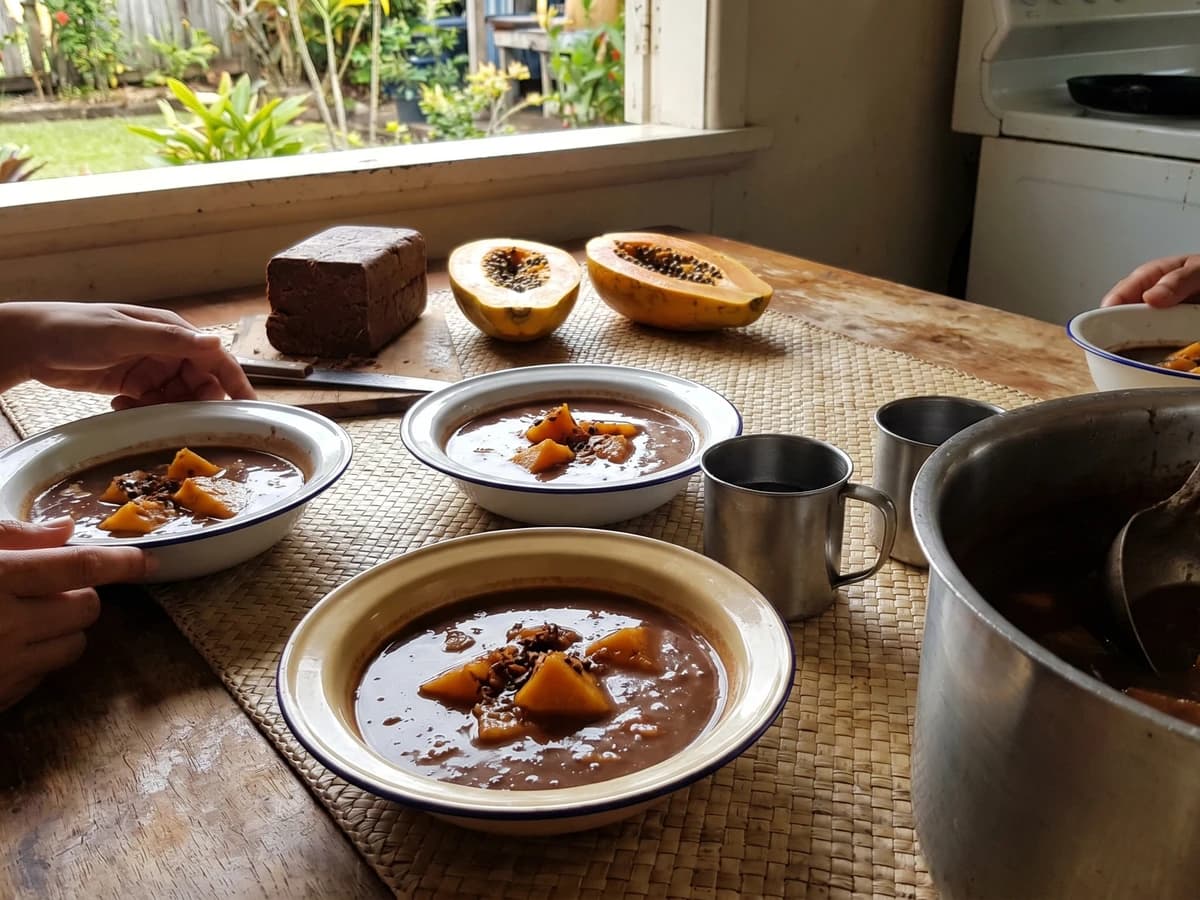
Chef Makoa
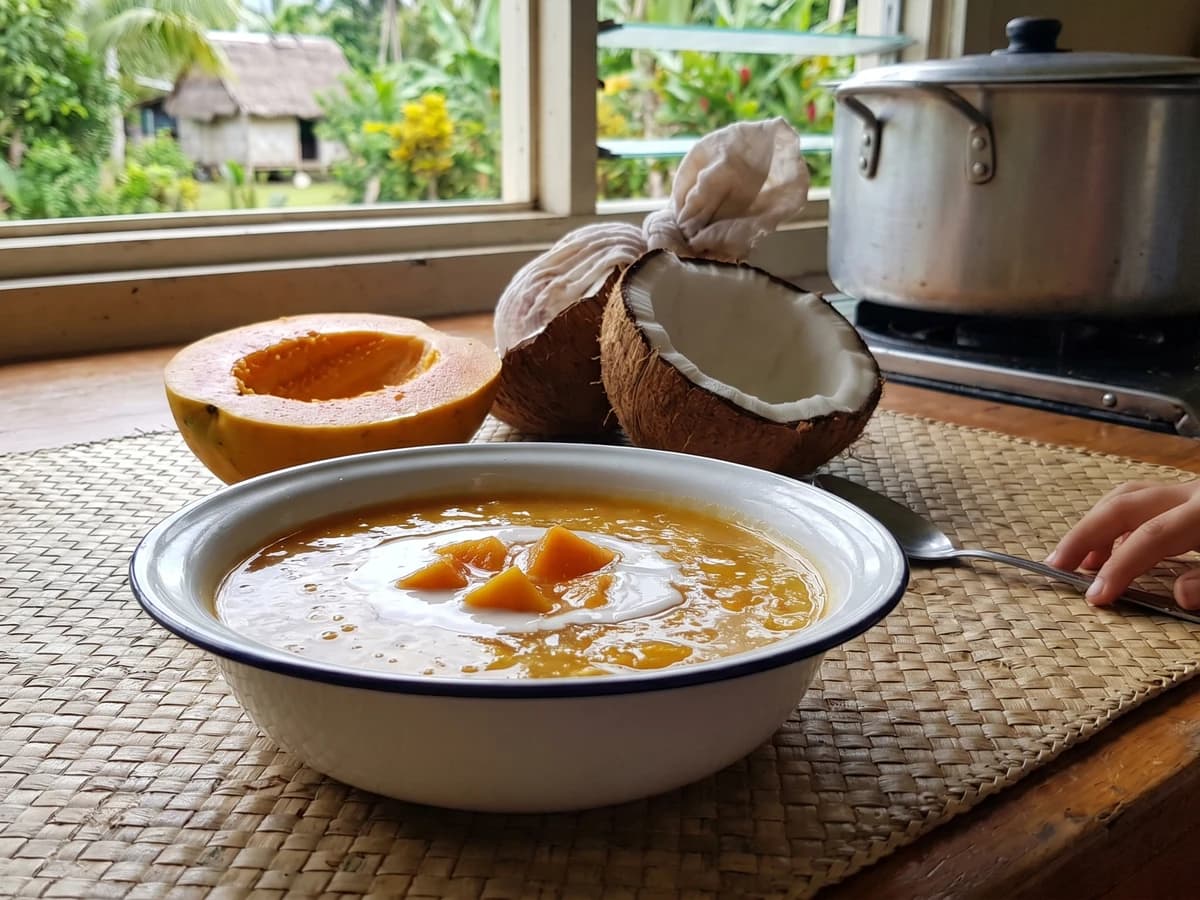
Koko Esi (Sāmoan Cacao-Papaya Soup)
A Sāmoan building-up bowl of ripe esi simmered with roasted Koko Sāmoa, softened with fresh peʻepeʻe, and served warm for elders, children, new mothers, and anybody who needs steady care.
A cooking platform built around craft, culture, and the stories behind what we eat.
Created by
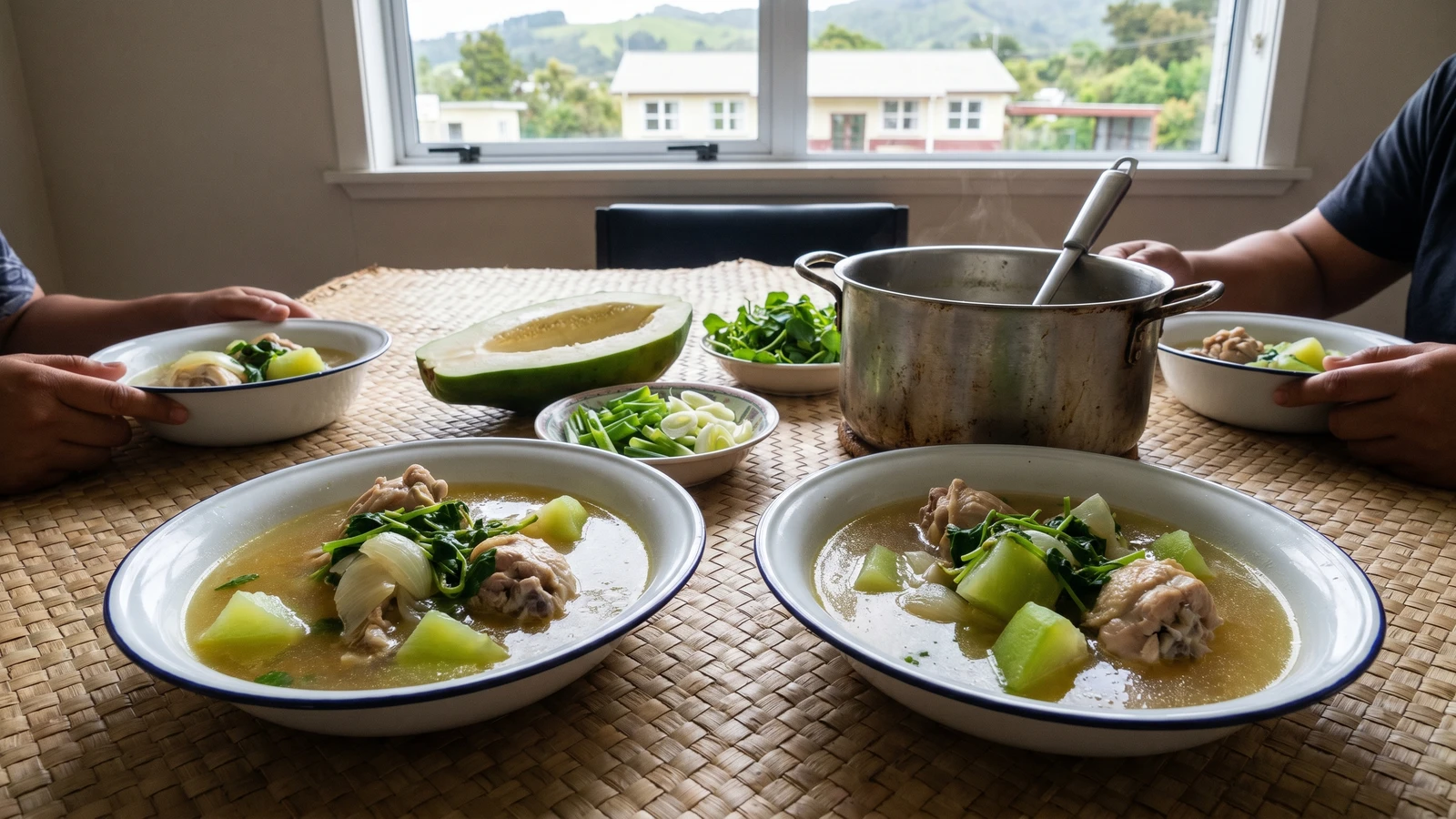
A gentle Sāmoan broth of bone-in chicken, firm green esi, onion, fish sauce, and greens, the kind of bowl an āiga sets down when somebody needs building back up.
The first time a Sāmoan auntie set this bowl in front of me, she didn't talk big about it. She just said, eat, you need strength. Supo moa ma le esi belongs to Sāmoa: supo is soup, moa is chicken, and esi is papaya, still green and firm, cut big so it gives its body to the broth without falling apart. This is āiga food, family food, the kind of pot that sits close to the sickbed, the new mother, the elder, the child who needs one more bowl before sleep.
This one isn't an umu ceremony or a chief's pig laid under hot stones. It is the other side of keeping people alive, the quiet pot on the stove. The fish sauce and onion tell you the pantry is living, not frozen in the old days. The papaya didn't come in the first canoe like kalo or ʻulu, but Sāmoa took it into the yard, into the kitchen, into the work of feeding people back to themselves. That's how food lives.
Across the Triangle every island has bowls like this, named by their own hand. In Aotearoa the Māori boil-up builds strength with bones, kūmara, and greens. Back home in Hawaiʻi, chicken long rice does gentle work at a family table, though that one comes through the local mixed kitchen, not the old deep food. Same care, different bowl. Here we keep the name clear: this is Sāmoan supo moa ma le esi.
Cook it soft but not sad. Let the chicken bones sweeten the broth, let the green papaya turn tender at the edges, let the greens go in near the end so they stay alive in the bowl. No need make it precious. Just make it clean, warm, and enough for one more.
Supo carries a borrowed word from English, and green papaya came into the Pacific after contact from the Americas, while chickens traveled through older voyaging networks and later trade. In Sāmoa the dish became a home and church-hall recovery food, a broth the āiga feeds failele, new mothers, along with elders, the sick, and children who need building up. It stands beside other named comfort bowls across the Triangle, like Māori boil-up in Aotearoa and Hawaiʻi's local chicken long rice, not as one blurred dish but as cousins doing the same work.
Quantity
3 pounds
thighs, drumsticks, or a whole chicken cut into pieces
Quantity
10 cups
or enough to cover by about 1 inch
Quantity
1 large
sliced
Quantity
4
smashed
Quantity
1 thumb-size piece
sliced
Quantity
2 tablespoons
plus more to taste
Quantity
1 1/2 teaspoons
plus more to taste
Quantity
1 firm papaya, about 2 to 2 1/2 pounds
peeled, seeded, and cut into large chunks
Quantity
4 cups
tough stems trimmed
Quantity
2
thinly sliced
Quantity
to taste
Quantity
for serving
| Ingredient | Quantity |
|---|---|
| bone-in chicken piecesthighs, drumsticks, or a whole chicken cut into pieces | 3 pounds |
| wateror enough to cover by about 1 inch | 10 cups |
| onionsliced | 1 large |
| garlic clovessmashed | 4 |
| fresh gingersliced | 1 thumb-size piece |
| fish sauceplus more to taste | 2 tablespoons |
| sea saltplus more to taste | 1 1/2 teaspoons |
| green papaya (esi)peeled, seeded, and cut into large chunks | 1 firm papaya, about 2 to 2 1/2 pounds |
| watercress, lau pele, or tender greenstough stems trimmed | 4 cups |
| green onionsthinly sliced | 2 |
| black pepper | to taste |
| cooked rice or white bread (optional) | for serving |
Peel the green esi, the papaya, split it, scrape out the seeds, and cut the flesh into big chunks, about 1 1/2 inches. Keep them generous. Small pieces fall apart before the chicken has given the broth what it owes.
Put the chicken, water, onion, garlic, ginger, fish sauce, and salt into a heavy pot. Bring it up to a gentle boil, then lower it right away to a steady simmer. Skim off the gray foam that rises so the broth tastes clean and light, not muddy.
Simmer 30 to 35 minutes, until the broth smells savory and the chicken is mostly cooked through. The bones matter here. They give the soup body without making it heavy, the way an auntie knows without measuring.
Slide the green papaya into the pot and simmer 20 to 25 minutes more, until the edges turn a little translucent and a fork goes in without a fight. Don't boil hard. Let the esi soften the broth and the broth soften the esi.
Stir in the watercress, lau pele, or whatever tender greens you have, then cook 3 to 5 minutes, just until they turn glossy and tender. Taste the broth. Add fish sauce for depth, salt for clarity, and black pepper only if the bowl wants that little bite.
Ladle chicken, papaya, greens, and clear broth into deep bowls and scatter green onion over the top. Serve with rice or white bread if that's how the table eats. For an elder or somebody recovering, keep the seasoning gentle. The point is strength, not showing off.
1 serving (about 700g)
Culinary guides, cultural storytelling, and the editorial depth that makes cooking meaningful.
Discover Culinary ExplorerChef Makoa
A Sāmoan building-up bowl of ripe esi simmered with roasted Koko Sāmoa, softened with fresh peʻepeʻe, and served warm for elders, children, new mothers, and anybody who needs steady care.
Chef Makoa
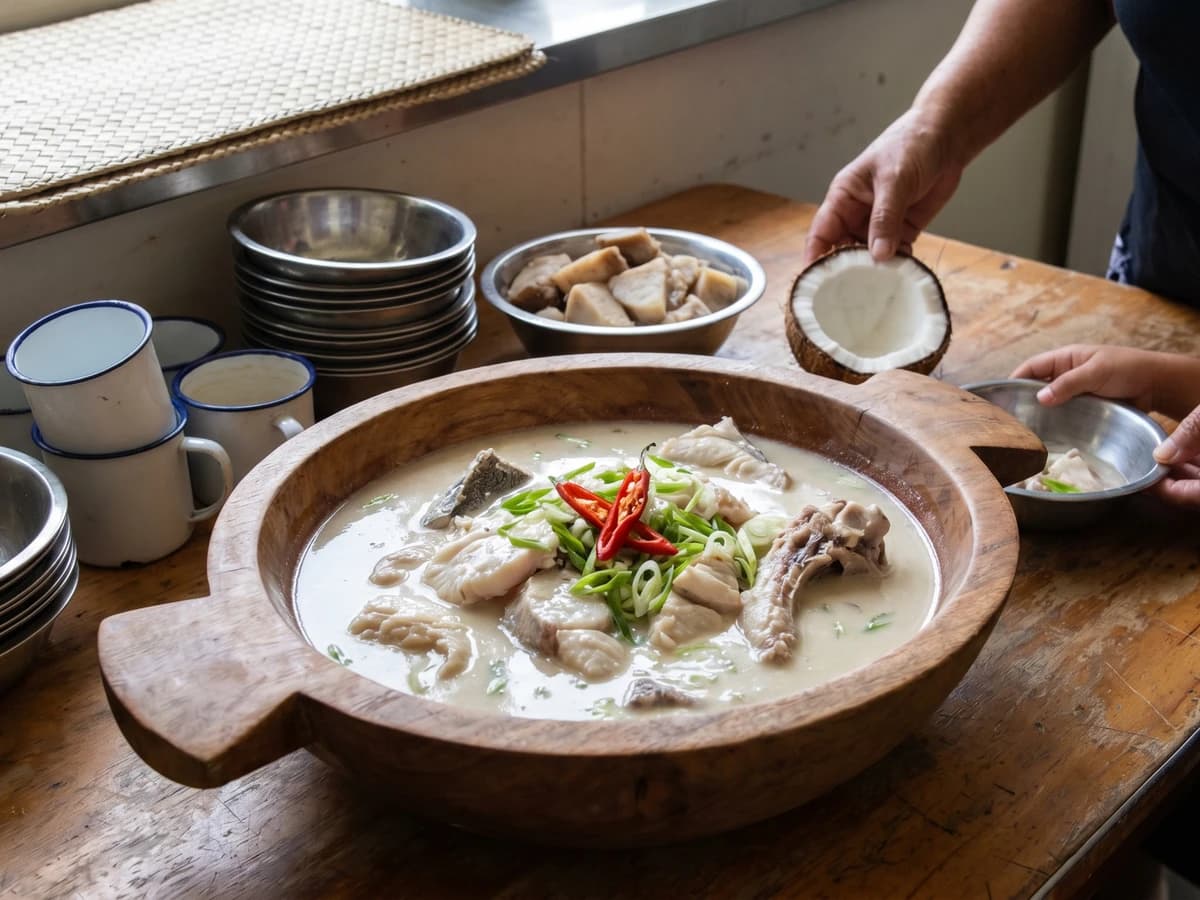
A clear Sāmoan fish soup softened with peʻepeʻe, fresh coconut cream, made for the aiga when somebody needs feeding now: clean fish, onion, chili, salt, and no showing off.
Chef Makoa
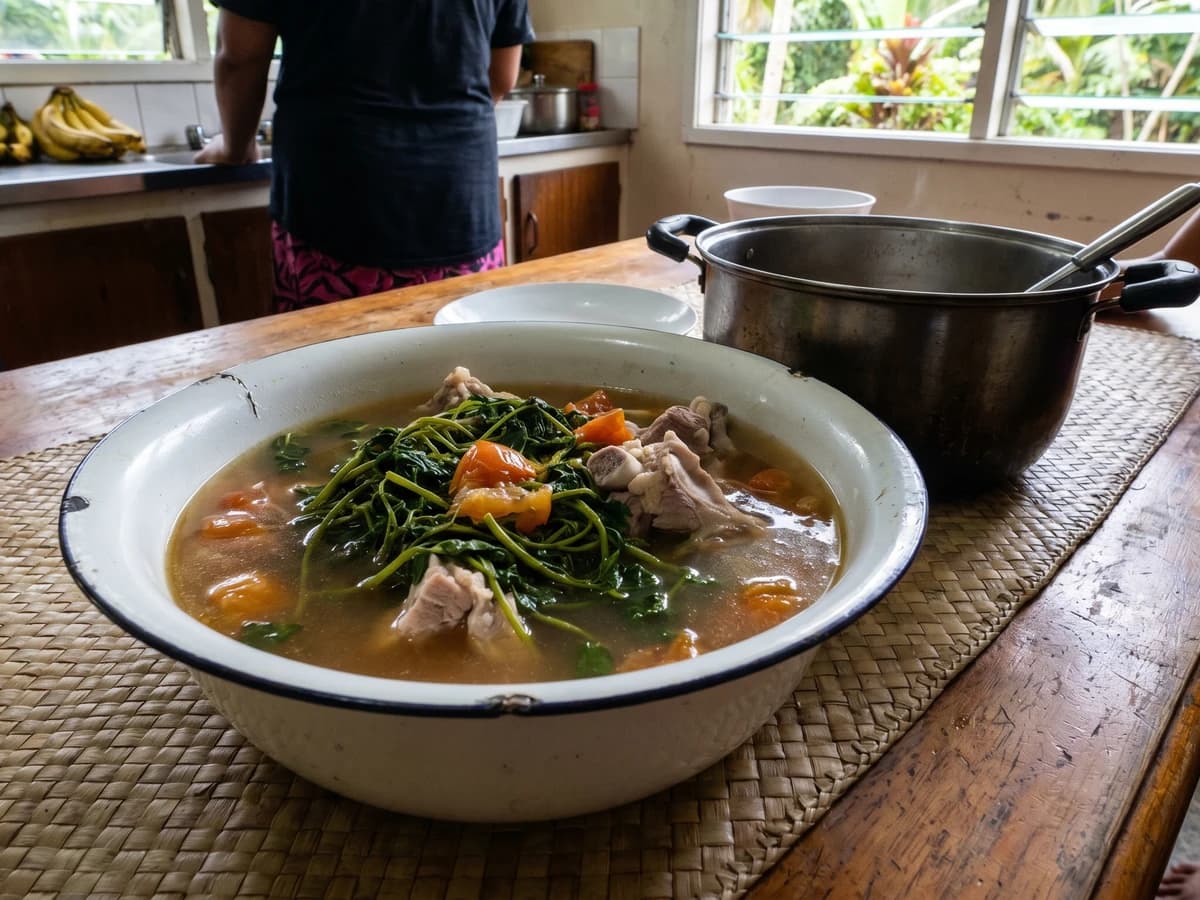
Sāmoa's supo kapisi, pork bones simmered with ginger until the broth turns rich, then peppery watercress folded in dark and tender for a bowl that builds you back up.
Chef Makoa
Sāmoa's supoesi, ripe esi and tapioca pearls softened into fresh peʻepeʻe coconut cream, the gentle golden soup Sāmoan families feed to children, elders, new mothers, and anybody coming back to strength.