Chef Joost
Aardbeienvlaai (Limburg Strawberry Vlaai)
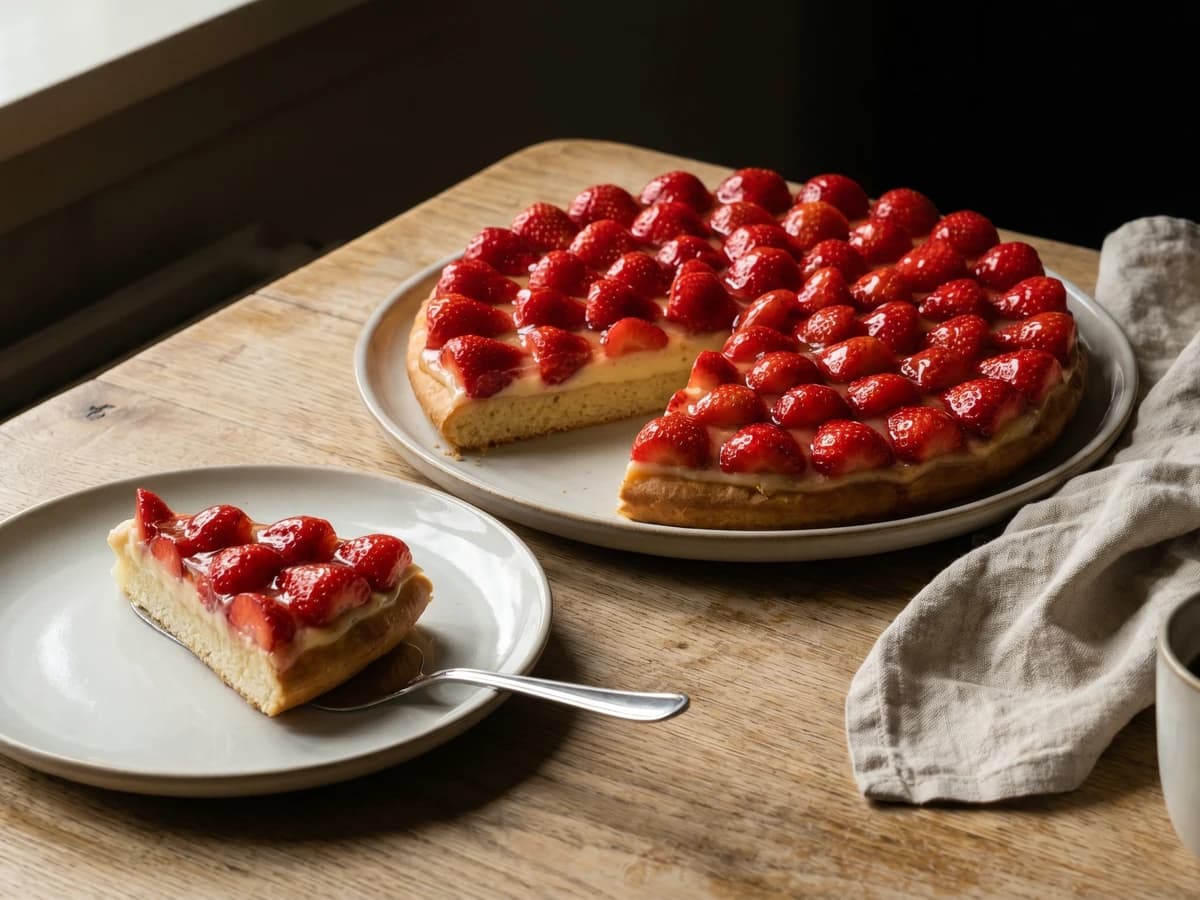
The summer vlaai that politely breaks Limburg's baked-fruit rule: soft gistdeeg, cool pastry cream, and strawberries left fresh because June knows better than the oven.
A cooking platform built around craft, culture, and the stories behind what we eat.

Created by
A carved wooden mold, a cargo of warm spices, and a December table: speculaas is the Sinterklaas cookie that proves Dutch frugality always kept one rich cupboard.
Smell speculaas baking and you're smelling a cargo manifest. Cinnamon from Ceylon, cloves from the Moluccas, nutmeg and mace from Banda, ginger, cardamom, white pepper: the little brown cookie in your hand carries the routes that made Amsterdam rich and kitchens complicated. A country famous for thrift put empire into a spice jar and then served it with coffee as if nothing had happened. Exuberant cookery in a frugal country.
During my year in Fez I read medieval Arabic recipes by day and watched bakers at night dust wooden stamps before pressing patterns into dough. That is what a speculaasplank, a carved wooden cookie mold, does too. The name already tells you something is hiding here, though it refuses to behave politely. Cooks and philologists have long argued between speculum, Latin for mirror, because the dough takes the reversed image of the carved plank, and speculator, observer, the word tradition likes to place near Saint Nicholas. I keep both on the shelf. The cookie gets eaten before the argument cools.
What I want from you is respect for the mold and patience with the dough. Cold butter, dark sugar, true speculaaskruiden, the Dutch spice blend, and a proper rest in the refrigerator: that is the whole trick. Too soft, and the saint leaves the oven as a brown smudge, for obvious reasons a poor devotional object. Hou het altijd simpel, always keep it simple. Make the dough firm, let the spices settle, press it cleanly, and bake until the edges darken by one shade. The carving does the showing off. You only have to let it.
Speculaas belongs to the Sinterklaas season, especially the evening of 5 December, and its recognizable form grew in the seventeenth and eighteenth centuries as Dutch bakers worked VOC spice cargoes into feast-day doughs. The carved speculaasplank, a wooden mold, stamped saints, ships, horses, and household figures into dough, making the cookie a small edible print as much as a sweet. The name's origin remains disputed, usually traced either to Latin speculum, mirror, for the reversed imprint of the mold, or speculator, observer, linked by tradition to Saint Nicholas.
Quantity
250g
plus more for dusting
Quantity
150g
sieved if lumpy
Quantity
125g
diced
Quantity
2 teaspoons
preferably freshly ground
Quantity
1/2 teaspoon
Quantity
1/2 teaspoon
Quantity
1/2 teaspoon
Quantity
1/4 teaspoon
Quantity
1/4 teaspoon
Quantity
1/4 teaspoon
Quantity
1 teaspoon
Quantity
1/4 teaspoon
Quantity
2 to 3 tablespoons
| Ingredient | Quantity |
|---|---|
| all-purpose flourplus more for dusting | 250g |
| dark brown basterdsuiker or dark muscovadosieved if lumpy | 150g |
| cold unsalted butterdiced | 125g |
| ground cinnamonpreferably freshly ground | 2 teaspoons |
| ground mace | 1/2 teaspoon |
| ground cloves | 1/2 teaspoon |
| ground ginger | 1/2 teaspoon |
| freshly grated nutmeg | 1/4 teaspoon |
| ground white pepper | 1/4 teaspoon |
| ground cardamom | 1/4 teaspoon |
| baking powder | 1 teaspoon |
| fine sea salt | 1/4 teaspoon |
| cold milk | 2 to 3 tablespoons |
Stir the cinnamon, mace, cloves, ginger, nutmeg, white pepper, and cardamom together in a small bowl. This is speculaaskruiden, the Dutch spice blend, and the white pepper is not a prank; it gives the sweetness a quiet heat at the back of the mouth.
Put the flour, sugar, baking powder, salt, and spice blend in a large bowl and whisk until the sugar is evenly broken through the flour. Rub in the cold butter with your fingertips until the mixture looks like damp sand, then add 2 tablespoons of cold milk. Press the dough together with your hands. Add the last tablespoon of milk only if dry flour remains at the bottom of the bowl.
Flatten the dough into a thick disk, wrap it, and refrigerate for at least 2 hours, or overnight. This rest is doing real work: the sugar hydrates, the spices settle into the butter, and the dough firms enough to hold the carving from the mold.
Heat the oven to 180C, or 170C fan, and line two baking sheets with parchment. Dust a speculaasplank lightly with flour, then knock out almost all of it; the flour should cling in the carving, not sit in white patches. Press chilled dough firmly into the mold, slice the back flush with a thin knife, and tap the cookie out onto the baking sheet.
Bake for 12 to 15 minutes, rotating the tray once, until the edges have darkened by one shade and the centers look set. They will still feel a little tender when hot. Leave them on the tray for 5 minutes, because butter and sugar need a moment to remember they are a cookie.
Move the speculaas to a rack and let them cool completely; they crisp as they cool. Serve with coffee, tea, or a glass of milk on Sinterklaas evening. Store them in a tin once fully cool, and the spice will deepen over the next day.
1 small cookie (about 23g)
Culinary guides, cultural storytelling, and the editorial depth that makes cooking meaningful.
Discover Culinary ExplorerChef Joost
The summer vlaai that politely breaks Limburg's baked-fruit rule: soft gistdeeg, cool pastry cream, and strawberries left fresh because June knows better than the oven.

Chef Joost
A Limburg vlaai is not a pie trying to be grand. It is a thin yeast-dough round, fruit-bright and generous, made for birthdays, coffee, and second slices.

Chef Joost
The December bakery counter made small: cold leafed pastry wrapped around lemon-scented amandelspijs, brushed gold, and scattered with almonds so one person gets the whole holiday in both hands.
Chef Joost
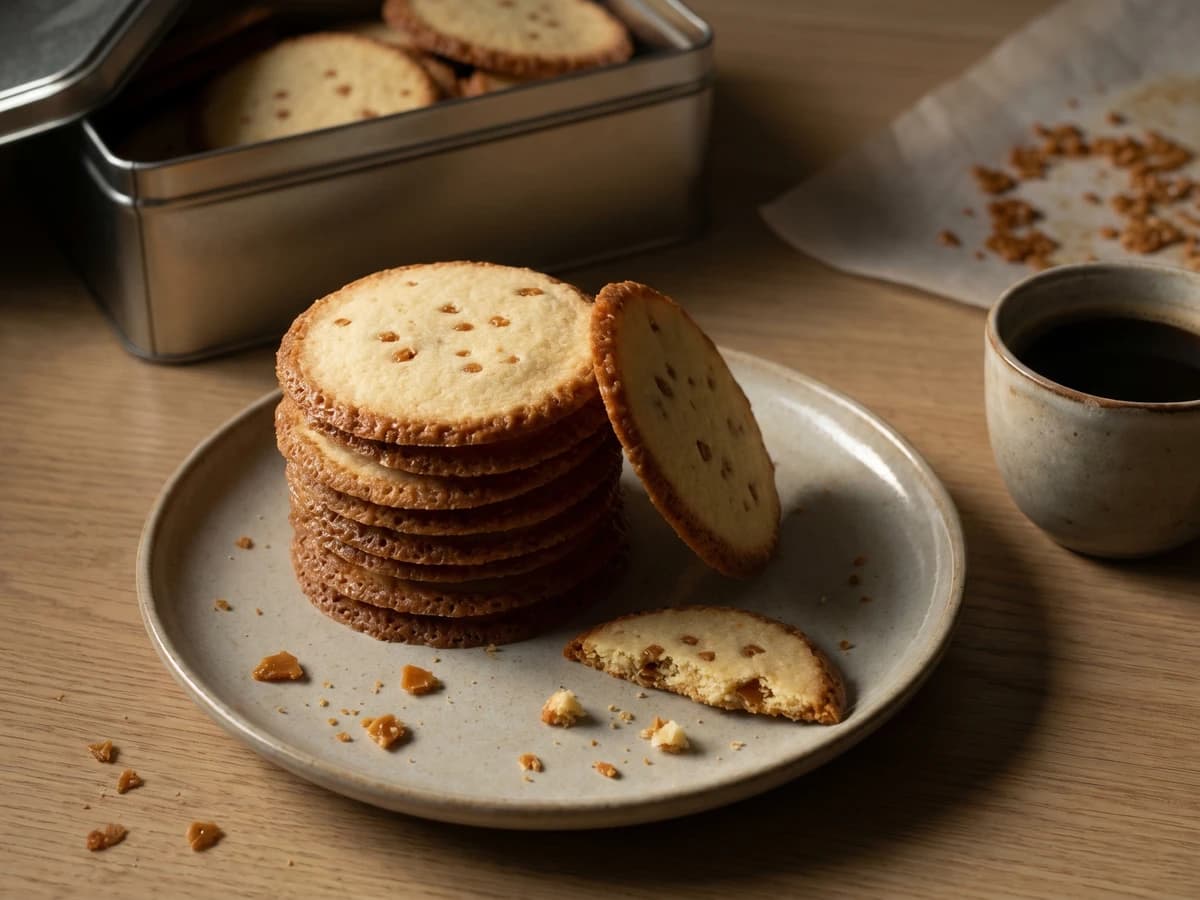
A thin Amsterdam cookie carrying a cog ship in its name: caramelized butter dough, almond nougatine, and a 1934 contest that turned municipal pride into something for coffee.