Culinary Explorer

A cooking platform built around craft, culture, and the stories behind what we eat.
Discover Culinary Explorer
Banketletter

Banketletter

Created by

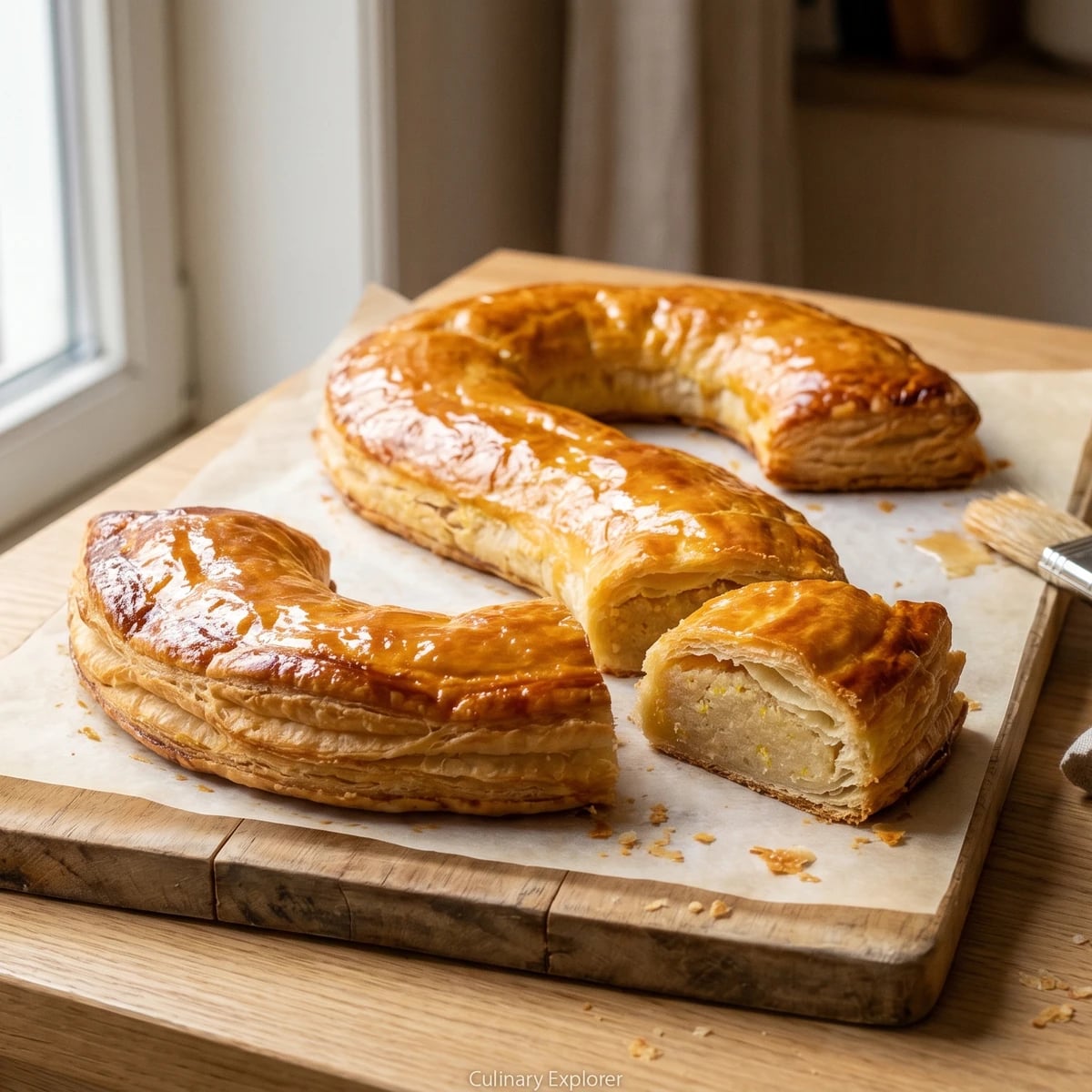
The almond-filled pastry letter of the Dutch December table, crisp outside, fragrant within, and most prized when it curls into the S of Sinterklaas.

Pastries & Cookies
Dutch
Christmas
Holiday
Celebration
25 min
Active Time
25 min cook1 hr 20 min total
Yield1 large letter, 8 servings

In my grandmother's second notebook, the page for banketletter was not much of a recipe. That is how you know it mattered. The things made every year need fewer words because the hands remember them: roll the spijs, fold the pastry, brush with egg, mind the seam. December did the rest. Children watched the oven because the letter was theirs, or so they believed, which is one of the kinder lies a Dutch household tells at Sinterklaas.

The name already tells you most of the truth. Banket is the Dutch word for fine pastry and confectionery, the good counter at the bakery, and letter means exactly what it says. This is pastry made into writing. A banketstaaf is the straight bar, respectable enough, but the banketletter has personality. The S is the old favourite, for Sinterklaas, though a first initial on the table still has the small magic of being chosen.

But let me tell you a secret: the pastry is not the luxury here. The almond paste is. Real amandelspijs, almond paste, is made from almonds and sugar in equal weight, loosened with egg and sharpened with lemon zest. If you replace it with the bland filling sold as bakery paste, the letter still looks correct and tells a lie when cut. Get the spijs right and I'll forgive shop-bought puff pastry. Hou het altijd simpel, but simple is not the same as skipped.

Banketletters belong to the Dutch December baking tradition around Sinterklaas on 5 December, when edible letters also appear as chocoladeletters, chocolate initials given as gifts. Almond paste pastries became fixtures of Dutch bakeries in the early modern period, when imported almonds and sugar moved from luxury goods into urban pastry shops. The S-shaped banketletter remains the classic form because of Sinterklaas, though straight banketstaven and personal initials are common on Christmas and New Year tables as well.

The technique, the tradition, and the story behind every dish.

Discover Culinary Explorer

Ingredients

blanched almonds

Quantity

300g

finely ground

fine caster sugar

Quantity

300g

lemon

Quantity

1

finely grated zest only

large egg

Quantity

1

divided, for almond paste

large egg

Quantity

1

beaten, for glazing

almond extract (optional)

Quantity

1 teaspoon

all-butter puff pastry

Quantity

450g

chilled

flour

Quantity

1 tablespoon

for dusting

apricot jam (optional)

Quantity

2 tablespoons

warmed and sieved

Equipment Needed

  • Large baking tray
  • Parchment paper
  • Rolling pin
  • Pastry brush

Instructions

  1. 1

    Make the spijs

    Mix the ground almonds, sugar, lemon zest, half the egg, and the almond extract if using into a firm paste. It should hold together like soft marzipan, not slump like cake batter. If it feels dry, add a little more egg, teaspoon by teaspoon. Wrap and chill for at least 30 minutes, or overnight if you have the sense to start early.

    Equal weights almonds and sugar are the backbone of real amandelspijs, almond paste. More sugar makes it cheaper and flatter; the almond should speak first.
  2. 2

    Shape the filling

    On a lightly floured surface, roll the chilled almond paste into one long rope, about 70cm long and 3cm thick. Keep the rope even so every slice of the finished letter gets its fair share. If it cracks, press it back together with damp fingers; this is pastry, not porcelain.

  3. 3

    Wrap the pastry

    Roll the puff pastry into a long rectangle, about 80cm by 18cm. Lay the almond rope down the centre, brush one long pastry edge with beaten egg, and fold the pastry around the filling so the seam closes underneath. Press gently along the seam, not so hard that you crush the layers. Puff pastry rises because it has been allowed to keep its little architecture.

  4. 4

    Form the letter

    Transfer the filled pastry, seam side down, to a parchment-lined baking tray and bend it into an S, or into the initial you need. Leave room between the curves, because the pastry will broaden as it bakes. Tuck the ends neatly underneath so the almond paste stays where it belongs.

  5. 5

    Glaze and chill

    Brush the whole letter with beaten egg, then chill it for 20 minutes while the oven heats to 200C. Cold pastry going into a hot oven gives you clean lift and crisp layers. Brush once more with egg just before baking for the deep bakery shine.

  6. 6

    Bake until bronzed

    Bake for 22 to 28 minutes, until the pastry is deeply golden, crisp at the edges, and firm underneath when lifted with a spatula. If the top colours too quickly, lower the oven to 180C for the final minutes. Brush lightly with warm apricot jam if you want the old bakery gloss, then cool at least 20 minutes before slicing so the almond paste settles.

Chef Tips

  • Use all-butter puff pastry. Margarine pastry can puff, yes, but butter gives the clean flavour this very simple pastry depends on.
  • Make the amandelspijs a day ahead if you can. The almond, sugar, lemon, and egg relax into one another overnight, and the filling cuts more cleanly.
  • Do not overfill the pastry. A generous letter is good; an exploded letter is a lesson. Keep a clear pastry border for sealing.
  • Serve in thick slices with coffee after Sinterklaas evening or on a Christmas table. A small glass of oude jenever beside it is historically more Dutch than it is sensible, which has never stopped anyone.

Advance Preparation

  • The almond paste can be made up to 3 days ahead and kept covered in the refrigerator.
  • The shaped, unbaked letter can be chilled for up to 8 hours before baking; glaze it once before chilling and once again just before it goes into the oven.
  • Best eaten the day it is baked, though leftovers keep 2 days in an airtight tin and can be refreshed briefly in a low oven.

Frequently Asked Questions

Nutrition Information

1 serving (about 140g)

Calories
625 calories
Total Fat
34 g
Saturated Fat
11 g
Trans Fat
0 g
Unsaturated Fat
22 g
Cholesterol
75 mg
Sodium
220 mg
Total Carbohydrates
70 g
Dietary Fiber
6 g
Sugars
42 g
Protein
13 g

Note: Chef personas and recipes are created with AI assistance. Cook with care: follow safe food-handling practices, check doneness with a thermometer when needed, and adapt for allergies and your kitchen.

Where cooking meets culture.

Culinary guides, cultural storytelling, and the editorial depth that makes cooking meaningful.

Discover Culinary Explorer

More from Sinterklaas: Speculaas & Banket

Browse the full collection