Chef Joost
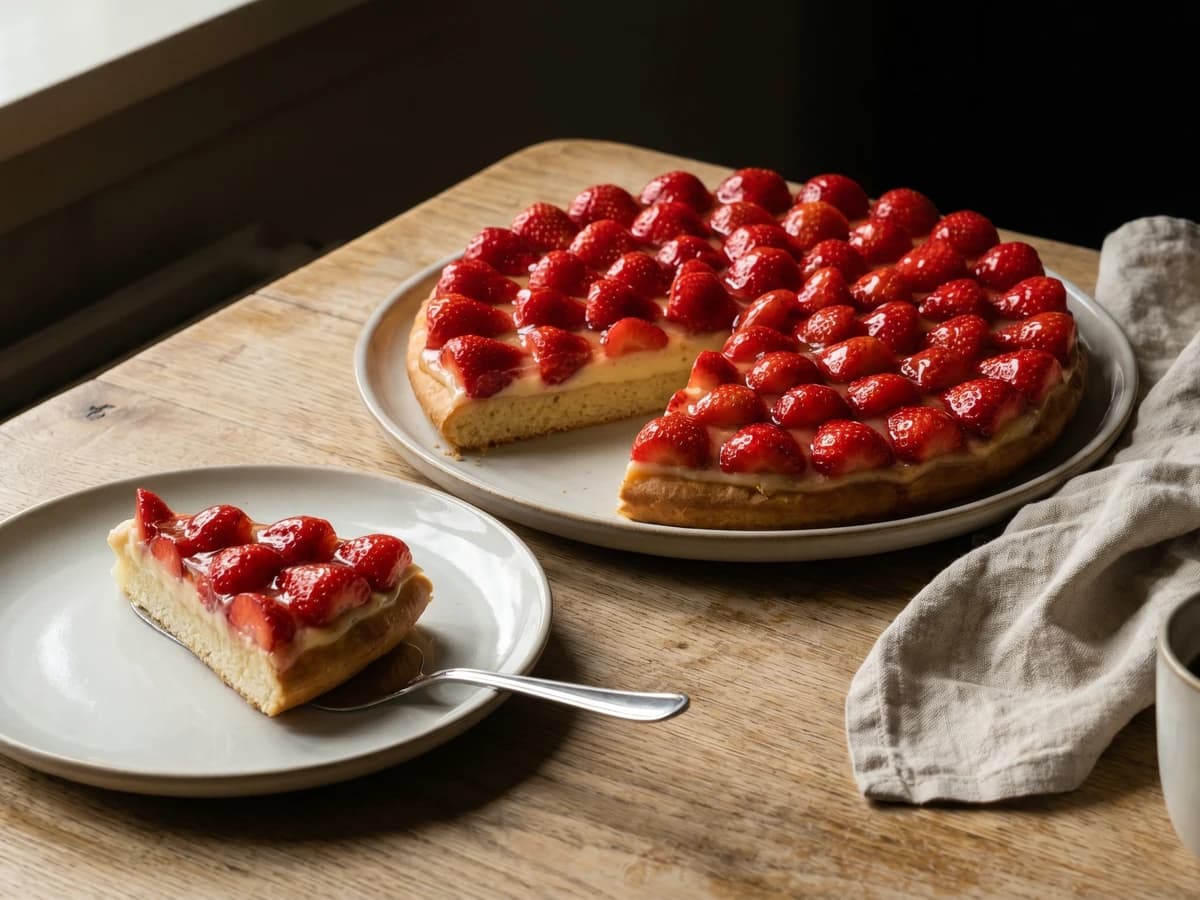
Aardbeienvlaai (Limburg Strawberry Vlaai)
The summer vlaai that politely breaks Limburg's baked-fruit rule: soft gistdeeg, cool pastry cream, and strawberries left fresh because June knows better than the oven.
A cooking platform built around craft, culture, and the stories behind what we eat.

Created by
The December bakery counter made small: cold leafed pastry wrapped around lemon-scented amandelspijs, brushed gold, and scattered with almonds so one person gets the whole holiday in both hands.
Every Dutch December has a smell before it has a date: butter browning at the bakery, almond paste under glass, and the faint citrus lift that tells you the spijs is not merely sweet but awake. As a boy I thought the amandelbroodje was the modest one, sitting beside the great banketletters shaped for Sinterklaas, the filled rods for Christmas, and the proud slabs of gevulde speculaas. Modest, yes. Innocent, never.
The name already tells you almost everything, which is very Dutch of it. Amandel is almond, broodje is a little bread or roll, though here the bread is bladerdeeg (leaf dough), dozens of butter-thin layers folded around amandelspijs (almond paste). It isn't quite bread, for obvious reasons; the Dutch bakery has always been relaxed about taxonomy when butter is behaving. But let me tell you a secret: this pastry is not the lesser cousin of the holiday letter. It is the democratic one. No initials, no ceremony, just a single parcel for the person who has stood in the cold and deserves the first bite before the kettle boils.
What matters is restraint. The filling must be almond before it is sugar, sharpened with lemon and rested so it becomes paste rather than grit. The pastry must stay cold, because butter only makes leaves when it enters the oven firm. Hou het altijd simpel: good puff pastry, honest spijs, egg, flaked almonds, and the discipline to leave the shaped broodjes in the refrigerator while the oven gets properly hot. History and cookery, they cannot be separated; in this case, both say the same thing. Wait a little, then bake.
Amandelbroodje belongs to the same Dutch bakery family as banketstaaf and banketletter: butter-rich bladerdeeg (leaf dough) folded around amandelspijs (almond paste) for the December season, especially Sinterklaas and Christmas. Almonds and sugar entered the Low Countries as costly feast ingredients through Mediterranean and later Atlantic trade, which is why almond paste remained tied to holidays long after it became affordable. The individual broodje is the counter-sized descendant of that tradition, less ceremonial than a letter but carrying the same almond, butter, and winter-calendar logic.
Quantity
200g
Quantity
200g
Quantity
1/2 lemon
finely grated
Quantity
1/4 teaspoon
Quantity
1 medium
beaten
Quantity
1/4 teaspoon
Quantity
320g
thawed but cold
Quantity
1 tablespoon
Quantity
1
beaten
Quantity
40g
Quantity
1 tablespoon
| Ingredient | Quantity |
|---|---|
| blanched almond flour | 200g |
| fine caster sugar | 200g |
| lemon zestfinely grated | 1/2 lemon |
| fine salt | 1/4 teaspoon |
| egg for almond fillingbeaten | 1 medium |
| bitter almond extract (optional) | 1/4 teaspoon |
| all-butter puff pastry sheetthawed but cold | 320g |
| flour for rolling | 1 tablespoon |
| egg for glazingbeaten | 1 |
| flaked almonds | 40g |
| poedersuiker, powdered sugar (optional) | 1 tablespoon |
Stir the almond flour, sugar, lemon zest, and salt together in a bowl. Add the beaten egg and the bitter almond extract, if using, and mix until you have a heavy paste that holds its shape. It should feel like soft clay, not run like batter. Wrap it and chill for at least 20 minutes; overnight is even better, because the sugar hydrates and the lemon works its way through the almond.
Heat the oven to 200C, or 180C fan, and line a baking sheet with parchment. Roll the cold puff pastry lightly on a floured surface to about 32 by 24 cm, then cut it into 8 rectangles, each roughly 8 by 12 cm. If the pastry softens while you work, slide it back into the refrigerator for 10 minutes. Bladerdeeg is polite only while cold.
Divide the chilled almond filling into 8 small logs, about 45 to 50g each, and lay one log lengthwise down the centre of each pastry rectangle. Brush one long edge of the pastry with a little water, fold the pastry over the filling, and press the seam and short ends closed. Turn each broodje seam-side down on the baking sheet. Don't flatten them; they should sit like small pillows.
Brush the tops with beaten egg and scatter over the flaked almonds, pressing them very lightly so they cling. Chill the shaped pastries for 15 to 20 minutes while the oven finishes heating. This little wait is what buys you lift; if the butter melts on the tray, the pastry bakes flat and sulks.
Bake for 18 to 22 minutes, until the pastries are deep golden, the almonds are toasted, and the sides have lifted into clear layers. A little almond paste showing at a seam is not failure; it is the pastry admitting what it is full of. Let the broodjes cool on a rack for at least 10 minutes before dusting lightly with poedersuiker, powdered sugar, if you like. The filling is sweetest when warm, but it is also impatient with tongues.
1 serving (about 95g)
Culinary guides, cultural storytelling, and the editorial depth that makes cooking meaningful.
Discover Culinary ExplorerChef Joost
The summer vlaai that politely breaks Limburg's baked-fruit rule: soft gistdeeg, cool pastry cream, and strawberries left fresh because June knows better than the oven.

Chef Joost
A Limburg vlaai is not a pie trying to be grand. It is a thin yeast-dough round, fruit-bright and generous, made for birthdays, coffee, and second slices.
Chef Joost
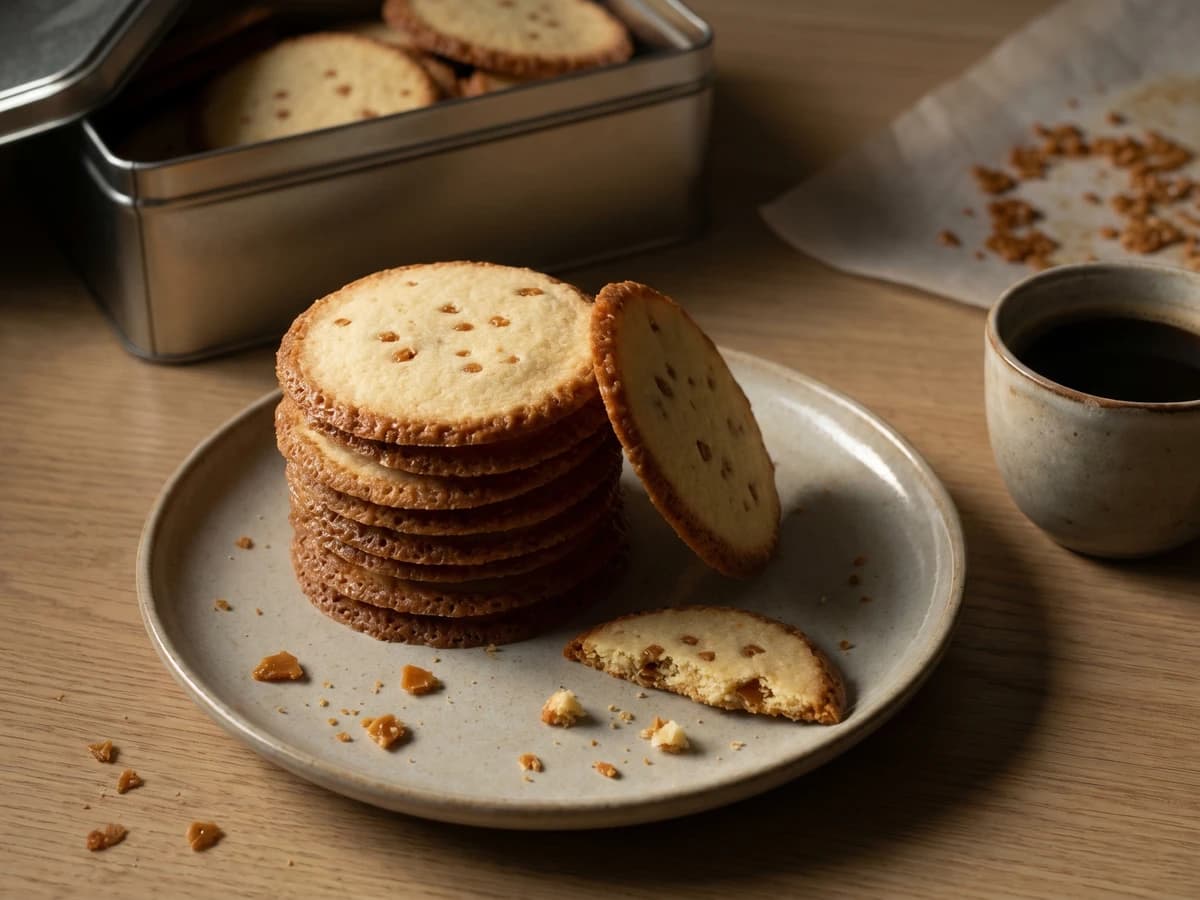
A thin Amsterdam cookie carrying a cog ship in its name: caramelized butter dough, almond nougatine, and a 1934 contest that turned municipal pride into something for coffee.

Chef Joost
A winter apple ring in light batter, fried for oudejaarsavond, New Year's Eve, when the oliebol makes the noise and the quieter beignet keeps the cinnamon-sugared secret.