
Chef Takumi
Aji Fry (アジフライ, panko-fried horse mackerel)
Aji fry is weeknight fish with no mystery: fresh horse mackerel opened cleanly, breaded lightly, and fried until the panko crackles while the flesh stays sweet.
A cooking platform built around craft, culture, and the stories behind what we eat.

Created by
Tatsuta-age makes good mackerel easy to trust: soy and ginger season it plainly, potato starch seals the surface, and a short fry leaves the fish crisp outside and tender within.
Mackerel frightens people a little. It has a strong character, and when it is tired it tells you so with no manners at all. That is useful, really. Choose saba that is glistening fresh, cook it the day you buy it, and this dish becomes straightforward: marinate, starch, fry.
Tatsuta-age is not a heavy batter. The fish is seasoned first with soy, sake, and ginger, then dusted in potato starch so the surface fries into a fine, dry crust. The starch does two jobs. It keeps the marinade close to the fish, and it seals the outside quickly so the flesh stays juicy. Flour gives a softer coat. Potato starch gives the clean bristle we want here.
The one detail that decides it is dryness before frying. Let the marinade do its work, then wipe off the excess and dredge just before the fish meets the oil. Too much wet marinade darkens before the fish is cooked, and too much loose starch clouds the oil. Nothing hidden, nothing muddy. This is weeknight washoku with teeth: a bowl of rice, something green, perhaps a sharp grated daikon beside it, and the method doing honest work.
Tatsuta-age is a deep-frying method in which pieces of fish or meat are marinated in soy-based seasoning, then coated in starch before frying. The name is usually linked to the Tatsuta River in Nara, famous in classical poetry for autumn maple leaves, because the reddish-brown fried surface was compared to leaves floating on the river. Saba became a natural partner for the method because its oily flesh takes soy and ginger well and stays moist through a brief fry.
Quantity
4 fillets (about 600g total)
pin bones removed
Quantity
3 tablespoons
Quantity
2 tablespoons
Quantity
1 tablespoon
Quantity
1 tablespoon
grated, with its juice
Quantity
1 small
grated
Quantity
1/2 cup, plus more as needed
Quantity
about 3 cups
for deep-frying
Quantity
1/4
grated and lightly squeezed
Quantity
1
cut into wedges
Quantity
as needed
| Ingredient | Quantity |
|---|---|
| mackerel filletspin bones removed | 4 fillets (about 600g total) |
| soy sauce | 3 tablespoons |
| sake | 2 tablespoons |
| mirin | 1 tablespoon |
| fresh gingergrated, with its juice | 1 tablespoon |
| garlic clove (optional)grated | 1 small |
| potato starch | 1/2 cup, plus more as needed |
| neutral oilfor deep-frying | about 3 cups |
| daikongrated and lightly squeezed | 1/4 |
| lemon or sudachicut into wedges | 1 |
| fine sea salt (optional) | as needed |
Pat the mackerel dry and smell it before you begin. It should smell clean and faintly of the sea, not sharp or sour. If the fish is not fresh, change the dish and cook something else. Tatsuta-age is seasoning, not a disguise.
Cut each fillet crosswise into pieces about 4 cm wide. If the skin is thick, make one shallow slash through the skin of each piece. This helps the marinade reach the flesh and keeps the pieces from curling hard in the oil.
Mix the soy sauce, sake, mirin, grated ginger and its juice, and the garlic if using. Add the mackerel and turn each piece so it is coated. Leave it for 15 minutes, turning once. Longer is not better here: the soy can toughen the surface and make the fish too salty before the center has any chance to speak.
Lift the fish from the marinade and wipe each piece with paper towel until damp, not wet. Dredge in potato starch, pressing lightly into the skin side and cut faces, then shake off every loose clump. The starch should look like a thin frost, not a winter coat.
Heat the oil in a deep pot to 170 C. If you don't use a thermometer, drop in a pinch of starch: it should sink halfway, then rise with small lively bubbles. Too cool and the coating drinks oil. Too hot and the soy-dark surface browns before the flesh is done.
Slide in a few pieces of mackerel, skin side down first, leaving space between them. Fry for 3 to 4 minutes, turning once, until the crust is crisp, the color is deep golden brown, and the bubbles around each piece become smaller and quieter. Crowding drops the oil temperature and gives you heavy fish. Two calm batches beat one crowded pot.
Lift the fish to a rack, not a flat plate, so the crust stays dry. Taste one piece while it is still warm. If it needs salt, use only a few grains. Serve with grated daikon and a wedge of lemon or sudachi. The daikon cuts the richness, and the citrus brightens the soy without covering the mackerel.
1 serving (about 200g)
Culinary guides, cultural storytelling, and the editorial depth that makes cooking meaningful.
Discover Culinary ExplorerChef Takumi
Aji fry is weeknight fish with no mystery: fresh horse mackerel opened cleanly, breaded lightly, and fried until the panko crackles while the flesh stays sweet.
Chef Takumi
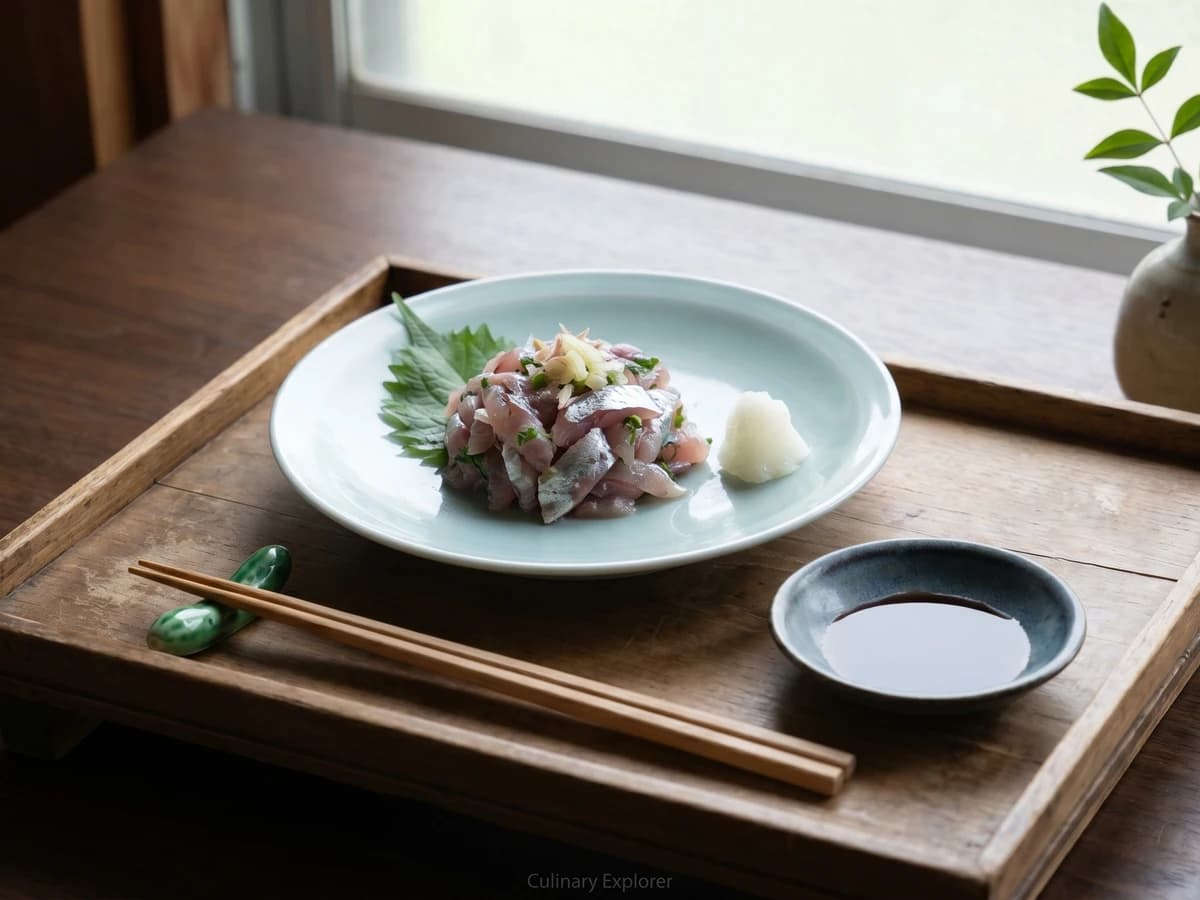
Summer horse mackerel, chopped just enough to catch ginger and scallion, becomes a cool, clean main dish with rice. The secret is fresh fish and a knife that does not bruise it.
Chef Takumi
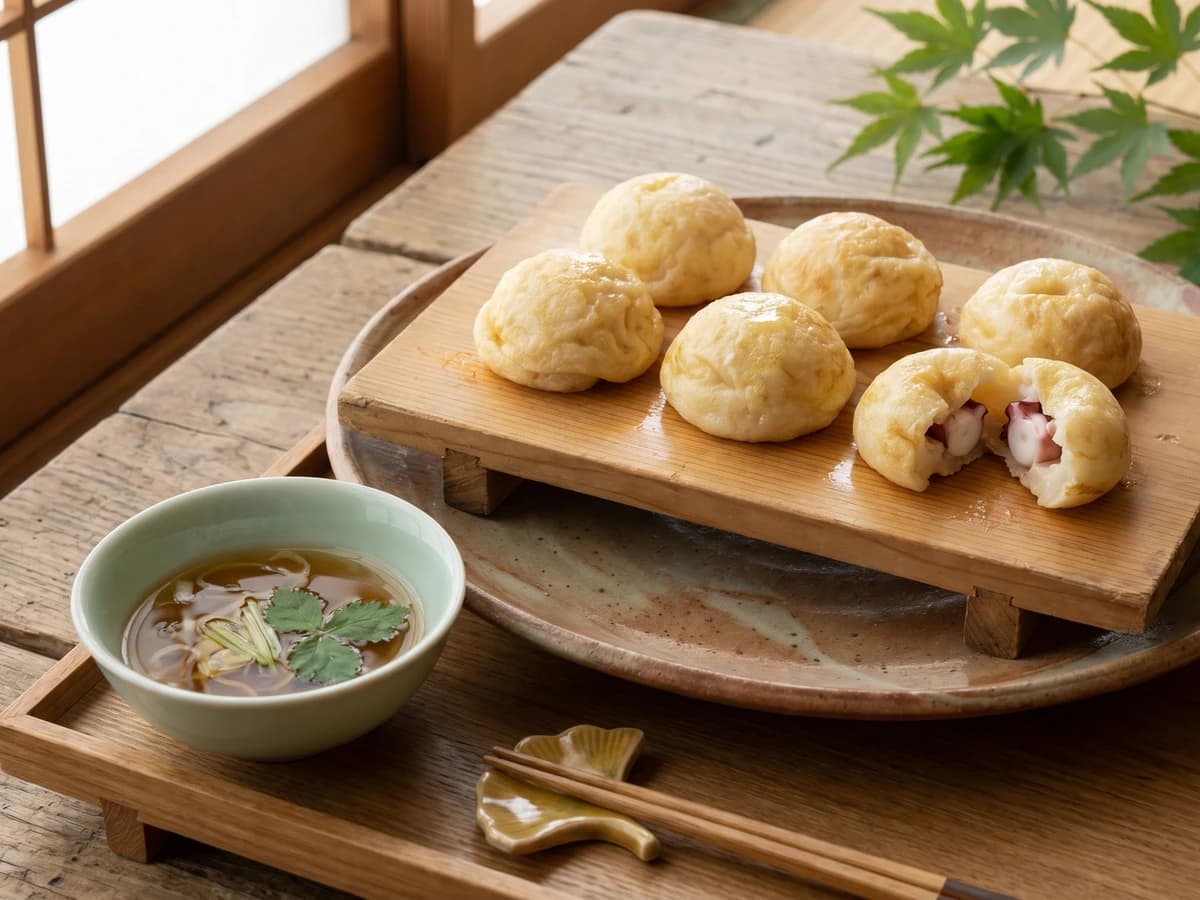
Akashi-yaki is not sauced takoyaki. It is egg-rich batter, tender octopus, and clear dashi, cooked pale and soft so each ball can be dipped like a small custard dumpling.

Chef Takumi
A whole anago looks like a test of nerve. It is mostly good sourcing, a dry skin, cold batter, and oil hot enough to leave the eel sweet under its lace.