
Chef Juliana
Açaí com Camarão do Pará
You think açaí belongs with banana and granola because that's the version that traveled. In Pará, thick unsweetened açaí sits beside shrimp, rice, and farinha. Anota aí: same fruit, different meal.
A cooking platform built around craft, culture, and the stories behind what we eat.
Created by
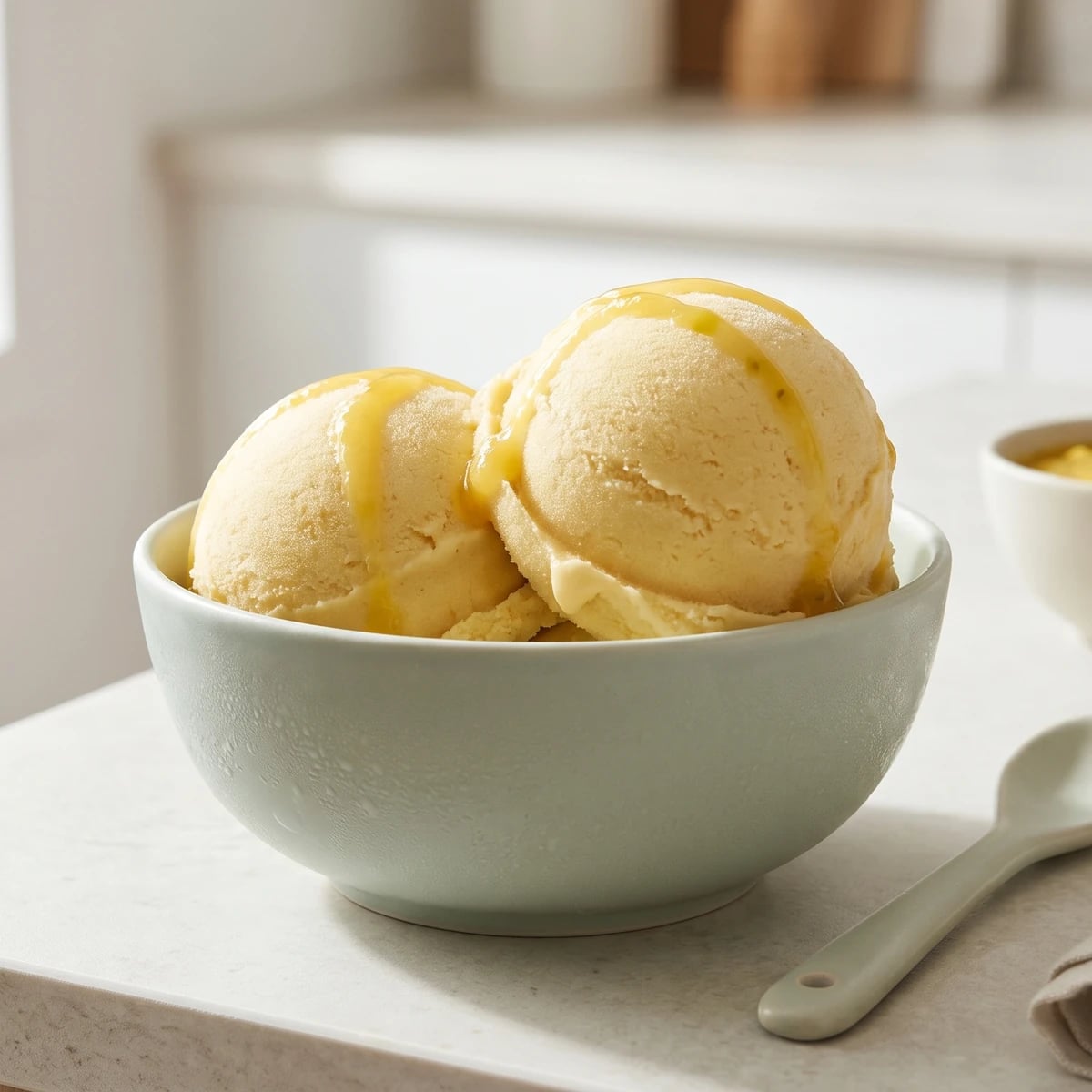
You don't need an ice cream machine or a brave little speech. Tart taperebá pulp, condensed milk, and real cream make a cold scoop that cuts through a summer pê-efe beautifully.
You see a packet of frozen yellow pulp and hear that little voice: isso não é pra mim. Good. Let's put that voice to work washing the blender later, because the recipe itself is fruit, cream, and a freezer. Cozinhar não é dom, é um aprendizado, and this is a kind teacher. It gives you time to fix things before they become dinner drama.
A gente talks a lot about the pê-efe, rice, feijão, a piece of chicken or egg, something green, because that plate quietly keeps the country itself. Dessert doesn't live outside that. A scoop of fruit sorvete after a real meal is still comida de verdade, especially when the fruit tastes like Brazil and not like a packet pretending to be Brazil.
The method is plain. Taperebá is sharp and sunny, so it cuts the fat of the cream the way lime cuts honey. Condensed milk sweetens and helps the texture stay creamy, because sugar slows the ice from turning into a brick. You whip the cream because air is what makes a scoop soft instead of dense. You stir it halfway through freezing because little ice crystals need interrupting. Anota aí: every step has a job.
Start after lunch and scoop after dinner. You'll have pale gold sorvete with a tart bite, a clean finish, and no mystery hiding in the container. Just a receita que funciona.
Taperebá is the Amazonian name often used in Pará for Spondias mombin, a tart yellow fruit known as cajá in much of the Northeast and other parts of Brazil. The tree is native to tropical America and long predates the domestic freezer; the modern sorvete belongs to the Belém and Manaus habit of turning short-season fruit pulps into year-round frozen sweets. The naming debate matters at the market: taperebá on one label and cajá on another may be the same fruit, which is why reading the polpa label is kitchen fluency, not fussiness.
Quantity
2 cups
thawed until slushy
Quantity
2 tablespoons
reserved for swirling
Quantity
1 can, 14 ounces or 395g
Quantity
1 1/2 cups
Quantity
1/8 teaspoon
Quantity
1 to 2 tablespoons
only if the pulp is very sour
| Ingredient | Quantity |
|---|---|
| unsweetened taperebá pulp, also sold as cajá or yellow mombin pulpthawed until slushy | 2 cups |
| unsweetened taperebá pulp (optional)reserved for swirling | 2 tablespoons |
| sweetened condensed milk | 1 can, 14 ounces or 395g |
| cold heavy cream or creme de leite fresco | 1 1/2 cups |
| fine salt | 1/8 teaspoon |
| sugar (optional)only if the pulp is very sour | 1 to 2 tablespoons |
Look at the label before you open anything. You want polpa de taperebá, cajá, or yellow mombin, with fruit as the main ingredient and no powdered drink mix, artificial flavoring, or syrup doing a fruit's job. The pulp should smell bright, tart, and tropical once thawed. If it smells flat or cooked, the sorvete will taste flat too.
Put the mixing bowl and beaters in the freezer for 10 minutes. Keep the cream cold. Cold cream whips faster and holds air better, and air is what keeps homemade sorvete scoopable instead of heavy.
Whisk the 2 cups of slushy taperebá pulp with the condensed milk and salt until smooth and glossy. Taste it. It should be a little louder than you want the final sorvete, more tart and more sweet, because freezing mutes flavor. If your pulp is punishingly sour, whisk in 1 tablespoon of sugar, taste again, then decide if it needs the second. Don't bury the fruit. You're seasoning, not silencing.
Pour the cold cream into the chilled bowl and whip until it forms soft billows that hold for a second, then relax a little. Stop there. If you beat it stiff, the texture gets greasy and uneven, and then you'll blame the fruit for a cream problem.
Add one big spoonful of whipped cream to the taperebá base and stir it in to loosen the mixture. Then add the rest and fold slowly with a spatula, scooping from the bottom and turning over the top, until no white streaks remain. Gentle folding keeps the air you just worked to put in there. Stir hard now and you knock it all out.
Scrape the mixture into a 1-liter freezer-safe container. If using the reserved pulp, drizzle it over the top and drag a spoon through once or twice, just enough to make a tart ribbon. Cover and freeze for 2 hours, until the edges are firm and the center is thick like a milkshake. Stir from the frozen edges into the softer center, because breaking up those early ice crystals gives you a smoother scoop.
Cover again and freeze until firm, about 4 more hours. Before serving, let the container sit on the counter for 5 to 10 minutes, just until a scoop slides through with pressure instead of a fight. Homemade sorvete has no factory tricks holding it soft forever, and that's fine. Give it a minute.
1 serving (about 160g)
Culinary guides, cultural storytelling, and the editorial depth that makes cooking meaningful.
Discover Culinary Explorer
Chef Juliana
You think açaí belongs with banana and granola because that's the version that traveled. In Pará, thick unsweetened açaí sits beside shrimp, rice, and farinha. Anota aí: same fruit, different meal.

Chef Juliana
You don't need a blender trick or a sweet shop bowl. Thick unsweetened açaí, crunchy farinha de tapioca, and the discipline to read the label solve this Belém spoon plate.

Chef Juliana
You think savory açaí is not for you. I understand. Then you taste the cold, dark bowl beside hot fried fish, rice, greens, and farinha, and dinner gets very quiet.

Chef Juliana
You don't need a shop to make a thick açaí bowl. You need real frozen pulp, a ripe banana, and the discipline to stop blending before it becomes juice.