Culinary Explorer

A cooking platform built around craft, culture, and the stories behind what we eat.
Discover Culinary Explorer
Açaí com Peixe Frito

Açaí com Peixe Frito

Created by

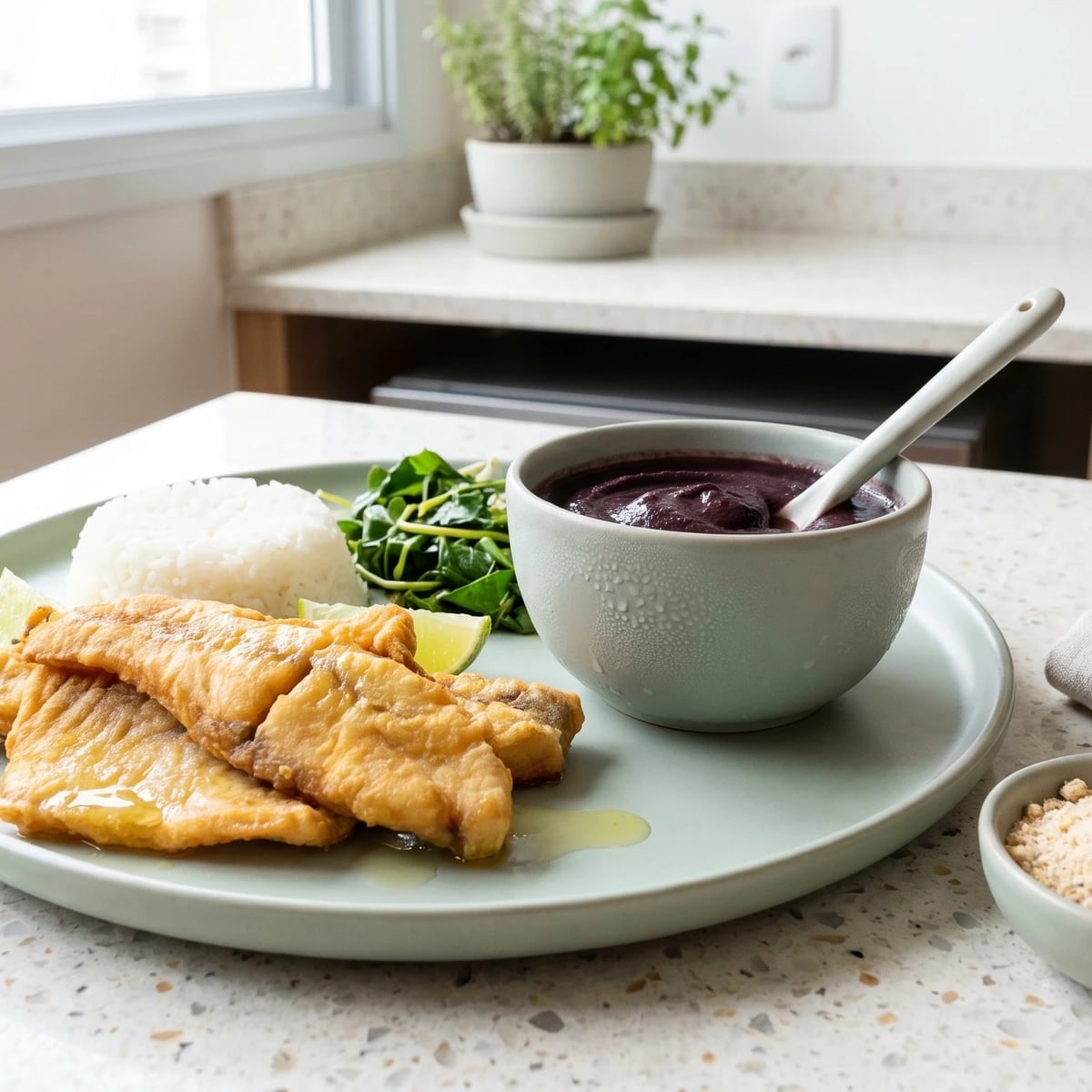
You think savory açaí is not for you. I understand. Then you taste the cold, dark bowl beside hot fried fish, rice, greens, and farinha, and dinner gets very quiet.

Main Dishes
Brazilian
Weeknight
Comfort Food
Special Occasion
25 min
Active Time
35 min cook1 hr total
Yield4 servings

You may be standing in front of the freezer aisle thinking, isso não é pra mim. Good. That's where a gente starts. Not with bravery, not with a fancy palate, with reading the label and buying the right thing. Cooking isn't a gift, cozinhar não é dom, é um aprendizado, and sometimes the whole lesson is knowing that açaí for lunch is not the same animal as the sweet bowl with banana and granola.

In Belém, açaí sits on the table like beans do in so many other Brazilian homes: daily, dark, thick, unsweetened, spooned beside rice, fried fish, and farinha d'água. It belongs to the everyday plate because it does the everyday work. It fills, it comforts, it carries the meal. This is pê-efe logic in Pará clothes: rice, fish, something green, a starch from mandioca, and a cold bowl of açaí that makes the whole plate make sense.

The method is plain. Season the fish so the salt has time to enter. Cook arroz soltinho because loose rice catches the açaí without turning to paste. Refogar the greens quickly so they stay bright instead of collapsing into sadness. Fry the fish in oil hot enough to bubble around the edges, because lukewarm oil makes a greasy crust and then you blame the fish. Don't.

Anota aí: buy frozen unsweetened açaí pulp, preferably grosso or médio, not sweetened syrup and never powder. Powder is the industry whispering that dinner can be replaced by dust. It can't. This is comida de verdade, cold bowl, hot fish, farinha between your fingers, and one mouthful that explains what a lecture never could.

Açaí comes from Amazonian palm fruit, and its daily savory use in Pará is rooted in ribeirinho and Indigenous foodways that long predate the sweet açaí bowls popularized in southern Brazilian cities in the late twentieth century. In Belém, especially around the Ver-o-Peso market, açaí is graded by texture as grosso, médio, or fino, and is commonly eaten unsweetened with farinha d'água, rice, fried fish, shrimp, or other local foods. The sweet frozen bowl and the savory Pará lunch are both Brazilian, but they are different lineages and should not be flattened into one story.

The technique, the tradition, and the story behind every dish.

Discover Culinary Explorer

Ingredients

firm white fish fillets

Quantity

4 fillets, about 150g each

pescada, tilapia, hake, or corvina

fine salt

Quantity

1 1/2 teaspoons

divided

lime

Quantity

1

juiced

garlic

Quantity

2 cloves

finely grated, for the fish

black pepper

Quantity

1/4 teaspoon

fine cassava flour or all-purpose flour

Quantity

1/2 cup

for dredging

neutral oil

Quantity

1/2 cup, plus more as needed

for shallow frying

long-grain white rice

Quantity

2 cups

oil

Quantity

1 tablespoon

for the rice

onion

Quantity

1/2 small

finely chopped

garlic

Quantity

1 clove

minced, for the rice

water

Quantity

3 3/4 cups

for the rice

jambu

Quantity

1 bunch

washed and tough stems removed

couve (optional)

Quantity

1 bunch

thinly sliced, if jambu is unavailable

oil

Quantity

1 tablespoon

for the greens

garlic

Quantity

1 small clove

thinly sliced, for the greens

frozen unsweetened açaí pulp

Quantity

400g to 600g

preferably açaí grosso or médio

cold water (optional)

Quantity

1/4 cup

only if needed to loosen the açaí

farinha d'água

Quantity

1 to 1 1/2 cups

for serving

lime wedges (optional)

Quantity

4

for serving

Equipment Needed

  • Wide heavy skillet, 28 cm
  • Medium 3-liter pot with lid
  • Mixing bowl for seasoning fish
  • Shallow plate for dredging
  • Fine-mesh strainer for rinsing rice
  • Tongs or fish spatula

Instructions

  1. 1

    Read the label

    Choose frozen unsweetened açaí pulp labeled açaí grosso or açaí médio. Grosso is thicker and richer, médio is easier to find and still works, fino is thinner and more watery. Skip sweetened blends, syrup mixes, and powder. You want fruit pulp, not dessert pretending to be lunch and not dust pretending to be fruit.

    Don't confuse polpa de açaí with polpa de cupuaçu or polpa de bacuri. Cupuaçu is pale and tart, bacuri is creamy and fragrant, both wonderful, neither is this lunch.
  2. 2

    Season the fish

    Pat the fish dry, then rub it with 1 teaspoon salt, the lime juice, grated garlic, and black pepper. Let it sit for 15 minutes while you start the rice. Dry fish browns better, and a short rest lets the seasoning enter instead of sitting on the surface like gossip.

  3. 3

    Start the rice

    Rinse the rice until the water runs mostly clear, then drain it well. Warm 1 tablespoon oil in a medium pot over medium heat, add the onion, and cook until soft and see-through, about 4 minutes. Add the garlic for 30 seconds, just until fragrant. This refogado is small, but it matters, because loose rice with real aroma beats plain boiled rice every time.

  4. 4

    Cook arroz soltinho

    Add the drained rice and stir for 1 minute, until the grains look glossy. Add 3 3/4 cups water and 1/2 teaspoon salt, bring to a lively boil, then lower the heat, cover, and cook for 15 minutes. Turn off the heat and rest, covered, for 10 minutes. Don't stir while it cooks. Stirring breaks the grains and releases starch, and then your arroz soltinho becomes rice paste with ambition.

  5. 5

    Prepare the açaí

    Set the frozen açaí packs in a bowl at room temperature until they soften enough to squeeze, about 10 to 15 minutes, but keep them cold. Open the packs into a bowl and stir until thick and spoonable, adding cold water 1 tablespoon at a time only if it won't loosen. The texture should be like a thick sauce, not juice. Too much water makes it fino at home, and a gente did not pay for grosso to drown it.

  6. 6

    Refogar the greens

    Warm 1 tablespoon oil in a skillet over medium heat. Add the sliced garlic and cook just until it smells good, about 30 seconds. Add the jambu or couve and toss until bright and wilted, 2 to 3 minutes for jambu, 3 to 4 for couve. Stop while the leaves still look alive. Cook them to death and they go dull, wet, and apologetic.

  7. 7

    Dredge the fish

    Lift the fish from the marinade and pat off excess moisture. Coat lightly in cassava flour or all-purpose flour, then shake off the extra. You want a thin dry veil, not a winter coat. Too much flour falls into the oil and burns before the fish is ready.

  8. 8

    Fry until crisp

    Heat 1/2 cup oil in a wide skillet over medium-high heat until a pinch of flour sizzles right away. Fry the fish in batches, 2 to 4 minutes per side depending on thickness, until the crust is deep gold and the fish flakes when pressed with a fork. Don't crowd the pan. Crowd it and the temperature drops, the fish releases water, and instead of dourar you get pale fish soaking in oil, a small tragedy with witnesses.

  9. 9

    Serve the plate

    Fluff the rice with a fork. Spoon rice onto each plate, add the fried fish and greens, then set a small bowl of cold unsweetened açaí beside it. Put farinha d'água on the table so each person can sprinkle and thicken as they eat. The farinha gives crunch and body, and the cold açaí against the hot fish is the point, not an accident.

Chef Tips

  • For this savory lunch, buy açaí grosso if you can. Médio is the honest Tuesday shortcut and works well. Fino is cheaper, but it eats thinner, so serve it in a bowl and use farinha d'água to give it body.
  • Farinha d'água is coarse, toasted, and made from fermented mandioca. Farinha seca is drier and finer. It won't ruin the meal, but it doesn't give the same crunch and swelling texture beside açaí.
  • Farinha de tapioca is not the same as tapioca pearls. In Pará, farinha de tapioca can mean crisp little granules scattered into açaí. Tapioca pearls are the round things people cook for sweets and drinks. Read the bag before it reads you.
  • If your fish is very fresh and affordable, use it. If the counter smells tired, cook something else. I won't make you fry a sad fish and let you think dinner failed because of you.
  • The shortcut I allow: frozen unsweetened pulp. The shortcut I refuse: açaí powder. One is preserved fruit. The other is an imitation trying to sell you convenience in a spoonful of purple dust.
  • If you want the full everyday plate, serve feijão simples on the side another day, or with this if your house eats that way. Soak dried beans overnight so they cook evenly and sit easier, then finish with a real refogado and mash a ladle into the pot so the caldo turns creamy instead of watery.

Advance Preparation

  • Keep the açaí frozen until the day you cook. Thaw only until stirrable, 10 to 15 minutes, so it stays cold and thick.
  • Season the fish up to 30 minutes ahead in the fridge. Longer with lime can make the surface tighten, so don't leave it all afternoon.
  • Wash and slice the greens up to 1 day ahead. Wrap them in a clean towel and refrigerate so they hit the pan dry, not dripping.
  • Cooked rice can be made earlier the same day and reheated with a spoonful of water, covered, over low heat.

Frequently Asked Questions

Nutrition Information

1 serving (about 620g)

Calories
925 calories
Total Fat
27 g
Saturated Fat
4 g
Trans Fat
0 g
Unsaturated Fat
23 g
Cholesterol
75 mg
Sodium
960 mg
Total Carbohydrates
128 g
Dietary Fiber
9 g
Sugars
2 g
Protein
39 g

Note: Chef personas and recipes are created with AI assistance. Cook with care: follow safe food-handling practices, check doneness with a thermometer when needed, and adapt for allergies and your kitchen.

Where cooking meets culture.

Culinary guides, cultural storytelling, and the editorial depth that makes cooking meaningful.

Discover Culinary Explorer

More from Açaí & Amazonian Fruit

Browse the full collection