Culinary Explorer

A cooking platform built around craft, culture, and the stories behind what we eat.
Discover Culinary Explorer
Açaí com Farinha de Tapioca

Açaí com Farinha de Tapioca

Created by

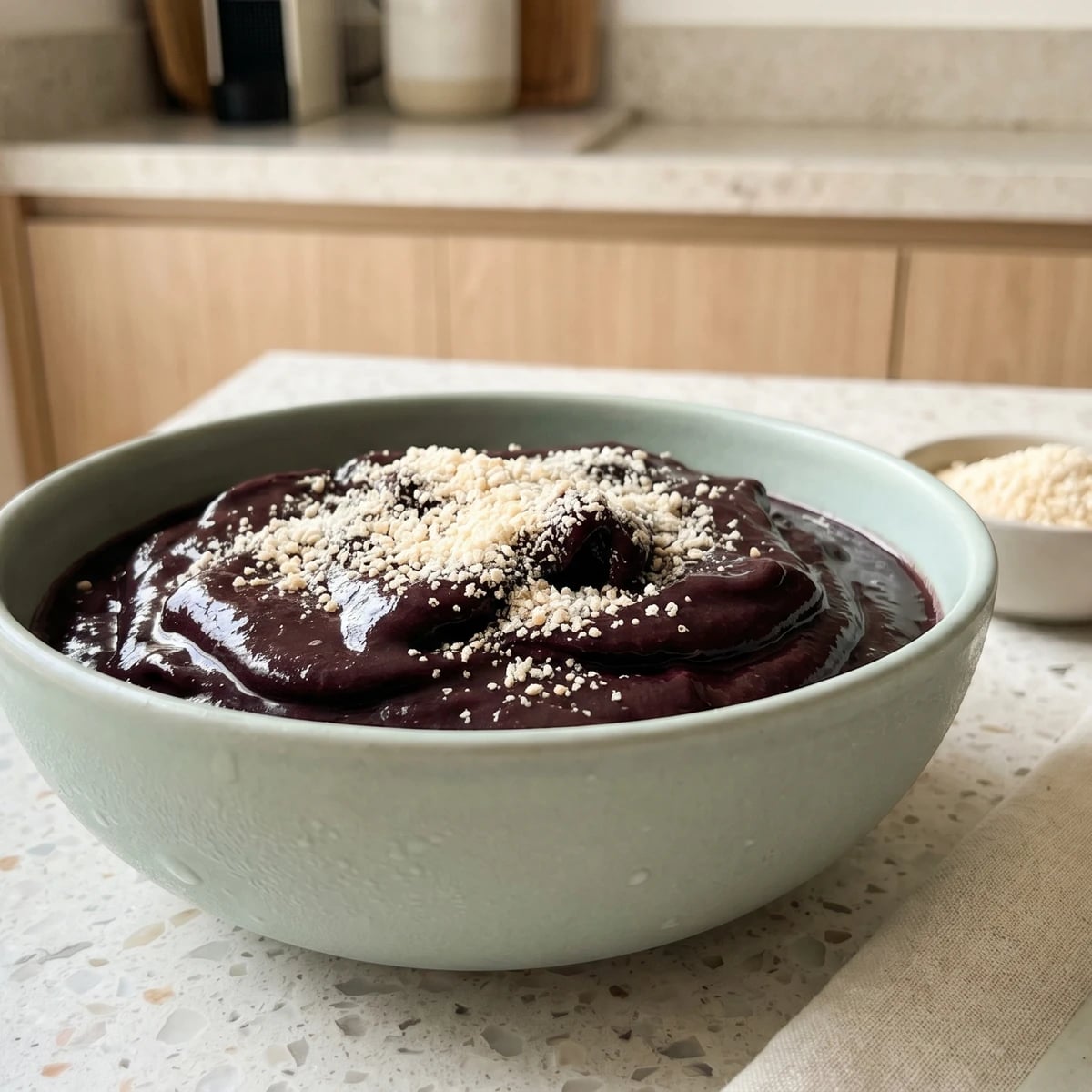
You don't need a blender trick or a sweet shop bowl. Thick unsweetened açaí, crunchy farinha de tapioca, and the discipline to read the label solve this Belém spoon plate.

Breakfast & Brunch
Brazilian
Weeknight
Quick Meal
Comfort Food
10 min
Active Time
0 min cook10 min total
Yield2 servings

You look at the freezer case, see five purple packets and three bags of white crumbs, and think, isso não é pra mim. It is. The hard part isn't cooking, it's being fluent enough to know what you're buying. Anota aí: for this plate, you want açaí puro, preferably grosso, and farinha de tapioca, not tapioca pearls for bubble tea and not the hydrated gum for frigideira tapioca.

In Belém, açaí doesn't need to dress up as dessert to matter. It can sit beside rice, fish, shrimp, farinha, or come to the table in a bowl with only its own deep, slightly earthy flavor and that dry crunch on top. That's comida de verdade: direct, daily, and not asking permission from granola.

The method is almost rude in its simplicity. Soften the frozen pulp only enough to loosen it, beat it with as little cold water as possible, and stop when it's thick enough to mound on the spoon. Too much water turns açaí grosso into fino in your own kitchen, and then you paid for thickness just to drown it. I made worse mistakes learning simpler things, believe me.

This isn't the southern sweet bowl with banana and syrup, and it doesn't have to fight with it. A gente can honor both lineages by not collapsing them. Today we're making the Belém spoon plate: cold, dark, unsweetened, crunchy, and ready before anyone can say cooking is a gift. Cozinhar não é dom, é um aprendizado.

Açaí comes from Amazonian palm fruit, and its food history belongs first to Indigenous and ribeirinho communities who have long eaten it as part of daily meals, especially across Pará and the lower Amazon. In Belém, thick unsweetened açaí is commonly served with farinha, tapioca, fish, shrimp, or rice, while the sweet frozen bowl with banana and granola is a later southern Brazilian reinvention that spread in the late twentieth century. The market terms grosso, médio, and fino refer to how concentrated or diluted the beaten pulp is, which is why reading the label changes the whole bowl.

The technique, the tradition, and the story behind every dish.

Discover Culinary Explorer

Ingredients

frozen unsweetened açaí pulp

Quantity

2 packs (200g each)

preferably grosso, plain, with no sugar or syrup

ice-cold water

Quantity

2 to 4 tablespoons

only as needed to loosen the pulp

farinha de tapioca flocada or granulada

Quantity

1/2 cup

crunchy dry flakes or granules, not bubble-tea pearls

salt (optional)

Quantity

1 tiny pinch

Equipment Needed

  • Blender or food processor
  • Rubber spatula
  • 2 chilled serving bowls

Instructions

  1. 1

    Read the labels

    Pick frozen açaí pulp that says puro or sem açúcar, and choose grosso if you can find it. Grosso is thicker and less diluted, médio is still usable, fino is already watered down and will taste flat here. If the packet lists syrup, guaraná, or a long little parade of extras, put it back. We are making açaí, not a purple candy drink.

    Polpa de cupuaçu and polpa de bacuri are wonderful Amazon fruit pulps, but they are not açaí. Buy them another day with joy. Today the freezer bag needs to say açaí.
  2. 2

    Check the tapioca

    Use farinha de tapioca flocada or granulada, the dry crunchy flakes or little irregular beads that crack under the teeth. Don't use farinha d'água or farinha seca, those are manioc flours with a different dry, sandy bite. Don't use black tapioca pearls for bubble tea either; they need cooking and belong to another story.

    If the bag says goma de tapioca or tapioca hidratada, that's the damp starch for making skillet tapioca. It will clump on cold açaí instead of giving you the clean crunch this plate needs.
  3. 3

    Loosen the pulp

    Run the sealed açaí packs under cool water for 30 to 60 seconds, just until the outside lets go and you can break the block into chunks. Keep it very cold and still firm. If you thaw it until soft, you'll need less beating, yes, but you'll lose that thick spoon texture before the bowl reaches the table.

  4. 4

    Beat it thick

    Put the chunks in a blender or food processor with 2 tablespoons ice-cold water and a tiny pinch of salt if using. Pulse, stop, scrape down, and pulse again, adding more water 1 tablespoon at a time only if the blade refuses to move. Stop when the açaí is smooth, dark, glossy, and thick enough to sit in soft folds. Too much water makes it fino, and the whole point here is body.

  5. 5

    Top and eat

    Spoon the açaí into cold bowls and scatter the farinha de tapioca over the top right before eating. Listen for that dry little crunch when the spoon goes in. Add the tapioca too early and it softens, because starch is thirsty and açaí is wet. Serve immediately, with no sugar, no granola, and no apology.

Chef Tips

  • The best shortcut is buying good frozen pulp. The cost is that you must read the label like a grown cook: açaí puro, sem açúcar, grosso if possible. Powdered açaí is not the shortcut. That's the fruit after the life has been bullied out of it.
  • If you only find médio, use it and add almost no water. If you only find fino, make something else or accept a looser bowl. I won't let you think the recipe failed when the packet started thin.
  • Farinha de tapioca gives crunch, farinha d'água gives toasted manioc flavor, and farinha seca gives a drier, finer bite. All are Brazilian, all useful, none interchangeable here.
  • Chill the bowls for 10 minutes if you have time. Cold stoneware keeps the açaí firm longer, which matters because this dish softens fast.
  • Want to serve it the Belém lunch way another day? Put the unsweetened açaí beside fried fish, rice, and farinha. That's a real plate, not a trend wearing sunglasses.

Advance Preparation

  • Keep the açaí packs frozen until right before beating. This is not a make-ahead bowl.
  • Chill the serving bowls 10 minutes ahead so the açaí stays thick at the table.
  • Measure the farinha de tapioca before beating the açaí, because the topping should go on at the last second.

Frequently Asked Questions

Nutrition Information

1 serving (about 250g)

Calories
230 calories
Total Fat
10 g
Saturated Fat
3 g
Trans Fat
0 g
Unsaturated Fat
7 g
Cholesterol
0 mg
Sodium
90 mg
Total Carbohydrates
30 g
Dietary Fiber
6 g
Sugars
0 g
Protein
2 g

Note: Chef personas and recipes are created with AI assistance. Cook with care: follow safe food-handling practices, check doneness with a thermometer when needed, and adapt for allergies and your kitchen.

Where cooking meets culture.

Culinary guides, cultural storytelling, and the editorial depth that makes cooking meaningful.

Discover Culinary Explorer

More from Açaí & Amazonian Fruit

Browse the full collection