
Chef Juliana
Açaí com Farinha de Tapioca
You don't need a blender trick or a sweet shop bowl. Thick unsweetened açaí, crunchy farinha de tapioca, and the discipline to read the label solve this Belém spoon plate.
A cooking platform built around craft, culture, and the stories behind what we eat.
Created by
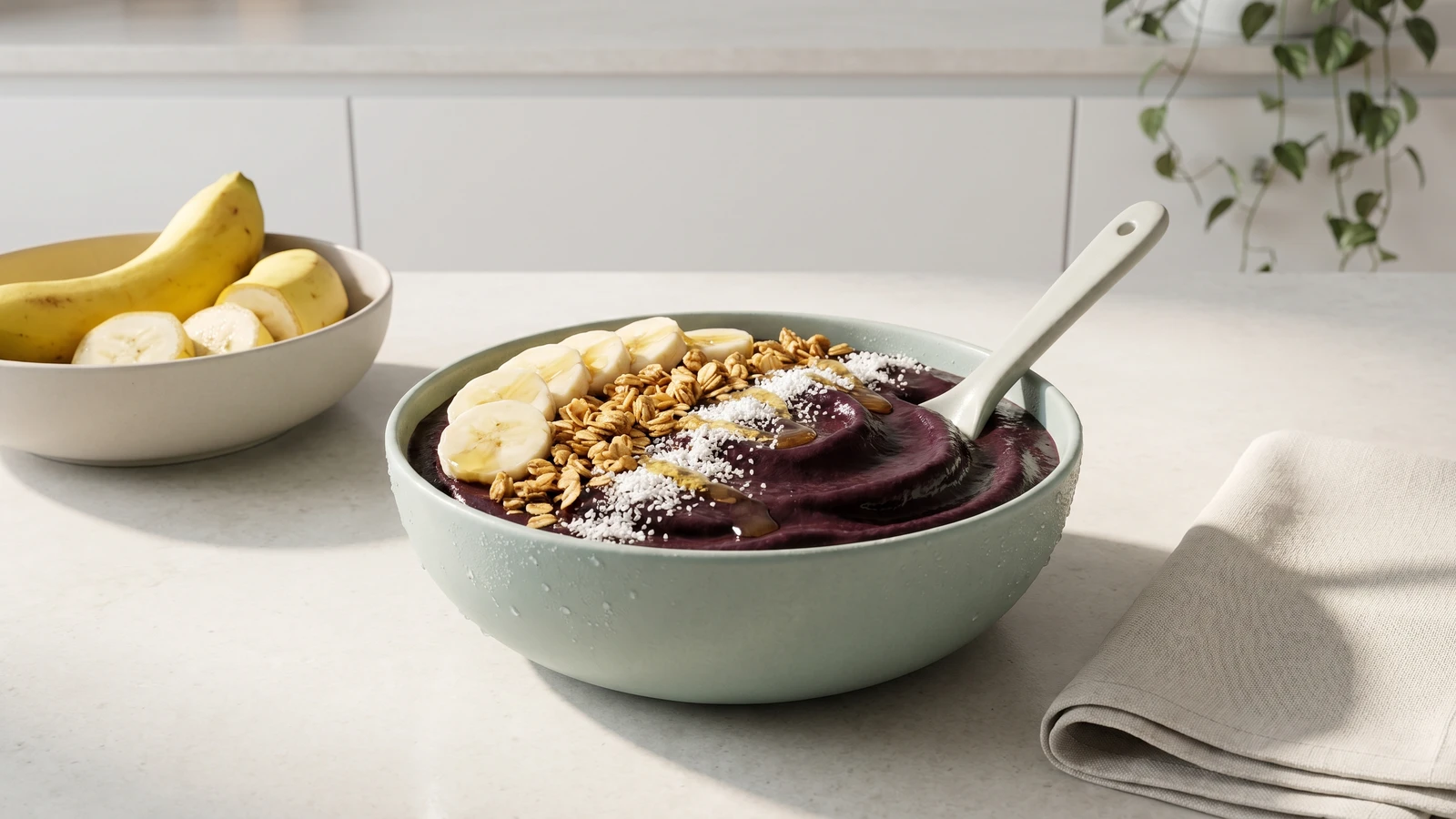
You don't need a shop to make a thick açaí bowl. You need real frozen pulp, a ripe banana, and the discipline to stop blending before it becomes juice.
You know that little voice saying, "isso não é pra mim," because the bowl at the shop looks too perfect, too purple, too expensive? Tell that voice to sit down. This is frozen fruit in a blender, not a secret society. Cozinhar não é dom, é um aprendizado, and here the whole lesson is texture.
Now, anota aí, because a gente needs to be honest with açaí. The original northern way, carried by Indigenous and ribeirinho people, is thick, unsweetened açaí eaten as part of a real meal, often with fish, shrimp, farinha d'água, or rice. This sweet açaí na tigela with banana, granola, and honey is another branch of the family. Beloved, Brazilian, and completely different. Don't collapse one into the other and call it learning.
The everyday Brazilian plate, the pê-efe, teaches the same thing this bowl teaches: food works when you understand the structure. Rice, beans, something from the pan, something green. Here the structure is frozen pulp, a ripe fruit to sweeten, the tiniest splash of liquid, and something crunchy on top. No powder pretending to be açaí. No syrupy mix deciding your sweetness for you.
Make it thick enough to hold a spoon, dark enough to taste like the fruit, and sweet enough for pleasure without turning it into a candy bath. Five minutes. Real food. Dinner may still be rice and beans, but breakfast can absolutely be this.
Açaí comes from Amazonian palm fruit, and in Pará and nearby northern communities it has long been eaten thick, unsweetened, and meal-like, especially with fish, shrimp, rice, and farinha. The sweet frozen bowl with banana and granola is a later urban and coastal reinvention that spread through Brazil and then abroad in the late twentieth century. Both lineages matter, but they are not the same dish: one is a northern staple, the other is the sweet bowl that took açaí global.
Quantity
2 packs (200g each)
kept frozen, preferably açaí médio or grosso
Quantity
1 large
peeled and broken into chunks
Quantity
1 tablespoon, plus more to taste
Quantity
2 to 4 tablespoons
only as needed to blend
Quantity
1
sliced, for topping
Quantity
1/2 cup
Quantity
2 tablespoons
Quantity
1/2 cup
optional, for a sharper fruit note
| Ingredient | Quantity |
|---|---|
| frozen unsweetened açaí pulpkept frozen, preferably açaí médio or grosso | 2 packs (200g each) |
| ripe bananapeeled and broken into chunks | 1 large |
| honey or guaraná syrup | 1 tablespoon, plus more to taste |
| cold water or cold orange juiceonly as needed to blend | 2 to 4 tablespoons |
| bananasliced, for topping | 1 |
| granola | 1/2 cup |
| farinha de tapioca or small tapioca pearls (optional) | 2 tablespoons |
| frozen cupuaçu pulp or bacuri pulp (optional)optional, for a sharper fruit note | 1/2 cup |
Pick up the frozen pulp and read it like a grown cook, not like someone being sold a miracle. You want açaí pulp, preferably unsweetened, with no powder mix pretending to be fruit. Açaí grosso is thickest, médio is good for bowls, and fino is thinner and better when you want to drink it. If the first ingredients are syrup, sugar, and flavoring, put it back. That's not a shortcut, that's someone charging you for purple sweetness.
Put two serving bowls in the freezer for 5 to 10 minutes while you set out the toppings. A cold bowl keeps the açaí firm for a few extra minutes, and with a frozen bowl, a few minutes are the difference between spoonable and sad. Slice the topping banana now, because once the açaí is blended, it starts softening.
Run the sealed açaí packs under room-temperature water for 10 to 15 seconds, just until the outside loosens, then smack them gently on the counter and break the pulp into chunks. Keep it mostly frozen and hard. Frozen chunks are what make the bowl thick like soft-serve; melted pulp gives you a drink and then you stand there blaming the blender, coitada.
Add the frozen açaí chunks, the ripe banana, honey or guaraná syrup, and 2 tablespoons cold water or orange juice to a strong blender or food processor. Pulse, stop, push the mixture down, and pulse again. Add more liquid 1 tablespoon at a time only if the blade truly stalls. Stop as soon as it turns smooth, dark, and moundable. Too much liquid makes a smoothie. Açaí na tigela needs to hold the spoon for a second before slowly settling.
Taste a spoonful before it goes into the bowl. If it tastes flat, add a few drops of orange juice. If it needs sweetness, add another teaspoon of honey or guaraná syrup and pulse once. Don't bury the fruit under sugar. The point is açaí that tastes like açaí, with enough sweetness to make it generous.
Spoon the thick açaí into the chilled bowls, mound it slightly, and top with sliced banana and granola. Add farinha de tapioca or small tapioca pearls if you want that soft chew. Serve immediately, while the surface is still firm and cold. This is not a make-ahead bowl. It waits for nobody, and for once the food is right.
1 serving (about 455g)
Culinary guides, cultural storytelling, and the editorial depth that makes cooking meaningful.
Discover Culinary ExplorerChef Juliana
You don't need a blender trick or a sweet shop bowl. Thick unsweetened açaí, crunchy farinha de tapioca, and the discipline to read the label solve this Belém spoon plate.

Chef Juliana
You don't need boxed cereal to get breakfast on the table. Fine cassava farinha, milk, salt, and steady stirring turn into a warm Amazonian bowl that actually carries you.

Chef Juliana
If you think two ingredients can't feed you, anota aí. Good farinha d'água, cold water, and salt make a bowl that's plain, Brazilian, and smarter than the packet.

Chef Juliana
You think cuscuz is the kind of thing someone else knows by instinct. It's not. Hydrate the flocao, let it rest, steam it gently, and breakfast is solved.