
Chef Takumi
Awamori Mizuwari (泡盛水割り, awamori with water)
Awamori mizuwari is not a trick of the bar. It is three parts awamori, seven parts cold water, and enough patience to let the black-kōji aroma open.
A cooking platform built around craft, culture, and the stories behind what we eat.
Created by
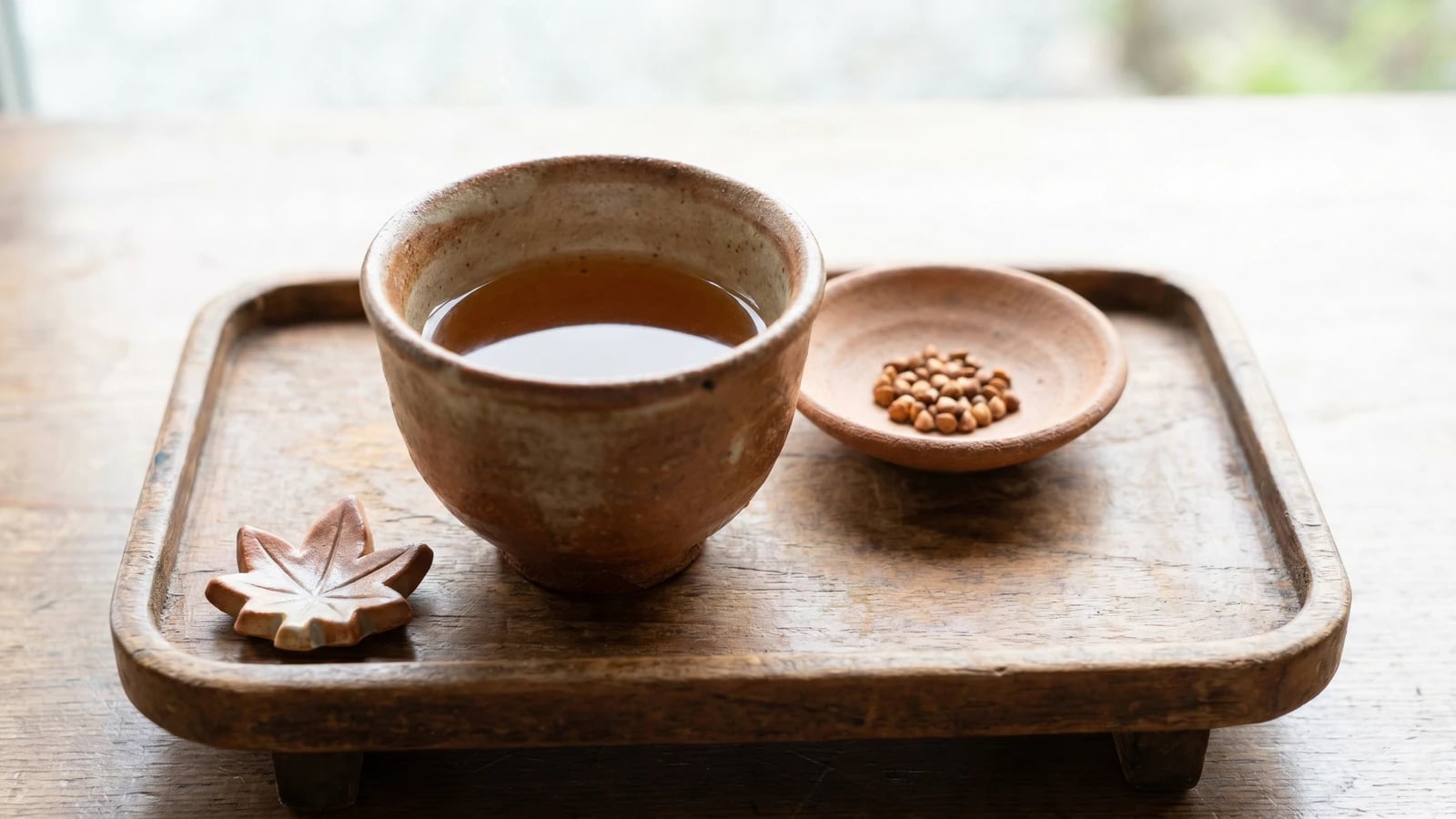
Buckwheat roasted until it smells faintly of bread, then steeped like tea. Sobacha asks for patience at the pan, and repays you with a clear, nutty evening cup.
Sobacha begins as grain, not leaf. That is the first small surprise. Buckwheat groats, roasted until they smell of toasted bread and warm nuts, give a tea that is clear, amber, and gentle enough for the end of the day.
There is no ceremony to fear here. The one detail that decides it is the roast. Too pale, and the cup tastes thin. Too dark, and the bitterness arrives before the fragrance. Keep the pan moving and listen with your nose: when the groats turn deep golden brown and smell round and nutty, you've done the important work.
We drink sobacha as the quiet companion to a plain meal, or after one, when green tea would be too sharp or too wakeful. It has no caffeine, no tannic bite, and nothing hidden. Just buckwheat, water, and heat handled with a little attention. Honmono is often like this, less dramatic than people expect, and better for it.
Buckwheat has long been grown in Japan's cooler upland regions, especially Shinshu in present-day Nagano, where short growing seasons made it useful when rice was less dependable. Soba became closely tied to Edo-period food culture through noodles, but roasted buckwheat tea remained a simpler household and soba-shop drink, made from the grain itself rather than from tea leaves. In modern Japan, dattan soba cha, made from Tartary buckwheat, is also common, especially where its stronger, slightly bitter flavor is prized.
Quantity
1/2 cup
raw, not pre-roasted kasha
Quantity
4 cups
just boiled
| Ingredient | Quantity |
|---|---|
| hulled buckwheat groatsraw, not pre-roasted kasha | 1/2 cup |
| waterjust boiled | 4 cups |
Use raw hulled buckwheat groats, pale green or tan, not the dark pre-roasted kasha sold for porridge. Starting raw lets you control the roast, which is the whole flavor of the tea.
Put the groats in a dry skillet over medium-low heat. Shake the pan or stir constantly for 8 to 10 minutes, until the grains turn deep golden brown and smell nutty, like toasted bread. Keep the heat modest, because scorched buckwheat tastes bitter and there is no seasoning later to cover it.
Tip the roasted groats onto a plate and let them cool for a minute or two. This stops the carryover heat from darkening them further, the same small mercy you give sesame seeds after toasting.
Put the roasted buckwheat in a teapot and pour over the just-boiled water. Cover and steep for 5 to 7 minutes, until the liquor is clear amber and smells toasty. Longer steeping gives more body, but after about 10 minutes the edge can turn dry.
Strain into cups and serve hot. The spent groats can be steeped once more for a lighter second pot, or eaten with a pinch of salt if they are still pleasantly tender. Nothing wasted, and nothing made grander than it needs to be.
1 serving (about 240g)
Culinary guides, cultural storytelling, and the editorial depth that makes cooking meaningful.
Discover Culinary ExplorerChef Takumi
Awamori mizuwari is not a trick of the bar. It is three parts awamori, seven parts cold water, and enough patience to let the black-kōji aroma open.

Chef Takumi
Hot awamori asks for one small discipline: pour the hot water first, then the spirit. Do that, and the glass turns round, fragrant, and calmer than its strength suggests.

Chef Takumi
Bancha is the honest daily cup: late-season leaves, hot water, a short steep, and a clean amber-green liquor that asks for no ceremony to be good.

Chef Takumi
Whole black soybeans, roasted until their skins split, make a clear amber tea with a roasted sweetness and no caffeine. Drink it plain, then eat the softened beans while they still hold their warmth.