
Chef Takumi
Autumn Mushroom Rice (きのこの炊き込みご飯, Kinoko Takikomi Gohan)
Autumn mushrooms do most of the work here. Rinse the rice well, season the liquid before cooking, and let the pot rest so every grain comes out separate and fragrant.
A cooking platform built around craft, culture, and the stories behind what we eat.
Created by
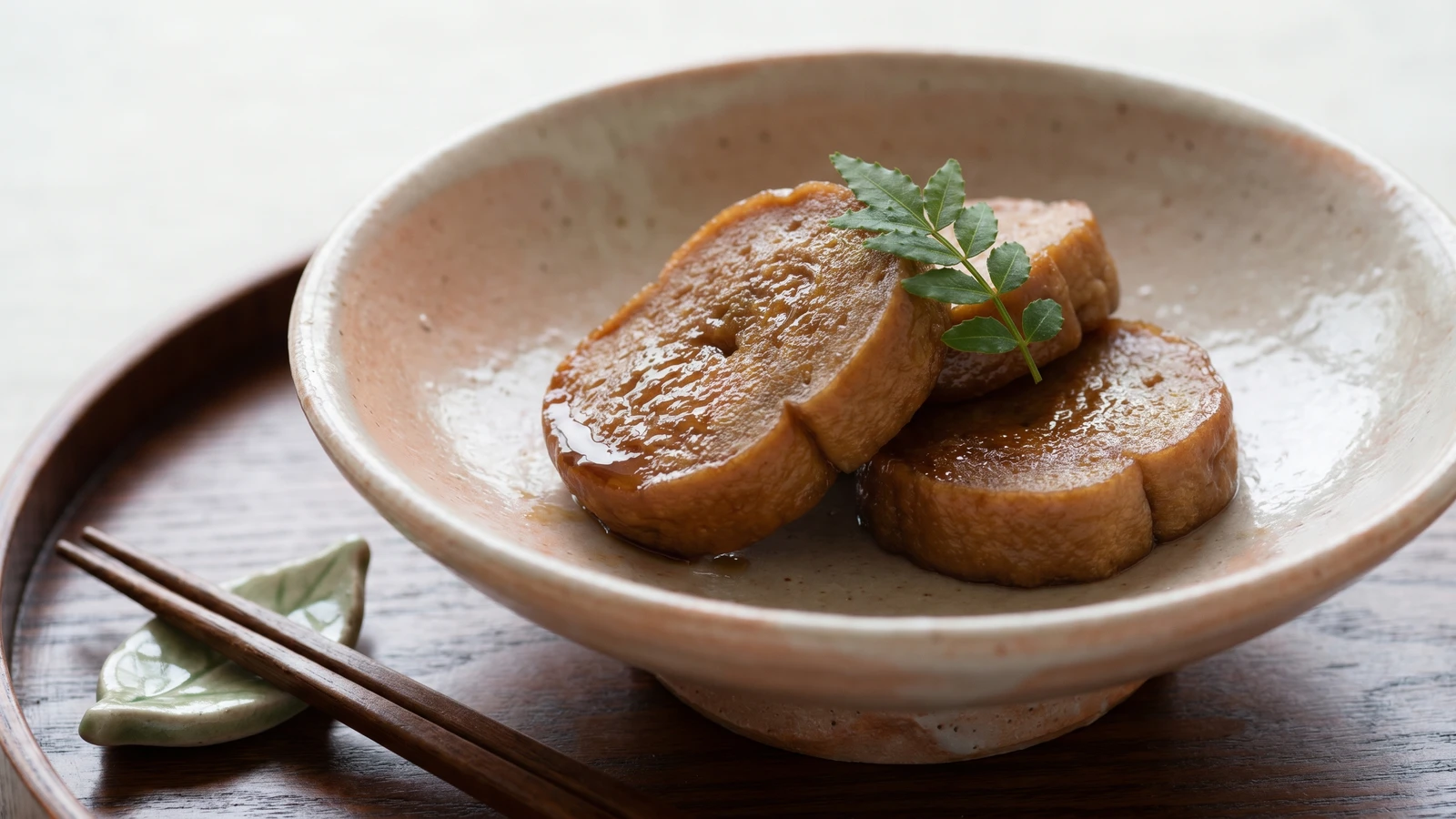
Daitokuji fu looks like a serious temple secret, then gives itself away: soak the wheat gluten well, simmer it gently in sweet shōyu, and let it rest until the seasoning reaches the center.
Fu is wheat gluten, and that plain sentence frightens more cooks than it should. In Daitokuji fu, the gluten is not pretending to be meat. It is being itself: springy, absorbent, a little stubborn until you teach it to drink. The dish looks dark and severe on the plate, very Kyoto in its refusal to flatter you, but the work is simple.
The first detail is water. Dried fu must be soaked all the way to the center, then pressed gently so stale soaking water leaves and the dashi can enter. If you simmer a dry core in shōyu, the outside becomes salty before the middle has learned anything. Give sugar and mirin a short head start, add the shōyu after, and keep the pot quiet under an otoshibuta, a drop-lid. It seasons evenly without stirring, which would tear the pieces.
This belongs to shōjin ryōri, the temple cooking of Kyoto, so I use konbu and dried shiitake dashi here. That is honmono, not a lesser version; the temple table knows how much depth sits in kelp and a mushroom when you don't bully them. Serve it warm or at room temperature beside rice, greens, and soup. Make it ahead if you can. The rest is where the color turns mahogany and the spring returns.
Daitokuji is a Rinzai Zen temple in northern Kyoto founded in 1315 by Shūhō Myōchō, later honored as Daitō Kokushi. The monastery became closely tied to shōjin ryōri, Buddhist vegetarian cooking, and to the tea culture that gathered around Kyoto's Zen temples in the Muromachi and Momoyama periods. Daitokuji fu belongs to that setting: wheat gluten used as a springy, sustaining food, then simmered dark with soy and sugar so a small piece could carry a bowl of rice.
Quantity
8 pieces (about 80 to 100g)
Quantity
4 cups
for soaking the fu
Quantity
1 piece (about 10g)
Quantity
3 mushrooms (about 12g)
Quantity
2 1/2 cups
for dashi
Quantity
2 tablespoons
Quantity
2 tablespoons
Quantity
3 tablespoons
Quantity
4
| Ingredient | Quantity |
|---|---|
| dried Daitokuji fu cakes | 8 pieces (about 80 to 100g) |
| lukewarm waterfor soaking the fu | 4 cups |
| konbu (dried kelp) | 1 piece (about 10g) |
| dried shiitake mushrooms | 3 mushrooms (about 12g) |
| cold waterfor dashi | 2 1/2 cups |
| sugar | 2 tablespoons |
| mirin | 2 tablespoons |
| shōyu (Japanese soy sauce) | 3 tablespoons |
| kinome leaves (optional) | 4 |
Wipe the konbu with a damp cloth, but don't wash it; the pale bloom is flavor, not dirt. Put the konbu and dried shiitake in 2 1/2 cups cold water for at least 30 minutes, or overnight in the refrigerator. Warm the pan slowly over low heat and lift out the konbu just before the water boils, when small bubbles climb the sides. Boiled konbu gives a bitter, slippery edge. Simmer the shiitake 5 minutes more, then strain. You need about 2 cups dashi.
Cover the Daitokuji fu with plenty of lukewarm water and set a small plate on top so every piece stays under. Soak 10 to 15 minutes, until the centers have no hard spot when pressed. Drain, rinse once in fresh water, and press each piece gently between your palms. You're not wringing laundry. A little water left inside keeps the gluten supple; pressing only makes room for seasoned dashi.
In a wide saucepan, combine the dashi, sugar, and mirin. Add the fu in a single layer and bring to a quiet simmer. Lay an otoshibuta, a wooden drop-lid, directly on the surface, or use a parchment circle with a small hole in the center. Simmer 10 minutes. Sugar moves in slowly, so it gets its turn before the salt in the shōyu tightens the surface.
Pour the shōyu around the edge of the pot, not straight onto one piece, then continue simmering gently under the drop-lid for 20 to 25 minutes. Turn the fu once by lifting and setting it down, not stirring. Hard boiling toughens the edges and reduces the sauce before the center is seasoned. The pieces are ready when they are mahogany-dark, glossy, and spring back when nudged, with only a few spoonfuls of liquid left.
Take the pot off the heat and spoon the remaining glaze over the fu. Leave it in the pot 30 minutes, or cool it completely if you're making it ahead. As the gluten cools, the seasoning settles through the center; this is why a rushed piece tastes salty outside and shy inside.
Serve warm or at room temperature in small portions, two pieces per person, with a kinome leaf if you have it. Spoon a little glaze over the top and stop there. This is a dark, quiet side dish; pile it up and it loses its dignity.
1 serving (about 145g)
Culinary guides, cultural storytelling, and the editorial depth that makes cooking meaningful.
Discover Culinary ExplorerChef Takumi
Autumn mushrooms do most of the work here. Rinse the rice well, season the liquid before cooking, and let the pot rest so every grain comes out separate and fragrant.

Chef Takumi
A whole salmon fillet laid on seasoned rice does nearly all the work. Cook it gently, flake it back through, and autumn has found its bowl.

Chef Takumi
Daigakuimo is simple student comfort: sweet potato cut stout, fried until the corners take color, then turned in a soy-sugar syrup that sets shiny instead of sticky.

Chef Takumi
Chawanmushi looks delicate, but the secret is plain: good dashi, strained egg, and quiet heat. Keep the steam soft and the custard sets smooth, tender, and calm.