Culinary Explorer

A cooking platform built around craft, culture, and the stories behind what we eat.
Discover Culinary Explorer
Sesame-Dressed Kabocha (かぼちゃのごま和え, Kabocha no Goma-ae)

Sesame-Dressed Kabocha (かぼちゃのごま和え, Kabocha no Goma-ae)

Created by

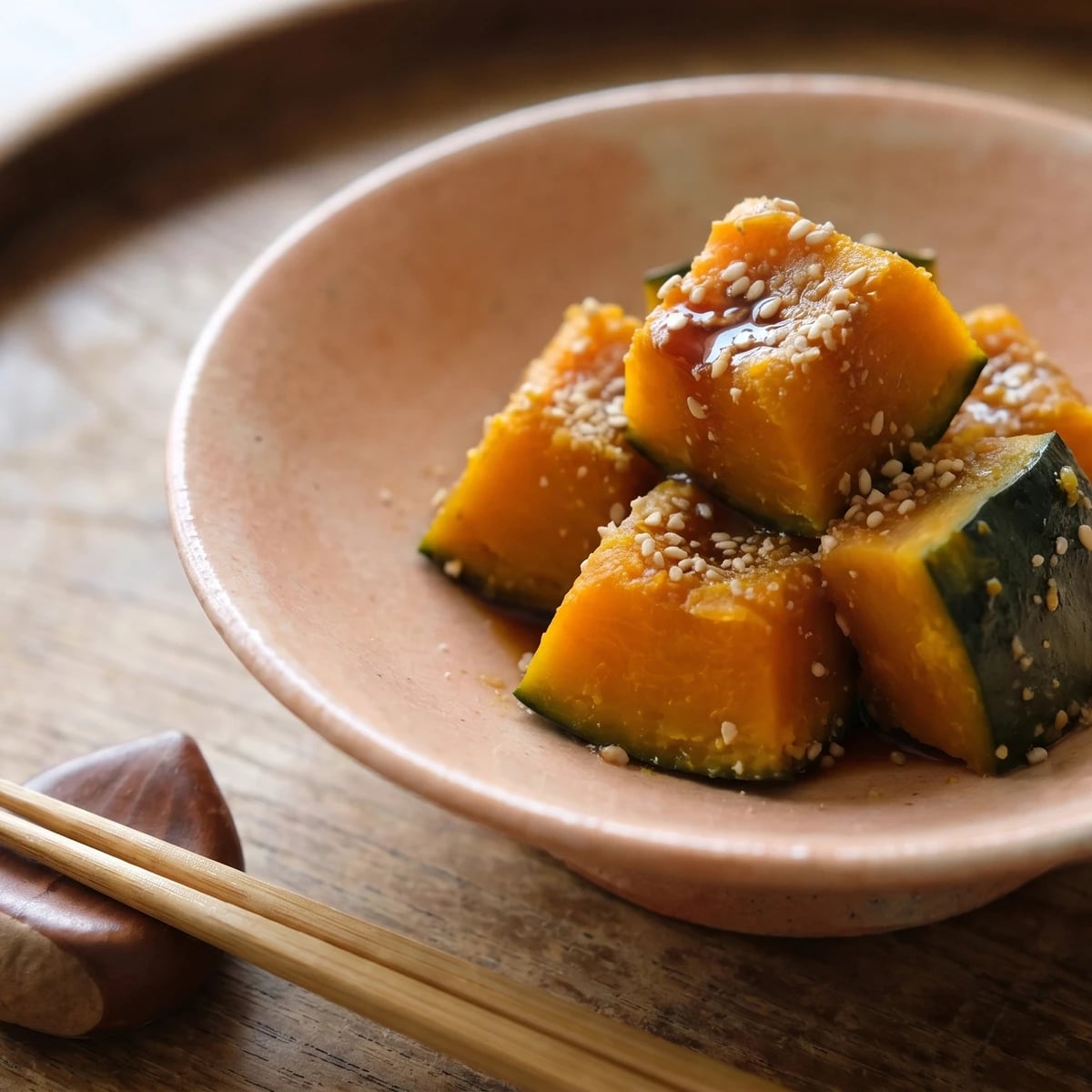
Kabocha no goma-ae is autumn squash made plain and good: steamed until tender, then folded through fragrant ground sesame, shoyu, and sugar while the flesh is still warm.

Side Dishes
Japanese
Weeknight
Comfort Food
Make Ahead
15 min
Active Time
15 min cook30 min total
Yield4 servings

Kabocha needs very little when it's in shun, at its prime. The flesh is dense, sweet, and orange enough to make a small bowl look like autumn arrived early and sat down politely. This is not a complicated side dish. It is squash, sesame, shoyu, and sugar, with nothing hidden.

The one detail that decides it is when you dress the kabocha. Too hot, and the pieces crumble into paste. Too cold, and the sesame sits on the surface like an apology. Let the squash cool until warm, then fold it gently so the cut faces drink the dressing while the edges still hold.

Goma-ae means sesame-dressed, one of the quiet ae-mono, or dressed dishes, that sit beside rice and soup without making a speech. We grind the sesame because whole seeds mostly pass through the mouth without giving what they have. Crush them and their oil wakes up, the fragrance comes forward, and a spoonful of shoyu and sugar is suddenly enough.

Leave a little green skin on each piece. It helps the kabocha keep its shape, and it gives the bowl the five-color feeling washoku loves: orange flesh, green skin, pale sesame, soy-dark gloss, and the empty space around it. Honmono often looks this modest.

Goma-ae belongs to ae-mono, the family of Japanese dressed dishes in which cooked vegetables are lightly coated rather than buried in sauce. Sesame has been used in Japan since ancient times and became especially important in Buddhist temple cooking, where its richness helped vegetable dishes carry weight without meat or fish. Kabocha reached Japan through Portuguese trade in the sixteenth century, and its name preserves a memory of Cambodia, from which Japanese cooks understood the squash to have come.

The technique, the tradition, and the story behind every dish.

Discover Culinary Explorer

Ingredients

kabocha squash

Quantity

600g (about 1/2 small squash)

seeded and cut into bite-size wedges, some skin left on

white sesame seeds

Quantity

3 tablespoons

shoyu (Japanese soy sauce)

Quantity

1 1/2 tablespoons

sugar

Quantity

1 tablespoon

mirin

Quantity

1 teaspoon

dashi or kabocha steaming liquid (optional)

Quantity

1 to 2 teaspoons

sea salt

Quantity

1 pinch

Equipment Needed

  • Steamer basket or bamboo seiro
  • Suribachi and surikogi, or a mortar and pestle
  • Small dry skillet
  • Wide tray for cooling

Instructions

  1. 1

    Cut the kabocha

    Scoop out the seeds and stringy center, then cut the kabocha into bite-size wedges or rough cubes, about 3cm across. Leave patches of the green skin on. The skin is not only color, it helps each piece keep its shape once the flesh turns soft.

    If the squash rocks under the knife, set it cut-side down and work from the stable side. A steady squash is kinder to both the cook and the fingers.
  2. 2

    Steam until tender

    Set the kabocha in a steamer basket in a single layer, sprinkle with a small pinch of salt, and steam over steady heat for 10 to 14 minutes. It is ready when a skewer slides in without force but the pieces still lift cleanly. Steam cooks the flesh evenly without waterlogging it, so the sesame dressing can cling instead of sliding away.

  3. 3

    Toast the sesame

    While the kabocha cooks, toast the sesame seeds in a dry pan over low heat, shaking often, until they smell nutty and a few seeds turn pale gold. Take them off the heat before they darken. Burnt sesame tastes bitter, and bitterness is a loud guest in a small bowl.

    If your sesame is already toasted, warm it briefly anyway. Heat wakes the aroma, which is why this simple dressing tastes full.
  4. 4

    Grind the dressing

    Grind the warm sesame in a suribachi, the ridged Japanese mortar, until most seeds are crushed and the mixture looks sandy and slightly moist. Stir in the shoyu, sugar, mirin, and a pinch of salt. Add 1 teaspoon of dashi or steaming liquid only if the dressing is too stiff to coat the squash. It should be thick, fragrant, and spoonable, not runny.

  5. 5

    Cool slightly

    Spread the steamed kabocha on a tray and let it cool until warm, about 5 minutes. This pause matters. Straight from the steamer, the flesh breaks easily; fully cold, it won't take the dressing as kindly. Warm is the useful middle.

  6. 6

    Dress gently

    Add the warm kabocha to the sesame dressing and fold with a spoon or your hands, turning the pieces just enough to coat the cut faces. Do not stir as if making mashed squash. You want pieces that hold their corners, with a thin sesame coating in the cracks and on the surface.

  7. 7

    Serve with space

    Pile the kabocha in a small bowl with a little height, scatter over a few extra crushed sesame seeds, and serve warm or at room temperature. Leave part of the bowl empty. The space is not decoration, it lets the color and shape of the squash read clearly.

Chef Tips

  • Choose kabocha that feels heavy for its size, with hard dull skin and a dry corky stem. If the squash is watery or pale inside, change the plan and simmer it instead. Sesame dressing won't hide a tired ingredient.
  • A suribachi and wooden pestle give the best texture: crushed, not pureed. A spice grinder works, but stop early. Sesame paste alone is too smooth for this dish unless you loosen it with freshly ground seeds.
  • Use Japanese shoyu here. It gives salt, aroma, and depth in one small spoonful. If the dressing tastes flat, add a little more ground sesame before reaching for more soy.
  • This is a fine make-ahead side, but dress it while the kabocha is still warm. That is when the cut faces accept the seasoning without falling apart.

Advance Preparation

  • The sesame dressing can be made up to one day ahead and kept covered in the refrigerator. Bring it back to room temperature before using so it coats the kabocha evenly.
  • The finished dish keeps one day refrigerated. Let it return to room temperature before serving, and refresh with a pinch of freshly ground sesame if the aroma has quieted.
  • For a meatless table, use konbu and dried shiitake dashi if you need liquid to loosen the dressing. That is honmono, not a compromise.

Frequently Asked Questions

Nutrition Information

1 serving (about 165g)

Calories
130 calories
Total Fat
4 g
Saturated Fat
1 g
Trans Fat
0 g
Unsaturated Fat
3 g
Cholesterol
0 mg
Sodium
380 mg
Total Carbohydrates
21 g
Dietary Fiber
3 g
Sugars
9 g
Protein
3 g

Note: Chef personas and recipes are created with AI assistance. Cook with care: follow safe food-handling practices, check doneness with a thermometer when needed, and adapt for allergies and your kitchen.

Where cooking meets culture.

Culinary guides, cultural storytelling, and the editorial depth that makes cooking meaningful.

Discover Culinary Explorer

More from Shojin Ryori: Buddhist Temple Cuisine

Browse the full collection