
Chef Jeong-sun
Aehobak-guk (애호박국, Korean Zucchini Soup)
A clean summer soup of Korean zucchini and salted shrimp, built on quick anchovy-kelp broth and finished before the half-moons lose their shape on a weeknight table.
A cooking platform built around craft, culture, and the stories behind what we eat.

Created by
A Seoul market bowl of beef broth, ugeoji greens, bean sprouts, and soft slices of ox blood, built for cold mornings and tired bodies, with the seonji slipped in late so it stays tender.
People hear ox blood and expect the soup to be severe. Good seonji-haejangguk is not severe. The seonji (coagulated ox blood) is already set into a soft curd, sliced thick, and it should sit in the broth like tender tofu with an iron shadow. Boil it hard and you punish it. Slip it in late and let it warm through gently; that is the whole lesson.
Master Seong-nyeo took me to a market soup house before sunrise once, after the vendors had started carrying crates and the last drinking tables were still pretending the night was young. She ordered this, not because she liked drama, but because she liked a soup that used what the butcher had, what the cabbage seller trimmed away, and what a tired body could actually keep down. This is Seoul food in its work clothes.
Tonight it asks for time, not cleverness. Blanch the bones so the broth is clean, season the ugeoji (outer cabbage leaves) before it enters the pot, and measure the finished broth at 8 cups so the salt has a place to stand. The seonji goes in last, at a bare tremble. This is how a market bowl becomes a home recipe someone can cook twice.
Haejangguk means soup to relieve a hangover, and Seoul newspapers by the 1920s were already treating early-morning haejangguk and seongjutang (醒酒湯, soup to wake from alcohol) as part of the city's drinking and market life. Seonji-haejangguk grew from that urban soup-house world, using inexpensive beef bones, ugeoji (outer cabbage leaves), bean sprouts, and coagulated ox blood from butchers so nothing nourishing was wasted. It is ordinary Seoul cooking, not palace cooking, and the point has always been strength, warmth, and a bowl that does honest work before the day begins.
Quantity
900g
rinsed
Quantity
350g
kept in one piece
Quantity
12 cups, plus more for blanching
Quantity
200g
peeled and cut into 1-inch chunks
Quantity
1/2 medium
halved
Quantity
6
crushed
Quantity
2 coin-thick slices
Quantity
3
1 cut in half for broth, 2 sliced on the diagonal for soup
Quantity
500g
or sturdy napa cabbage leaves
Quantity
1 tablespoon
for blanching cabbage
Quantity
3 tablespoons
Quantity
2 tablespoons
Quantity
2 tablespoons
divided
Quantity
1 tablespoon
minced
Quantity
1 teaspoon
grated
Quantity
2 teaspoons
Quantity
1/2 teaspoon
Quantity
2 tablespoons
Quantity
450g
cut into 1-inch-thick pieces
Quantity
1 tablespoon
for blanching seonji
Quantity
200g
rinsed
Quantity
1
sliced
Quantity
1
sliced
Quantity
1 teaspoon, plus up to 1/2 teaspoon more if needed
Quantity
to serve
Quantity
to serve
| Ingredient | Quantity |
|---|---|
| beef soup bones or ox leg bonesrinsed | 900g |
| beef brisket or shankkept in one piece | 350g |
| cold water | 12 cups, plus more for blanching |
| Korean radish (mu)peeled and cut into 1-inch chunks | 200g |
| onionhalved | 1/2 medium |
| garlic clovescrushed | 6 |
| fresh ginger | 2 coin-thick slices |
| large scallions1 cut in half for broth, 2 sliced on the diagonal for soup | 3 |
| ugeoji (outer napa cabbage leaves)or sturdy napa cabbage leaves | 500g |
| coarse saltfor blanching cabbage | 1 tablespoon |
| doenjang (Korean fermented soybean paste) | 3 tablespoons |
| gochugaru (Korean chili flakes) | 2 tablespoons |
| guk-ganjang (Korean soup soy sauce)divided | 2 tablespoons |
| garlicminced | 1 tablespoon |
| fresh gingergrated | 1 teaspoon |
| toasted sesame oil | 2 teaspoons |
| freshly ground black pepper | 1/2 teaspoon |
| finely ground perilla seed powder (deulgatgaru) (optional) | 2 tablespoons |
| prepared seonji (coagulated ox blood)cut into 1-inch-thick pieces | 450g |
| rice wine or sojufor blanching seonji | 1 tablespoon |
| soybean sproutsrinsed | 200g |
| green chili (optional)sliced | 1 |
| red chili (optional)sliced | 1 |
| fine sea salt | 1 teaspoon, plus up to 1/2 teaspoon more if needed |
| cooked short-grain rice (optional) | to serve |
| kkakdugi (cubed radish kimchi) (optional) | to serve |
Put the beef bones and brisket in a large pot and cover them with cold water. Bring to a hard boil for 8 minutes, then drain everything. Rinse the bones, meat, and pot clean. It looks wasteful in a blood soup, but this first water is not broth; it carries bone scum that would muddy the bowl.
Return the rinsed bones and brisket to the clean pot with 12 cups cold water. Bring to a simmer, skim for 10 minutes, then add the radish, onion, crushed garlic, ginger slices, and the halved scallion. Keep it at a steady gentle simmer for 2 hours. Pull the brisket out after about 75 minutes, when a chopstick slides through it, and let it cool before slicing or tearing it. Strain the broth and measure out exactly 8 cups. If you are short, add water; if you have too much, simmer it uncovered until it measures 8 cups. The seasoning below is written for that amount, because a wandering broth makes a wandering soup.
Bring a separate pot of water to a boil and add the coarse salt. Blanch the ugeoji for 4 to 5 minutes, until the thick ribs bend without snapping. Rinse under cold water, squeeze until damp but not dry, and cut into 3-inch lengths. The greens need their raw edge removed before they can carry the broth.
In a bowl, mix the doenjang, gochugaru, 1 tablespoon of the guk-ganjang, minced garlic, grated ginger, sesame oil, black pepper, and perilla seed powder if using. Add the blanched ugeoji and the sliced brisket, then massage the seasoning in with your hand. Let it sit 10 minutes. Seasoning the cabbage before it enters the pot makes the greens taste seasoned through, not just dipped in salty broth.
Rinse the prepared seonji gently in cold water and cut it into 1-inch-thick pieces if it is not already cut. In a small pot, bring water and the rice wine or soju to a bare simmer, then slide in the seonji for 3 minutes. Lift it out with a slotted spoon. This clears the mineral edge and warms the blood curd without making it rubbery.
Bring the 8 cups of beef broth to a simmer in the soup pot. Add the seasoned ugeoji and brisket and simmer uncovered for 20 to 25 minutes, until the cabbage has softened and the broth has taken on the color of doenjang and gochugaru. Keep the pot lively at the edges, not violent. The greens need time to give themselves to the soup.
Add the soybean sprouts, sliced scallions, and chilis if using. Simmer with the lid off for 7 minutes. Bean sprouts have their own smell; lid off from the start keeps it clean. Taste the broth and adjust with the remaining 1 tablespoon guk-ganjang and 1 teaspoon salt. If it still tastes flat, add up to 1/2 teaspoon more salt. It should be savory and slightly peppery, not so salty that it tires the rice.
Lower the heat before the seonji goes in. Slide the pieces into the soup and let them barely simmer for 5 to 7 minutes, until hot through. Do not let the pot roll. Stir once from the edge with a spoon, gently. The seonji should cut softly under the spoon, not bounce back from it.
Ladle the soup into deep bowls, giving each person greens, sprouts, beef, broth, and one or two pieces of seonji. Serve with hot rice and kkakdugi. Put extra gochugaru or perilla seed powder on the table for those who want it, but taste the soup first. Let it taste like itself.
1 serving (about 1100g)
Culinary guides, cultural storytelling, and the editorial depth that makes cooking meaningful.
Discover Culinary ExplorerChef Jeong-sun
A clean summer soup of Korean zucchini and salted shrimp, built on quick anchovy-kelp broth and finished before the half-moons lose their shape on a weeknight table.
Chef Jeong-sun
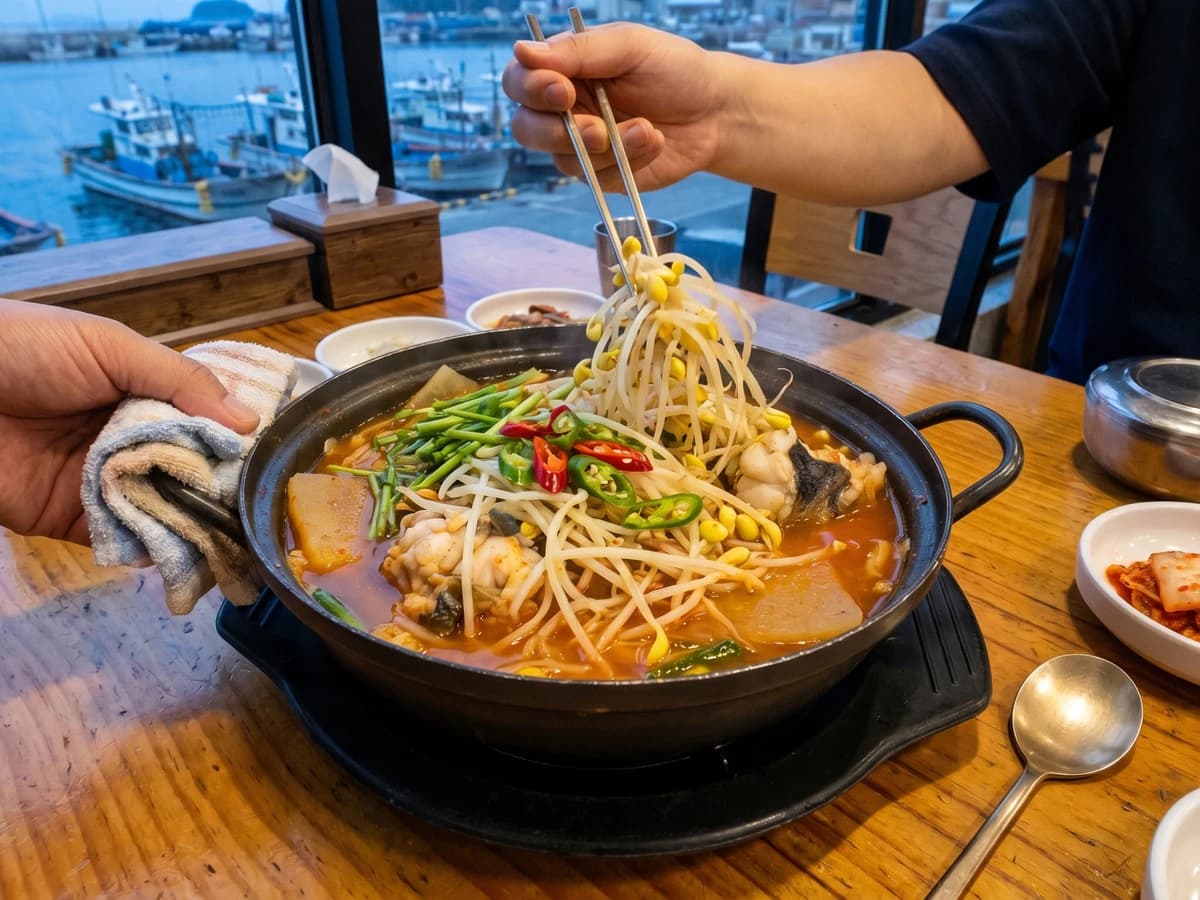
A Masan coast monkfish stew with firm white meat, gelatin at the bones, soybean sprouts for crunch, and a red broth seasoned to carry the fish, not bury it.

Chef Jeong-sun
A weeknight fish roe stew with radish and crown daisy in a clean spicy broth, where the whole success depends on adding the roe late enough that it sets tender, not chalky.

Chef Jeong-sun
Late-summer mallow leaves rubbed with salt until the bitter green water runs off, then simmered in a clean doenjang broth with dried shrimp, the quiet soup a Korean weeknight deserves.