
Chef Jeong-sun
Dwaeji-gukbap (Busan Pork and Rice Soup)
Busan's pork and rice soup, built from blanched bones boiled until the broth turns milky, then finished in each bowl with sliced pork, garlic chives, salted shrimp, and dadaegi.
A cooking platform built around craft, culture, and the stories behind what we eat.
Created by
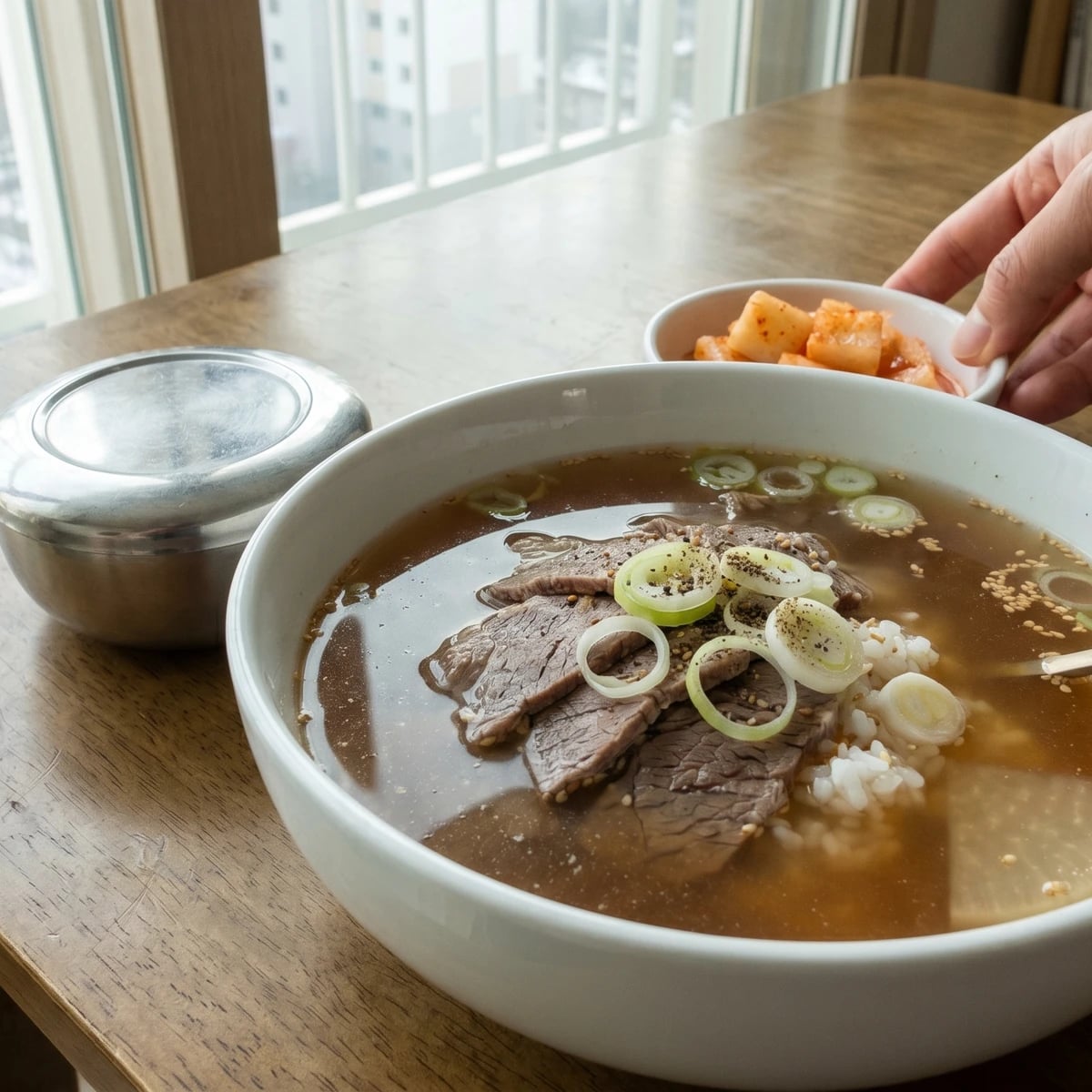
A clear beef and soy broth poured over rice, the older face of gukbap: brisket, bones, radish, and careful skimming until the bowl is clean enough to taste each part.
Janggukbap lives or dies by clarity. Not thinness. Clarity. A cloudy broth can still feed you, but this dish asks for a cleaner hand: soak the beef, blanch the bones, rinse the pot, then simmer gently and skim every bead of fat that rises. I won't tell you this is quick. I will tell you why it matters.
Janggukbap appears in Gyugon-yoram (규곤요람), a late-Joseon household manual, as an early form of gukbap built from rice and clear jang-guk, a soy-seasoned soup. The name points to jang, meaning soy sauce or fermented seasoning, not to red chili heat; the broth predates the many modern market gukbap styles now associated with pork bone, sundae, or regional taverns. Its plainness is the record: beef, bones, rice, soy sauce, and skimming done with care.
Quantity
450g
Quantity
700g
Quantity
12 cups, plus more for soaking and blanching
Quantity
250g
peeled and cut into 2-inch chunks
Quantity
1/2 medium
peeled
Quantity
4 large
lightly crushed
Quantity
2
Quantity
1 teaspoon
Quantity
3 tablespoons, plus more to adjust
Quantity
1 tablespoon
Quantity
1 teaspoon, plus more to adjust
Quantity
4 cups
warm
Quantity
2
thinly sliced
Quantity
1 teaspoon
Quantity
to finish
| Ingredient | Quantity |
|---|---|
| beef brisket or shank | 450g |
| beef marrow bones or soup bones | 700g |
| cold water | 12 cups, plus more for soaking and blanching |
| Korean radish (mu)peeled and cut into 2-inch chunks | 250g |
| onionpeeled | 1/2 medium |
| garlic cloveslightly crushed | 4 large |
| scallion whites | 2 |
| whole black peppercorns | 1 teaspoon |
| soup soy sauce (guk-ganjang) | 3 tablespoons, plus more to adjust |
| regular soy sauce | 1 tablespoon |
| kosher salt | 1 teaspoon, plus more to adjust |
| cooked short-grain white ricewarm | 4 cups |
| scallionsthinly sliced | 2 |
| toasted sesame seeds (optional) | 1 teaspoon |
| freshly ground black pepper (optional) | to finish |
Put the brisket and bones in a large bowl and cover with cold water. Soak 30 minutes, changing the water once if it turns very red. This pulls out excess blood so the broth tastes clean instead of metallic. Drain well.
Put the beef and bones in a large pot, cover with fresh water, and bring to a hard boil for 5 minutes. Drain, rinse the meat and bones under warm water, and wash the pot. This looks fussy until you see what comes off. That scum does not belong in janggukbap.
Return the rinsed beef and bones to the clean pot with 12 cups cold water. Bring slowly to a simmer over medium heat, then lower the heat so the surface trembles gently. Add the radish, onion, garlic, scallion whites, and peppercorns. Simmer uncovered for 2 hours, skimming foam and fat whenever they rise.
Lift out the brisket when it is tender enough to pull apart with chopsticks, usually after about 2 hours. Wrap it loosely so it does not dry out. Keep simmering the bones and vegetables 45 to 60 minutes more, until the broth is savory and lightly beefy.
Strain the broth through a fine sieve into a clean pot. Discard the bones, aromatics, and peppercorns. Let the broth stand 10 minutes, then skim the fat from the surface. If making ahead, chill it until the fat firms on top and lift it off in one piece. This is the easiest clean corner to cut: time in the refrigerator does the skimming for you.
Bring 8 cups strained broth back to a gentle simmer. Stir in 3 tablespoons soup soy sauce, 1 tablespoon regular soy sauce, and 1 teaspoon kosher salt. Taste before adding more. Soup soy sauce gives the old jang-guk flavor, but too much turns the bowl harsh, so adjust with 1/2 teaspoon salt or 1 teaspoon soup soy sauce at a time.
Slice the cooked brisket across the grain into thin bite-size pieces. The grain matters. Cut with it and the meat chews like rope; cut across it and the same piece becomes tender.
Put 1 cup warm cooked rice in each deep bowl. Lay sliced beef over the rice, then ladle 2 cups hot broth over each serving. Scatter with sliced scallion, sesame seeds if using, and a little black pepper. Serve with kkakdugi or baechu-kimchi at the side, not stirred into the bowl. Let the broth taste like itself.
1 serving (about 820g)
Culinary guides, cultural storytelling, and the editorial depth that makes cooking meaningful.
Discover Culinary Explorer
Chef Jeong-sun
Busan's pork and rice soup, built from blanched bones boiled until the broth turns milky, then finished in each bowl with sliced pork, garlic chives, salted shrimp, and dadaegi.

Chef Jeong-sun
A clear, nourishing Korean hangover soup made by tearing dried pollock, toasting it in sesame oil, then simmering it with bean sprouts until the broth turns pale and sweet.

Chef Jeong-sun
Jeonju's clear bean sprout rice soup, built on anchovy-kelp broth and salted shrimp, where the whole bowl depends on cooking the sprouts clean and keeping the rice lively.

Chef Jeong-sun
A thrifty market bowl of pork innards scrubbed clean, boiled until tender, and ladled over rice in a pale pork broth with scallion, salted shrimp, and chive muchim.