
Chef Jeong-sun
Aehobak-guk (애호박국, Korean Zucchini Soup)
A clean summer soup of Korean zucchini and salted shrimp, built on quick anchovy-kelp broth and finished before the half-moons lose their shape on a weeknight table.
A cooking platform built around craft, culture, and the stories behind what we eat.
Created by
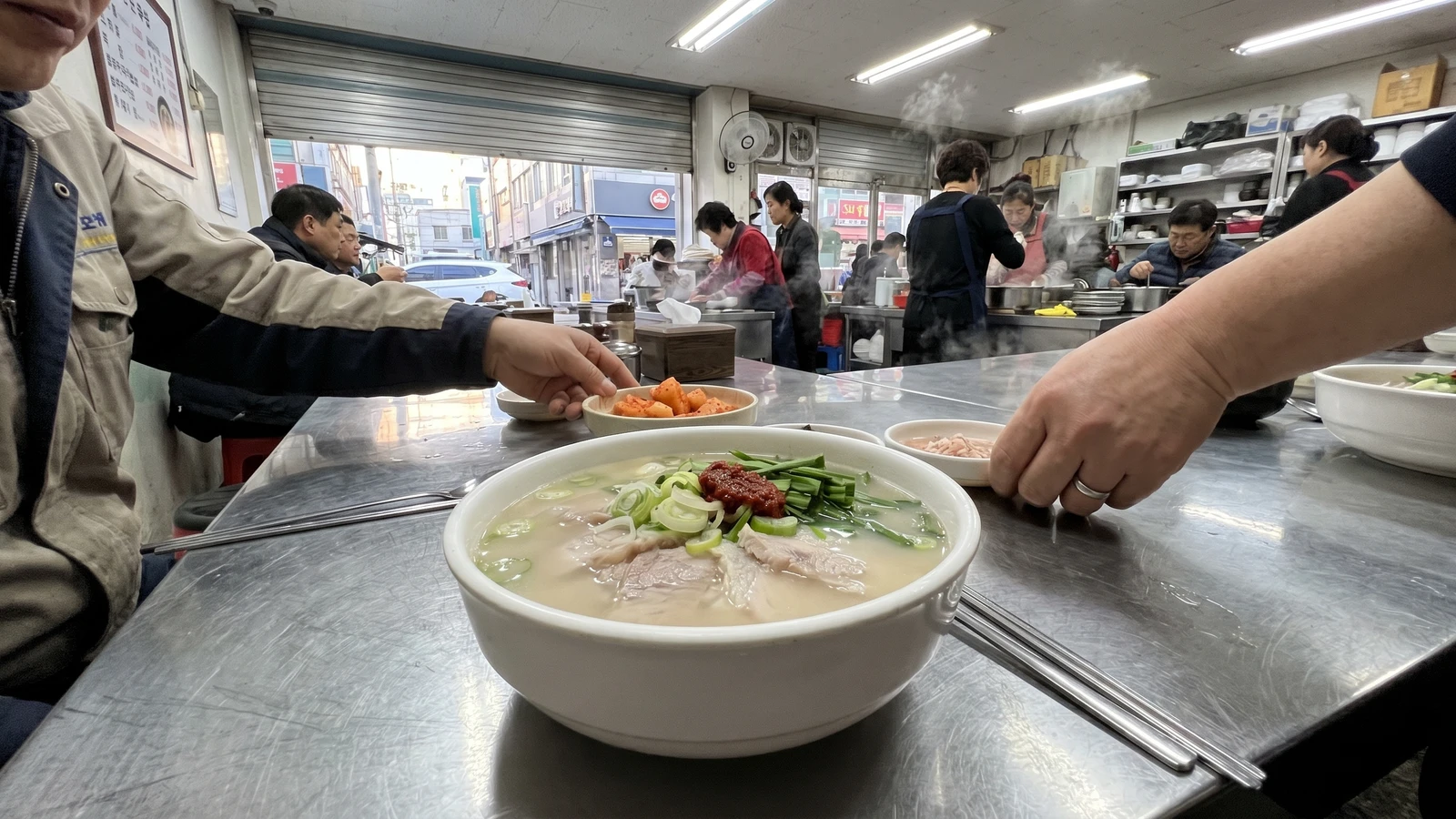
Busan's pork and rice soup, built from blanched bones boiled until the broth turns milky, then finished in each bowl with sliced pork, garlic chives, salted shrimp, and dadaegi.
Dwaeji-gukbap lives or dies by the first pot of water you throw away. People look at the milky broth and think richness came from neglect, as if bones can be bullied into soup. No. You soak, blanch, scrub, then boil hard enough that the collagen and fat join the water. Skip the washing and the bowl smells of old pork; wash properly and it tastes clean, full, and plain in the best way.
In Busan, this is not food that waits for ceremony. It is market food, dock-worker food, a bowl after a night shift or before a long morning, rice already tucked into the soup so the meal cannot wander off. My teacher cared about dishes like this because people assumed they did not need writing down. Notebook 41 says 2 kilograms bones, 700 grams meat, 4 liters water, one strong boil, no laziness at the sink. That one does it properly too.
Tonight the dish asks you for time, not difficult hands. The safe shortcut is the vessel: a pressure cooker can make a strong broth on a weeknight. The unsafe shortcut is skipping the blanch and rinse. Season lightly in the pot, then let each person finish the bowl with saeujeot (salted fermented shrimp), dadaegi (spicy chili paste), and buchu (garlic chives). 손맛 is real; I measure it anyway, so it can be handed on.
Dwaeji-gukbap is closely tied to Busan and the southeast, especially the years during and after the Korean War, when Busan was South Korea's provisional capital from 1950 to 1953 and refugees made filling meals from inexpensive pork bones, offal, and rice. The dish belongs to the same practical world as market gukbap, but Busan made it its own: bowls are kept pale and pork-forward, then sharpened at the table with saeujeot, garlic chives, and dadaegi. Seomyeon and Bujeon in Busan still have gukbap alleys where the local argument is not whether to season the soup, but how much salted shrimp a proper bowl should take.
Quantity
2 kg
cut into 2 to 3 inch pieces
Quantity
300g
Quantity
700g
kept in one piece
Quantity
as needed
for soaking and blanching
Quantity
4 liters, plus up to 1 liter hot water as needed
for broth
Quantity
1 large
halved
Quantity
4 scallions or 1 leek
trimmed and cut in half
Quantity
8
smashed
Quantity
20g
thinly sliced
Quantity
1 teaspoon
Quantity
3 tablespoons
for dadaegi
Quantity
2 tablespoons
for dadaegi
Quantity
1 tablespoon
for dadaegi
Quantity
2 teaspoons
for dadaegi
Quantity
2 teaspoons
minced, for dadaegi
Quantity
1/2 teaspoon
freshly ground, for dadaegi
Quantity
1 teaspoon
for dadaegi
Quantity
120g
cut into 2 inch lengths
Quantity
1 teaspoon
for the chives
Quantity
1 teaspoon
for the chives
Quantity
1 teaspoon
for the chives
Quantity
1 teaspoon
for the chives
Quantity
4 1/2 cups
Quantity
3
thinly sliced, for serving
Quantity
3 tablespoons
for serving
Quantity
to serve
Quantity
to serve
Quantity
to serve
| Ingredient | Quantity |
|---|---|
| pork neck bones or back bonescut into 2 to 3 inch pieces | 2 kg |
| pork hock or split trotter (optional) | 300g |
| pork shoulder or fresh pork bellykept in one piece | 700g |
| waterfor soaking and blanching | as needed |
| waterfor broth | 4 liters, plus up to 1 liter hot water as needed |
| onionhalved | 1 large |
| scallions or leektrimmed and cut in half | 4 scallions or 1 leek |
| garlic clovessmashed | 8 |
| fresh gingerthinly sliced | 20g |
| kosher salt | 1 teaspoon |
| gochugaru (Korean chili flakes)for dadaegi | 3 tablespoons |
| hot pork brothfor dadaegi | 2 tablespoons |
| soup soy sauce (guk-ganjang)for dadaegi | 1 tablespoon |
| saeujeot brine or fish saucefor dadaegi | 2 teaspoons |
| garlicminced, for dadaegi | 2 teaspoons |
| black pepperfreshly ground, for dadaegi | 1/2 teaspoon |
| toasted sesame oil (optional)for dadaegi | 1 teaspoon |
| Korean garlic chives (buchu)cut into 2 inch lengths | 120g |
| gochugarufor the chives | 1 teaspoon |
| saeujeot brine or fish saucefor the chives | 1 teaspoon |
| toasted sesame oilfor the chives | 1 teaspoon |
| toasted sesame seedsfor the chives | 1 teaspoon |
| cooked short-grain white rice | 4 1/2 cups |
| scallionsthinly sliced, for serving | 3 |
| saeujeot (salted fermented shrimp)for serving | 3 tablespoons |
| dadaegi | to serve |
| kkakdugi or napa cabbage kimchi (optional) | to serve |
| sliced green chili and raw garlic (optional) | to serve |
Put the pork bones and hock, if using, in a large bowl and cover with cold water by 2 inches. Soak 30 minutes, changing the water once if it turns very red. This pulls out excess blood before the bones ever meet the pot, which is the first step toward a clean broth.
Drain the bones. Put the bones, hock, and whole pork shoulder or belly in a large stockpot, cover with fresh water, and boil hard for 10 minutes. Drain everything, throw that water away, and wash the pot. Rinse each bone and piece of meat under warm running water, rubbing off clots and dark bits. This is not fussiness. This is where the broth's clean smell is made.
Return the clean bones, hock, and pork meat to the washed pot. Add 4 liters water and bring to a strong boil. Skim for the first 10 minutes, then add the onion, scallions or leek, garlic, and ginger. Keep the pot at a lively boil, not a sleepy simmer. The movement helps the pork fat and collagen cloud the broth.
After 75 to 90 minutes, check the pork shoulder or belly. A skewer should slide in easily, but the meat should still hold its shape for slicing. Lift it out, wrap it, and let it rest. If you leave the slicing meat in for the full bone boil, it gives everything to the broth and arrives at the bowl dry.
Continue boiling the bones and hock for 3 to 3 1/2 hours more, adding hot water as needed to keep the bones barely covered. By the end you should have about 2.8 liters broth, opaque ivory with a glossy surface. If the broth is still clear, remove the lid and boil harder for 20 minutes. The milkiness comes from bone, collagen, fat, and movement, not from flour or milk.
Strain the broth through a fine strainer into a clean pot. Discard the spent bones and aromatics. Skim off only excessive fat; leave a thin sheen, because a completely stripped broth tastes thin. Stir in 1 teaspoon kosher salt. It should taste underseasoned now. Saeujeot and dadaegi will finish each bowl at the table.
Stir together 3 tablespoons gochugaru, 2 tablespoons hot broth, 1 tablespoon soup soy sauce, 2 teaspoons saeujeot brine or fish sauce, 2 teaspoons minced garlic, 1/2 teaspoon black pepper, and the sesame oil if using. Let it sit 10 minutes so the chili softens and blooms. Dry chili flakes floating on soup taste raw; hydrated dadaegi melts into the bowl.
Just before serving, toss the garlic chives with 1 teaspoon gochugaru, 1 teaspoon saeujeot brine or fish sauce, 1 teaspoon sesame oil, and 1 teaspoon toasted sesame seeds. Do this late, because buchu collapses if it waits. You want it bright and sharp against the pale pork broth.
Slice the rested pork thinly across the grain. Put 3/4 cup cooked rice in each bowl, lay 90 to 120g sliced pork over it, and ladle in about 2 cups hot broth. Scatter sliced scallion over the top and add a small spoonful of dressed chives. Serve with saeujeot, dadaegi, kimchi or kkakdugi, green chili, and raw garlic on the side. Start with 1 teaspoon saeujeot and 1 teaspoon dadaegi per bowl, taste, then add more. The seasoning belongs to the eater, but the first measure keeps the bowl from turning too salty at once.
1 serving (about 760g)
Culinary guides, cultural storytelling, and the editorial depth that makes cooking meaningful.
Discover Culinary ExplorerChef Jeong-sun
A clean summer soup of Korean zucchini and salted shrimp, built on quick anchovy-kelp broth and finished before the half-moons lose their shape on a weeknight table.
Chef Jeong-sun
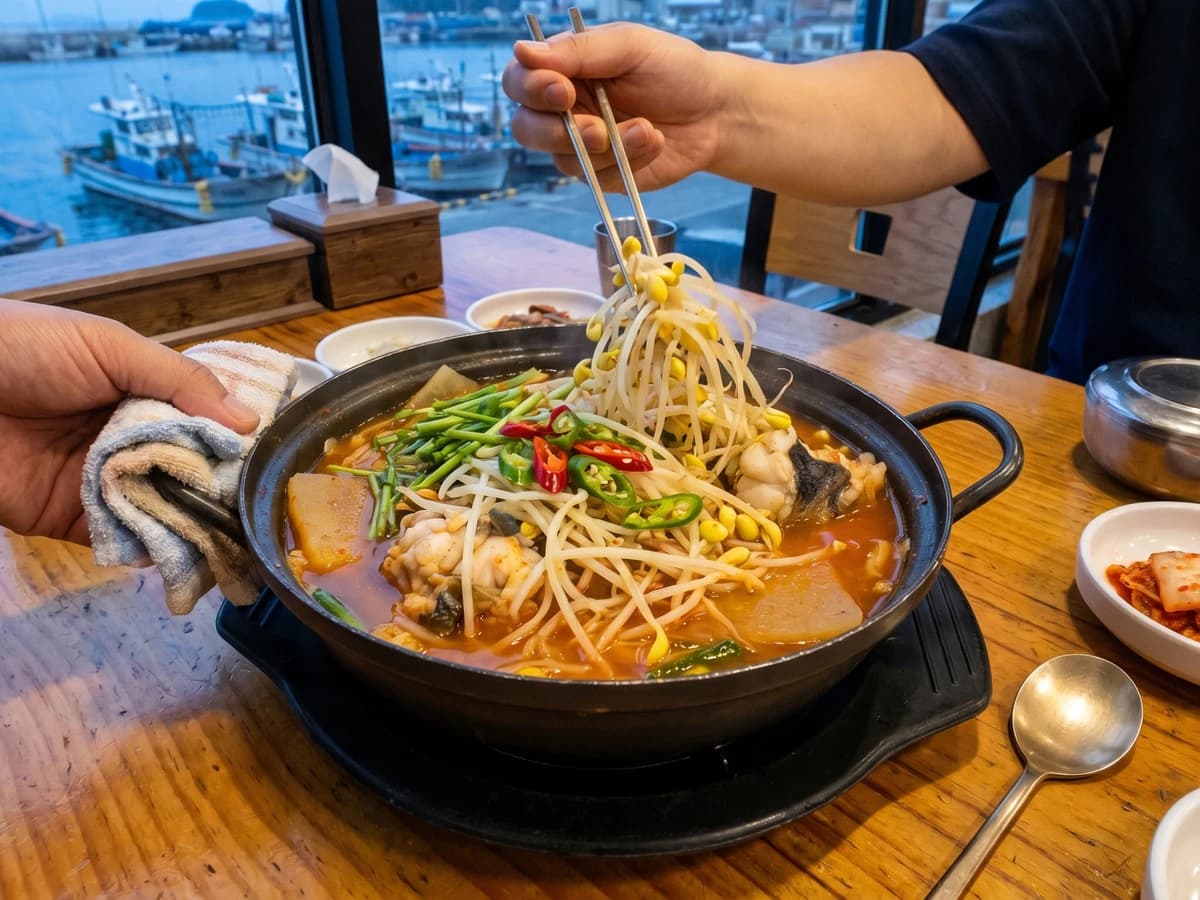
A Masan coast monkfish stew with firm white meat, gelatin at the bones, soybean sprouts for crunch, and a red broth seasoned to carry the fish, not bury it.

Chef Jeong-sun
A weeknight fish roe stew with radish and crown daisy in a clean spicy broth, where the whole success depends on adding the roe late enough that it sets tender, not chalky.

Chef Jeong-sun
Late-summer mallow leaves rubbed with salt until the bitter green water runs off, then simmered in a clean doenjang broth with dried shrimp, the quiet soup a Korean weeknight deserves.