
Chef Jeong-sun
Aehobak-guk (애호박국, Korean Zucchini Soup)
A clean summer soup of Korean zucchini and salted shrimp, built on quick anchovy-kelp broth and finished before the half-moons lose their shape on a weeknight table.
A cooking platform built around craft, culture, and the stories behind what we eat.

Created by
Jeonju's clear bean sprout rice soup, built on anchovy-kelp broth and salted shrimp, where the whole bowl depends on cooking the sprouts clean and keeping the rice lively.
The first thing this soup asks is obedience to a lid. Soybean sprouts are forgiving in price and unforgiving in smell: cook them covered from the start, or uncovered from the start, but don't peek halfway. Notebook 38 says it plainly after a cold morning in Jeonju's Nambu Market: 8 minutes covered, then season. That is the hinge of the bowl.
Kongnamul-gukbap is not a grand soup. It is market food and morning-after food, a cheap bowl that puts rice, sprouts, anchovy broth, salted shrimp, gim, and an egg in the right order. The broth must stay clean because the sprouts are the point. If you bury them under chili or garlic, you have only made noise. Let it taste like itself: green-white crunch, sea-salt depth from saeujeot (salted shrimp), rice grains still separate enough to feel.
Tonight this asks for one good broth, one careful boil, and restraint at the end. You can use cooked rice from yesterday, and you can serve the egg in a separate cup instead of copying a market stall's exact rhythm. 시대가 바뀌면 음식도 바뀌어야 해요. When times change, food must change too. But the lid rule, the clean broth, and the final tasting stay exactly where they are.
Jeonju in North Jeolla is the city most strongly tied to kongnamul-gukbap, especially the stalls around Nambu Market that fed merchants, workers, and drinkers with an inexpensive bowl at dawn. Bean-sprout soup itself is older household food, but the rice-soup form became a Jeonju market specialty in the twentieth century; shops such as Sambaekjip, founded in 1947, helped carry it beyond the market. The Jeonju style is clear and restrained, often served with suran (a softly set egg in a separate cup) and seasoned at the table with saeujeot (salted shrimp).
Quantity
450g
rinsed and loose hulls removed
Quantity
8 cups
Quantity
14
heads and guts removed
Quantity
1 piece, about 5 inches square
Quantity
150g
cut into 1-inch chunks
Quantity
1/2 medium
peeled
Quantity
4 cups
Quantity
1 tablespoon, plus more to serve
finely chopped
Quantity
1 tablespoon
Quantity
3 cloves
minced
Quantity
1/2 teaspoon, plus more as needed
Quantity
4
Quantity
3
thinly sliced
Quantity
4 sheets
crushed
Quantity
1 teaspoon, plus more to serve
Quantity
2 teaspoons
Quantity
120g
thinly sliced
| Ingredient | Quantity |
|---|---|
| fresh soybean sprouts (kongnamul)rinsed and loose hulls removed | 450g |
| water | 8 cups |
| large dried anchovies (myeolchi)heads and guts removed | 14 |
| dried kelp (dasima) | 1 piece, about 5 inches square |
| Korean radish (mu)cut into 1-inch chunks | 150g |
| onionpeeled | 1/2 medium |
| cooked short-grain white rice | 4 cups |
| saeujeot (salted fermented shrimp)finely chopped | 1 tablespoon, plus more to serve |
| guk-ganjang (Korean soup soy sauce) | 1 tablespoon |
| garlicminced | 3 cloves |
| fine sea salt | 1/2 teaspoon, plus more as needed |
| large eggs | 4 |
| scallionsthinly sliced | 3 |
| roasted gim (seaweed)crushed | 4 sheets |
| gochugaru (Korean chili flakes) (optional) | 1 teaspoon, plus more to serve |
| toasted sesame seeds | 2 teaspoons |
| cooked squid (ojingeo) (optional)thinly sliced | 120g |
Rinse the soybean sprouts in cold water and lift away loose yellow hulls. Do not spend the evening trimming every tail unless the ends are brown. The tails carry flavor and texture, and this is a market bowl, not a garnish lesson. Drain them well and keep them ready.
Put the water, anchovies, kelp, radish, and onion in a 4- to 5-quart pot over medium heat. When the water reaches a simmer, pull out the kelp right away; leave it too long and it gives the broth a slick bitterness. Simmer the anchovies, radish, and onion for 15 minutes more, then strain. You should have about 6 1/2 cups clear broth. Add a little water if you are short.
Return the broth to the pot and add the drained soybean sprouts. Cover the pot before it comes back to a boil. Once you hear a steady boil under the lid, lower the heat to medium and cook 8 minutes without lifting the lid. Covered from start to finish, or uncovered from start to finish. Halfway is where the raw grassy smell comes from, and I won't ask you to invite that into your kitchen.
Uncover the pot after the full 8 minutes. Stir in the minced garlic, guk-ganjang, chopped saeujeot, and 1/2 teaspoon salt. Add the sliced squid now if using, and simmer uncovered for 2 minutes. Taste the broth. It should be clean and lightly salty, because the gim, egg, and table saeujeot will deepen each bowl later.
Crack one egg into each of four small heatproof cups. Ladle 3 tablespoons of boiling broth over each egg, cover the cups, and let them sit 3 to 4 minutes for suran (a softly set egg). If you need the eggs fully cooked, slide them into the simmering soup instead and cook 4 minutes, until the yolks thicken. That is the honest adjustment.
Divide 1 cup cooked rice into each warm deep bowl or ttukbaegi. If the rice is cold from the refrigerator, ladle a little hot broth over it, wait 20 seconds, and pour that broth back into the pot while holding the rice in place with a spoon. This wakes the rice without boiling it into porridge.
Ladle the broth and plenty of soybean sprouts over each bowl of rice. Top with scallions, crushed gim, a pinch of gochugaru if you want it, and toasted sesame seeds. Serve the soft egg cup on the side, Jeonju market style, or slide the egg into the bowl at the table. Put extra saeujeot and gochugaru nearby, but taste before adding. Let the sprouts still taste like sprouts.
1 serving (about 760g)
Culinary guides, cultural storytelling, and the editorial depth that makes cooking meaningful.
Discover Culinary ExplorerChef Jeong-sun
A clean summer soup of Korean zucchini and salted shrimp, built on quick anchovy-kelp broth and finished before the half-moons lose their shape on a weeknight table.
Chef Jeong-sun
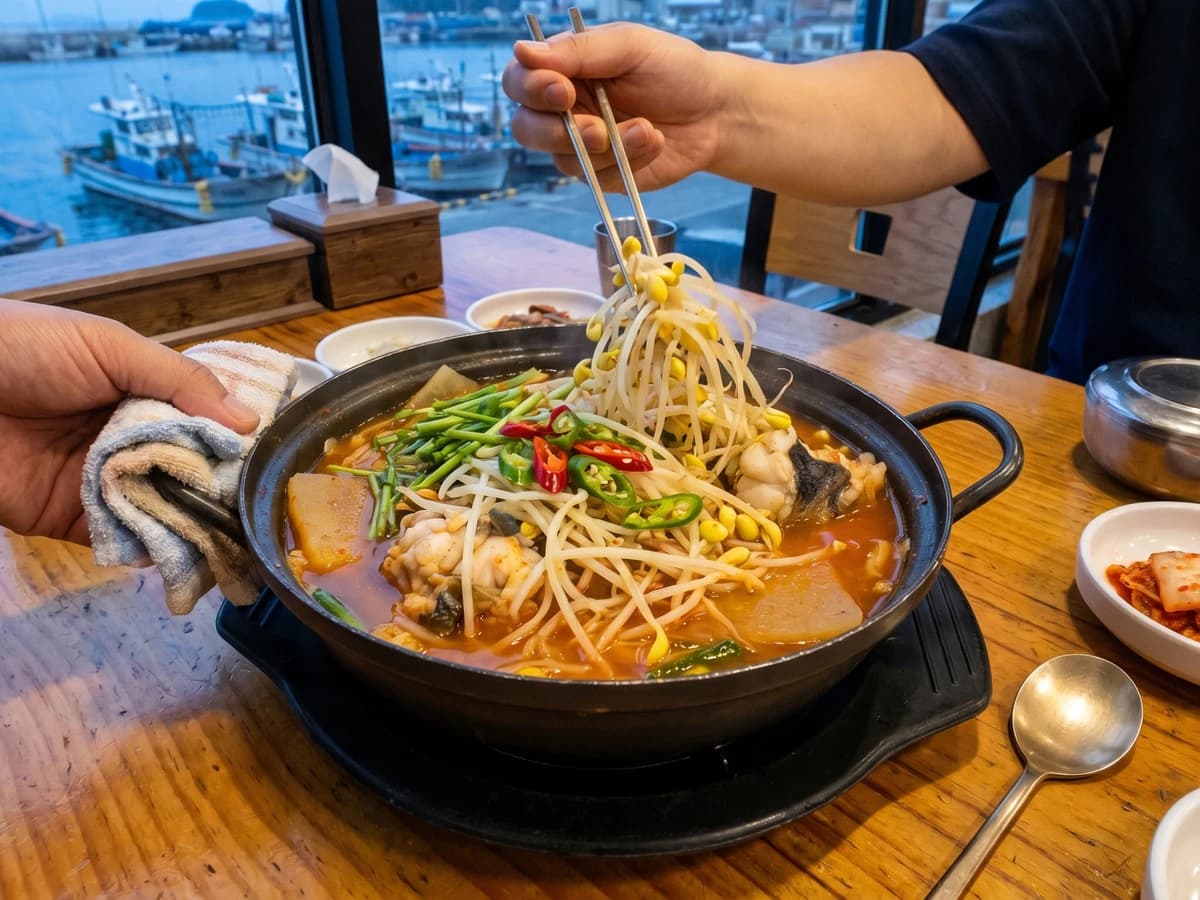
A Masan coast monkfish stew with firm white meat, gelatin at the bones, soybean sprouts for crunch, and a red broth seasoned to carry the fish, not bury it.

Chef Jeong-sun
A weeknight fish roe stew with radish and crown daisy in a clean spicy broth, where the whole success depends on adding the roe late enough that it sets tender, not chalky.

Chef Jeong-sun
Late-summer mallow leaves rubbed with salt until the bitter green water runs off, then simmered in a clean doenjang broth with dried shrimp, the quiet soup a Korean weeknight deserves.