Chef Joost
Amsterdamse Ossenworst
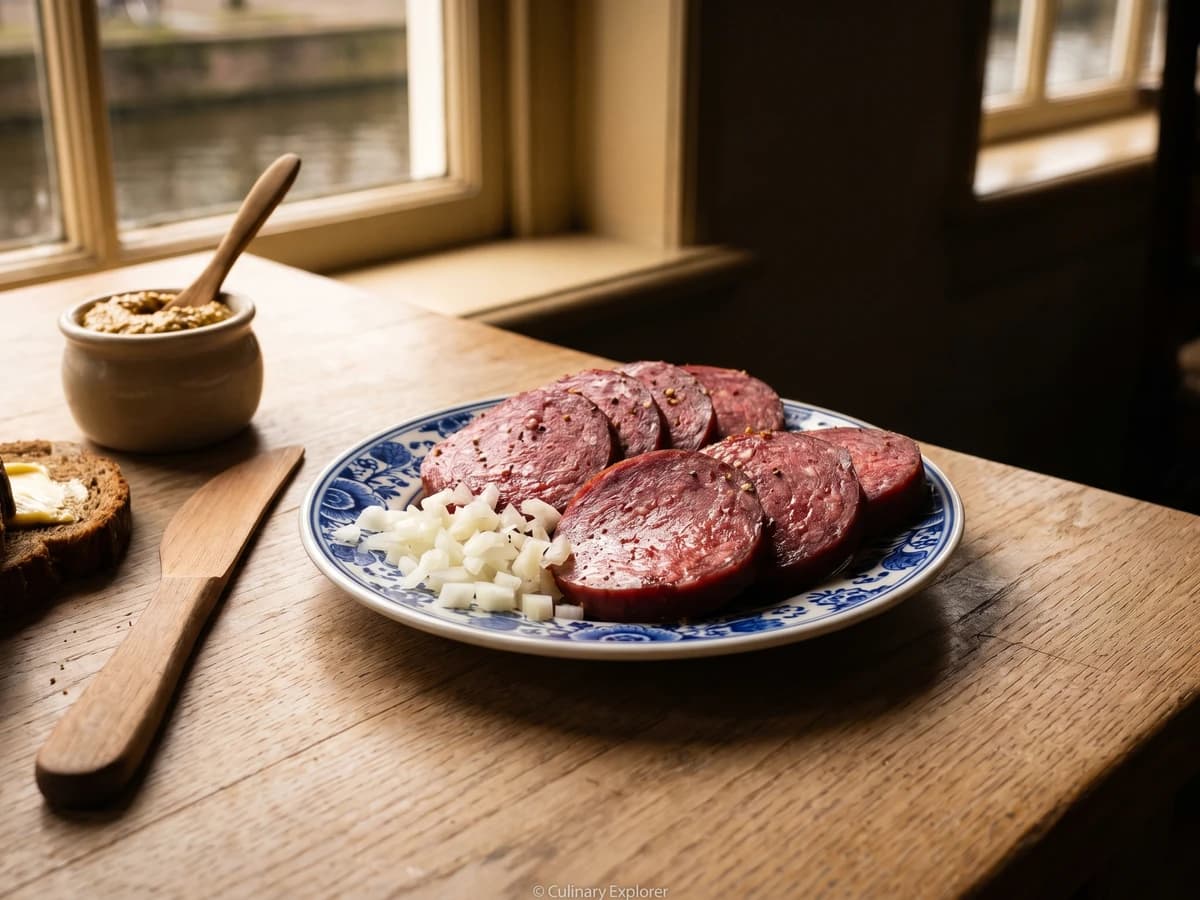
The name means ox sausage, but the real story is Amsterdam itself: cattle trade, Jewish butchers, VOC spices, and raw beef sliced thin with onion.
A cooking platform built around craft, culture, and the stories behind what we eat.
Created by
The bakery's borrel staple, crisp puff pastry around mace-scented meat, proves the Dutch birthday table knows exactly when to be practical and a little luxurious.
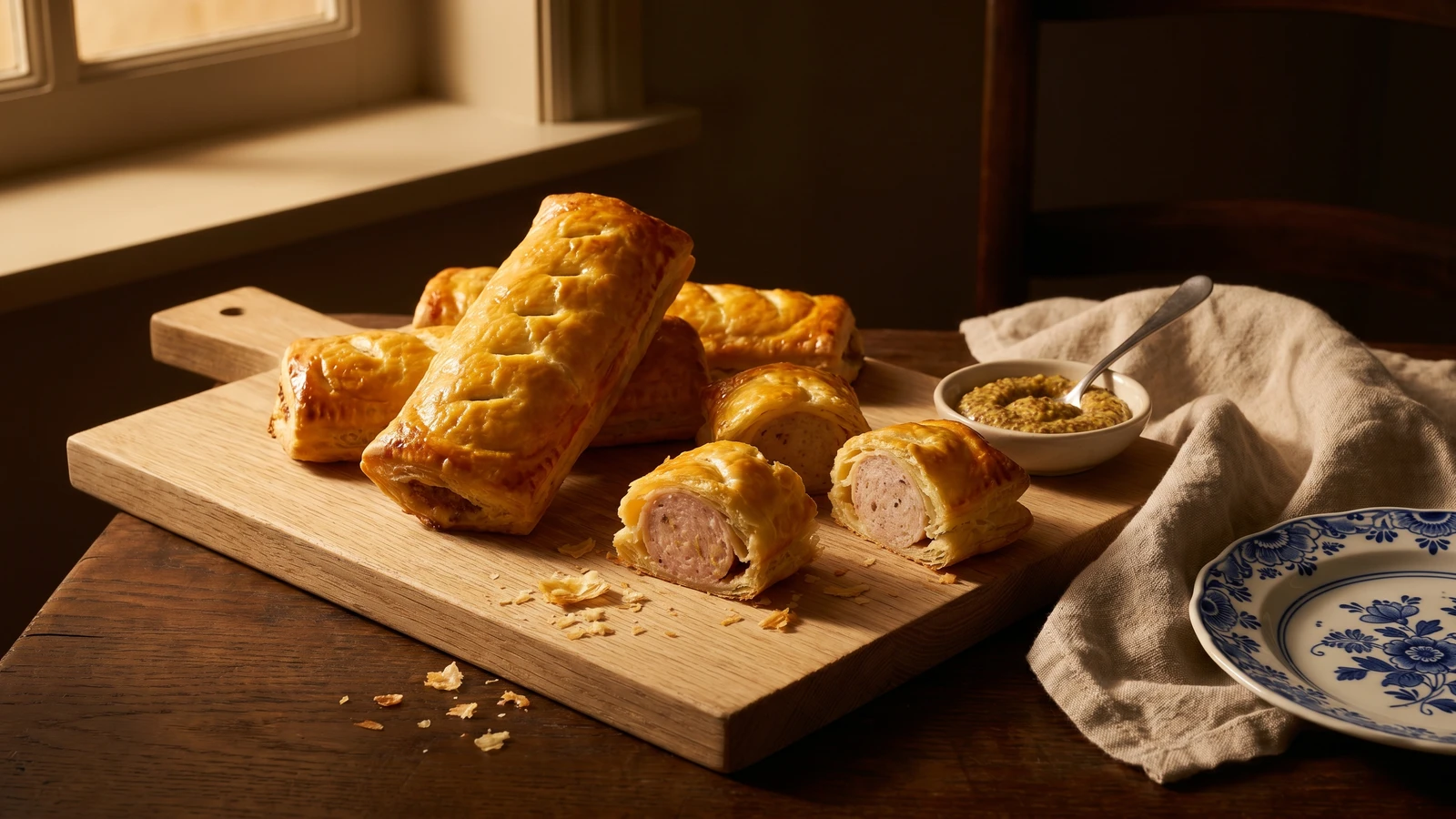
Every Dutch birthday has its choreography: coffee first, cake passed in obedient slices, then the borrel, the convivial drink, when the table suddenly grows cheese cubes, bitterballen, and saucijzenbroodjes cut into neat warm rounds. Nobody announces them. They simply appear, and the room understands that the serious sitting-down part of the evening has relaxed its collar.
The name already tells you more than it pretends to. Saucijs comes through French saucisse from Latin salsicia, the salted thing, the sausage, while broodje means little bread. But let me tell you a secret: this is not really bread at all. It is a baker's trick, meat wrapped in puff pastry, rich enough to feel festive and simple enough to buy on the way home from work. Very Dutch. We make ceremony, then pretend we haven't.
What matters is the seasoning. A bland filling inside fine pastry is a forgery with good handwriting. Nutmeg and a little mace belong here, not as exotic decoration, but as the ordinary inheritance of a country whose spice cupboards remember the VOC better than its history lessons sometimes do. Keep the meat cold, seal the pastry firmly, cut a few small vents so the roll doesn't burst, and bake until the pastry flakes under the knife. Hou het altijd simpel, always keep it simple, but don't skip the spice.
Saucijzenbroodjes belong to the Dutch bakery tradition that grew around puff pastry and seasoned minced meat in the nineteenth century, when urban bakers sold savoury pastries alongside sweet goods for markets, stations, and household entertaining. The Dutch word saucijs is related to French saucisse and ultimately Latin salsus, salted, while the filling's nutmeg and mace reflect the everyday spice habits of the Dutch kitchen after the seventeenth-century VOC trade. It is often confused with the Brabant worstenbroodje, but that regional cousin uses soft bread dough; the saucijzenbroodje is the flaky bakery version, especially at borrels and birthdays.
Quantity
500g
kept cold
Quantity
350g
Quantity
1 small
beaten and divided
Quantity
35g
Quantity
1 small
very finely minced
Quantity
1 tablespoon
Quantity
1 teaspoon
Quantity
1/2 teaspoon
Quantity
1/4 teaspoon
Quantity
1/4 teaspoon
Quantity
1 tablespoon
finely chopped
Quantity
1 tablespoon
for egg wash
| Ingredient | Quantity |
|---|---|
| ready-rolled puff pastrykept cold | 500g |
| minced pork, or half pork and half beef | 350g |
| eggbeaten and divided | 1 small |
| fresh white breadcrumbs | 35g |
| shallotvery finely minced | 1 small |
| Dutch mustard | 1 tablespoon |
| fine salt | 1 teaspoon |
| freshly grated nutmeg | 1/2 teaspoon |
| ground mace | 1/4 teaspoon |
| ground white pepper | 1/4 teaspoon |
| parsley (optional)finely chopped | 1 tablespoon |
| milkfor egg wash | 1 tablespoon |
Put the minced meat in a bowl with half the beaten egg, the breadcrumbs, shallot, mustard, salt, nutmeg, mace, white pepper, and parsley if using. Mix with your hands just until it holds together. Don't knead it into paste; a saucijzenbroodje should bite like seasoned meat, not like a rubber stamp.
Divide the meat into 12 equal portions and roll each one into a short sausage about 8 centimetres long. Keep them even, because uneven rolls bake unevenly, and the birthday aunt who gets the dry one will remember.
Cut the cold puff pastry into 12 rectangles, each large enough to wrap around one meat roll with a small overlap. Lay a meat roll near one edge, brush the far edge with a little beaten egg, roll the pastry over the filling, and press the seam closed underneath. Pinch the ends lightly so the juices stay where they belong.
Set the rolls seam-side down on a parchment-lined baking tray. Mix the remaining beaten egg with the milk and brush it over the pastry. Cut two small slashes in the top of each roll. These are not decoration; they let the trapped air escape so the pastry rises cleanly instead of splitting where it chooses.
Bake at 200C for 22 to 25 minutes, until the pastry is deeply golden, crisp at the edges, and the meat is cooked through to 71C in the centre. Rest for five minutes before cutting. The pastry needs that brief pause to settle, and so do the cooks.
Serve whole as a bakery snack, or cut each roll into two neat rounds for a borrel table. They are best warm, when the pastry flakes under the knife and the mace comes up before the meat does.
1 serving (about 75g)
Culinary guides, cultural storytelling, and the editorial depth that makes cooking meaningful.
Discover Culinary ExplorerChef Joost
The name means ox sausage, but the real story is Amsterdam itself: cattle trade, Jewish butchers, VOC spices, and raw beef sliced thin with onion.

Chef Joost
The little yellow onion on the Amsterdam borrel board looks modest, until vinegar, turmeric, and patience turn it into the sharp bite that wakes cheese, herring, and sausage.

Chef Joost
The bear's claw of the northern snackbar: a seasoned gehaktbal, Dutch meatball, cut into thick discs, skewered with onion, fried until the edges catch, then dragged through peanut sauce.

Chef Joost
The name points to the drink, not the mood: bitterballen are crisp little balls of beef ragout made for the borrel table, mustard beside them, fingers slightly burned by impatience.