
Chef Takumi
Aji Fry (アジフライ, panko-fried horse mackerel)
Aji fry is weeknight fish with no mystery: fresh horse mackerel opened cleanly, breaded lightly, and fried until the panko crackles while the flesh stays sweet.
A cooking platform built around craft, culture, and the stories behind what we eat.
Created by
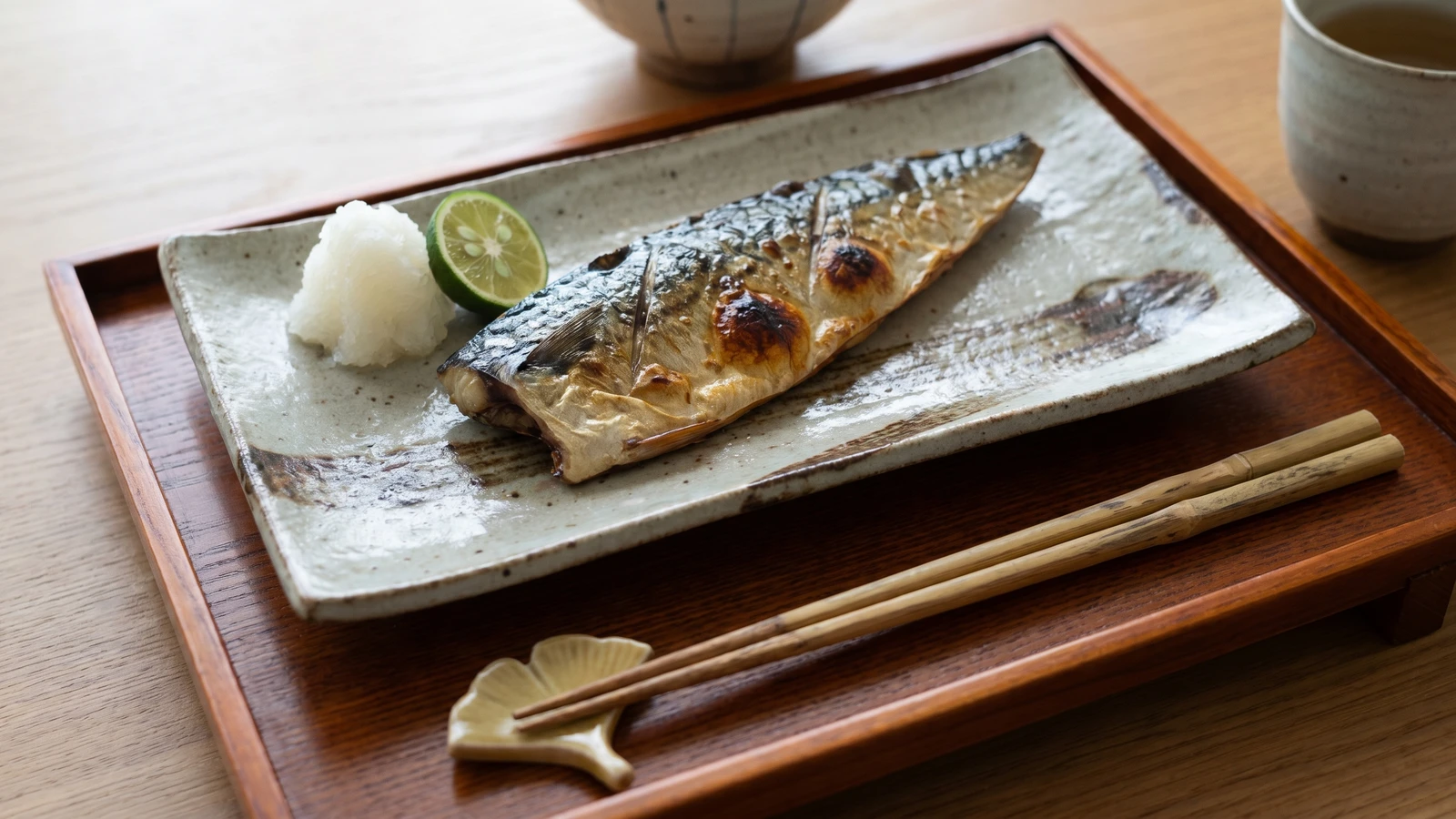
The blue-backed home fish asks for salt, time, and a hot grill. Rest it twenty minutes, start skin-up under the broiler, and the flesh turns clean while the skin crisps.
Saba is honest fish. It is oily, blue-backed, and quick to tell you whether it was handled well. At its 旬 (shun, at its prime), from autumn into winter, the flesh is fat enough that salt and fire are all it needs. If the fish smells tired, cook something else. Nothing hidden.
People hesitate over mackerel because they hear fishy and imagine a fight with the pan. The answer isn't sauce. The answer is salt, twenty minutes, and a hot grill. Salt draws beads of moisture to the surface, bringing the stronger smell with them and firming the flesh so it cooks cleanly. Rinse, dry, salt lightly again, then set the skin facing the heat first. Under a broiler that means skin-up.
This is yakizakana, grilled fish, one of the quiet standards of the home table: rice, miso soup, a vegetable, and a piece of fish set with its skin showing. The plate needs little else, only grated daikon and citrus to answer the richness. Saba no shioyaki is 本物 (honmono, the real thing) in the plainest sense: good fish, right salt, no disguise.
Saba had a special place in inland Kyoto because routes from Obama on Wakasa Bay, in present-day Fukui Prefecture, carried salted mackerel over the mountains to the old capital. By the Edo period these routes were known collectively as Saba Kaidō, the Mackerel Road, and the salting done for preservation helped season the fish by the time it arrived. That same practical salt-and-time logic sits behind saba-zushi in Kyoto and the simpler home dish of saba no shioyaki.
Quantity
2 fillets (about 150g each)
pin bones removed
Quantity
2 teaspoons
divided
Quantity
1 teaspoon
for oiling the rack
Quantity
150g
peeled and grated
Quantity
2 wedges
Quantity
1 teaspoon
for the grated daikon
| Ingredient | Quantity |
|---|---|
| fresh skin-on mackerel filletspin bones removed | 2 fillets (about 150g each) |
| coarse sea saltdivided | 2 teaspoons |
| neutral oilfor oiling the rack | 1 teaspoon |
| daikonpeeled and grated | 150g |
| sudachi, kabosu, or lemon | 2 wedges |
| soy sauce (optional)for the grated daikon | 1 teaspoon |
Choose mackerel with bright skin, firm flesh, and a clean smell. If you buy it whole, the eyes should be clear and the gills red. Saba is rich in oil and does not wait politely, so keep it cold and cook it the day you buy it.
Lay the fillets on a tray and sprinkle 1 1/2 teaspoons of the salt over both sides, a little more on the flesh than the skin. Refrigerate uncovered for 20 minutes. You will see beads of moisture rise. That is the salt doing its work: drawing out surface water and the stronger blue-fish smell, while firming the flesh for the grill.
Rinse the fillets quickly under cold water to remove the salty beads, then pat them very dry with paper towels. Make three shallow diagonal cuts through the skin of each fillet. Dry skin blisters and crisps; wet skin softens. The scoring keeps the fillet from curling and helps heat reach the thicker flesh.
Heat a Japanese fish grill or oven broiler on high for 5 minutes. Set an oiled wire rack over a rimmed pan, with the rack about 6 inches from the heat. A hot, lightly oiled rack helps the fish release cleanly; a cold one grabs the skin, and then everyone starts blaming the fish.
Sprinkle the remaining 1/2 teaspoon salt lightly over the fillets. Place them skin-side up on the rack and broil for 5 to 7 minutes, until the skin is blistered in places, the edges are lightly browned, and the fish oil glistens on the surface. The skin faces the heat first because the fat sits just beneath it. Render that fat early and the skin crisps before the flesh dries.
Turn the fillets gently with a thin spatula and cook the flesh side for 2 to 3 minutes more, until the thickest part turns opaque and flakes when pressed. If you use a thermometer, aim for 63°C or 145°F. Do not cook it into dryness. Mackerel gives you fat as a gift; don't punish it.
Set each fillet skin-side up on a plate. Add a small mound of daikon oroshi, grated daikon, and a citrus wedge. If you like, touch the daikon with a few drops of soy sauce, not the fish itself. The daikon and citrus cut the richness without hiding the clean taste of the saba.
1 serving (about 150g)
Culinary guides, cultural storytelling, and the editorial depth that makes cooking meaningful.
Discover Culinary ExplorerChef Takumi
Aji fry is weeknight fish with no mystery: fresh horse mackerel opened cleanly, breaded lightly, and fried until the panko crackles while the flesh stays sweet.
Chef Takumi
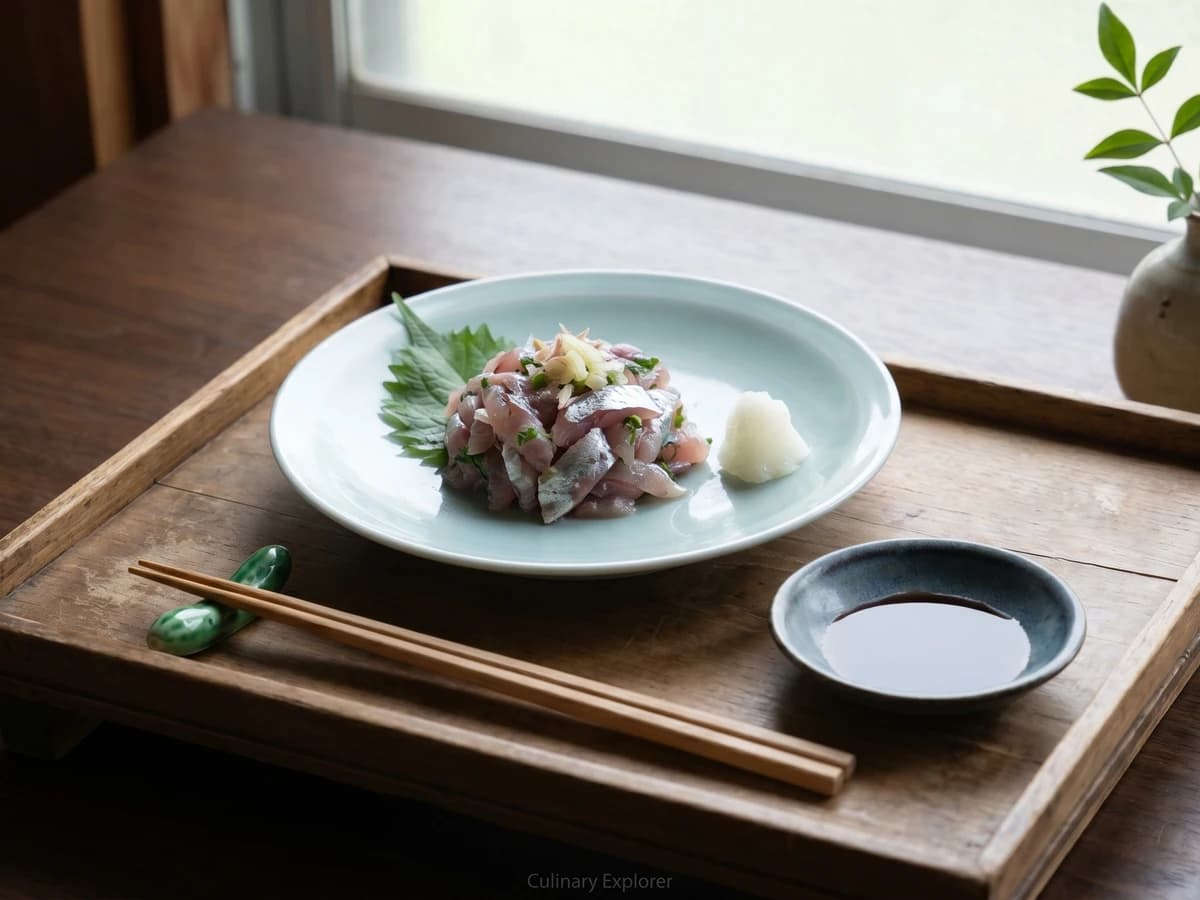
Summer horse mackerel, chopped just enough to catch ginger and scallion, becomes a cool, clean main dish with rice. The secret is fresh fish and a knife that does not bruise it.
Chef Takumi
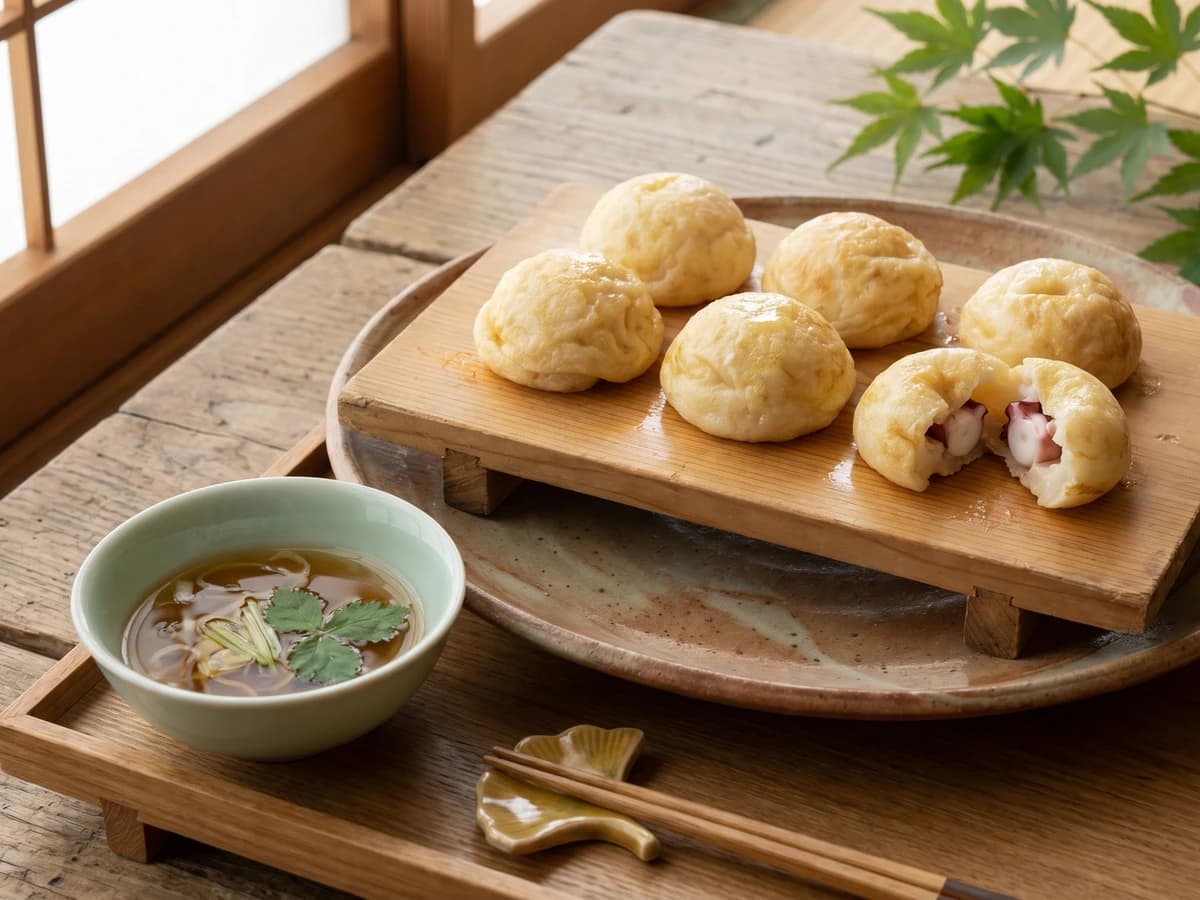
Akashi-yaki is not sauced takoyaki. It is egg-rich batter, tender octopus, and clear dashi, cooked pale and soft so each ball can be dipped like a small custard dumpling.

Chef Takumi
A whole anago looks like a test of nerve. It is mostly good sourcing, a dry skin, cold batter, and oil hot enough to leave the eel sweet under its lace.