
Chef Lupita
Adobo de Carnitas estilo Apaseo el Grande
Guanajuato's Bajío adobo for carnitas, built with guajillo, ancho, naranja agria, laurel, and garlic before the pork goes into manteca de cerdo.
A cooking platform built around craft, culture, and the stories behind what we eat.
Created by
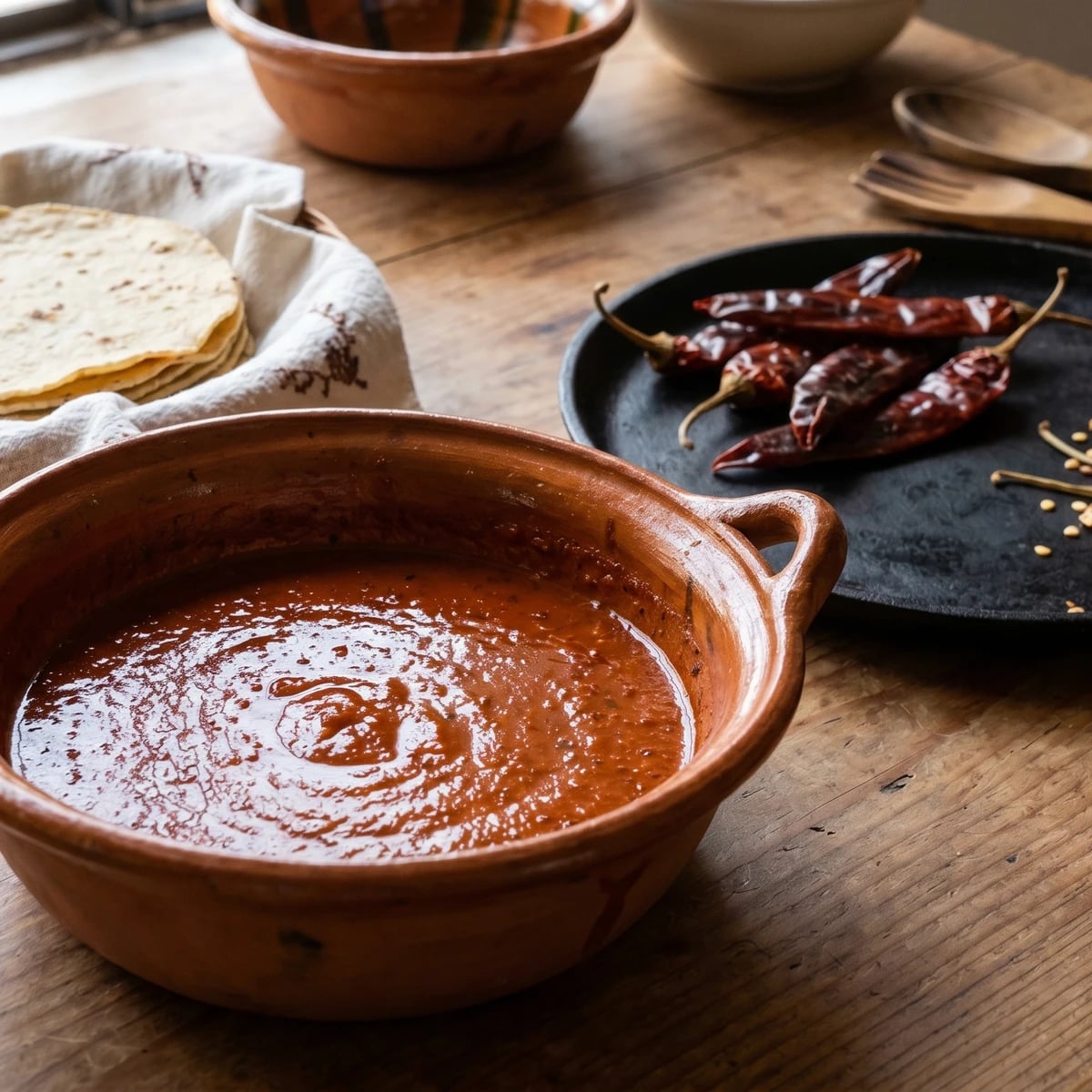
Guanajuato's guajillo salsa for enchiladas mineras, thin enough to coat a tortilla and deep enough from manteca to taste like the Bajio mining towns that built it.
Guanajuato, the Bajio, the old mining towns between the capital, Valenciana, and Dolores Hidalgo. That is where this salsa lives. Enchiladas mineras were not born on a restaurant plate. They belong to working kitchens, market fondas, and women feeding families with tortillas, chile, potatoes, carrots, cheese, and a spoonful of serious fat.
The chile is guajillo. Not tomato. Not chipotle. Not a mixed red sauce trying to be important. Guajillo gives the color: brick red, clean, a little fruity, with enough tannin to stand up to the tortilla and the vegetables that sit on top. The cumin and oregano are quiet, but necessary. Too much and the salsa tastes like someone confused Guanajuato with a spice cabinet.
The technique is the point. Toast the chiles, soften them, blend them thin, strain them, then fry that salsa in manteca de cerdo until the raw edge disappears and the fat stains red. La manteca es el sabor. If you use oil, the sauce will still turn red, yes. It will not taste like the enchiladas mineras I learned from a señora near Mercado Hidalgo who kept one hand on the cazuela and one eye on me like I might ruin her morning. No me vengas con atajos.
This is a 32-state cuisine. Cada estado, su propia cocina. Guanajuato's salsa is practical, lean in ingredients, and disciplined in method. Recetas probadas y garantizadas, but only if you respect the comal and the manteca.
Enchiladas mineras are tied to Guanajuato's silver mining economy, especially the colonial and 19th-century mining communities around the state capital and Mineral de Valenciana. The dish used inexpensive staples, corn tortillas, dried guajillo, potatoes, carrots, fresh cheese, and lard, to feed workers and families with a sauce that could be made ahead and stretched across a stack of tortillas. Unlike central Mexican enchiladas suizas or northern flour-tortilla dishes, enchiladas mineras keep their Bajio identity through corn tortillas dipped in guajillo sauce and fried in manteca.
Quantity
12
wiped clean, stemmed, and seeded
Quantity
2 large
peeled
Quantity
1/2 teaspoon
Quantity
1/4 teaspoon
Quantity
1/8 teaspoon
Quantity
1 1/2 teaspoons, plus more to taste
Quantity
2 cups
for soaking the chiles
Quantity
3/4 cup, plus more as needed
Quantity
3 tablespoons
| Ingredient | Quantity |
|---|---|
| dried chile guajillowiped clean, stemmed, and seeded | 12 |
| garlic clovespeeled | 2 large |
| dried Mexican oregano | 1/2 teaspoon |
| ground cumin | 1/4 teaspoon |
| whole black peppercorns | 1/8 teaspoon |
| kosher salt | 1 1/2 teaspoons, plus more to taste |
| hot waterfor soaking the chiles | 2 cups |
| chile soaking liquid | 3/4 cup, plus more as needed |
| manteca de cerdo (pork lard) | 3 tablespoons |
Wipe the chile guajillo with a dry cloth. Pull off the stems, open the chiles, and shake out the seeds. Do not rinse them. Water drags dust into the flesh and dulls the flavor before the comal has a chance to do its work.
Heat a dry comal or heavy skillet over medium. Toast the guajillos a few at a time, about 10 to 15 seconds per side, pressing them flat with tongs until the skin darkens slightly and smells fruity. Do not let them blacken. Burned guajillo turns bitter, and bitterness in a thin enchilada salsa has nowhere to hide.
Put the toasted chiles in a bowl and cover them with the hot water. Use hot water, not boiling. Press a small plate on top so they stay submerged. Let them soften for 15 minutes, until the flesh bends easily and the water turns reddish brown.
Transfer the softened chiles to a blender with the garlic, Mexican oregano, cumin, black peppercorns, salt, and 3/4 cup of the soaking liquid. Blend until very smooth, at least one full minute. This salsa should be thin enough to coat tortillas, not thick like mole. Add another splash of soaking liquid if the blender struggles.
Pour the blended salsa through a fine-mesh strainer into a bowl, pressing hard with a spoon. Discard the skins and seeds left behind. Guajillo skin can be leathery. Straining is not vanity, it is texture, and the tortilla will tell on you if you skip it.
Melt the manteca de cerdo in a clay cazuela or heavy saucepan over medium heat. When it shimmers, pour in the strained salsa carefully. It will sputter. Stir constantly for 6 to 8 minutes, until the color deepens to brick red, the raw garlic smell softens, and tiny red droplets of fat appear around the edges.
Taste for salt. The salsa should be a little more seasoned than you think because tortillas and potatoes will quiet it down. If it has thickened too much, loosen it with 2 to 4 tablespoons of hot water or chile soaking liquid. Keep it warm and fluid for dipping tortillas for enchiladas mineras.
1 serving (about 50g)
Culinary guides, cultural storytelling, and the editorial depth that makes cooking meaningful.
Discover Culinary Explorer
Chef Lupita
Guanajuato's Bajío adobo for carnitas, built with guajillo, ancho, naranja agria, laurel, and garlic before the pork goes into manteca de cerdo.

Chef Lupita
San Luis Potosí's hacienda wedding adobo, built from ancho, mulato, pasilla, clove, laurel, and a little chocolate, turns browned pork into the dark red asado served when a family means ceremony.

Chef Lupita
Guanajuato's Bajío table pickle, thin red onion softened in hot vinegar with orégano mexicano, cumin, bay leaf, and serrano, the sharp pink bite beside carnitas from Apaseo.

Chef Lupita
Aguascalientes' San Marcos escabeche is a sharp jar of whole jalapeños, carrot, onion, garlic, laurel, and thyme, built to crown pollo San Marcos, tortas, and any table that respects vinegar.