
Chef Lupita
Aceite de Chiltepin Bajacaliforniano
Baja California's wild chiltepin steeped in olive oil with garlic, orejon, and lime peel, until the oil turns ruby-amber and carries the slow, sneaky burn of the desert coast.
A cooking platform built around craft, culture, and the stories behind what we eat.

Created by
Guanajuato's Sierra Gorda salsa uses the golden Otomi root, roasted chile serrano, tomatillo, and sal de grano, ground in a molcajete until the heat tingles before it burns.
Guanajuato, Sierra Gorda guanajuatense, especially Xichu, Atarjea, and Victoria. That is where this salsa lives. Querétaro has its own claim across the mountains, and the root travels through Otomi kitchens on both sides, but this version comes from the Guanajuato side, where chilcuague is sold in little bundles that look like thin golden fingers.
I first bought it from a señora in Xichu who measured with her eyes, not a spoon. She told me, "poquito, hija, porque la lengua se acuerda." A little, because the tongue remembers. She was right. Chilcuague does not taste like ordinary chile. It tingles. It wakes the mouth. It makes barbacoa taste deeper and makes a pot of beans feel like food made on purpose.
The tomatillo gives body and acid. The chile serrano gives clean green heat. The chile piquin gives the mountain bite. But the root is the authority. You grind it with sal de grano first, because the salt tears the fibers and pulls the flavor into the salsa. La cocina no es decoracion, es trabajo.
Do not drown this with cilantro, onion, or lime because you saw a generic salsa recipe somewhere. This is a Sierra Gorda salsa. Cada estado, su propia cocina.
Chilcuague, Heliopsis longipes, is an edible root endemic to the Sierra Gorda and adjoining semidesert of Guanajuato, Querétaro, and San Luis Potosí, where Otomi, Pame, and Chichimeca Jonaz communities used it as both seasoning and household remedy. Its tingling comes from affinin, an alkamide concentrated in the root; 20th-century ethnobotanical studies recorded the same kitchen use still seen in Xichu and Atarjea: a little root ground with chile and sal de grano. State borders later divided the region, which is why the same root appears in market baskets from both the Sierra Gorda guanajuatense and queretana.
Quantity
1 pound
husked and rinsed
Quantity
5
stems removed
Quantity
6
stems removed
Quantity
1
unpeeled
Quantity
1 to 2 teaspoons
freshly grated, start with 1 teaspoon
Quantity
3/4 teaspoon, plus more to taste
Quantity
2 tablespoons
only if needed to loosen the salsa
Quantity
for serving
| Ingredient | Quantity |
|---|---|
| tomate de cascara (tomatillos)husked and rinsed | 1 pound |
| fresh chile serranostems removed | 5 |
| dried chile piquinstems removed | 6 |
| small garlic cloveunpeeled | 1 |
| culinary-grade chilcuague root (Heliopsis longipes)freshly grated, start with 1 teaspoon | 1 to 2 teaspoons |
| sal de grano | 3/4 teaspoon, plus more to taste |
| water (optional)only if needed to loosen the salsa | 2 tablespoons |
| barbacoa de hoyo, frijoles de la olla, carne asada, or warm corn tortillas (optional) | for serving |
Look at the chilcuague before you cook anything. It should be tan-gold, dry, clean-smelling, and firm if fresh, never damp or moldy. Grate 1 teaspoon finely and keep the rest aside. This root is powerful. More is not more correct. Too much will numb the mouth until you cannot taste the tomatillo, the chile, or the salt.
Heat a dry comal over medium heat. Roast the tomatillos, chile serrano, and unpeeled garlic, turning them with tongs. The tomatillos should blister, soften, and turn olive green with black freckles. The serranos should char in patches and smell sharp. The garlic is ready when the skin browns and the clove inside feels soft. Do not boil the tomatillos. Water gives you a flat salsa.
Swipe the dried chile piquin across the hot comal for 5 to 8 seconds, just until it smells nutty and wakes up. Pull it off immediately. Chile piquin is small and proud, but it burns fast. Burned chile turns bitter and then you have to start again. No me vengas con atajos.
In a volcanic stone molcajete, grind the sal de grano with the toasted chile piquin until the salt turns reddish and coarse. Add the grated chilcuague and grind again until the root disappears into the salt and chile. This is the center of the salsa: root, chile, sal. The salt breaks down the fibers and pulls the flavor out. A blender cannot do that the same way.
Peel the roasted garlic and grind it into the chilcuague paste. Add the roasted serranos and crush them until their skins break into dark green flecks. Add the tomatillos one at a time, grinding after each addition so the salsa stays coarse and alive, not watery. If it is too thick to spoon, add 1 or 2 tablespoons of water. Taste for salt.
Let the salsa sit for 10 minutes before serving. The chilcuague opens slowly. First it tastes grassy and sharp, then the tongue begins to tingle, then the serrano heat comes behind it. Spoon it over barbacoa de hoyo, frijoles de la olla, carne asada, or a warm corn tortilla straight from the comal. Asi se hace y punto.
1 serving (about 55g)
Culinary guides, cultural storytelling, and the editorial depth that makes cooking meaningful.
Discover Culinary ExplorerChef Lupita
Baja California's wild chiltepin steeped in olive oil with garlic, orejon, and lime peel, until the oil turns ruby-amber and carries the slow, sneaky burn of the desert coast.

Chef Lupita
Puebla's Lenten convent adobo, a brick-red vinegar chile paste of ancho, guajillo, garlic, oregano, and comino made to dress fish for the meatless calendar.
Chef Lupita
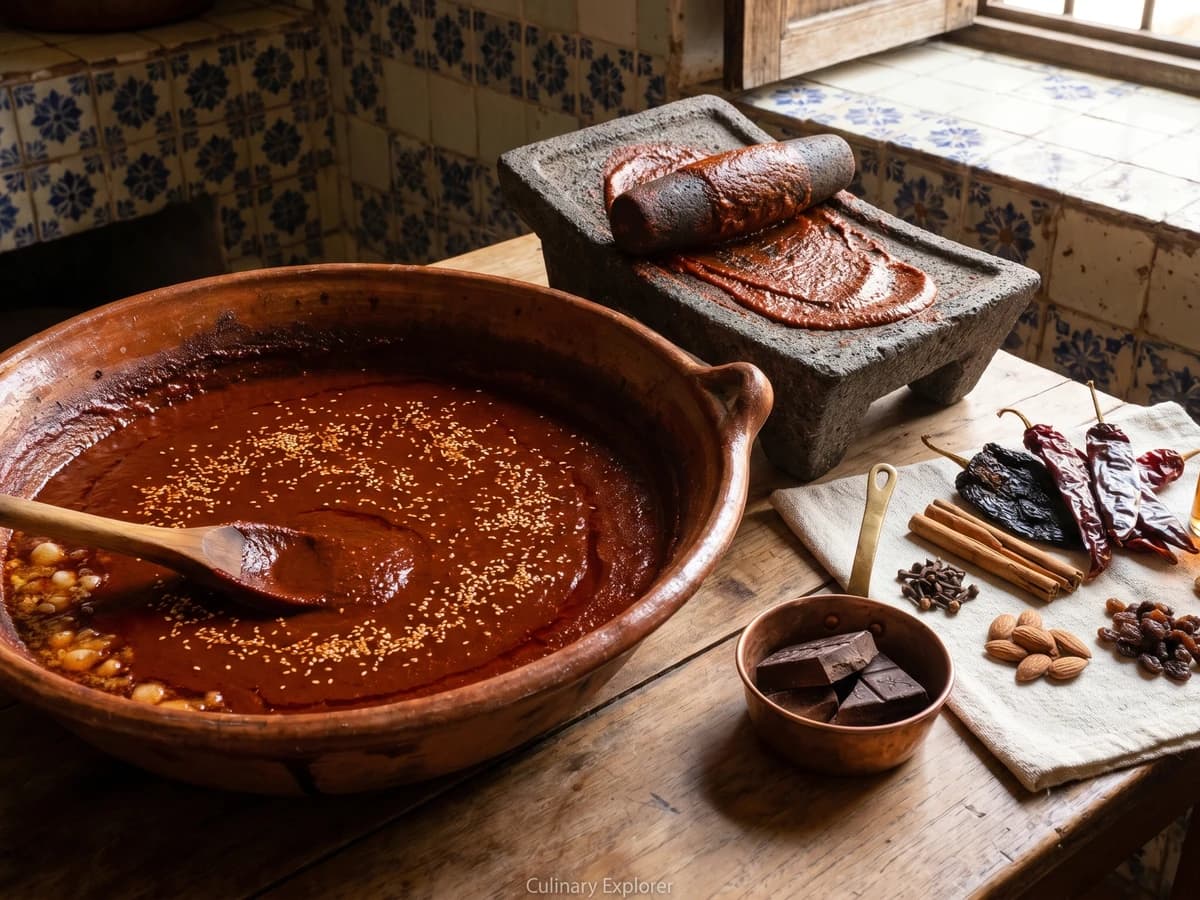
Zacatecas' wedding-table adobo, built from toasted guajillo and ancho, piloncillo, sour orange, chocolate, canela, clavo, almonds, sesame, and lard.

Chef Lupita
Puebla's convent kitchens built this adobo with ancho, guajillo, jerez, almonds, raisins, clove, and lard, a baroque marinade that stains pork loin and finishes as the sauce.