
Chef Lupita
Aceite de Chiltepin Bajacaliforniano
Baja California's wild chiltepin steeped in olive oil with garlic, orejon, and lime peel, until the oil turns ruby-amber and carries the slow, sneaky burn of the desert coast.
A cooking platform built around craft, culture, and the stories behind what we eat.
Created by
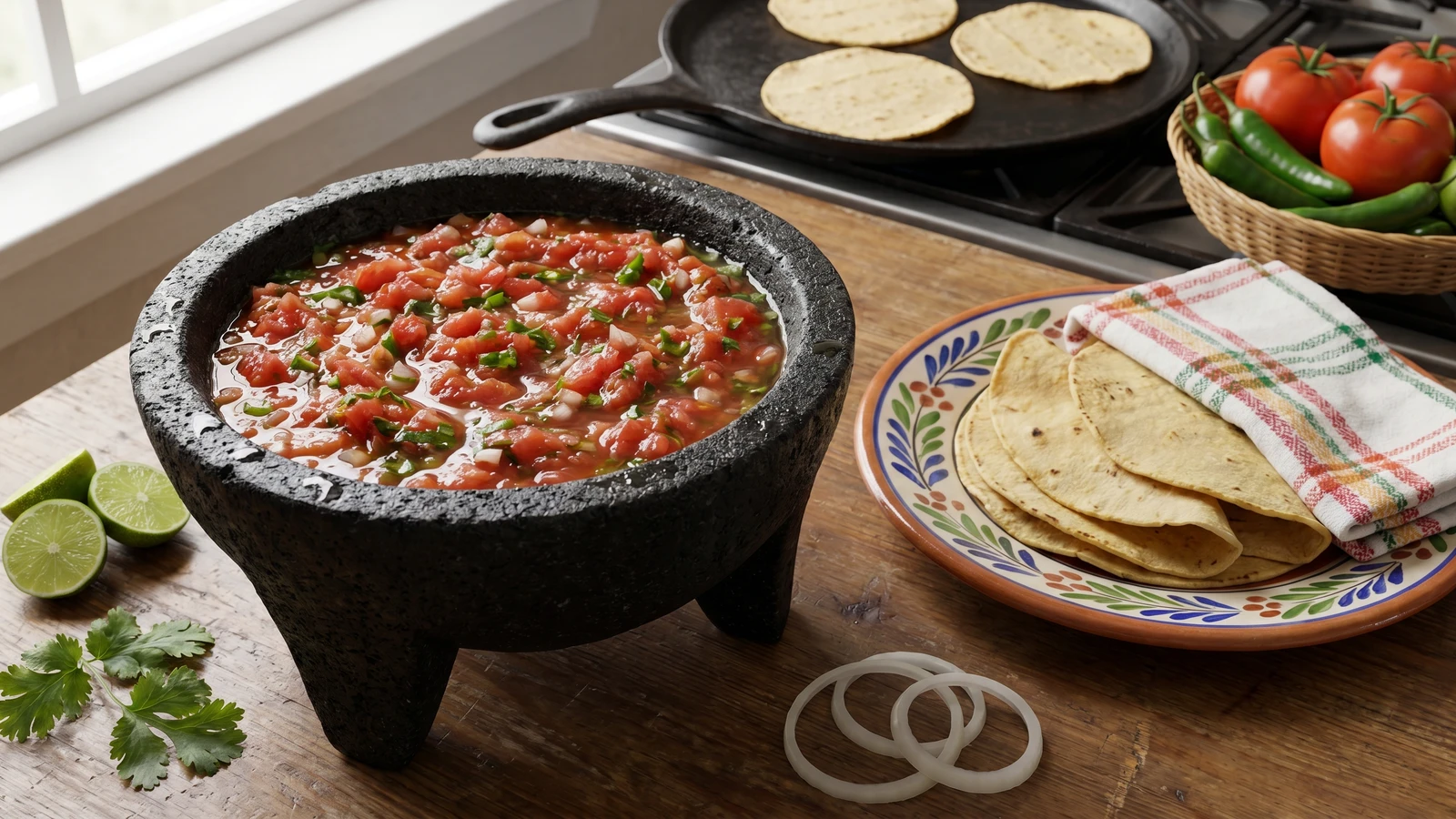
Guanajuato's raw Bajio table salsa, crushed in volcanic stone with ripe jitomate, chile serrano, white onion, cilantro, lime, and sal de grano for anything coming off the comal.
Guanajuato, in the Bajio, is where this salsa belongs. Not because nobody else makes raw salsa, of course they do, but because this version lives on the everyday table between the comal, the beans, the tortillas, and whatever meat or eggs the day allowed. It is not a special-occasion salsa. It is the one you make because dinner needs a sharp, fresh hand beside it.
The chile is serrano. Use ripe red jitomate saladet if the market has it, white onion, cilantro with tender stems, lime, and sal de grano. That is enough. No cumin, no bottled hot sauce, no vinegar. The molcajete does the work that a blender cannot do here. It bruises the onion and chile, pulls the juice from the tomato, and leaves you with texture instead of a pink liquid. No me vengas con atajos.
I learned versions of this from women in the mercados of Leon and Celaya, where the salsa was made while tortillas puffed on a blackened comal. One senora told me, 'La salsa cruda se hace cuando el jitomate manda.' She was right. If the tomatoes are hard and pale, make another salsa. Preguntale a las senoras del mercado. Saber cocinar es saber vivir.
The Bajio, especially Guanajuato and Queretaro, became one of central Mexico's major agricultural corridors during the colonial period, supplying grains, vegetables, and livestock to mining towns such as Guanajuato and Zacatecas. Raw molcajete salsas preserve an older Mesoamerican grinding technique, using volcanic stone to crush fresh chile and tomato rather than cooking them into a sauce. The tomato, chile, and molcajete are pre-Columbian foundations; the lime arrived with Spanish and Asian trade routes, then stayed because its acidity sharpened the everyday table.
Quantity
3
cored and roughly chopped
Quantity
2
stemmed and roughly chopped
Quantity
1/4 cup
finely chopped
Quantity
1/3 cup
chopped
Quantity
1 small
peeled
Quantity
1/2 teaspoon, plus more to taste
Quantity
1 tablespoon, plus more to taste
| Ingredient | Quantity |
|---|---|
| ripe jitomates saladet or Roma tomatoescored and roughly chopped | 3 |
| fresh chile serranostemmed and roughly chopped | 2 |
| white onionfinely chopped | 1/4 cup |
| fresh cilantro leaves and tender stemschopped | 1/3 cup |
| garlic clovepeeled | 1 small |
| sal de grano or kosher salt | 1/2 teaspoon, plus more to taste |
| fresh lime juice | 1 tablespoon, plus more to taste |
If your molcajete is new, it must already be cured before you start. A gritty molcajete will leave stone dust in the salsa and that is not tradition, that is laziness. Rinse the cured molcajete and dry it well.
Put the sal de grano and garlic in the molcajete. Grind with the tejolote until you have a rough paste pressed into the stone. Salt helps tear the garlic down. This is the base, small but important.
Add the chile serrano and crush it into the garlic paste. Do not just chop it. Press, drag, and turn the tejolote until the chile releases its green juice and the skin breaks down. This is where the heat spreads through the salsa instead of sitting in random sharp pieces.
Add the chopped jitomate a handful at a time. Crush each addition against the side of the molcajete until the tomato collapses and releases its juice, but leave some soft pieces. You want a loose, spoonable salsa with body. A blender would turn this cloudy and thin. That is a different salsa.
Stir in the white onion and cilantro with a spoon. Do not grind the cilantro into mud. It should stay fresh and green, with the tender stems giving that clean market flavor. Taste for salt.
Add the lime juice just before serving and stir once or twice. The lime should brighten the jitomate, not take over the bowl. Set the molcajete directly on the table with warm corn tortillas, beans, eggs, grilled nopales, or anything coming off the comal. Asi se hace y punto.
1 serving (about 30g)
Culinary guides, cultural storytelling, and the editorial depth that makes cooking meaningful.
Discover Culinary ExplorerChef Lupita
Baja California's wild chiltepin steeped in olive oil with garlic, orejon, and lime peel, until the oil turns ruby-amber and carries the slow, sneaky burn of the desert coast.

Chef Lupita
Puebla's Lenten convent adobo, a brick-red vinegar chile paste of ancho, guajillo, garlic, oregano, and comino made to dress fish for the meatless calendar.
Chef Lupita
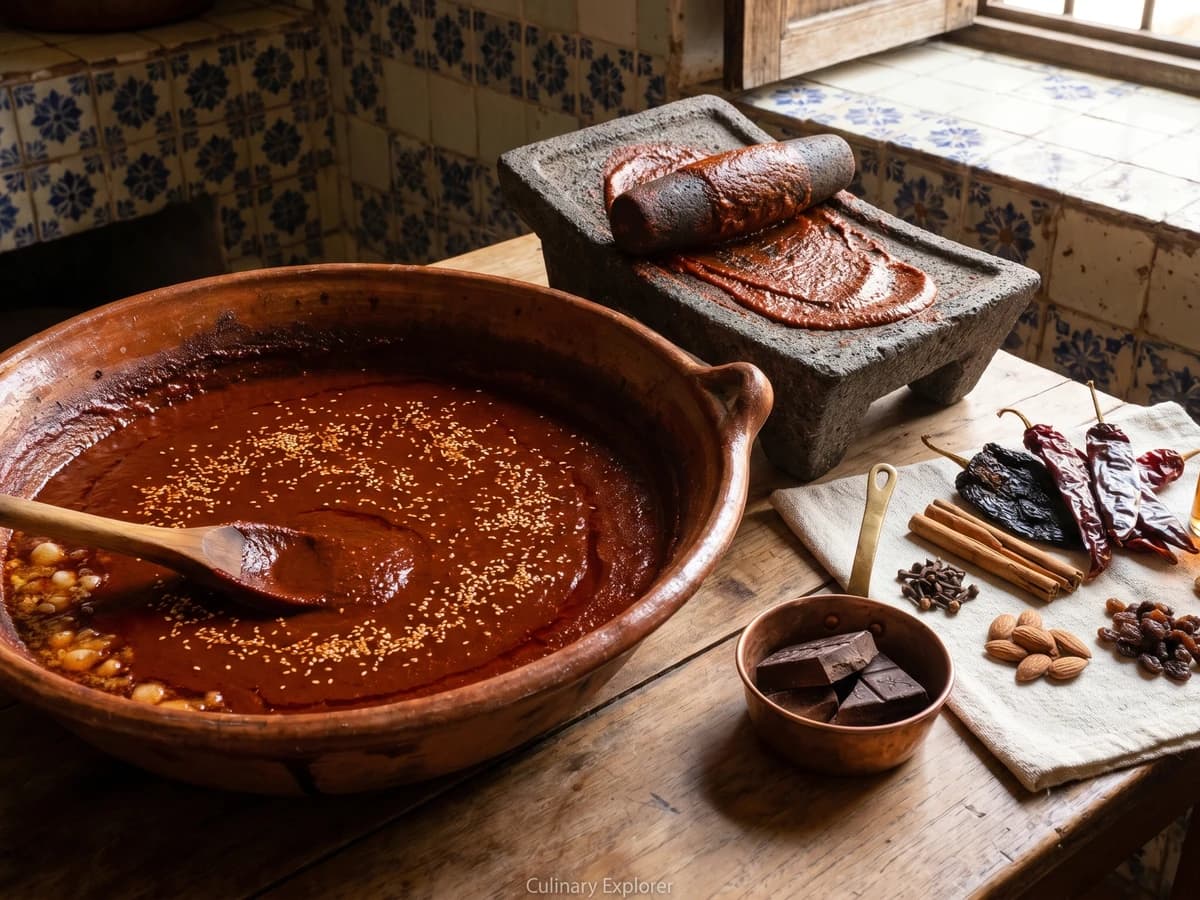
Zacatecas' wedding-table adobo, built from toasted guajillo and ancho, piloncillo, sour orange, chocolate, canela, clavo, almonds, sesame, and lard.

Chef Lupita
Puebla's convent kitchens built this adobo with ancho, guajillo, jerez, almonds, raisins, clove, and lard, a baroque marinade that stains pork loin and finishes as the sauce.