
Chef Lupita
Aceite de Chiltepin Bajacaliforniano
Baja California's wild chiltepin steeped in olive oil with garlic, orejon, and lime peel, until the oil turns ruby-amber and carries the slow, sneaky burn of the desert coast.
A cooking platform built around craft, culture, and the stories behind what we eat.

Created by
Veracruz's Gulf table sauce, a sharp bottle of vinegar, chile de arbol, garlic, bay, thyme, oregano, and spices left to infuse until it wakes up seafood.
Veracruz, especially the port and Boca del Rio, keeps this bottle on the seafood table. Salsa bruja is not a salsa for scooping with chips. It is a spiced vinegar, poured by the spoonful over oysters, shrimp cocktails, fried fish, jaiba, ceviche, and anything that came from the Gulf that morning.
The chile de arbol gives heat, but the vinegar is the spine. Use good cane vinegar or pineapple vinegar if you can find it. Veracruz cooking carries the Gulf in one hand and the old trade routes in the other: bay leaf, thyme, oregano, clove, allspice, black pepper. That is why this bottle tastes different from a northern chile oil or a central Mexican molcajete salsa. Cada estado, su propia cocina.
I learned this from a woman near the Mercado Unidad Veracruzana who kept two bottles on her counter: one young, one serious. The young one was sharp and nervous. The older one had settled into itself, chile, garlic, herbs, and vinegar speaking together. No me vengas con atajos. Salsa bruja needs time. You make it, you wait, and then it belongs on the table.
Salsa bruja belongs to the port culture of Veracruz, where seafood tables absorbed Spanish, Caribbean, Afro-Veracruzano, and Gulf Coast habits through centuries of trade. Vinegar-based table condiments became practical in hot coastal kitchens because acid carried flavor, preserved aromatics, and cut through fried fish and shellfish. Its spice profile, especially clove, allspice, bay leaf, and black pepper, reflects Veracruz's long history as Mexico's principal Atlantic port after the 16th century.
Quantity
2 1/2 cups
Quantity
1/2 cup
Quantity
20
stems removed
Quantity
3
stemmed, seeded, and torn into strips
Quantity
2
slit lengthwise
Quantity
6
lightly crushed
Quantity
1/2 small
thinly sliced
Quantity
1 small
peeled and sliced into thin coins
Quantity
2
Quantity
1 teaspoon
Quantity
3 sprigs
Quantity
1 sprig
Quantity
8
Quantity
4
Quantity
3
Quantity
1/2 teaspoon
Quantity
1 teaspoon
| Ingredient | Quantity |
|---|---|
| cane vinegar or pineapple vinegar | 2 1/2 cups |
| water | 1/2 cup |
| dried chile de arbolstems removed | 20 |
| dried chile guajillostemmed, seeded, and torn into strips | 3 |
| fresh chile jalapenoslit lengthwise | 2 |
| garlic cloveslightly crushed | 6 |
| white onionthinly sliced | 1/2 small |
| carrotpeeled and sliced into thin coins | 1 small |
| bay leaves | 2 |
| dried Mexican oregano | 1 teaspoon |
| fresh thyme | 3 sprigs |
| fresh epazote | 1 sprig |
| whole black peppercorns | 8 |
| whole allspice berries | 4 |
| whole cloves | 3 |
| kosher salt | 1/2 teaspoon |
| piloncillo or dark brown sugar | 1 teaspoon |
Wash a 1-quart glass bottle or jar with hot soapy water, rinse well, and pour boiling water through it. Let it drain upside down until dry. This sauce sits for weeks, so start clean. A cloudy bottle with old pickle smell will give you cloudy, tired vinegar.
Heat a dry comal over medium. Toast the chile de arbol for 10 to 15 seconds, just until fragrant and a shade darker. Toast the guajillo strips for about 20 seconds, pressing them flat with tongs. Do not blacken them. Burned chile in vinegar becomes harsh and bitter, and the vinegar will carry that mistake for weeks.
Combine the vinegar, water, salt, and piloncillo in a small nonreactive saucepan. Warm over medium heat until the salt and piloncillo dissolve, about 2 to 3 minutes. Do not boil it hard. You are waking the vinegar, not cooking it to death.
Put the toasted chiles, jalapenos, garlic, onion, carrot, bay leaves, Mexican oregano, thyme, epazote, black peppercorns, allspice, and cloves into the clean bottle. Pack loosely so the vinegar can move around everything. The herbs and spices should look like a Veracruz market stall in a bottle.
Pour the warm vinegar mixture over the packed aromatics, making sure everything is submerged. Tap the bottle gently on the counter to release trapped air. Seal tightly. If any chile or herb floats above the liquid, push it down with a clean spoon. Vinegar preserves what it touches.
Let the bottle sit in a cool, dark place for at least 2 weeks, shaking it once a day for the first week. Four weeks is better. The vinegar will turn amber-red, the garlic will mellow, and the chile will move from raw heat to a clean bite. This is the part impatient cooks ruin.
Set the bottle on the table with seafood: oysters, shrimp cocktail, fried fish, crab, or ceviche. Shake it, spoon out the vinegar, and leave the solids in the bottle. When the liquid gets low, top it with more vinegar once or twice, then make a new batch. Recetas probadas y garantizadas.
1 serving (about 75g)
Culinary guides, cultural storytelling, and the editorial depth that makes cooking meaningful.
Discover Culinary ExplorerChef Lupita
Baja California's wild chiltepin steeped in olive oil with garlic, orejon, and lime peel, until the oil turns ruby-amber and carries the slow, sneaky burn of the desert coast.

Chef Lupita
Puebla's Lenten convent adobo, a brick-red vinegar chile paste of ancho, guajillo, garlic, oregano, and comino made to dress fish for the meatless calendar.
Chef Lupita
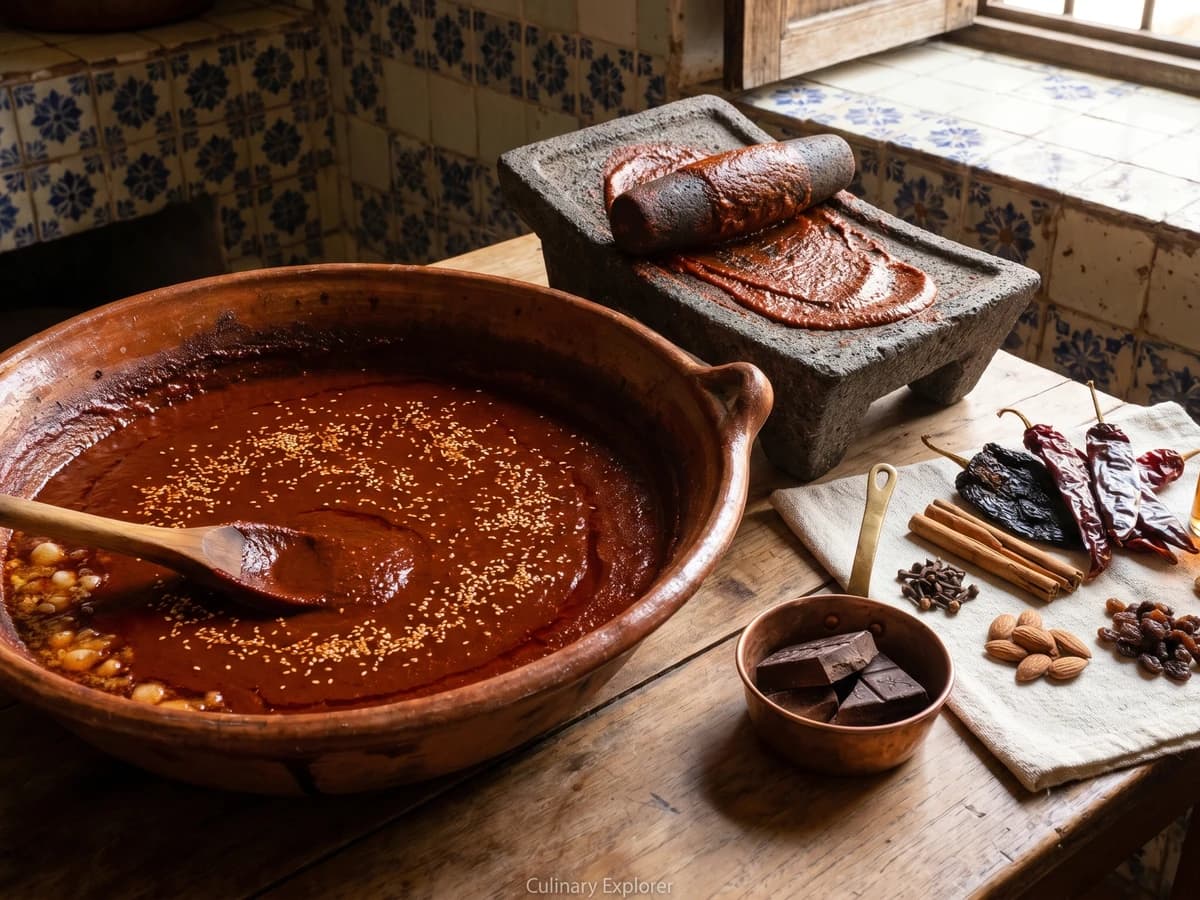
Zacatecas' wedding-table adobo, built from toasted guajillo and ancho, piloncillo, sour orange, chocolate, canela, clavo, almonds, sesame, and lard.

Chef Lupita
Puebla's convent kitchens built this adobo with ancho, guajillo, jerez, almonds, raisins, clove, and lard, a baroque marinade that stains pork loin and finishes as the sauce.