
Chef Klaus
Altmärkische Hochzeitssuppe
The Altmark wedding broth is a clear soup with no tricks: bones for depth, patient skimming for clarity, and small semolina dumplings that make it festive.
A cooking platform built around craft, culture, and the stories behind what we eat.
Created by
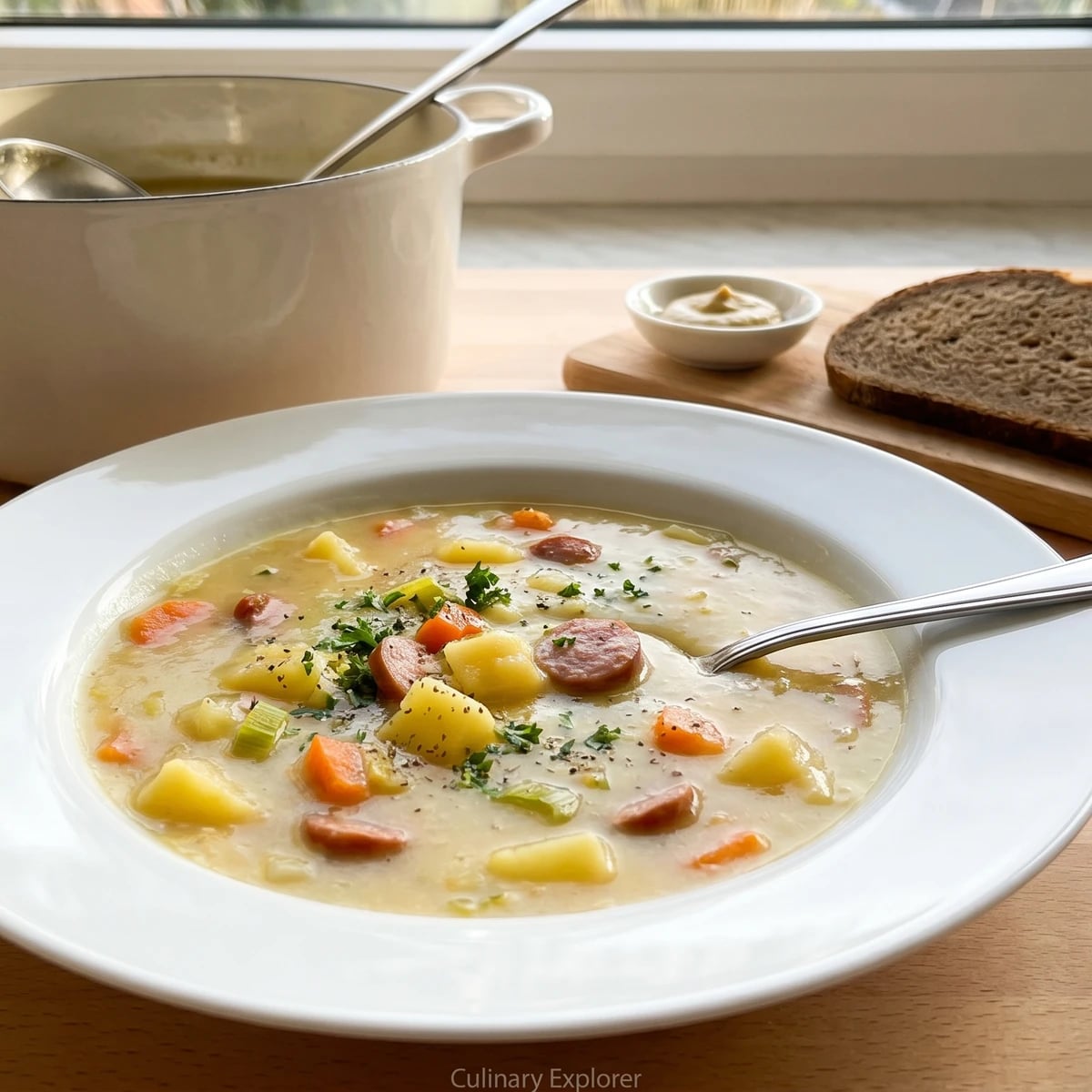
A Saxon potato soup for the cold months, built from stored roots, marjoram, and a good broth, thickened by the potato itself, not by a packet.
Sächsische Kartoffelsuppe is winter and weeknight food from Saxony, the kind of pot that stands between the pantry and the table without showing off. Floury potatoes, a knob of celeriac, carrot, leek, marjoram, and if the larder has it, a piece of smoked bacon rind or a few slices of sausage at the end. Stored roots made this soup possible when the garden was asleep. Weggeworfen wird nichts, the rind gives taste, then comes out after it has done its work.
Every region has its potato soup, and every region thinks the other one is doing too much or too little. In the north it may be thinner and sharper, sometimes with fish nearby on the table. In the south it often runs creamier, with Speck, sausage, and more fat. Saxony keeps it plain and clever: the potatoes cook until soft, then half the pot is crushed against the side so the broth thickens on its own starch. Im Norden anders, im Süden anders.
The technique is not the chopping. It is when you mash. Cook the potatoes fully before you crush them, because half-cooked potato gives a grainy soup and never releases enough starch. Mash only part of the pot, because a completely pureed soup turns dull and heavy, while chunks left whole give you something to eat. Nicht aus dem Glas, and not from a powder. A potato can thicken its own soup if you let it.
Watch the marjoram. It belongs here, but boil it hard for too long and it goes dusty. Add most of it near the end, then taste for salt after the sausage or smoked rind has spoken. Würzen, Fett, Salz zum Schluss. Schön ist, was schmeckt.
The potato became central to Saxon and broader German cooking only after its eighteenth-century spread, pushed famously in Prussia by Frederick II's potato orders from the 1740s and 1750s and adopted through necessity as much as persuasion. Saxony's Erzgebirge and working towns made potato dishes a backbone of everyday eating because the crop stored well, fed many people cheaply, and took flavour from a little smoked meat or root vegetables. The regional split remains clear: Saxon versions often lean on marjoram and a rough mash, while southern bowls tend to be richer with Speck or cream and northern bowls stay plainer and more broth-led.
Quantity
1kg
peeled and cut into 2cm chunks
Quantity
1 tablespoon
Quantity
1 large
finely chopped
Quantity
1
washed and sliced
Quantity
2
diced
Quantity
150g
peeled and diced
Quantity
1.25L
Quantity
1 rind or 100g
Quantity
1
Quantity
1 teaspoon, plus more to finish
Quantity
1/2 teaspoon
lightly crushed
Quantity
4
sliced
Quantity
to taste
Quantity
1 tablespoon
chopped
| Ingredient | Quantity |
|---|---|
| floury potatoespeeled and cut into 2cm chunks | 1kg |
| lard or neutral oil | 1 tablespoon |
| onionfinely chopped | 1 large |
| leekwashed and sliced | 1 |
| carrotsdiced | 2 |
| celeriacpeeled and diced | 150g |
| light pork, beef, or vegetable stock | 1.25L |
| smoked bacon rind or smoked bacon (optional) | 1 rind or 100g |
| bay leaf | 1 |
| dried marjoram | 1 teaspoon, plus more to finish |
| caraway seeds (optional)lightly crushed | 1/2 teaspoon |
| Wiener Würstchen or Bockwürste (optional)sliced | 4 |
| salt and black pepper | to taste |
| flat-leaf parsley (optional)chopped | 1 tablespoon |
Warm the lard in a heavy pot and soften the onion, leek, carrot, and celeriac for 8 minutes without browning them. You want the vegetables sweet and rounded, not fried dark, because this is a pale potato soup and burnt onion will take over the whole pot.
Stir in the potatoes, bay leaf, marjoram, caraway if using, and the bacon rind if you have one, then pour in the stock. The liquid should just cover the vegetables; too much water makes a thin soup, and the potato starch has nothing to hold. Bring it to a gentle simmer, then runter mit der Temperatur, down with the temperature, so the potatoes cook through without breaking into gritty bits.
Cook 25 to 30 minutes, until a potato chunk crushes easily against the side of the pot with a spoon. Do not mash early. Half-cooked potato gives you lumps with a raw centre and a cloudy broth, while fully cooked floury potato releases starch cleanly and thickens the soup by itself.
Remove the bay leaf and bacon rind. Crush roughly half the vegetables against the side of the pot with a potato masher or wooden spoon, leaving plenty of potato and carrot pieces whole. This is the Saxon trick: the mashed potato thickens the broth, the whole pieces keep the soup from becoming baby food. Nicht aus dem Glas, not from a packet.
Add the sliced Wiener Würstchen or Bockwürste, if using, and let them warm gently for 5 minutes without boiling. Boil a sausage hard and it splits, leaks fat, and tastes tired. Gentle heat keeps it plump and lets the smoke season the soup.
Taste only now, then season with salt, black pepper, and a pinch more marjoram. The stock, rind, and sausage all carry salt, so salting early is how a thrifty soup becomes a thirsty one. Ladle into deep bowls and finish with parsley if you like. Würzen, Fett, Salz zum Schluss.
1 serving (about 570g)
Culinary guides, cultural storytelling, and the editorial depth that makes cooking meaningful.
Discover Culinary Explorer
Chef Klaus
The Altmark wedding broth is a clear soup with no tricks: bones for depth, patient skimming for clarity, and small semolina dumplings that make it festive.

Chef Klaus
Yesterday's boiled potatoes, a little ham, onion, and egg. The whole dish works only if the potatoes brown before the egg goes in.

Chef Klaus
Hard eggs, boiled potatoes, and a mustard sauce made from a proper roux: the quick eastern supper that works because the mustard goes in last.

Chef Klaus
An East German weekday egg dish: hard-boiled eggs warmed gently in a pale sauce with peas, carrots, and lemon, cheap enough for Tuesday and proper enough for the table.